Hand-harvested Guérande salt · Tracked international delivery included
Guide· by Celtic Salt Editorial Team
What Is The Difference Between Celtic Salt And Table Salt
What Is the Difference Between Celtic Salt and Table Salt and Why It Matters in 2026
If you have ever stood in a kitchen aisle comparing salt options, you have likely noticed a growing variety of products beyond the classic cylindrical canister of plain white table salt. Among these, Celtic grey salt — harvested by hand from the pristine tidal marshes of Guérande in Brittany, France — has earned an extraordinary reputation among chefs, nutritionists, and health-conscious consumers alike. But what exactly separates Celtic salt from ordinary table salt, and why does that distinction matter more than ever heading into 2026? The answer lies not just in taste or appearance, but in a profound difference of origin, processing, mineral composition, and the very philosophy behind how we season our food. Understanding these differences can genuinely transform the way you cook, the way you eat, and perhaps even the way you think about one of the most fundamental ingredients in human history.
Table salt, in its most common commercial form, begins its life as natural salt — often mined from underground deposits left behind by ancient seas, or harvested from large-scale solar evaporation ponds. What distinguishes it from its artisanal counterpart is what happens next: an extensive industrial refining process strips away virtually all trace minerals, bleaches the crystals to a brilliant white, and introduces anti-caking agents such as sodium aluminosilicate or magnesium carbonate to keep the grains free-flowing. Iodine is then frequently added back in a synthetic form, a practice that became widespread in the early twentieth century to combat iodine deficiency in populations with limited access to seafood. The result is a chemically simplified product that is almost pure sodium chloride — typically 97 to 99 percent — with a sharp, one-dimensional taste that many culinary professionals find harsh and unpleasant on the palate. It is a product optimised for shelf stability, uniformity, and industrial food manufacturing rather than for nutritional richness or gastronomic excellence.
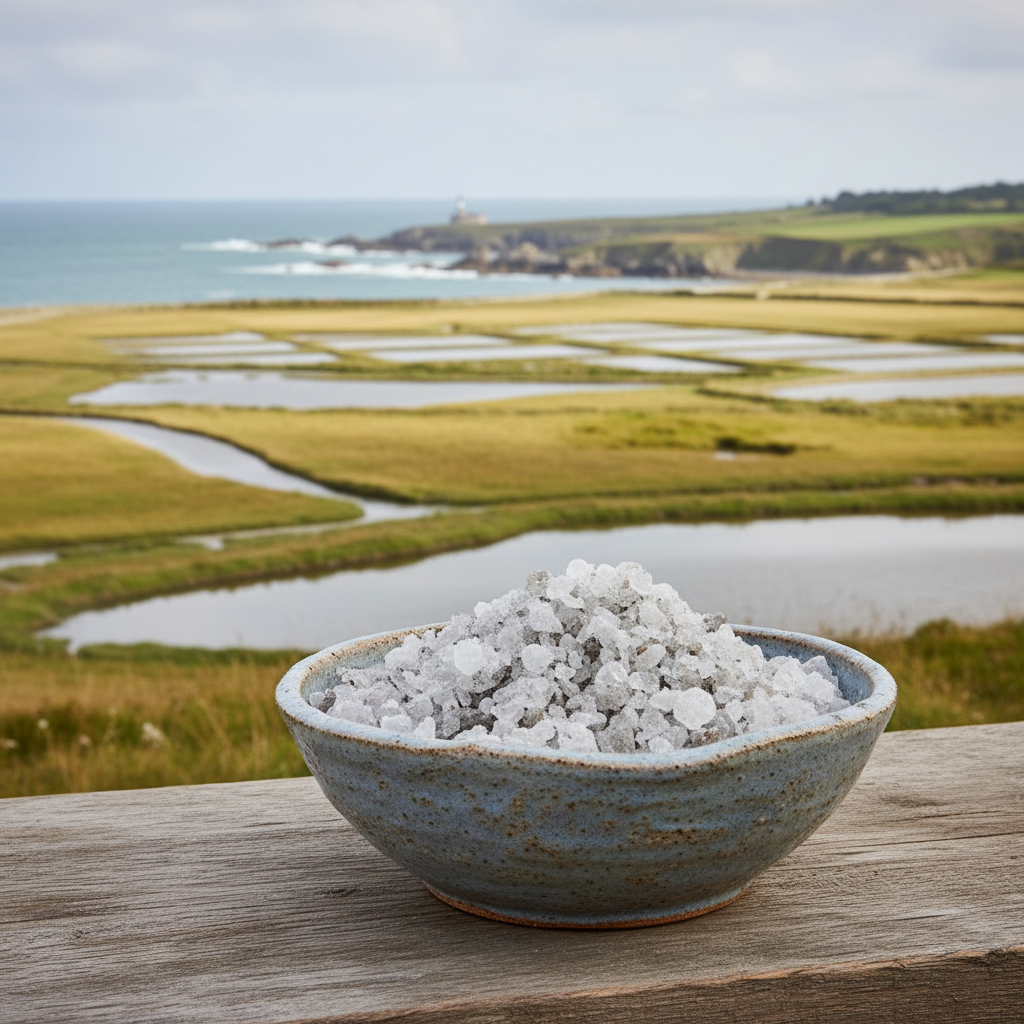
Celtic grey salt, by contrast, is produced through one of the oldest and most environmentally respectful harvesting methods still practiced anywhere in the world. In the Guérande region of Loire-Atlantique, Brittany, paludiers — the traditional salt farmers of this coastline — work in salt marshes known as oeillets, using wooden tools to gently rake and collect salt crystals that form naturally on the clay floor of the pans. This process has remained largely unchanged for over a thousand years, and it is precisely this ancient technique that gives Celtic salt its defining characteristics. The grey colour, which surprises many first-time buyers, comes from the natural clay minerals present in the marsh bed. The moisture that the salt retains — Celtic grey salt is notably damp to the touch — reflects its living mineral richness and the fact that it has not been kiln-dried or heavily processed. What you receive in a bag of authentic Celtic grey salt is essentially nature's work, minimally interrupted by human hands. This is not a marketing phrase; it is a verifiable, traceable reality rooted in one of France's most celebrated artisanal food traditions.
Why does this matter more in 2026 than ever before? Because the global conversation around food quality, mineral depletion in modern diets, and the long-term consequences of ultra-processed eating habits has never been louder or more urgent. Research into the relationship between dietary minerals — magnesium, potassium, calcium, and over eighty trace elements — and long-term health outcomes has expanded dramatically over the past decade. At the same time, consumers are increasingly seeking transparency in their food supply, wanting to know not just what is in their food, but where it comes from, how it was made, and what values underpin its production. Celtic salt from Guérande answers all of these questions with uncommon clarity. It comes from a specific, identifiable location. It is harvested by skilled artisans using sustainable, non-mechanised methods. It carries a natural mineral profile that no industrial process can replicate. And it tastes, as any professional chef will tell you, categorically different from the white powder that most people grew up shaking onto their food without a second thought.
The Complete Guide to the Difference Between Celtic Salt and Table Salt
To truly understand the difference between Celtic salt and table salt, it helps to examine them across several key dimensions: origin and terroir, production methods, mineral composition, texture and moisture content, flavour profile, and environmental impact. Each of these dimensions tells a part of a larger story about what salt is, what it can be, and what we lose when we reduce it to a single industrial commodity.
Origin and Terroir
Celtic grey salt is a product of a specific geography. The Guérande peninsula, with its unique combination of Atlantic tidal flows, clay-rich soil, and the particular microclimate of coastal Brittany, creates conditions that cannot be replicated elsewhere. The term "terroir" — borrowed from wine culture — applies with equal validity to salt. The minerals present in the Atlantic seawater, the clay composition of the marsh beds, the temperature and wind patterns that govern evaporation rates: all of these variables contribute to the final product's character. Table salt, whether mined or evaporated at industrial scale, is sourced from wherever extraction is most economically efficient. It is then refined to eliminate all traces of that origin. The result is a geographically anonymous product, stripped of the story and the substance that made it interesting in the first place.
Production Methods
The contrast in production could hardly be more dramatic. Industrial table salt is produced using high-heat evaporation techniques, mechanical harvesting, chemical treatment to remove impurities, bleaching, anti-caking agent addition, and often iodine fortification. Each step in this process is designed to maximise consistency and shelf life. Celtic grey salt is harvested by hand — specifically, by paludiers working each day during the summer harvest season, monitoring the salt pans, managing water flow through a sophisticated network of channels, and carefully collecting the grey crystals before they can be contaminated or washed away. The salt is then air-dried naturally rather than kiln-dried, preserving its moisture and mineral content. This labour-intensive process is slower, more expensive, and subject to the vagaries of weather, but it produces a salt of incomparable quality. No machine can replicate the judgment, skill, and sensitivity of an experienced paludier reading the state of his salt pans on a given afternoon in August.
Mineral Composition
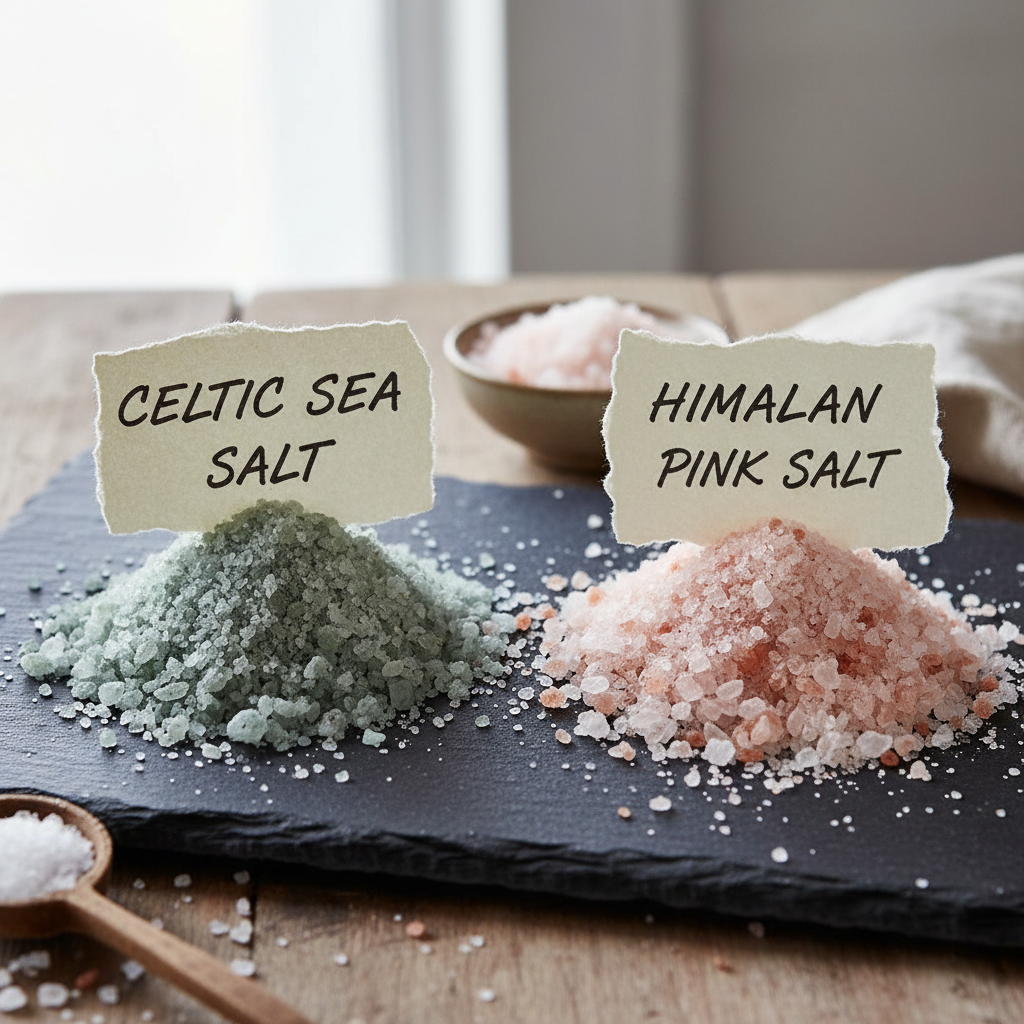
This is perhaps the most scientifically significant difference. Table salt is approximately 97–99% sodium chloride, with the remainder made up of added anti-caking agents and, in iodised versions, potassium iodide or iodate. It contains virtually no naturally occurring trace minerals. Celtic grey salt, by contrast, contains a substantially lower proportion of sodium chloride — typically around 84–87% — with the remaining percentage comprising a complex array of naturally occurring minerals including magnesium, calcium, potassium, iron, zinc, manganese, copper, silicon, and many other trace elements. These minerals are not added artificially; they are naturally present in the Atlantic seawater and the clay substrate from which the salt is harvested. Magnesium in particular is a mineral in which many people in modern Western diets are chronically deficient, and the relatively high magnesium content of Celtic grey salt has contributed to its reputation as a more nutritionally complex seasoning choice. It is also worth noting that the lower sodium chloride percentage means that, gram for gram, Celtic salt delivers slightly less sodium than refined table salt — a consideration worth noting for those monitoring sodium intake.
Texture and Moisture
Pick up a pinch of table salt and you will feel dry, uniform, perfectly regular crystals that pour freely and dissolve almost instantly. Pick up a pinch of authentic Celtic grey salt and you will immediately notice something different: the crystals are moist, irregular in size and shape, slightly sticky to the touch, and visibly grey-tinged. This moisture is not a defect; it is a sign of quality. The hygroscopic nature of Celtic salt — its tendency to absorb and retain moisture from its environment — is directly related to its mineral richness, particularly its magnesium chloride content. This moisture retention also affects how the salt behaves in cooking: it dissolves more gradually, releasing its flavour in layers rather than all at once, and it integrates into food differently, particularly in curing, brining, and fermentation applications.
Flavour Profile
Any professional chef who has worked with both salts will tell you that the flavour difference is unmistakable. Table salt tastes sharp, immediately briny, and somewhat harsh — a one-note sodium punch. Celtic grey salt has a more complex, rounder, deeper flavour with a subtle oceanic quality that lingers pleasantly on the palate. This complexity is a direct consequence of its mineral profile. The balance of sodium, magnesium, potassium, and trace elements creates what French chefs describe as "sel gris caractère" — a character to the salt that elevates rather than simply seasons food. Many experienced cooks report using less Celtic salt by volume to achieve the desired level of seasoning, precisely because its flavour is more multidimensional and satisfying.
It is important to approach the topic of salt and health with appropriate nuance. No salt should be positioned as a health supplement or a cure for any condition, and any responsible discussion of dietary salt must acknowledge that total sodium intake remains a relevant consideration for cardiovascular health. With that said, there are meaningful, evidence-informed reasons why many nutritionists, integrative health practitioners, and culinary professionals consider Celtic grey salt a preferable choice to heavily refined table salt.
The trace mineral content of Celtic grey salt is genuinely significant. Magnesium, which is present in notable quantities in authentic Guérande grey salt, plays a role in over three hundred enzymatic processes in the human body, including muscle function, nerve transmission, protein synthesis, and blood sugar regulation. Many people in Western diets consume insufficient magnesium, partly because modern agricultural practices have depleted magnesium levels in soil. While salt is not a primary dietary source of magnesium, every contribution counts, and choosing a salt that naturally contains magnesium over one that has had all minerals stripped out is a rational decision in the context of overall dietary mineral intake. Similarly, the presence of potassium in Celtic salt is relevant: potassium helps counterbalance the effects of sodium in the body, and the naturally occurring potassium in Celtic salt represents a more integrated form of this balance than the pure sodium chloride of refined table salt.
From a culinary standpoint, the benefits of Celtic grey salt are well-documented among professional cooks. Its complex flavour profile means that less salt can achieve more flavour — an advantage for anyone seeking to reduce overall sodium intake without sacrificing the pleasure of well-seasoned food. Its moisture content makes it particularly effective for certain preparations: curing fish and meat, fermenting vegetables, brining poultry, and finishing dishes where a last-minute addition of flaked or coarsely ground salt is desired. The irregular crystal structure of grey salt also means it dissolves unevenly in some applications, creating small pockets of intense saltiness that experienced chefs exploit for textural interest. Learn more about how to use Celtic salt in cooking for the best culinary results.
The environmental dimension of choosing Celtic salt over industrial table salt is also increasingly relevant to consumers in 2026. The salt marshes of Guérande are a protected natural habitat, home to numerous species of migratory birds, rare plants, and aquatic life. The traditional paludier system of salt farming actively maintains this ecosystem; without the ongoing work of salt farmers managing the complex hydraulic networks of the marshes, the habitat would quickly revert to a different ecological state. When you purchase authentic Celtic grey salt from Guérande, you are not simply buying a condiment — you are participating in the preservation of one of Europe's most extraordinary living cultural and natural landscapes. Industrial salt production, by contrast, often involves significant land use, energy consumption, and chemical inputs with considerably less ecological sensitivity.
How to Use Celtic Salt versus Table Salt — Expert Tips
Understanding the practical differences between these two salts is essential for making the most of Celtic grey salt in your kitchen. They are not interchangeable in a one-to-one way, and knowing how to adapt your seasoning approach will help you achieve consistently excellent results.