What Is the Best Celtic Salt? A Complete Buyer's Guide
The question "what is the best Celtic salt?" is deceptively simple. It presumes there is one answer, when in reality the "best" Celtic salt depends entirely on your intended use, budget, and personal preferences. However, there are objective criteria that distinguish authentic, high-quality Celtic grey salt from imitations and inferior products — criteria that any informed buyer can use to make the right choice.
The short answer: authentic Celtic grey salt with IGP Guérande certification from a reputable artisan producer is the best choice for nearly all culinary and wellness applications. The specific form — coarse, fine, or fleur de sel — depends on what you're doing. But the sourcing, certification, and production method matter far more than brand or price point within the premium segment.
The Three Criteria That Define the Best Celtic Salt
1. Geographic Origin and Certification
The only genuinely "best" Celtic salt is salt that actually comes from Guérande, Brittany, France. Any other origin is, by definition, not Celtic salt — it may be grey salt, sea salt, or artisan salt, but not the specific product that centuries of tradition have established in Guérande. Look for IGP Guérande (Indication Géographique Protégée) certification on the label. This is the only legally regulated, audited designation that guarantees authentic Guérande origin and traditional production method. Without it, you are buying something labeled "Celtic" but not necessarily the real thing.
2. Processing Method — Unrefined and Minimal
The best Celtic salt is harvested by hand, dried naturally (no heat processing), and packaged with zero additives. The moment a salt undergoes industrial refinement, heat treatment, mechanical grinding, or additive addition, it ceases to be authentic Celtic salt — it becomes a processed imitation. How can you verify this at point of sale? Look for three indicators: (a) grey color (from clay minerals, not bleached white), (b) natural moisture (slightly damp to touch, not bone-dry), and (c) irregular crystal structure (not uniform or mechanically processed). All three together indicate true artisan production.
3. Mineral Content — 80+ Trace Minerals Retained
The mineral profile is where Celtic salt proves its value. Laboratory analysis of authentic Guérande grey salt consistently shows 80+ distinct mineral and trace mineral elements, with particular richness in magnesium, calcium, potassium, and trace iron. This mineral diversity cannot be replicated artificially and cannot be faked through marketing claims — it either exists in the salt or it doesn't. Reputable producers provide lab analysis on request or on their website. If a Celtic salt producer cannot provide mineral composition data, question the authenticity.
Coarse vs Fine Celtic Salt — Which Is Best for You?
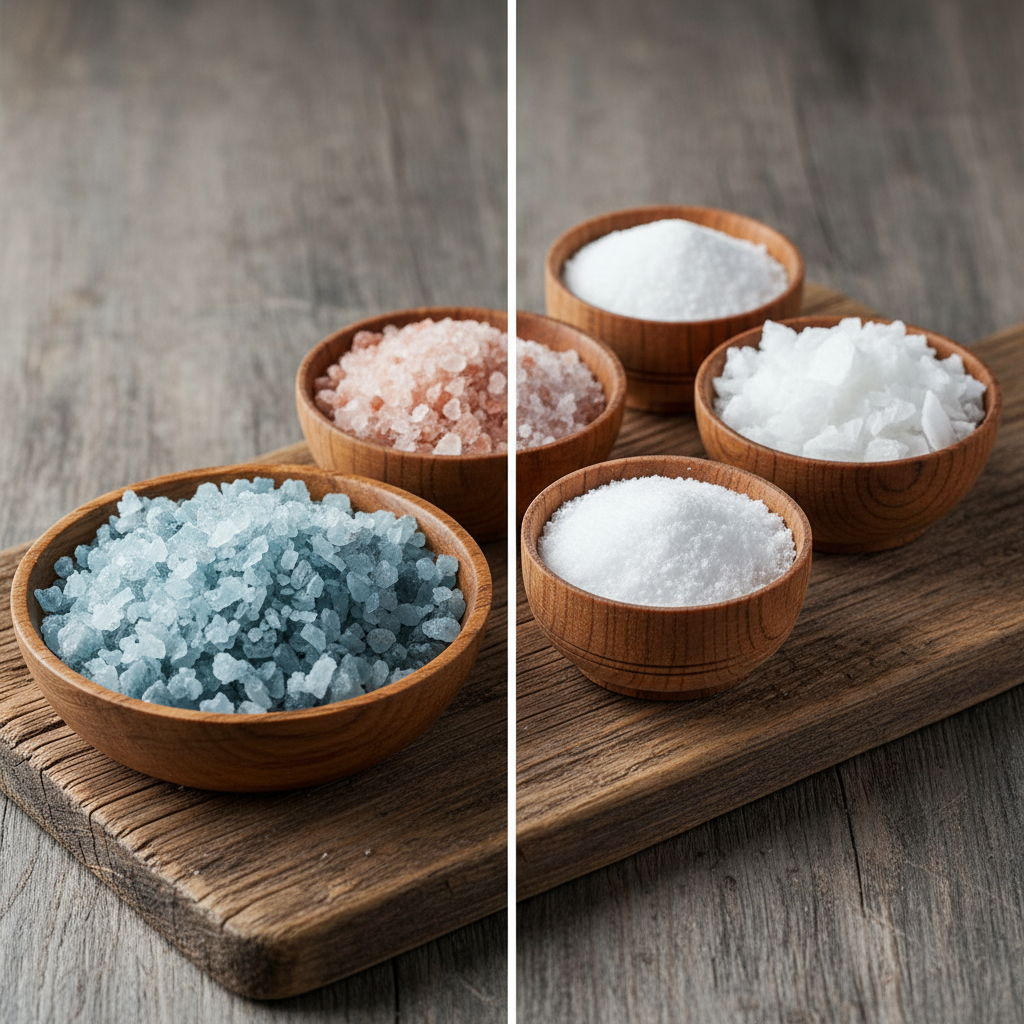
This is the most practical decision: coarse grey salt (gros sel) or fine grey salt (sel fin). Both are authentic Celtic salt with the same mineral profile and origin. The difference is crystal size and the best-use applications.
Experience the difference: Discover Authentic Celtic Grey Salt →
Coarse Celtic grey salt is best for: brining poultry, pork, and lamb (salt dissolves gradually, penetrating deep into muscle tissue); pasta water (generous handful per large pot of water); bread doughs (complex minerals enhance fermentation); fermentation projects like sauerkraut and kimchi (minerals support beneficial bacteria); grilling and dry-brining (large crystals cling to meat surfaces). The slow dissolution is an advantage in these applications.
Fine Celtic grey salt is best for: everyday seasoning in cooking (dissolves quickly, measures predictably, sprinkles evenly); finishing sauces (mineral complexity enhances flavor); salad dressings and vinaigrettes (dissolves without grittiness); the morning hydration protocol (dissolves readily in water); baking (measures consistently). Fine salt gives you precision and speed.
Fleur de sel is best for: finishing only — raw fish, sliced tomatoes, soft cheeses, chocolate desserts, premium salads. Never cook with fleur de sel; it is a delicate luxury finishing salt. Its price premium (3–5x the cost of grey salt) is justified only in applications where the delicate crystals and texture are the point.
The Best Celtic Salt Brands and Where to Buy
The Guérande salt marshes are small — only about 2,000 hectares with approximately 200 active paludier families. This means authentic Celtic salt production is limited, and not all producers export to the US or anglophone markets. Several brands have built reliable international distribution:
Direct from source: Buying directly from Guérande salt producers or their official distributors is the most reliable way to ensure authenticity. Many small paludier cooperatives now sell online and ship internationally. Prices are typically $50–80 per 500g for coarse or fine salt, and $80–150 for fleur de sel.
Specialty food retailers: High-end grocery stores, artisan food shops, and gourmet online retailers typically carry 1–3 authentic Guérande salt options. These retailers curate their suppliers, so finding salt labeled as "Guérande" or "sel gris de Guérande" with IGP certification is a reasonable shortcut to authenticity.
What to avoid: Generic "Celtic salt" sold through mainstream supermarkets at prices suspiciously low ($10–20 for 500g) is almost certainly a processed imitation. Authentic Celtic salt cannot be produced at industrial scale, so it will never be the cheapest option on the shelf. If the price seems too good to be true, it is.
Quality Markers of the Best Celtic Salt
Beyond origin and certification, several quality indicators separate premium Celtic salt from mediocre products:
Color consistency: The best Celtic salt has uniform grey color throughout — not surface tinting, not white with hints of grey. The grey should range from light to deep depending on clay content and harvest timing, but it should be consistent.
Moisture level: Premium Celtic salt feels slightly damp when you touch it — this indicates it has not been heat-treated. Excessive moisture (wet, clumping heavily) can indicate improper storage. Bone-dry salt indicates heat processing.
Crystal size consistency: While Celtic salt is naturally irregular compared to refined salt, the best products have reasonably consistent crystal size within their "coarse," "fine," or "fleur de sel" category. Wildly inconsistent sizing can indicate poor sorting or processing shortcuts.
Harvest date transparency: The best producers indicate harvest year or season on the package. Celtic salt is a seasonal product — each year's harvest has slightly different mineral profiles based on weather and tidal patterns. Transparency about harvest date shows confidence in product quality.
Packaging integrity: Premium Celtic salt comes in sealed, food-safe packaging that protects from contamination and excessive moisture loss. The package should clearly state IGP certification, origin, and contact information for the producer. Opaque, unmarked bulk salt is a red flag.
Testing Celtic Salt at Home — How to Verify Quality
If you've bought Celtic salt and want to verify it's authentic, three simple tests work at home:
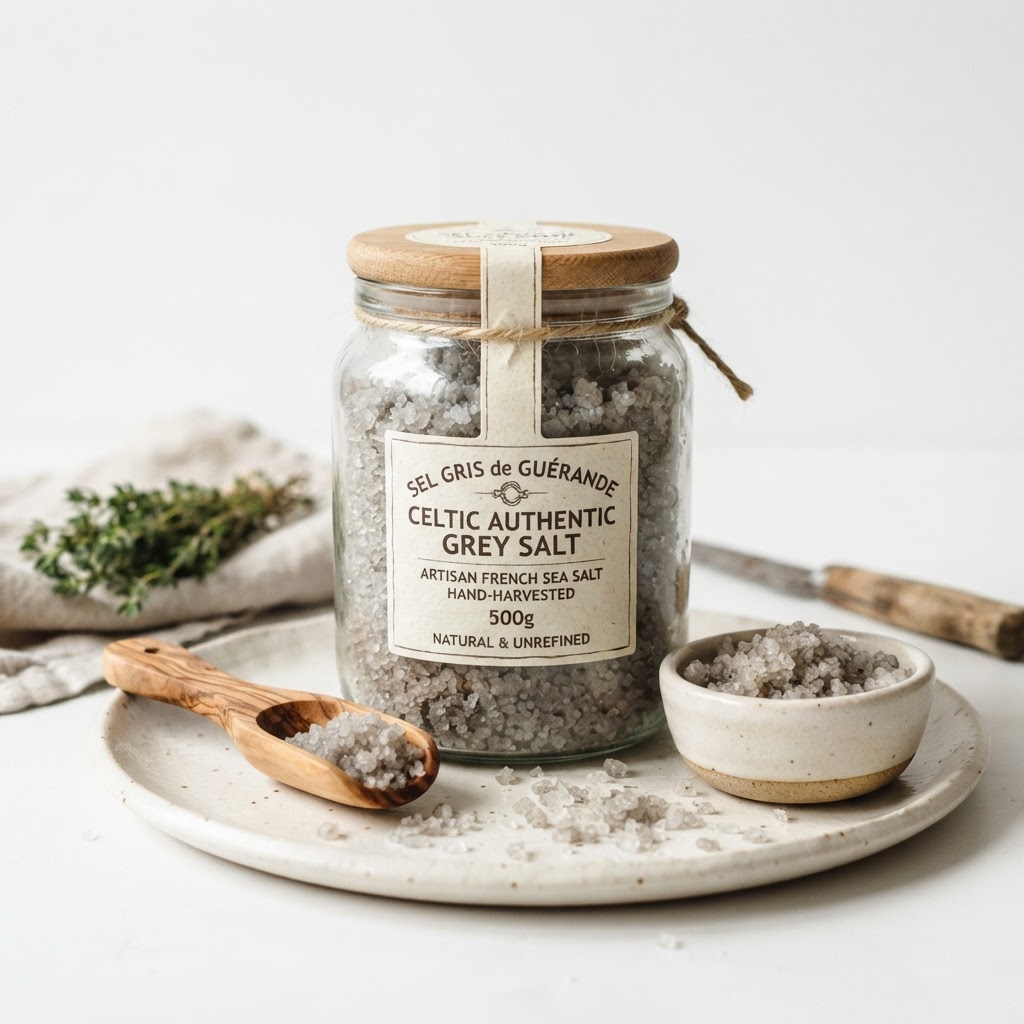
IGP certified · Hand-harvested · 80+ trace minerals
Celtic Grey Salt — 500g / 17.6 oz · $79.99
Order Now — Free Shipping over $75 →The finger test: Rub a small amount between your thumb and index finger. Authentic Celtic salt should feel slightly damp and clump lightly. Dry, free-flowing salt indicates processing. Slimy or excessively wet salt indicates moisture damage in storage.
The taste test: Place a single crystal on your tongue. Authentic Celtic salt has a complex, mineral-rich taste — slightly briny, with subtle undertones beyond simple saltiness. Refined salt tastes sharp and one-dimensional. The complexity comes from the mineral content and cannot be faked.
The dissolution test: Drop a pinch into room-temperature water. Authentic Celtic salt dissolves slowly and completely, leaving no residue. The water may take on a very slight grey tint from mineral particles. Refined salt dissolves instantly with no color. This test shows whether clay minerals are present.
The Price Question — Is Premium Celtic Salt Worth It?
The best Celtic salt costs 20–40x more than table salt. Is it worth the premium? The answer depends on what you value:
If you cook regularly and care about flavor complexity: Yes. The mineral richness and complexity of authentic Celtic salt noticeably improves the taste of finished dishes, particularly in applications where salt is a featured ingredient (brining, curing, seasoning raw elements). Professional chefs include it in their permanent toolkit.
If you practice wellness protocols like morning hydration with salt water: Yes. The full mineral spectrum — particularly the high magnesium content — makes Celtic salt a meaningfully different product from refined salt for electrolyte supplementation.
If you want additive-free, minimally processed food: Yes. Celtic salt is one of the few food products you can buy that has undergone essentially zero industrial processing. The purity comes from origin, not refinement.
If you buy salt occasionally and cost is the primary concern: Probably not. Table salt works fine for basic seasoning and costs a fraction as much. The premium is worth it only if you'll actually experience and benefit from the differences.
Storing the Best Celtic Salt — Keeping It Fresh
Once you have premium Celtic salt, storing it correctly preserves quality:
Container: Ceramic, glass, or untreated wood — not plastic or metal. Plastic can leach compounds; metal can corrode. Loose-fitting lids, not sealed airtight containers — natural moisture needs air circulation.
Environment: Cool, dry, dark place — kitchen pantry, not above the stove. Salt lasts indefinitely, but moisture and heat accelerate degradation.
Humidity management: In damp climates, a small piece of food-grade silica or dry bread in the container helps regulate moisture. Clumping is normal and not spoilage — just break up the clumps before use.
FAQs About the Best Celtic Salt
Is all Celtic salt from Guérande equally good?
Not quite. While all IGP-certified Guérande salt meets minimum standards, quality can vary by paludier family, harvest year, and specific microclimate conditions within the marshes. The best way to find your preferred salt is to buy small quantities from multiple producers and compare. Many people develop strong preferences for specific paludiers or cooperatives after tasting several options.
Can I use the best Celtic salt in baking?
Yes. Fine Celtic salt works 1:1 by weight with table salt in baking recipes. The mineral content actually enhances bread flavor and crust development, which is why many artisan bakeries specifically choose Celtic salt. For baking, weigh rather than measure by volume to account for the density difference between crystal types.
Should I buy coarse or fine for my first Celtic salt?
Start with fine. It is more versatile across cooking applications, dissolves readily, and gives you the best chance to experience the mineral complexity that makes Celtic salt worth the premium. Once you're convinced, buy coarse for specific applications like brining.
How long does Celtic salt last?
Indefinitely if stored properly. Salt does not spoil. The only concern is moisture loss (if stored in a hot place near heat) or excessive moisture gain (if stored in very humid conditions). Check your salt every 6 months and adjust storage conditions if needed.
Is the best Celtic salt better than Himalayan salt?
Different, not objectively better. Celtic salt is higher in magnesium; Himalayan salt is higher in iron. Celtic salt is fresh (current season); Himalayan is fossil (ancient). For cooking, Celtic salt's moisture makes it better for brining. For grinding and visual presentation, Himalayan salt is better. Neither is universally "best" — it depends on your application.
Tested by chefs · Trusted by nutritionists · 30-day guarantee
No additives. No compromise. Pure Guérande salt.
Shop Celtic Salt →