Hand-harvested Guérande salt · Tracked international delivery included
Guide· by Celtic Salt Editorial Team
Celtic Salt vs Himalayan Salt: Which Is the Better Choice?
The Salt Comparison That Actually Matters
Both Celtic grey salt and Himalayan salt are marketed as natural, unrefined alternatives to refined table salt — and both are genuinely better than the industrial white powder in your salt shaker. But they are different products with different origins, different mineral profiles, and different characteristics in the kitchen. Understanding those differences helps you choose the right salt for the right purpose.
The honest summary: Celtic grey salt and Himalayan salt are both valid choices, with distinct strengths. Celtic grey salt wins on culinary complexity and mineral freshness; Himalayan salt offers photogenic colour and is widely available. The choice matters most for finishing, where Celtic grey salt's oceanic mineral complexity is genuinely noticeable.
Origin: Ocean vs Ancient Seabed
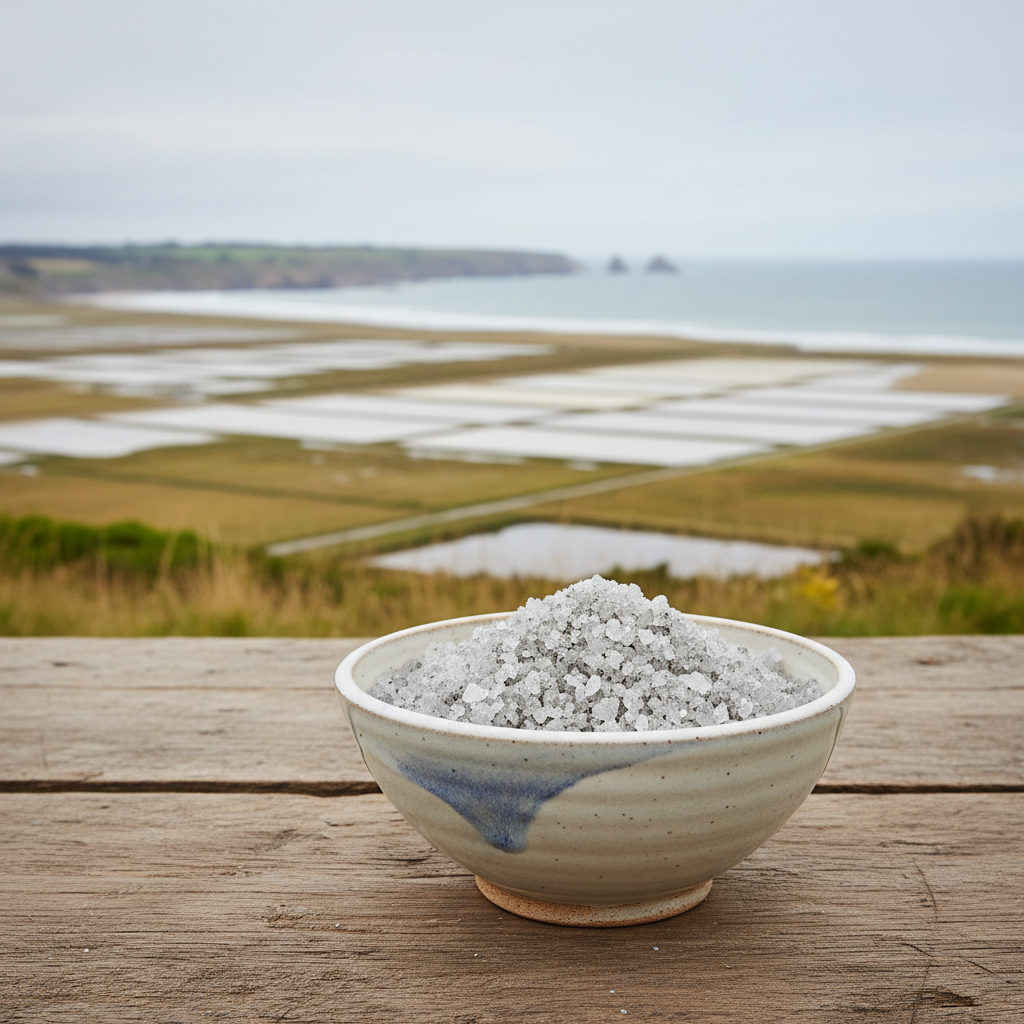
Celtic grey salt comes from living Atlantic seawater — harvested today, by hand, from the clay-lined salt pans of the Guérande marshes in Brittany, France. The minerals in Celtic grey salt are present because they are in today's Atlantic Ocean. IGP certification legally guarantees this origin and the traditional hand-harvesting method.
Himalayan salt comes from ancient underground deposits — primarily the Khewra Salt Mine in Pakistan — formed approximately 250 million years ago when an ancient inland sea evaporated. It is mined rather than evaporated from current seawater. The mineral composition reflects an ancient ocean that no longer exists.
Neither origin is superior — they are simply different. The key distinction is that Celtic grey salt's minerals come from a living, current ocean ecosystem; Himalayan salt's come from a geological deposit formed before modern marine life existed.
Colour: Grey vs Pink
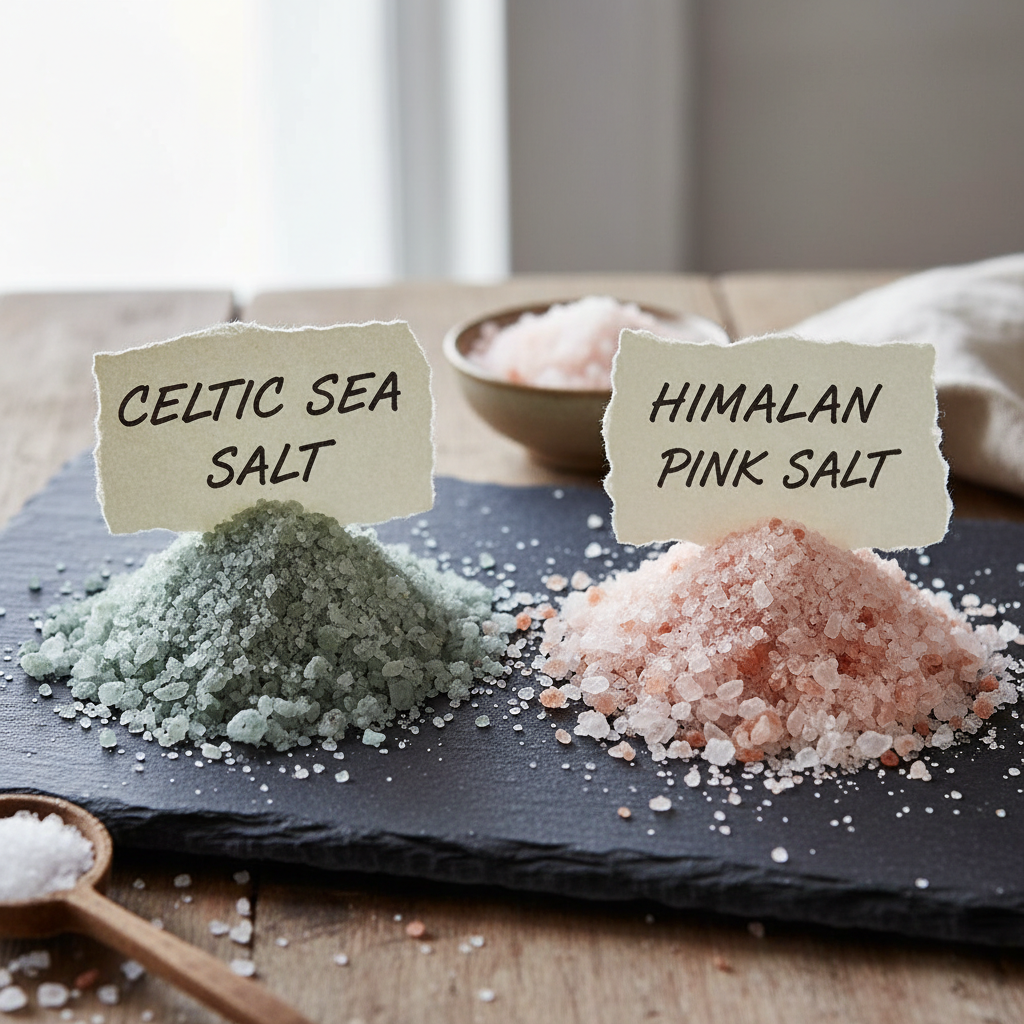
Celtic grey salt is grey — naturally grey from trace clay minerals and iron absorbed during harvesting from clay-lined pools. The grey colour is a quality marker indicating the salt has not been refined. It is moist and slightly irregular in crystal shape.
Himalayan salt is pink — the characteristic colour comes primarily from trace iron oxide (rust) in the geological deposit. The colour varies from pale pink to deep rose. It is dry and typically sold in large, regular crystals that grind well.
AUTHENTIC IGP GUÉRANDE SALT
🧂 AUTHENTIC GUÉRANDE CELTIC SALT
Celtic Authentic Grey Salt – 500g
Hand-harvested · Coarse · Dried · Brittany, France
Both salts contain trace minerals beyond sodium chloride — this is what distinguishes them from refined table salt. However, the mineral concentrations in both are trace-level: the quantities present in a normal daily serving of either salt are very small.
Celtic grey salt's mineral profile reflects current Atlantic seawater — primarily magnesium chloride (which causes the natural moisture), calcium, potassium, and iron, along with over 80 other trace elements from the living marine environment. The magnesium content is particularly notable — it is higher by proportion in Celtic grey salt than in Himalayan salt.
Himalayan salt's pink colour indicates iron oxide presence — and it does contain iron, calcium, potassium, and magnesium — but the concentrations per gram are very small, and the profile differs from a current ocean salt. The 84 mineral claim associated with Himalayan salt is a marketing approximation; the minerals present at measurable quantities are fewer.
Flavour: Where the Real Difference Lies
This is where choosing between them matters most. Celtic grey salt has a complex, rounded, oceanic mineral flavour — a depth that comes from its current-ocean mineral matrix and natural moisture. Used as a finishing salt, it delivers a noticeable, layered complexity that changes how food tastes.
Himalayan salt has a clean, mild, slightly mineral taste — less complex than Celtic grey salt, closer to sea salt in general character, without the pronounced oceanic mineral roundness of Celtic grey. As a finishing salt, it seasons effectively but with less complexity.
For most cooking applications, the flavour difference is subtle. As a finishing salt — where the crystals dissolve gradually on warm food — the difference between Celtic grey salt and Himalayan salt is more pronounced, with Celtic grey salt delivering more flavour complexity per pinch.
Texture and Kitchen Use
Celtic grey salt: Coarse, moist, slightly irregular crystals. Best used from a pinch pot — it does not grind easily because of the natural moisture. Ideal as a finishing salt and for curing, brining, and crust applications.
Himalayan salt: Dry, hard crystals available in large blocks, coarse grind, or fine. Excellent in a salt grinder. Works well for the full range of cooking uses because of its dry consistency. Popular as a serving slab (Himalayan salt blocks for cooking on).
CELTIC GREY SALT — IGP GUÉRANDE
Celtic Grey Salt – Guérande 500g
Hand-harvested · Unrefined · Brittany, France
Ships from France · Worldwide delivery · 30-day return guarantee
FEATURED PRODUCT
Celtic Authentic Grey Salt – 500g
$79.99$114.99SAVE 30%
Hand-harvested · Coarse · Dried · Brittany, France
✓ Ships from France · ✓ 30-day return · ✓ Secure checkout
Sustainability and Supply Chain
Celtic grey salt: Produced in a living, maintained coastal wetland ecosystem — the Guérande marshes — which have been sustainably managed for over 1,000 years. Produced by a small community of artisan paludiers in Brittany. The ecosystem produces a limited annual harvest.
Himalayan salt: Mined from an ancient geological deposit. The Khewra mine has been operating for centuries and the deposit is effectively limitless on any human timescale. Mining practices and supply chain transparency vary by producer.
Sustainability: A Closer Look at Both Salts
The Guérande marshes represent one of the most studied examples of sustainable traditional land management in Europe. The 2,000-hectare salt marsh ecosystem supports not just salt production but a complex wetland habitat — a protected natural area that hosts migratory bird populations, specific plant species adapted to brackish water, and a self-regulating water management system that has been maintained by the paludier community for over a thousand years. The economic viability of traditional salt production is directly tied to the ecological health of the marshes: paludiers have a direct material incentive to maintain the ecosystem they depend on. This alignment of economic and ecological interest is part of why the Guérande landscape has survived intact for so long.
Himalayan salt production has a different ecological profile. The Khewra mine in Pakistan operates as a conventional mining operation. The deposit is effectively inexhaustible on any human timescale, so supply sustainability is not an issue — but the supply chain for Himalayan salt sold in Western markets is long, energy-intensive, and opaque compared to the traceable, short-chain production of Guérande salt.
Making the Final Choice
For a home cook choosing a single finishing salt: authentic Celtic grey salt from Guérande is the more complex, more mineral-forward choice, with a provenance story that is directly traceable, legally protected, and connected to an artisan tradition of genuine cultural significance. The flavour is more interesting. The production story is more verifiable.
For people who want a dry, grindable salt that works in any salt mill: Himalayan salt is practical, consistent, and widely available. For the specific application of a salt grinder or salt mill, its dry crystalline structure is a genuine practical advantage over Celtic grey salt's natural moisture.
Many serious cooks keep both: Himalayan salt in a grinder for tasks requiring dry salt, Celtic grey salt in a pinch pot for finishing. If you can only choose one and finishing quality matters to you, Celtic grey salt wins on complexity and provenance.
Which to Choose
For finishing — where flavour complexity matters most — coarse Celtic grey salt from Guérande has a clear advantage in mineral complexity and oceanic depth. For everyday cooking, grinding, or a dry salt that works in any type of container, Himalayan salt is practical and widely available. The two are complementary rather than competitive: many serious cooks keep both. But if you can only choose one quality finishing salt, Celtic grey salt from Guérande delivers more flavour per pinch.
Ready to taste the difference?
Celtic Authentic Grey Salt – 500g — Hand-harvested · trace minerals whose levels vary by harvest and product · No additives
Ready to experience authentic Celtic salt?
Hand-harvested from the marshes of Guérande, Brittany · IGP certified · trace minerals whose levels vary by harvest and product
Ships from France · 30-day return guarantee
AVAILABLE NOW — LIMITED STOCK
Experience the Authentic Taste of Guérande Celtic Salt
Celtic Authentic Grey Salt – 500g · Hand-harvested · Coarse · Dried · Brittany, France