Hand-harvested Guérande salt · Tracked international delivery included
Guide· by Celtic Salt Editorial Team
What Are The 92 Minerals In Celtic Salt
Food information, not medical advice. Salt remains a significant source of sodium. Trace-mineral levels can vary by harvest and product, and culinary salt should not be used as a treatment or medical electrolyte supplement.
What Are the 92 Minerals in Celtic Salt and Why It Matters in 2026
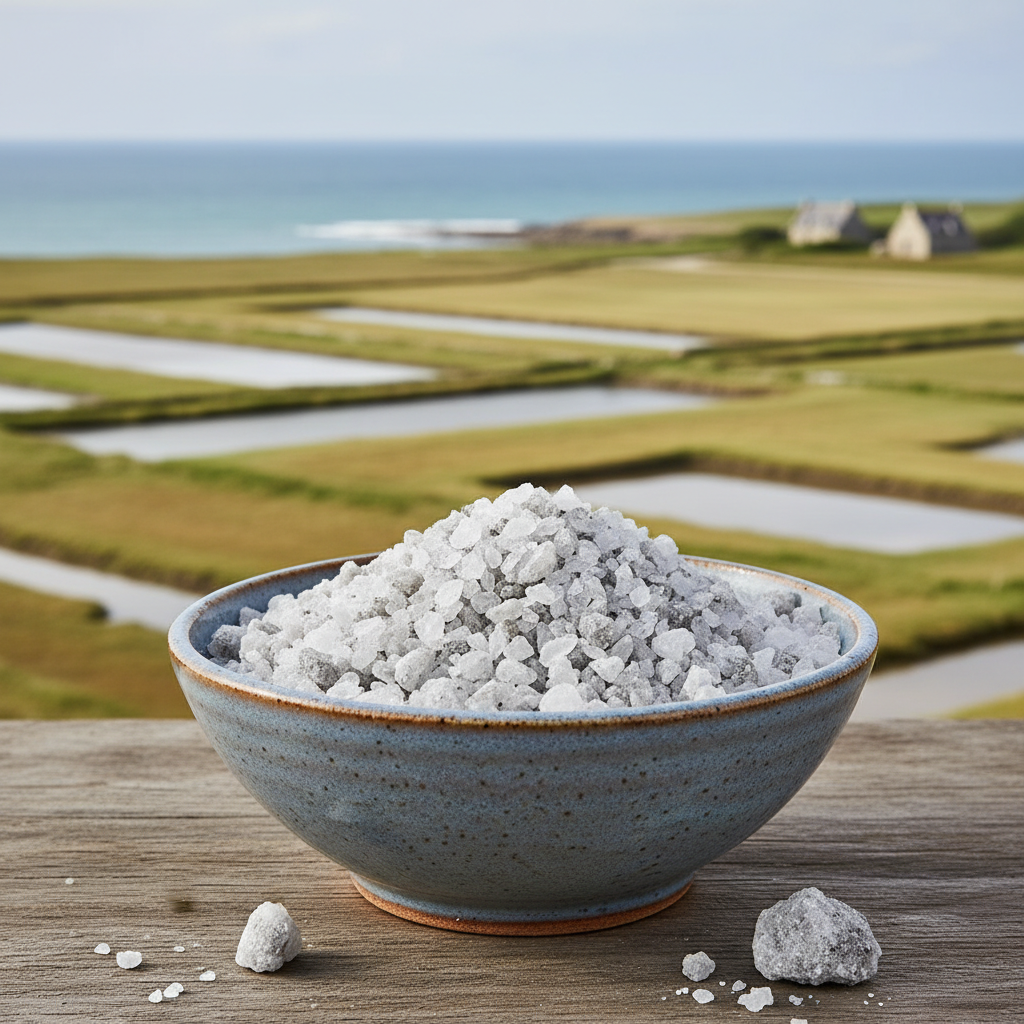
When people first hear that Celtic grey salt from the coastal marshes of Guérande, Brittany contains naturally occurring trace minerals whose levels vary by harvest and product, the reaction is often one of disbelief. How can something as simple as salt — that humble white granule sitting in shakers across the world — contain such an extraordinary spectrum of nutritional complexity? The answer lies not in any industrial process or laboratory enhancement, but in the ancient, living ecosystem from which authentic Celtic grey salt is harvested. The clay-lined salt pans of Brittany have been in continuous use for over a thousand years, and the seawater that flows into them carries with it a mineral profile that mirrors the ocean's own biochemical richness. In 2026, as more people turn away from ultra-processed foods and synthetic supplements toward whole, natural ingredients, understanding exactly what these minerals are and what they contribute to human health has never been more relevant.
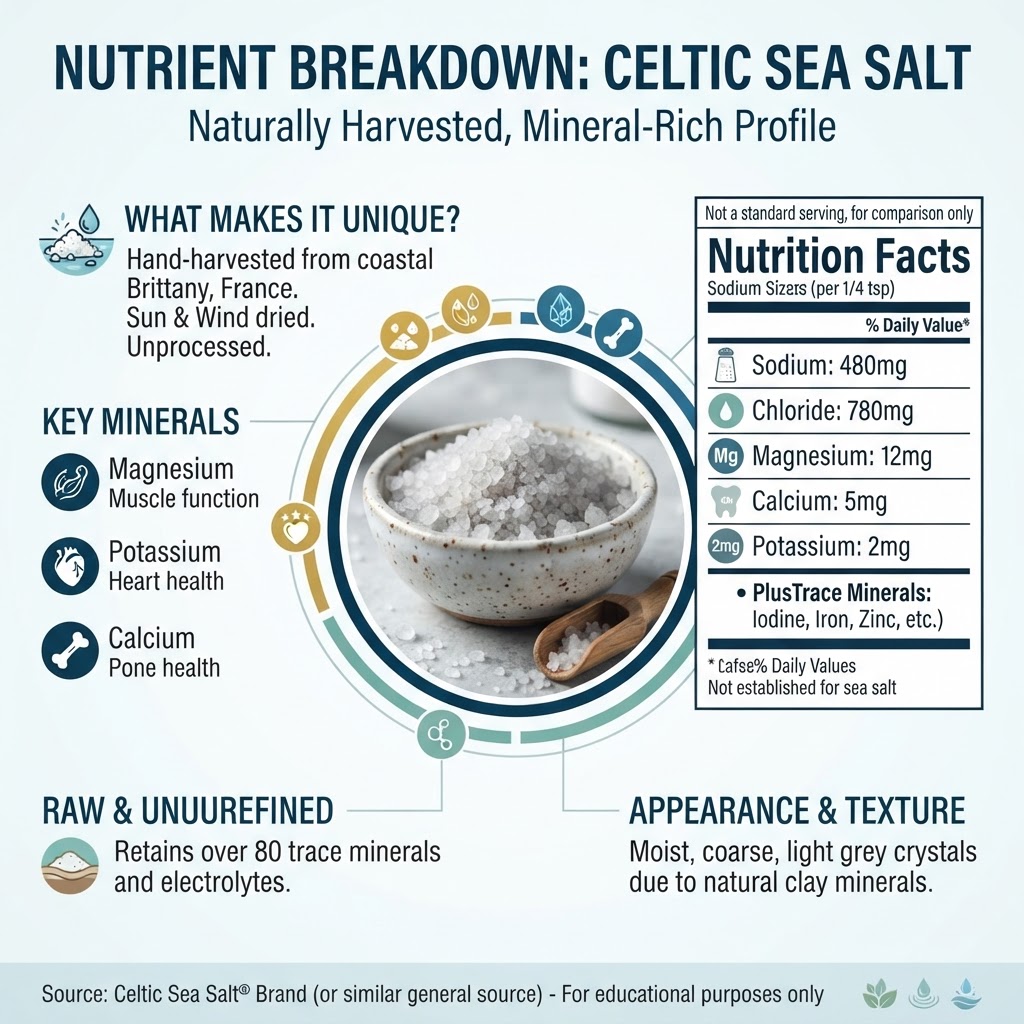
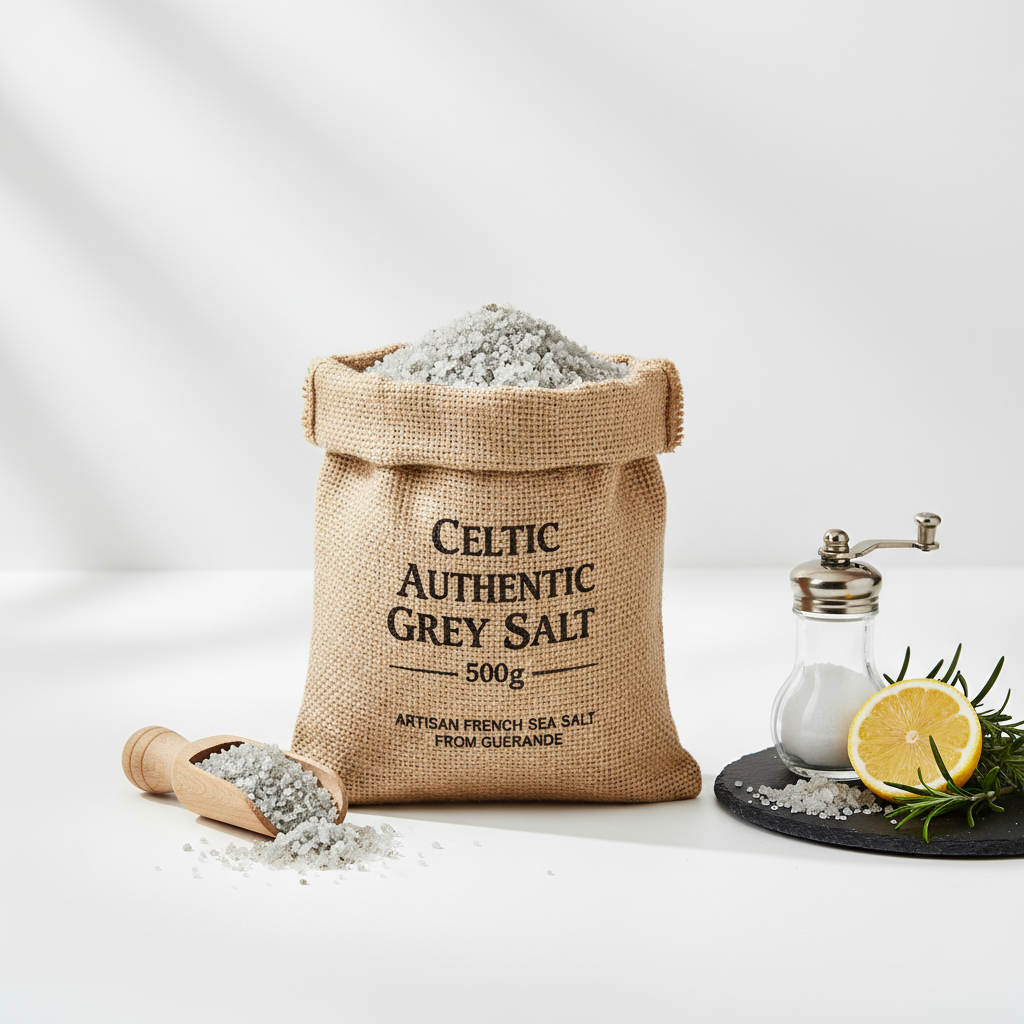
The minerals found in authentic Celtic grey salt are not added artificially. They exist because the salt is harvested with minimal processing, dried naturally by the Breton sun and wind, and never subjected to the bleaching, anti-caking treatments, or high-temperature refining that strip conventional table salt of everything except sodium chloride. Refined table salt typically contains 97 to 99.9 percent sodium chloride with trace amounts of added iodine and anti-caking agents like sodium ferrocyanide or magnesium carbonate. Celtic grey salt, by contrast, retains a broader matrix of naturally occurring compounds including macrominerals like magnesium, calcium, potassium, and sulfur, alongside a wide array of trace minerals including zinc, manganese, iron, copper, silicon, boron, selenium, chromium, and many others. The grey colour itself is a visual confirmation of mineral richness — it comes from the clay of the salt pans, which contributes additional mineral content and acts as a natural filter.
Why does this matter so profoundly in 2026? The context of modern nutrition is one of growing micronutrient deficiency even in wealthy nations. Studies continue to show that despite caloric abundance, large proportions of Western populations are deficient in magnesium, zinc, selenium, and other trace minerals that play critical roles in enzymatic function, immune response, thyroid health, and cardiovascular regulation. The soil in which our food grows has been progressively depleted of trace minerals through decades of industrial agriculture, meaning that even people eating diets rich in vegetables and whole grains may be obtaining fewer minerals than their grandparents did. In this landscape, every small, sustainable source of bioavailable minerals becomes significant. Celtic grey salt is not a supplement in the pharmaceutical sense, but it is a real food ingredient that brings genuine mineral complexity to the table — quite literally — in a form that human physiology has evolved to recognise and absorb.
The tradition of Celtic salt harvesting in Guérande dates back to at least the ninth century, and the methods used today by paludiers — the salt farmers of Brittany — remain remarkably close to those ancient techniques. Seawater is guided through a series of interconnected pools called oeillets, where it progressively concentrates under the influence of sunlight and wind. As the water evaporates, minerals crystallise in a specific sequence determined by their solubility, and the harvested salt carries with it the full spectrum of what the Atlantic Ocean delivered. This is why genuine Celtic grey salt from Guérande is geographically specific: the mineral profile of the Guérande marshes reflects the unique composition of that particular stretch of Breton coastline, its clay substrate, its tidal rhythms, and its microbiome. You cannot replicate this in a factory, and understanding the 92 minerals it contains is really an act of understanding the ocean itself.
The Complete Guide to the 92 Minerals in Celtic Salt
The figure of 92 minerals is often cited in discussions of Celtic grey salt, and it refers to the total number of naturally occurring elements and mineral compounds that have been identified in traditional, unrefined sea salt harvested from Atlantic coastal regions. It is worth understanding this number with some precision. The periodic table of elements contains 118 known elements, of which 94 occur naturally on Earth. Seawater contains measurable quantities of at least 72 to 84 of these elements, and when salt is harvested from seawater with minimal processing, it carries this mineral complexity with it. The number 92 is a commonly cited figure that encompasses both macrominerals present in meaningful quantities and trace elements present in parts per million or even parts per billion. Not all of these are present in pharmacologically significant doses in a daily serving of salt, but their presence as part of a natural mineral matrix is considered by nutrition researchers to have a synergistic value that isolated mineral supplements cannot replicate.
The most abundant mineral in Celtic grey salt after sodium is chloride, which together with sodium forms sodium chloride — the primary salt compound. But the supporting cast is extensive and scientifically interesting. Magnesium is one of the most significant minerals present in Celtic grey salt and is found in considerably higher concentrations than in refined salt. Magnesium is involved in over 300 enzymatic reactions in the human body, including those governing energy production, protein synthesis, muscle and nerve function, blood glucose control, and blood pressure regulation. Authentic Celtic grey salt can be slightly moist to the touch precisely because of its magnesium content: magnesium chloride and magnesium sulfate are hygroscopic compounds that attract and retain moisture from the air. This is not a defect — it is a sign of authentic mineral richness.
Calcium is another significant macomineral present in Celtic grey salt. While dairy products are typically associated with calcium intake, the calcium in salt exists in an ionic form that may be readily absorbed. Calcium works in close partnership with magnesium in regulating nerve impulse transmission and muscle contraction, and the natural ratio in which these two minerals appear in Celtic grey salt reflects the balance found in seawater — a balance that some nutritional researchers believe is more physiologically harmonious than synthetic calcium supplements taken in isolation. Potassium is also present and plays a critical role in maintaining healthy blood pressure by counteracting the effects of sodium on vascular tone. The natural presence of potassium in Celtic grey salt means that it provides a more balanced electrolyte profile than pure sodium chloride.
Sulfur appears in Celtic grey salt as sulfate compounds and is important for the synthesis of amino acids like methionine and cysteine, the production of glutathione (one of the body's primary antioxidants), and the maintenance of connective tissue. Silicon is present as silicates absorbed partly from the clay substrate of the salt pans and is associated with bone mineralisation and the health of connective tissue. Iron in its natural ionic form contributes to the faint grey-brown tones sometimes visible in individual crystals and is essential for haemoglobin production. Zinc supports immune function, wound healing, DNA synthesis, and sensory acuity. Manganese is a cofactor for antioxidant enzymes including superoxide dismutase. Copper assists in iron metabolism and the production of connective tissue proteins. Selenium, though present in minute quantities, is a powerful antioxidant micromineral associated with thyroid function and immune resilience. Chromium supports insulin sensitivity and glucose metabolism. Boron influences bone health and hormonal balance. Iodine occurs naturally in Celtic grey salt, unlike the synthetic iodine added to commercial table salt — though concentrations vary and should not be relied upon as a sole iodine source.
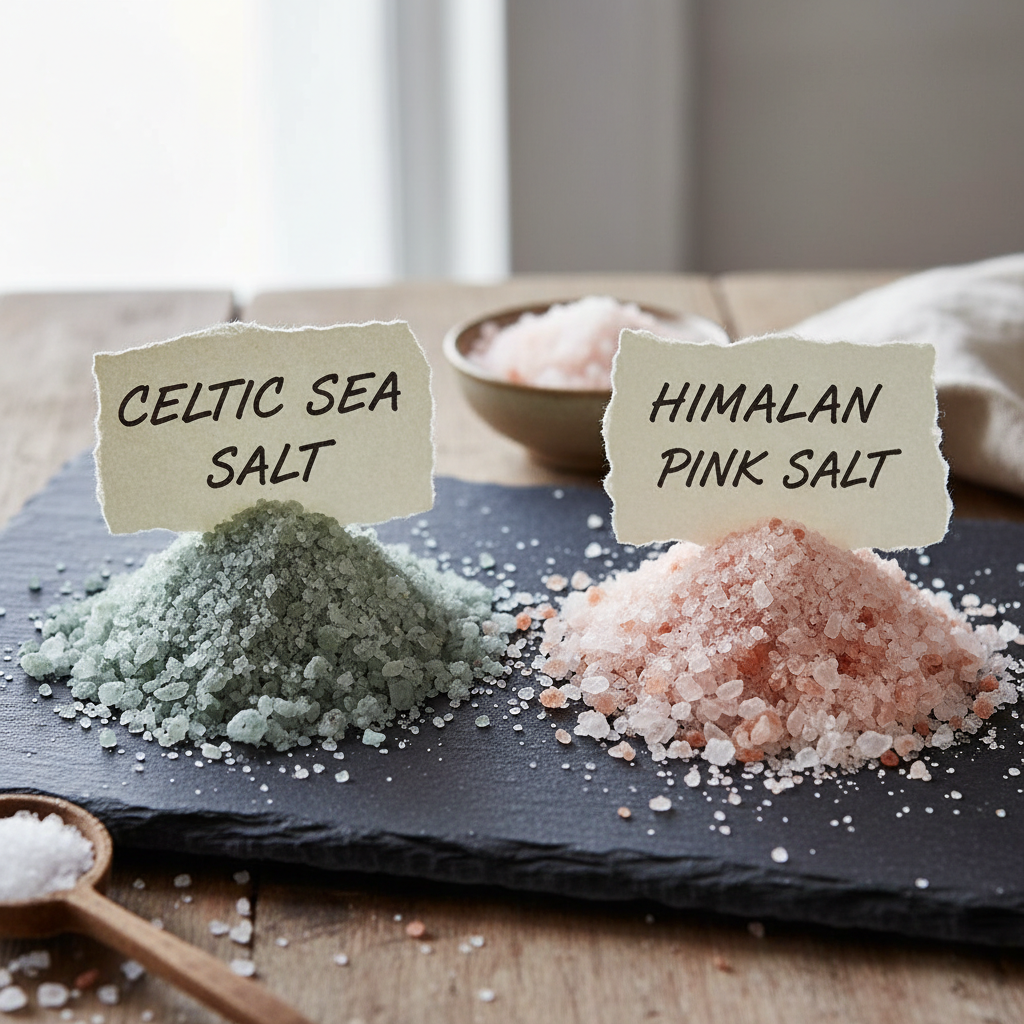
Other trace elements identified in authentic unrefined Atlantic sea salt include fluoride, phosphorus, strontium, rubidium, lithium, molybdenum, vanadium, cobalt, nickel, barium, titanium, and various rare earth elements in ultra-trace amounts. The presence of these elements at extremely low concentrations is not incidental noise — nutritional science increasingly recognises that ultra-trace minerals participate in enzymatic and biochemical processes that were not fully understood even a decade ago. The concept of a mineral matrix — where the biological effect of a complex mixture of minerals exceeds what would be predicted from the sum of its individual components — is gaining scientific traction and provides a compelling framework for understanding why traditional, minimally processed salts like Celtic grey salt may offer nutritional advantages beyond their sodium chloride content alone. For a deeper exploration of how Celtic salt compares to other natural salts, visit our detailed comparison of Celtic salt and Himalayan salt.
Health and Culinary Benefits
It is important to begin any discussion of the health benefits of Celtic grey salt by acknowledging what responsible nutrition communication requires: salt is not a medicine, and no food ingredient should be promoted as a treatment or cure for any medical condition. With that foundational clarity established, it is entirely accurate and scientifically defensible to say that choosing a minimally processed, mineral-rich salt over a highly refined one is a meaningful nutritional choice — in the same way that choosing whole grain bread over white bread or cold-pressed olive oil over refined vegetable oil is a meaningful choice. The difference is not pharmacological, but it is real, and it accumulates over a lifetime of cooking and eating.
The magnesium content of Celtic grey salt is perhaps its most nutritionally significant feature from a population health perspective. Magnesium deficiency is extraordinarily common in modern populations — estimates suggest that anywhere from 50 to 80 percent of adults in Western countries do not meet the recommended daily intake of this critical mineral. The consequences of chronic low-grade magnesium deficiency are wide-ranging and include increased susceptibility to stress, disrupted sleep architecture, impaired glucose metabolism, heightened cardiovascular risk, and reduced bone density. While the magnesium in a daily serving of Celtic grey salt is not sufficient to correct a clinical deficiency on its own, it contributes to overall intake and does so in a natural ionic form that the body is well equipped to absorb. Unlike magnesium supplements, which must be taken separately and may cause gastrointestinal side effects at high doses, magnesium from food and traditional salt sources is absorbed gradually as part of eating.
From a culinary perspective, the mineral complexity of Celtic grey salt translates directly into flavour depth and versatility. Professional chefs who work with Celtic grey salt consistently describe a broader, more nuanced flavour profile compared to refined salt — a flavour that begins with the characteristic salinity expected of any salt but then develops secondary notes of mineral earthiness and a clean, oceanic finish. This complexity arises because the trace minerals in Celtic grey salt interact with the volatile flavour compounds in food during cooking and at the table, creating reactions that enhance the perception of umami, round out bitterness, and extend the temporal arc of flavour on the palate. The slightly moist texture of coarse Celtic grey salt also means that it dissolves at a different rate than dry, fine-grained table salt, allowing for more controlled seasoning and a more gradual release of flavour.