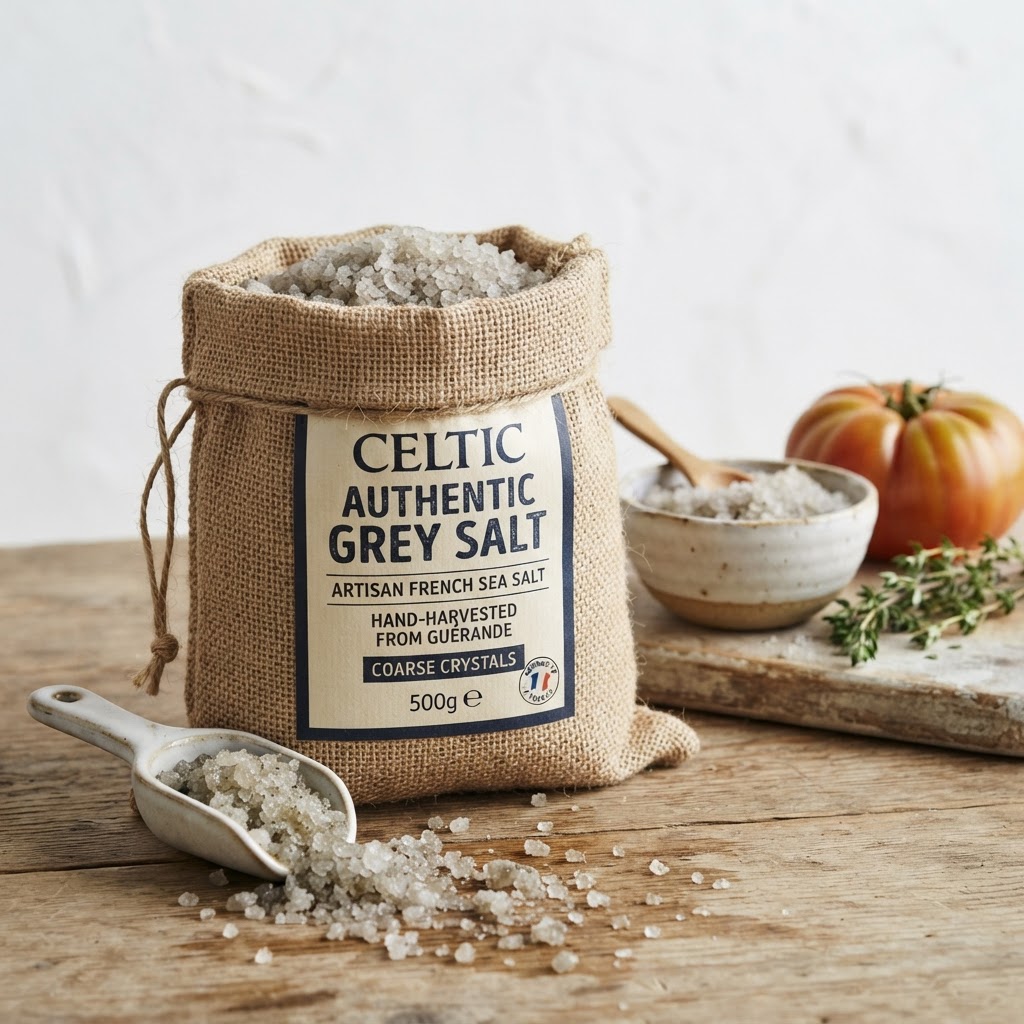
Understanding the Origins: Celtic Salt vs. Generic Sea Salt
When you walk down the spice aisle, the term 'sea salt' is often used as a catch-all category, yet not all salts are created equal. To truly understand the difference between standard sea salt and the legendary harvest from the French coast, we must look at the geological and traditional methods of extraction. Generic sea salt is often harvested through rapid evaporation methods or large-scale industrial pans, which strip away much of the salt's inherent character. In contrast, Celtic salt, specifically that which carries the IGP (Indication Géographique Protégée) designation from the Guérande region, represents a centuries-old tradition.
The Guérande marshes are a unique ecosystem where Atlantic seawater is channeled through a complex series of clay-bottomed basins. This clay is not merely a container; it is an active participant in the salt's transformation. As the water evaporates under the sun and wind, the salt crystallizes in direct contact with the mineral-rich grey clay. This process imparts the signature grey hue and complex flavor profile that distinguishes authentic Celtic salt from processed alternatives. For those curious about the science behind these differences, our guide on What Salt Has The Most Minerals explains why the traditional harvesting method is vital for retaining the integrity of the natural elements present in the water.
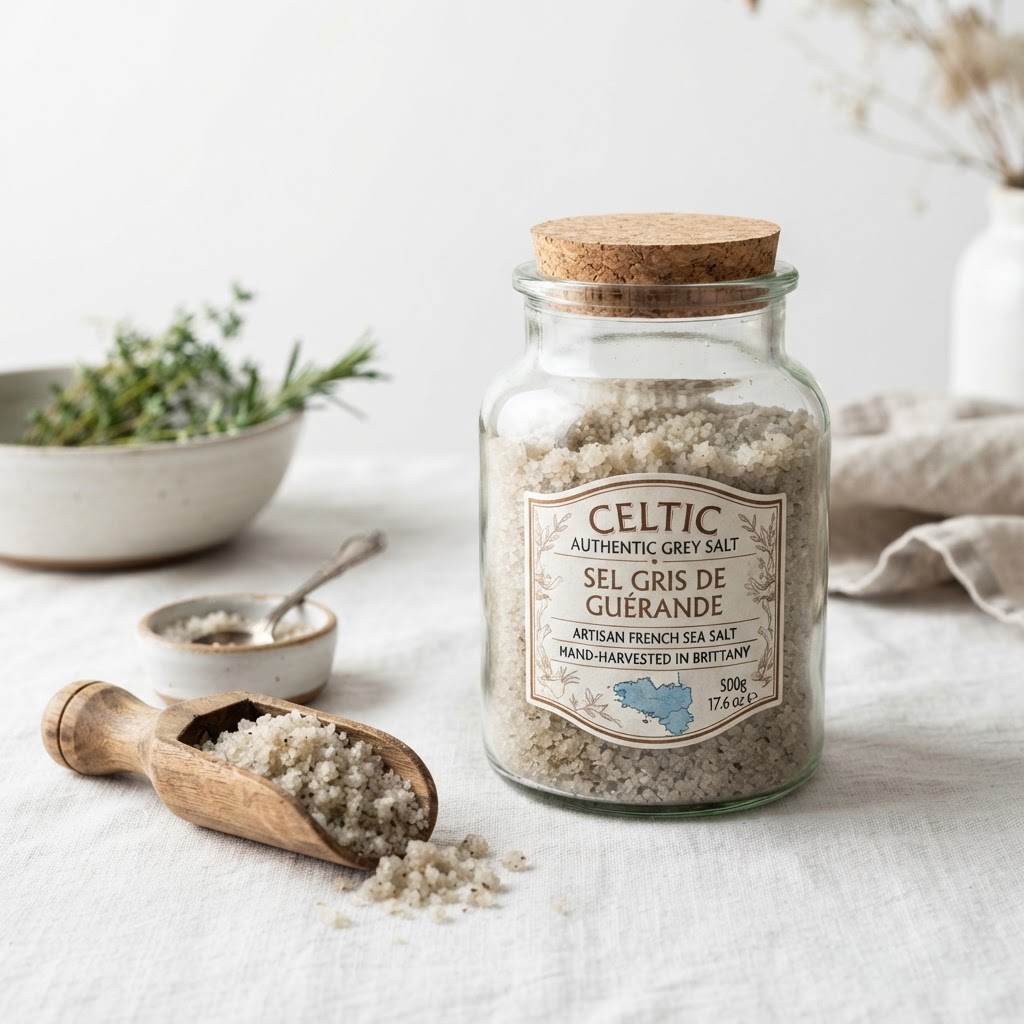
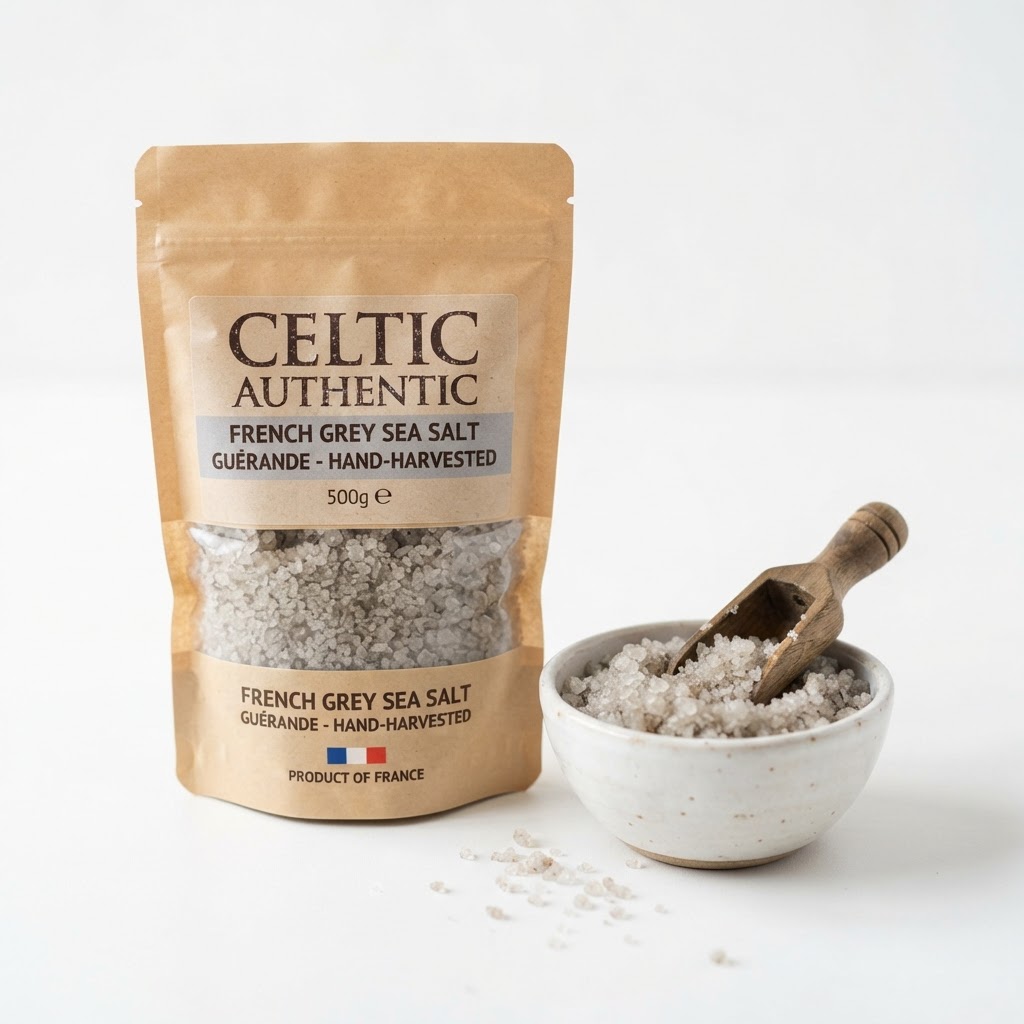
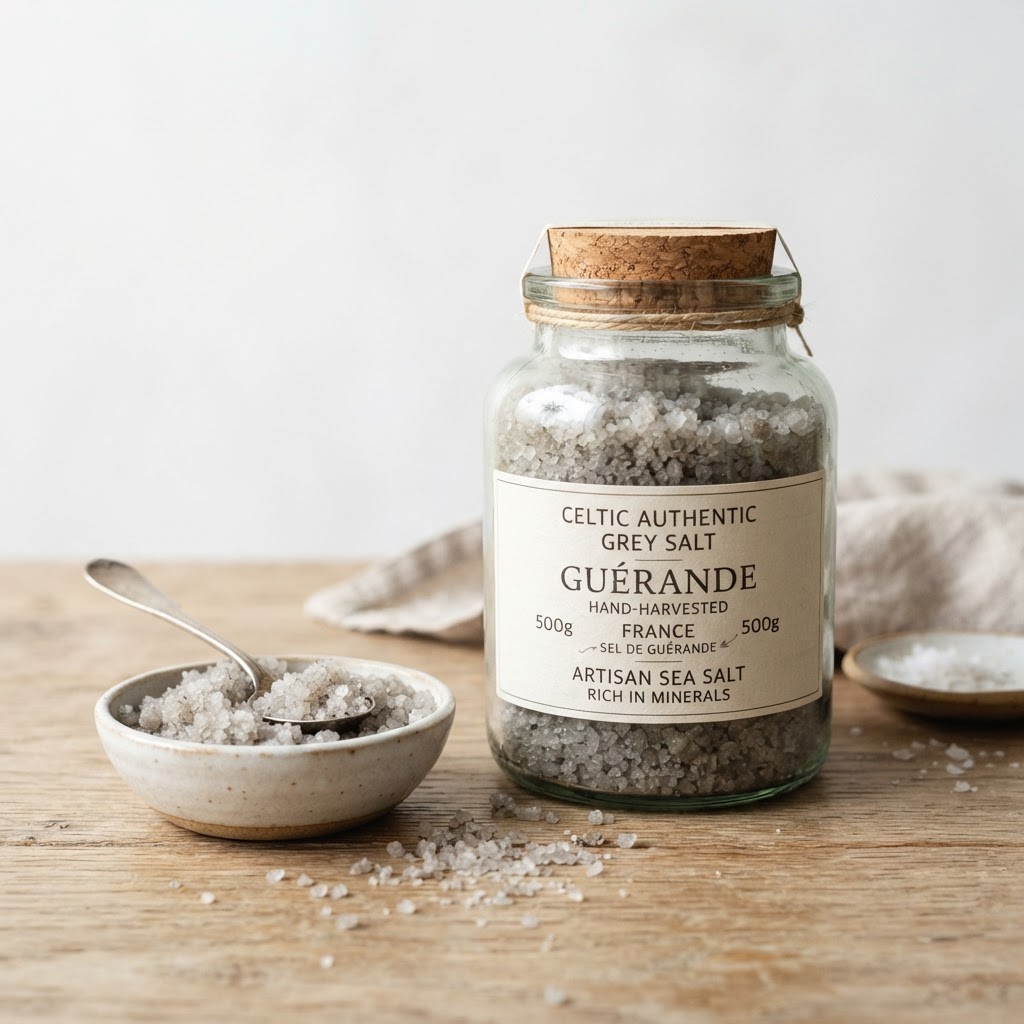
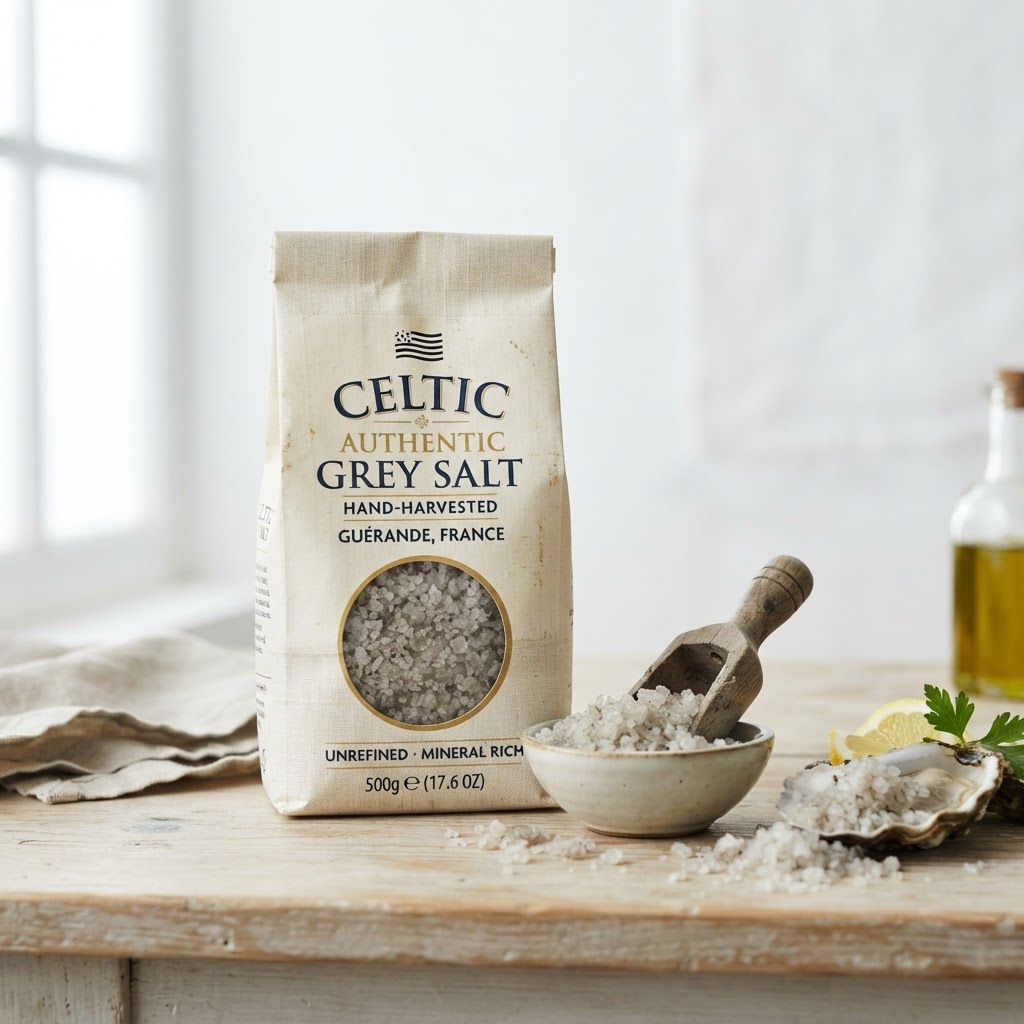
Unlike refined table salts, which are bleached and stripped of moisture, Celtic salt remains slightly damp to the touch. This moisture is a hallmark of authenticity. When you hold a pinch of Celtic Authentic Grey Salt – 500g ($79.99) in your hand, you are touching a product that has been filtered through nature rather than a factory machine. By choosing salt that respects these traditional methods, you are not just seasoning food; you are honoring a legacy of craftsmanship that has survived for over two thousand years.
The Mineral Composition and Sensory Profile
The primary reason culinary professionals and home cooks seek out Celtic salt is its nuanced flavor and chemical composition. Because standard sea salts are often washed or processed, they tend to offer a 'sharp' or one-dimensional salinity that can overwhelm a dish. Celtic salt, however, offers a complex, savory, and almost sweet finish. This depth of flavor is attributed to the presence of trace minerals such as magnesium, calcium, and potassium, which are naturally locked into the crystals during the crystallization process in the clay marshes.
When you conduct a side-by-side taste test, the difference is immediate. Standard sea salt hits the palate quickly and leaves a lingering, harsh saltiness. The Celtic salt experience is more measured; it blooms on the tongue and enhances the underlying notes of the ingredients it touches. This is why it is widely regarded as a 'finishing' salt as much as a cooking ingredient. If you want to dive deeper into the history of this harvest, our article on Celticseasalt explores the fascinating geographical requirements that make this specific salt so sought after across the globe.
Beyond taste, the properties of this salt reflect its unprocessed nature. The grey tint is a visual indicator of its contact with the mineral-dense clay beds of Guérande. This makes the product physically distinct from the stark white, refined crystals found in industrial processing plants. When utilizing our Celtic Authentic Grey Salt – 500g ($79.99), you are benefiting from a product that is harvested by hand by salt workers known as 'paludiers.' Their dedication ensures that the salt remains in its raw, natural state, maintaining its moisture content and original mineral balance, which is vital for those who value authenticity in their kitchen and wellness routines.
| Feature | Celtic Salt (IGP Guérande) | Standard Sea Salt |
|---|---|---|
| Harvesting Method | Hand-raked in clay-lined basins | Industrial evaporation/mechanical |
| Color | Natural grey/light silver | White (often processed/bleached) |
| Mineral Content | Retains trace minerals from clay/sea | Often stripped during processing |
| Moisture | Naturally damp | Dry and free-flowing |
| Flavor | Complex, savory, balanced | One-dimensional, sharp |
✨ Try it yourself: Celtic Authentic Grey Salt – 500g — $79.99 with free shipping.
How to Use Celtic Salt: A Step-by-Step Culinary Guide
Integrating high-quality salt into your culinary repertoire requires a subtle touch. Because Celtic salt is more potent in its flavor profile, you don't need to use as much as you would with standard table salt. Here is a step-by-step approach to mastering the use of Celtic salt in your daily cooking.
Step 1: Preparation. Because the salt is naturally damp, it is best stored in a ceramic or glass salt cellar rather than a mechanical shaker. Keep it in a cool, dry place to prevent clumping. If you are interested in learning more about the specific nuances of these types of salts, check out our resource on Celttic Salt.
Step 2: Seasoning during cooking. When simmering soups, stews, or roasting vegetables, add the salt midway through the process. This allows the minerals to integrate with the heat and moisture of your ingredients, creating a more cohesive flavor profile. Remember, a little goes a long way.
Step 3: The finishing touch. This is where Celtic Authentic Grey Salt – 500g ($79.99) truly shines. For grilled steaks, heirloom tomatoes, or even salted caramel desserts, take a small pinch between your fingers and distribute it evenly over the surface just before serving. The slight crunch and the release of minerals add a professional-grade finish to your dishes.
Step 4: Hydration and wellness rituals. Many of our customers choose to add a tiny pinch to their morning water to assist with hydration. Ensure the salt is fully dissolved before drinking. This method highlights the purity of the salt and provides a refreshing start to your day.
Choosing Quality: What to Look For
In a saturated market, consumers must be vigilant about the origins of the salt they purchase. Not all products labeled as 'Celtic' are genuine. The IGP Guérande label is the most important indicator. IGP (Indication Géographique Protégée) is a European certification that guarantees the salt has been harvested according to traditional, sustainable methods in the specific, protected marshes of Guérande, France.
When selecting your salt, look for a greyish color and a texture that feels slightly moist. If a product labeled as Celtic salt is perfectly white, bone-dry, and uniform in size, it has likely been refined or processed in an industrial facility. Authentic Celtic salt should have varying grain sizes and a distinct, earthy scent derived from the sea and the clay soil. At celtic-salt.com, we pride ourselves on providing only the highest quality, authentic salt. Choosing our Celtic Authentic Grey Salt – 500g ($79.99) ensures you are supporting sustainable harvesting practices that protect the Guérande region for future generations.
Another factor to consider is the packaging. High-quality salt is sensitive to moisture and light. We package our salt to preserve its natural state. When you purchase from us, you aren't just buying a seasoning; you are investing in a product that has been treated with the respect it deserves from the moment it was pulled from the clay basin to the moment it reaches your doorstep.
⭐ IGP Certified — Guérande, France
Celtic Authentic Grey Salt – 500g
Hand-harvested · 80+ trace minerals · No additives
$79.99 $114.99
Free shipping — no minimum order
🛒 Get Your Bag — Free ShippingShips from France · Worldwide delivery · 30-day return guarantee
Common Mistakes to Avoid
Even seasoned chefs can make mistakes when switching to high-end salt. The most common error is over-salting. Because you are used to the 'sharp' hit of processed white salt, you may be tempted to use the same volume of Celtic salt. Resist this urge. Start with half the amount you usually use and taste as you go.
Another mistake is using salt grinders that are meant for dry, brittle salts. Because our Celtic salt is naturally damp, it can clog traditional spice mills. Instead, we recommend using a small wooden spoon or simply pinching the salt from an open cellar. This allows you to control the amount accurately and maintains the texture of the crystals.
Finally, avoid storing your salt near high-heat areas like the stove or in areas with high humidity. While the salt is stable, prolonged exposure to heat can alter the mineral integrity, and excessive moisture can cause the salt to become too wet. Keep your Celtic Authentic Grey Salt – 500g ($79.99) in a dedicated, breathable container to maintain its quality over time.
Use Cases by Context: Culinary, Wellness, and Gifting
The versatility of Celtic salt makes it a staple in any lifestyle. In the kitchen, it is the secret weapon for chefs looking to elevate simple ingredients. Whether you are using it to cure fish, rub onto a roast chicken, or sprinkle onto a fresh salad, the mineral complexity enhances the natural flavors of the food. It is especially effective in bread baking, where the trace minerals can contribute to a better crust texture.
Beyond the kitchen, many individuals integrate the salt into their wellness routines. By adding a small pinch to your electrolyte-rich water, you are incorporating a natural, unprocessed mineral source into your daily hydration. It is an excellent way to maintain a connection to nature through your dietary habits.
Finally, Celtic salt makes a sophisticated and thoughtful gift. In an era where many people are looking to 'declutter' and focus on quality over quantity, a premium artisanal product like Celtic Authentic Grey Salt – 500g ($79.99) is a perfect choice for housewarmings, weddings, or as a host gift. It speaks to a refined taste and an appreciation for traditional craftsmanship. When you gift this salt, you are gifting a piece of French heritage that will enhance the recipient's daily life for months to come.
What is the difference between Celtic salt and table salt?
Table salt is highly refined, stripped of minerals, and often contains anti-caking agents. Celtic salt is hand-harvested, retains its natural moisture, and contains a complex balance of trace minerals from the French clay basins.
Is Celtic salt considered a 'natural' product?
Yes, authentic Celtic salt from Guérande is a natural product because it is harvested through traditional solar and wind evaporation, with minimal intervention, keeping the mineral content intact.
How should I store my Celtic salt?
Because of its natural moisture, it is best stored in a ceramic, glass, or wooden container in a cool, dry place. Avoid using plastic or metal grinders, as the dampness of the salt can affect these materials over time.
Can I use Celtic salt for baking?
Absolutely. The minerals in Celtic salt can interact beautifully with yeast and flour, often improving the crust development and overall depth of flavor in artisan breads and savory pastries.
Why does the price of Celtic salt differ from regular salt?
The price reflects the labor-intensive, hand-harvesting process, the protected status of the IGP Guérande region, and the premium quality of a product that has not been mass-produced in an industrial facility.
Ready to taste the difference?
Celtic Authentic Grey Salt – 500g — Hand-harvested · 80+ trace minerals · No additives
🛒 Get Your Bag — Free ShippingFree shipping · 30-day returns · Ships from France