What Is Celtic Salt vs Table Salt: An Honest Look at the Differences and Why It Matters in 2026
If you have ever stood in the kitchen aisle staring at a shelf full of salt options, you are not alone. In 2026, the conversation around which salt to choose has never been more relevant, more nuanced, or more hotly debated. At one end of the spectrum sits the humble white cylinder of table salt — affordable, familiar, and ubiquitous. At the other end rests a bag of coarse, grey, slightly moist crystals harvested by hand from the ancient salt marshes of Guérande, Brittany, France. These are not the same product. They are not even close relatives in any meaningful culinary or nutritional sense, and understanding the gap between them matters more than most people realise — not just for their cooking, but potentially for their long-term wellbeing. This article is an honest, in-depth examination of both salts: where they come from, what they contain, how they behave in the kitchen, and why so many people who make the switch from table salt to authentic Celtic grey salt never look back.
The modern food landscape has made it remarkably easy to confuse "salt" as a singular commodity. Most households grew up with iodised table salt as the default, and for decades it was simply what salt meant. It was poured into shakers, measured into baking recipes, and added to boiling pasta water without a second thought. But as awareness around processed food, mineral depletion in diets, and the importance of trace nutrients has grown, more home cooks, professional chefs, nutritionists, and health-conscious consumers have begun asking harder questions about what exactly is in their salt — and what has been taken out of it. Celtic salt, in particular, has surged in popularity precisely because it answers those questions in a compelling and transparent way. Its mineral profile, its unique grey colour, its slightly damp texture, and its complex, round flavour are not marketing gimmicks. They are the natural, unprocessed characteristics of a salt that has been harvested the same way for centuries along the Atlantic coast of France.
What makes this comparison especially important in 2026 is the growing body of consumer awareness around ultra-processed food. Salt is one of the most heavily processed ingredients in the modern diet, and table salt is arguably the most extreme example of that processing applied to a naturally mineral-rich substance. When you process salt to 99.9% sodium chloride, you are not simply purifying it — you are stripping away dozens of naturally occurring minerals that the human body has co-evolved with for millennia. Celtic salt, by contrast, retains those minerals because it undergoes minimal processing. It is raked by hand, dried naturally in the sun and wind, and packaged without additives. The result is a fundamentally different product — one that delivers not just sodium and chloride, but magnesium, calcium, potassium, zinc, iron, and over 80 additional trace minerals in bioavailable forms. This is not a minor distinction. It is the central difference between a processed ingredient and a whole food, and it is why celtic-salt.com exists: to make authentic, traditionally harvested Celtic grey salt from Guérande accessible to households that care about what they put into their food and their bodies.
Before we dive deep into the specifics, it is worth acknowledging that this article sets out to be genuinely honest. Celtic salt has real advantages over table salt, and we will explore all of them in detail. But we will also be candid about context, quantity, and the nuances that matter. Salt, in any form, is a nutrient that should be used thoughtfully. The goal of this comparison is not to demonise table salt or to oversell Celtic salt as a miracle product. It is to give you a clear, accurate, evidence-based picture of what differentiates these two very different salts — so you can make an informed choice for yourself, your family, and your kitchen. Whether you are a seasoned cook exploring artisan ingredients or a newcomer simply wondering if the switch is worth it, you will find real, useful answers here.
The Complete Guide to Celtic Salt vs Table Salt: An Honest Look at the Differences
To understand the full difference between Celtic salt and table salt, you need to start at the source. Table salt typically originates from underground salt deposits — ancient dried seabeds — or is produced through the evaporation of salt brine. The raw salt extracted from these sources is then subjected to an industrial refining process that includes washing, bleaching, and high-heat drying. Anti-caking agents such as sodium ferrocyanide, magnesium carbonate, or silicon dioxide are added to keep the grains free-flowing. In many countries, iodine is also added as a public health measure to prevent iodine deficiency disorders. The end result is a salt that is extremely consistent, extremely white, and extremely high in pure sodium chloride — typically between 97% and 99.9% NaCl by weight. Every mineral, every trace element, every bit of natural colour and moisture has been systematically removed or destroyed in the refining process.
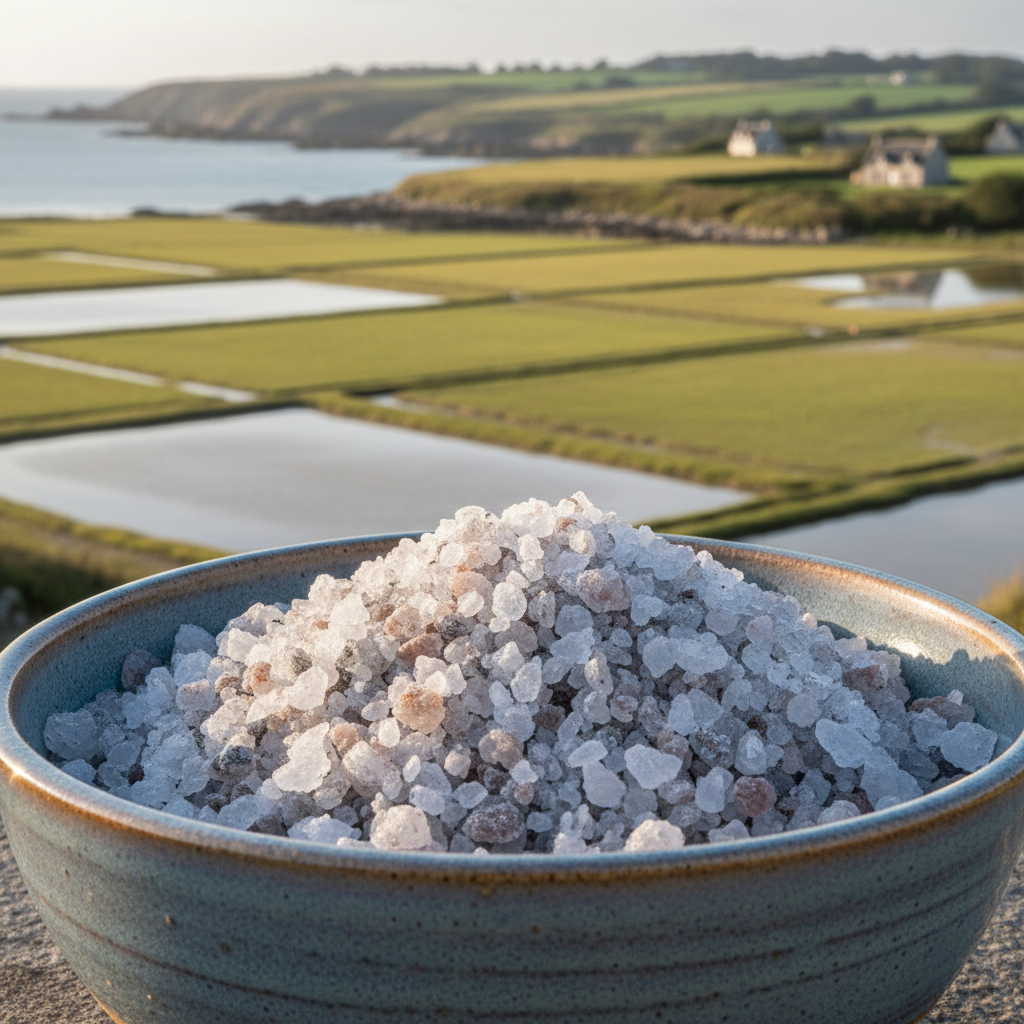
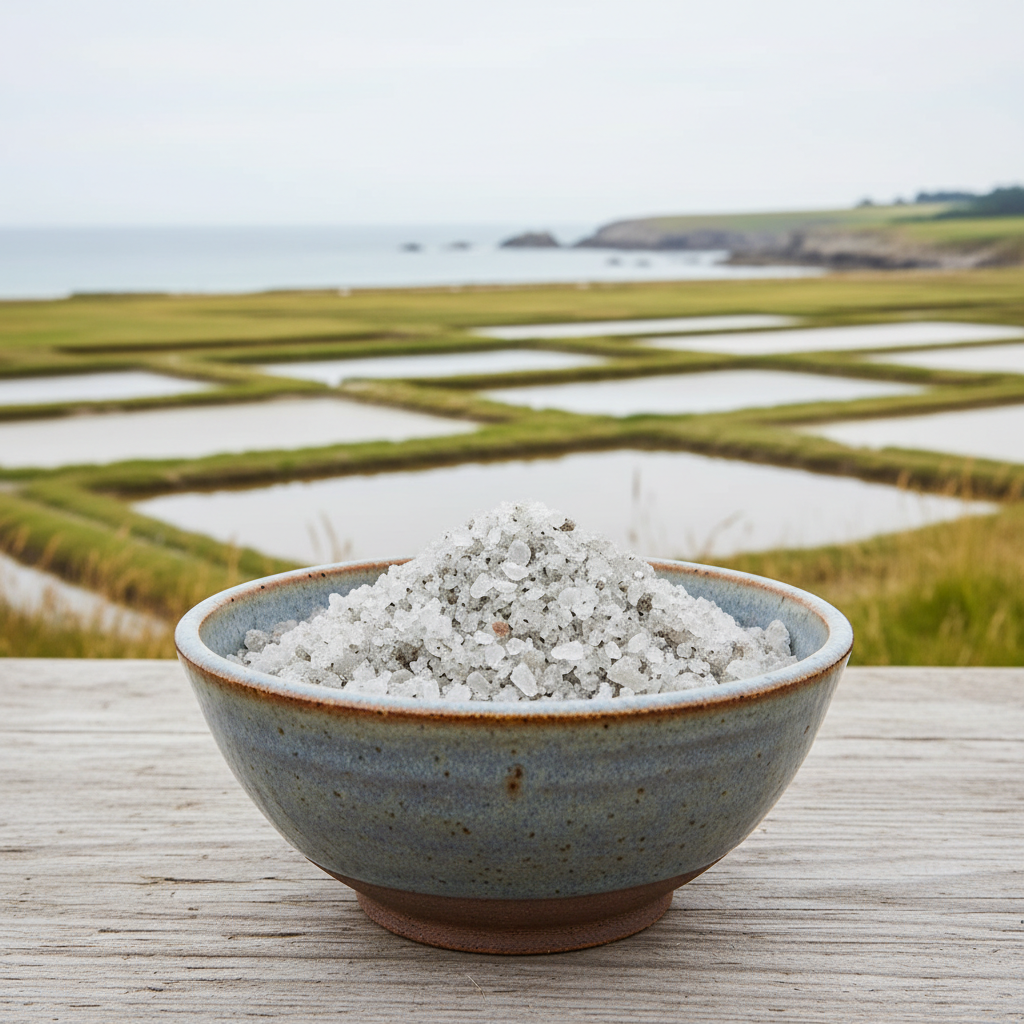
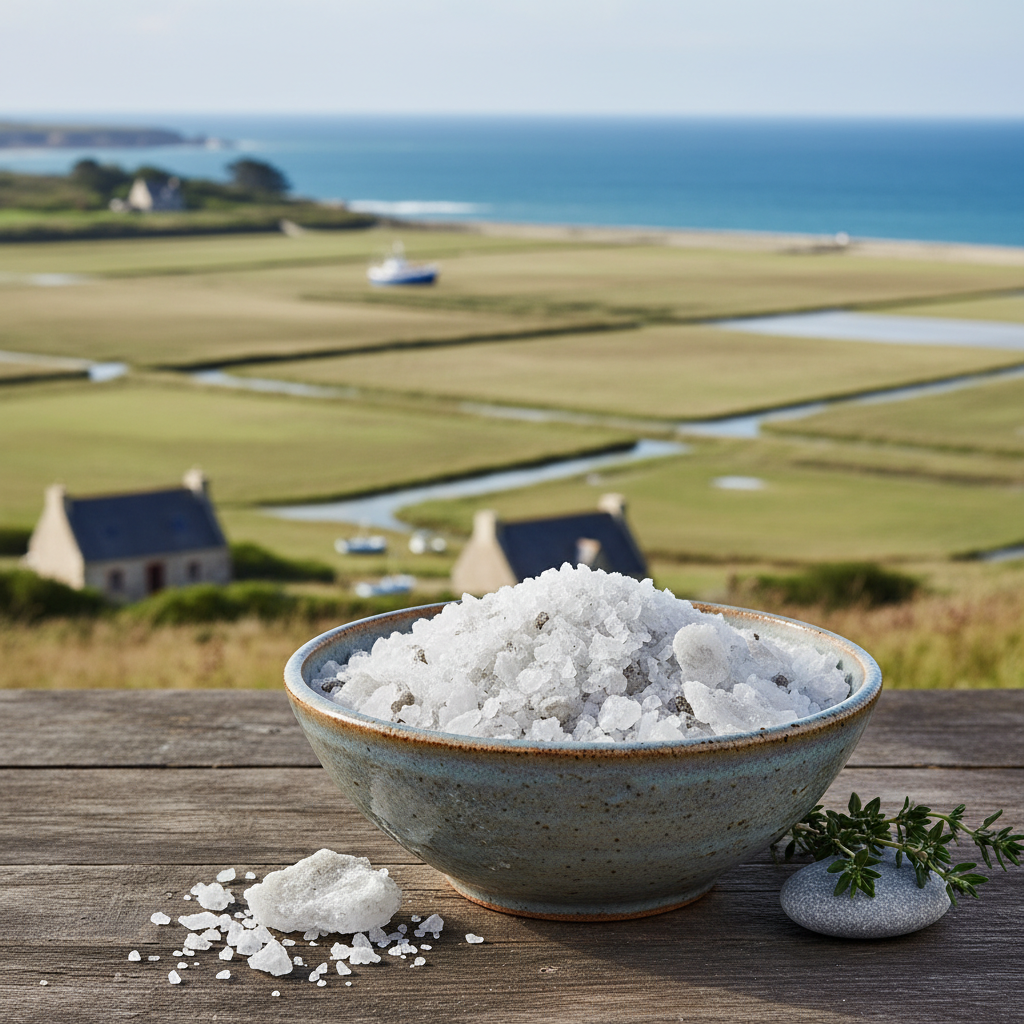
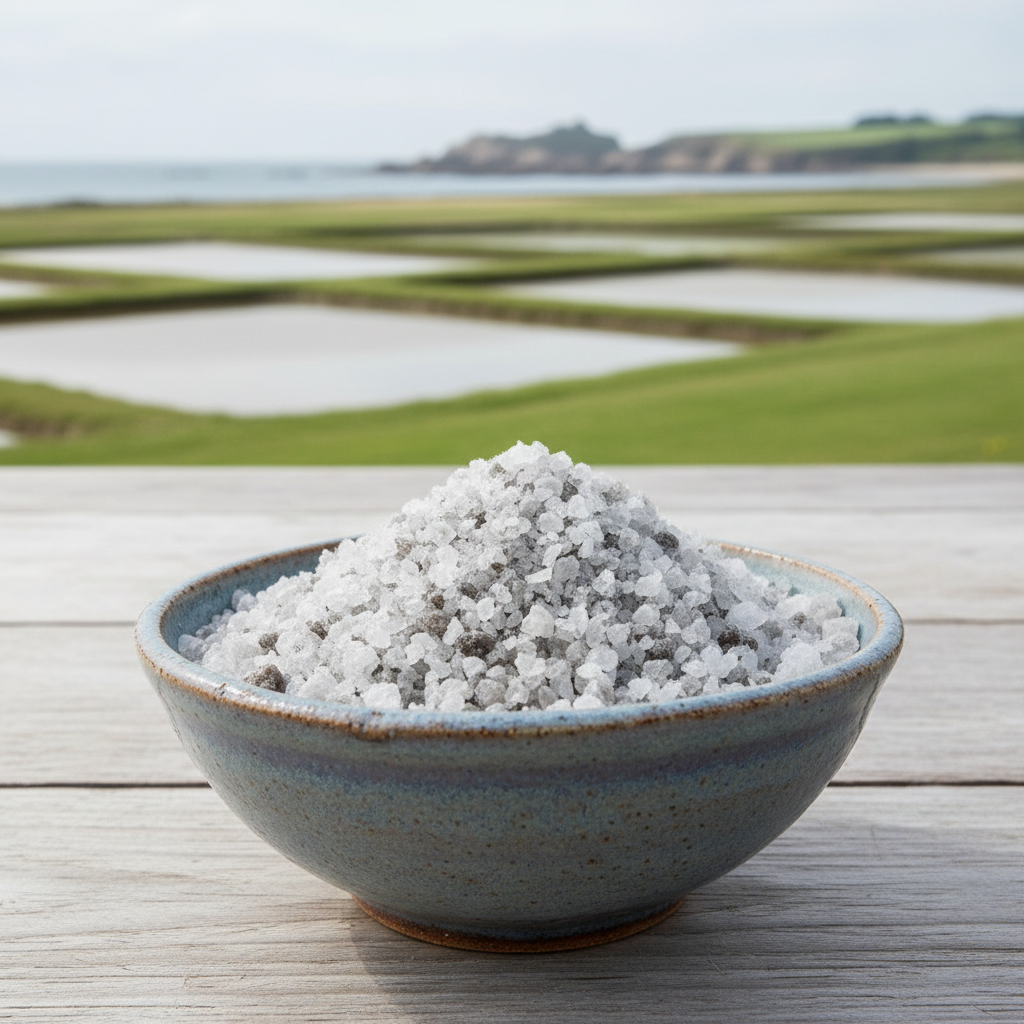
Celtic salt takes an entirely different path from ocean to table. The salt marshes of Guérande, located on the Atlantic coast of southern Brittany in France, have been producing exceptional salt for over a thousand years. These marshes are a UNESCO-recognised heritage site and a living example of sustainable, traditional food production. The paludiers — the salt farmers of Guérande — use a system of interconnected clay-lined ponds and channels to guide tidal seawater through the marshes. As the water flows from pond to pond, it gradually concentrates through solar evaporation and wind action. The paludiers use long-handled wooden tools called las to rake the settled salt crystals from the bottom of the shallow crystallising ponds. This technique has been passed down through generations and remains essentially unchanged from medieval times. The grey colour of Celtic salt — which ranges from pale silver to a deep, mineral-rich pewter — comes directly from the clay of the pond floors, which imparts a rich assortment of minerals to the crystals. There are no bleaching agents, no anti-caking additives, no high-heat drying processes, and no iodine supplements. What you get is nature's own mineral matrix, delivered as it has been for centuries.
The mineral content difference between these two salts is staggering and worth examining in detail. Table salt, after refining, contains essentially two elements: sodium and chloride. Some varieties are enriched with iodine (as potassium iodide) and may include trace amounts of anti-caking agents. Celtic grey salt from Guérande, however, contains a full spectrum of naturally occurring minerals. Magnesium is present in significant amounts — often in concentrations that are meaningfully higher than in refined salt. Calcium, potassium, sulphur, iron, manganese, zinc, copper, and silica are also present. In total, authentic Celtic salt can contain over 80 different trace minerals in naturally balanced proportions. These are the same minerals found in clean seawater, retained because the salt undergoes no refining that would strip them away. The slight moisture content of Celtic salt — which gives it its characteristic damp, clumping texture — is itself a sign of this mineral richness, because it is the hygroscopic magnesium chloride in the salt that holds onto that natural moisture.
The sodium content of Celtic salt is also lower than that of table salt, which is a detail worth understanding. Because table salt is essentially pure sodium chloride, gram for gram it delivers more sodium than a mineral-rich salt like Celtic grey salt. Celtic salt contains approximately 82–84% sodium chloride by weight, with the remaining 16–18% made up of moisture and minerals. This means that if you are using Celtic salt in the same quantities as table salt, you are automatically consuming less sodium per serving — a meaningful difference for anyone monitoring their sodium intake. The flavour of Celtic salt is also more complex and satisfying, which often means people use less of it to achieve the same seasoning effect. These two factors combined can result in noticeably lower sodium consumption simply by making the switch from table to Celtic salt, without any conscious restriction in how liberally you season your food.
Texture and physical form represent another major point of differentiation. Table salt is engineered to be a specific, uniform particle size — typically either fine granules or coarser crystals for specific applications. Celtic salt comes in several natural grain sizes, from the fine sel fin (fine Celtic salt) to the iconic coarse grey crystals (gros sel), and even the prized fleur de sel that forms as a delicate crust on the water's surface on warm, calm days. These different textures lend themselves to different culinary applications, giving the cook a versatile toolkit of salt options rather than a single one-size-fits-all product. The coarse gros sel is ideal for finishing, brining, and cooking pasta or vegetables. The finer versions integrate smoothly into everyday seasoning, dressings, and baking. Fleur de sel is a luxurious finishing salt that adds a delicate crunch and a burst of clean mineral flavour to everything from salads to caramel desserts.
From a flavour perspective, the difference is immediately perceptible to most people. Table salt delivers a sharp, almost harsh hit of saltiness — a single-note punch of sodium. Celtic salt, because it contains a broader spectrum of minerals including bitter magnesium and sweet calcium, tastes rounder, more complex, and more satisfying. Many chefs describe it as tasting "more like the sea" — which is exactly what it is. This complexity means it enhances food in a way that table salt cannot, lifting flavours rather than simply making things taste salty. The bitterness that might suggest over-salting with table salt is largely absent with Celtic salt, making it easier to season generously without overwhelming a dish. You can read more about the flavour profile of Celtic salt and how to maximise it in cooking in our complete Celtic salt cooking guide.
The difference a real salt makes: Discover Celtic Grey Salt →
Health and Culinary Benefits
It is important to approach the health discussion around any type of salt with appropriate nuance. No salt should be positioned as a cure, a treatment, or a therapy for any medical condition, and this article makes no such claims. What can be stated honestly and accurately, however, is that the mineral profile of traditionally harvested Celtic salt offers a notably broader nutritional contribution to the diet than refined table salt. While you should never rely on any single food as your primary source of essential minerals, the fact that Celtic salt contains meaningful amounts of magnesium, calcium, potassium, and numerous trace elements means that every pinch you use in cooking or at the table adds a small but real contribution to your overall mineral intake. Over time, across thousands of meals, that cumulative contribution is not insignificant.
Magnesium deserves particular attention in this context. Magnesium is one of the most important minerals in human physiology, involved in over 300 enzymatic reactions, including those governing muscle function, nerve transmission, blood sugar regulation, protein synthesis, and energy production. It is also one of the most commonly deficient minerals in modern Western diets, largely because intensive agriculture has depleted magnesium from soil, and because refined food processing removes it from ingredients. Celtic salt is a natural source of magnesium in the form of magnesium chloride — the same compound found abundantly in clean seawater. While you would not get your entire recommended daily intake of magnesium from salt alone, the fact that Celtic salt contributes magnesium rather than stripping it away (as refining does) represents a genuine, tangible difference in nutritional value. People who pay attention to their mineral balance have noted this as one of the most compelling reasons to switch.