Hand-harvested Guérande salt · Tracked international delivery included
Guide· by Celtic Salt Editorial Team
Celtic Salt in Cultural Traditions: An Exploration of Its Significance
Salt as the Foundation of Celtic Civilisation
Long before salt became a kitchen staple, it was one of the most strategically important substances in human history. Armies moved to secure it, trade routes were built around it, and entire civilisations organised themselves in relation to salt sources. Within this vast history, the salt-making tradition of the Guérande peninsula in Brittany — the home of authentic Celtic grey salt — represents one of the oldest continuously practised artisan production traditions in the world.
The word "salary" traces its origins to the Roman practice of paying soldiers in salt — sal. The city of Salzburg takes its name from salt. The ancient route from Rome to the Adriatic coast was the Via Salaria — the Salt Road. Salt defined geography, economics, and culture across every human civilisation that has ever existed.
The Guérande Peninsula: A Living Cultural Heritage Site
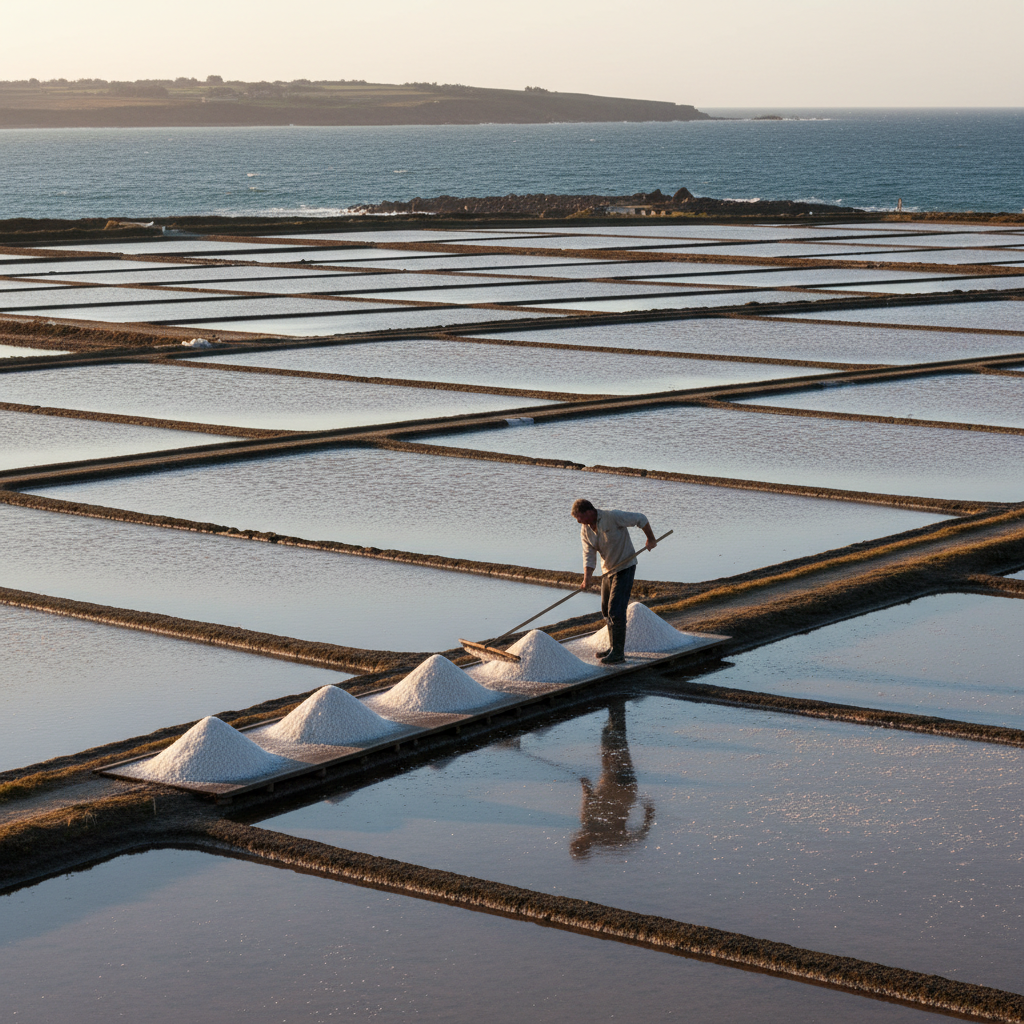
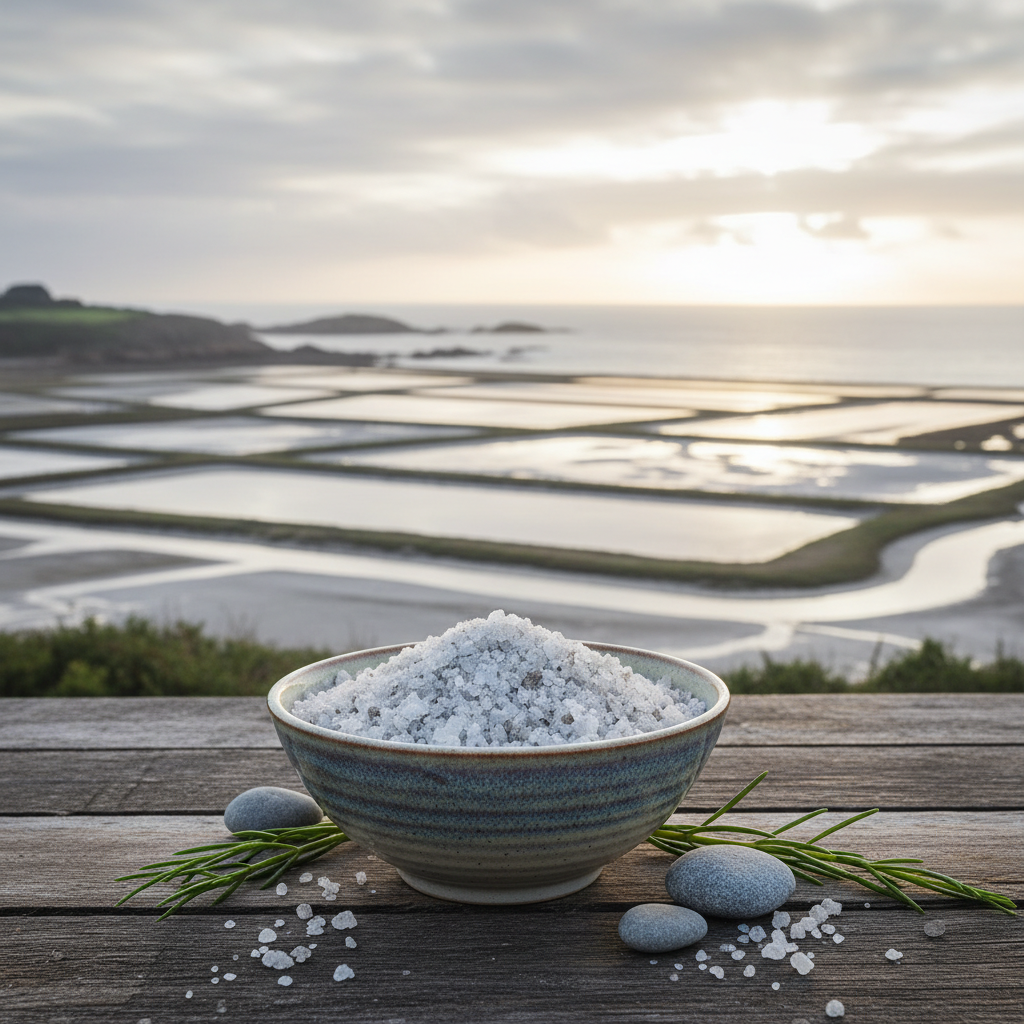
The salt marshes of Guérande — the marais salants — cover approximately 2,000 hectares of the Brittany coast in northwestern France. They have been maintained continuously since at least the 9th century CE, when Breton monks first systematically developed salt production in the region. What makes this landscape extraordinary is that it is entirely human-made: a complex, precisely engineered network of channels, clay-lined pools, embankments, and sluice gates — all designed and built by hand, maintained by hand for over a thousand years, and functioning today exactly as they did in the medieval period.
No machinery. No electricity. No industrial process. The landscape itself is a monument to human ingenuity and craft — and it produces Celtic grey salt by the same mechanism it always has: sun, wind, Atlantic seawater, and skill.
AUTHENTIC IGP GUÉRANDE SALT
The Paludiers: Custodians of a Thousand-Year Tradition
The paludier — the Breton salt harvester — is one of the last remaining practitioner of a truly ancient artisan tradition. The work is seasonal, physically demanding, and entirely dependent on an intimate knowledge of weather, tide, wind, and the specific behaviour of individual salt pans. This knowledge cannot be learned from a manual; it is transmitted through years of apprenticeship under experienced paludiers, often within families that have worked the same marshes for generations.
The tools have not changed: the lousse à sel, a flat wooden rake with a long handle, for gathering grey salt from the floor of the œillet (the crystallisation pool); the simoussi, a smaller tool for harvesting fleur de sel from the surface. Both are made of wood — never metal, which would contaminate the salt and damage the clay-lined pool floor. The harvest happens in the late afternoon, when the day's evaporation is complete and the crystals are ready.
🧂 AUTHENTIC GUÉRANDE CELTIC SALT
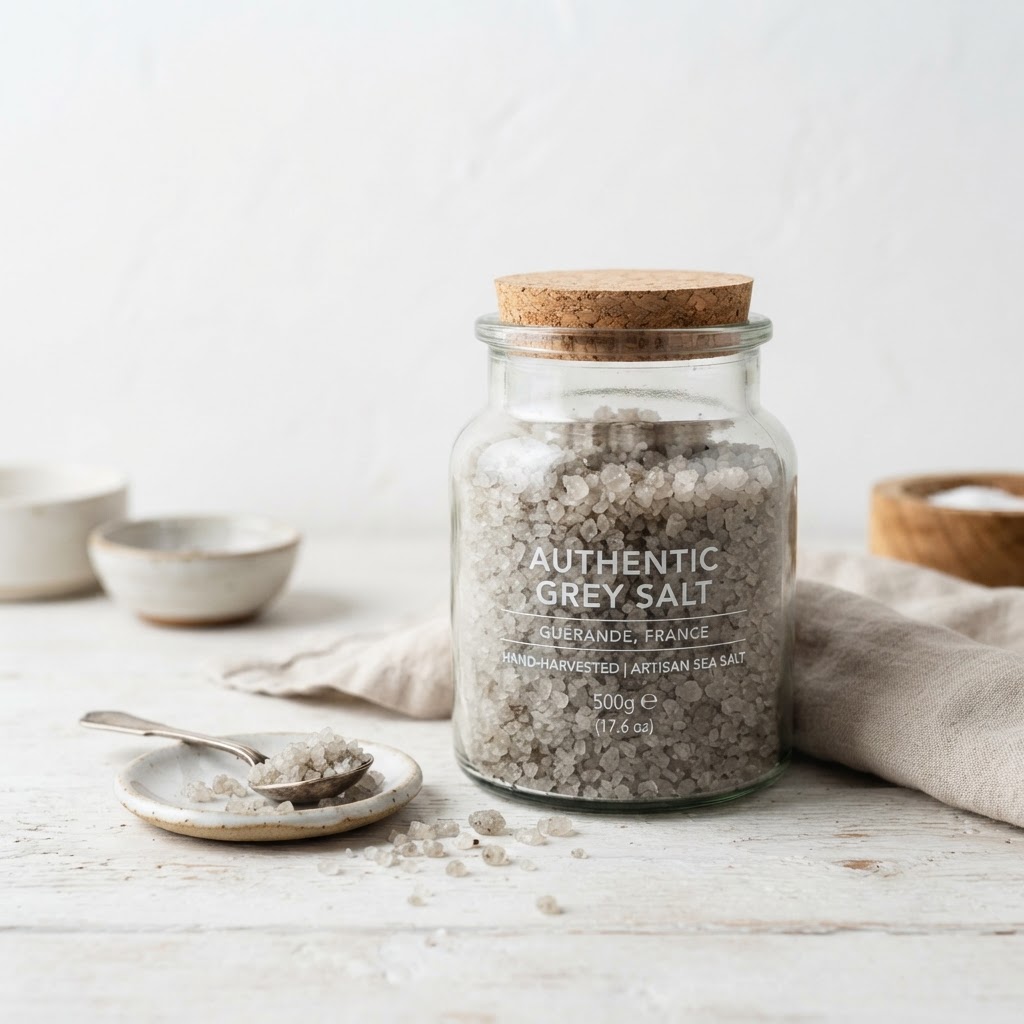
Celtic Authentic Grey Salt – 500g
Hand-harvested · Coarse · Dried · Brittany, France
In Breton culture, Guérande salt was not a luxury — it was essential. Before refrigeration, it was the primary means of preserving fish, pork, butter, and vegetables through the long Atlantic winters. The salt merchants of Guérande travelled the coast and inland waterways, trading salt for grain, timber, wine, and goods from across France and beyond. Parts of England, Ireland, and the Basque Country received Guérande salt through these historical trade networks.
Salt also carried deep symbolic weight in Breton tradition. It was placed at the threshold of new homes to bring prosperity and protection. It was present at baptisms, marriages, and significant life events. The Breton expression avoir du sel — to have salt — meant to have intelligence, vigour, and character. A person without salt was considered dull, unremarkable.
The IGP: Legal Protection for Cultural Heritage
The IGP certification (Indication Géographique Protégée) awarded to Guérande salt is not simply a quality mark — it is a legal instrument for cultural preservation. By tying the name "sel de Guérande" to a specific geographic area and specific production methods, the IGP ensures that the traditional practices of the paludiers cannot be displaced by industrial imitation. The certification protects not just a product but an entire way of life — a cultural landscape, a body of traditional knowledge, and a community of artisan producers whose roots in this land span more than a millennium.
Brittany in the Celtic World
Brittany — Breizh in the Breton language — is one of the six Celtic nations, sharing linguistic and cultural heritage with Wales, Cornwall, Ireland, Scotland, and Galicia in northwestern Spain. The Breton language belongs to the Brythonic branch of the Celtic language family, closely related to Welsh and Cornish. Breton cultural identity is alive and distinct, maintained through language preservation movements, traditional music, festivals, and artisan traditions including salt harvesting.
The name Celtic salt is not a marketing invention — it reflects a genuine cultural connection between the salt of the Guérande marshes and the Celtic heritage of the people who have produced it for over a thousand years.
CELTIC GREY SALT — IGP GUÉRANDE
Celtic Grey Salt – Guérande 500g
Hand-harvested · Unrefined · Brittany, France
Ships from France · Worldwide delivery · 30-day return guarantee
FEATURED PRODUCT
Celtic Authentic Grey Salt – 500g
$79.99$114.99SAVE 30%
Hand-harvested · Coarse · Dried · Brittany, France
✓ Ships from France · ✓ 30-day return · ✓ Secure checkout
Salt in French Culinary Heritage: Beyond Guérande
France has a relationship with salt that goes deeper than Guérande. The Camargue — the river delta at the mouth of the Rhône in southern France — also produces artisan sea salt, the fleur de sel de Camargue, using methods similar to those of the paludiers of Brittany. The Île de Ré, off the Atlantic coast north of La Rochelle, has its own salt-making tradition. Salt from Aigues-Mortes in the Languedoc region supplied medieval Europe for centuries. France's geography — two coastlines, both Atlantic and Mediterranean — made it naturally central to European salt production and trade.
The French relationship with salt extends into culinary culture in ways that are often invisible until you look for them. The classic French butter, beurre de Bretagne, is traditionally salted — and the Breton tradition of salted butter connects directly to the abundance of Guérande salt in Brittany. Salted caramel — now a global phenomenon — originated in Brittany, created in the 1970s by a chocolatier who used local Guérande salt in a caramel recipe. The connection between local salt production and local culinary tradition is not coincidental; it is causal.
Why This Matters for the Salt You Buy
Understanding the cultural depth behind authentic Celtic grey salt changes how you relate to it as a product. It is not simply a premium ingredient with better mineral content than table salt — though it is that too. It is a living cultural product, produced by a community of artisans using methods that have been continuously practised for over a millennium, in a landscape that is itself a feat of human engineering and cultural persistence.
The IGP certification is not just a quality mark; it is a promise that buying this salt supports the continued existence of this tradition. Each bag of IGP-certified Celtic grey salt from Guérande contributes to the economic viability of the paludier community and the maintenance of the Guérande marshes. The salt marshes are not commercially viable without the artisan tradition; the tradition is not viable without buyers who specifically choose IGP-certified Guérande salt over cheaper, unverified alternatives.
Why This History Matters When You Choose Your Salt
When you buy authentic Celtic grey salt with IGP certification from Guérande, you are not simply buying salt. You are participating in a chain of custody that goes back over a thousand years — connecting your table to one of the oldest surviving artisan traditions in Europe. The paludier who harvested your salt used the same tools, the same technique, and the same tidal marshes as their predecessors in the 9th century. That continuity is worth something.
Ready to taste the difference?
Celtic Authentic Grey Salt – 500g — Hand-harvested · trace minerals whose levels vary by harvest and product · No additives
Ready to experience authentic Celtic salt?
Hand-harvested from the marshes of Guérande, Brittany · IGP certified · trace minerals whose levels vary by harvest and product
Ships from France · 30-day return guarantee
AVAILABLE NOW — LIMITED STOCK
Experience the Authentic Taste of Guérande Celtic Salt
Celtic Authentic Grey Salt – 500g · Hand-harvested · Coarse · Dried · Brittany, France