Hand-harvested Guérande salt · Tracked international delivery included
Guide· by Celtic Salt Editorial Team
Grey Salt: Mineral Composition, Processing and Culinary Uses
What Is Grey Salt and Where Does It Come From?
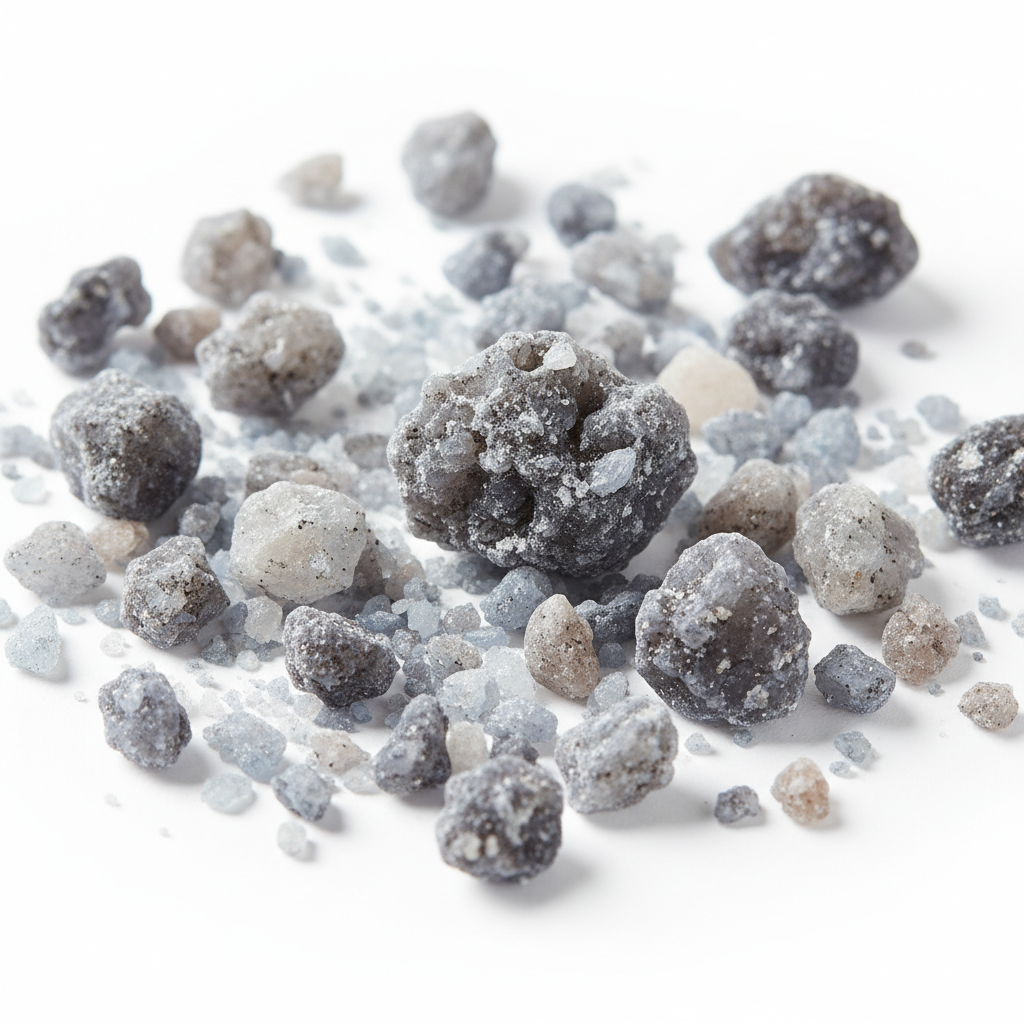
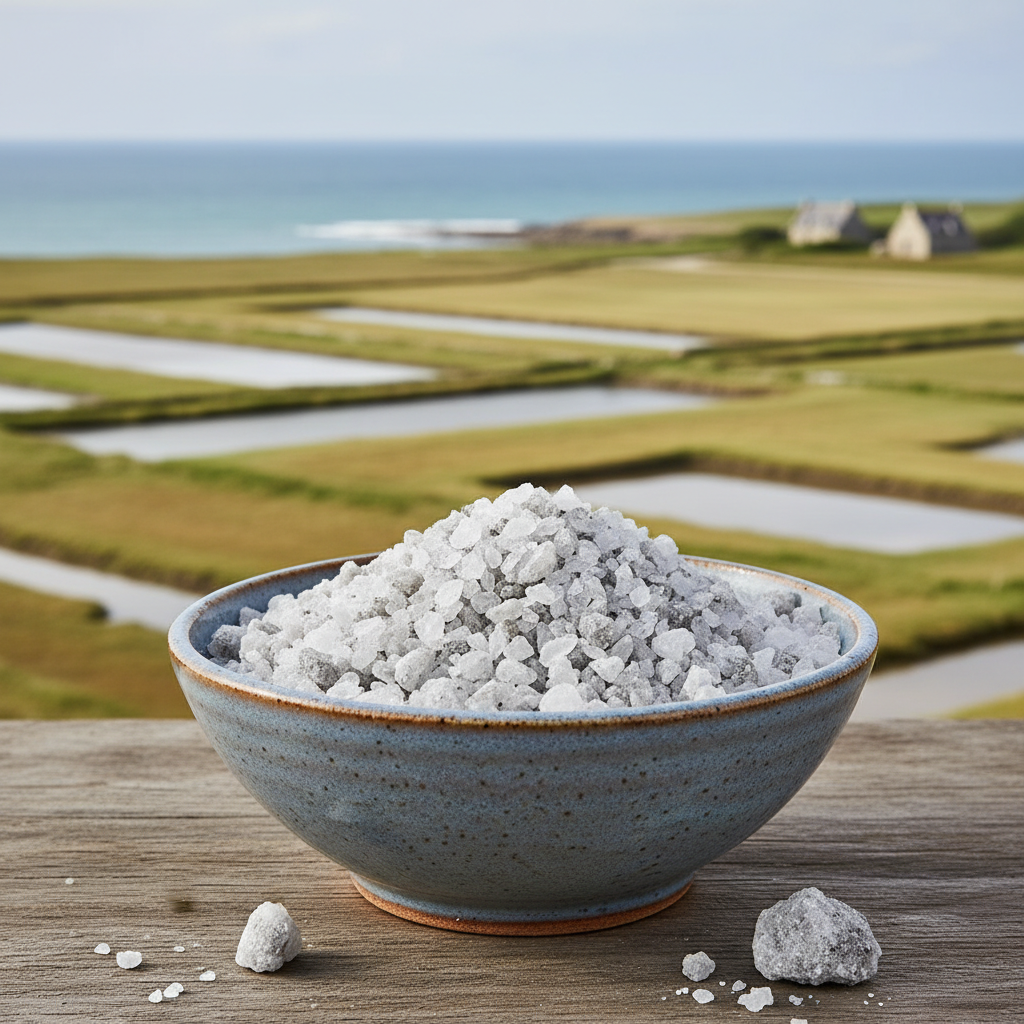
Grey salt — sel gris in French — is the authentic Celtic grey salt harvested from the tidal marshes of Guérande in Brittany, France. Its grey colour is not an imperfection or contamination; it is a natural consequence of the clay minerals and trace iron absorbed from the clay-lined floors of the salt pans during harvesting. The grey colour is a quality marker: it confirms the salt is unrefined and has not been bleached or industrially processed.
Authentic grey salt from Guérande carries IGP certification (Indication Géographique Protégée) — a European legal designation that guarantees geographic origin and traditional production method. It is harvested entirely by hand by artisan salt workers called paludiers, using traditional wooden tools unchanged for over a thousand years.
The Mineral Composition of Grey Salt
The most significant characteristic of authentic grey salt is its mineral richness. Refined table salt is processed to near-pure sodium chloride — over 99% NaCl — with all trace minerals removed. Grey salt from Guérande retains over trace minerals whose levels vary by harvest and product from Atlantic seawater, including:
Magnesium chloride — the dominant trace mineral, responsible for the natural moisture of authentic grey salt, present in meaningful quantities relative to other salts
Calcium — naturally present from the seawater mineral matrix
Potassium — in proportions reflecting Atlantic seawater composition
Iron — contributing the characteristic grey colour along with clay minerals
Zinc, manganese, copper, selenium — trace elements from the original Atlantic seawater
These minerals are present because they were never removed — not because they were added. This is an important distinction: they occur naturally in their original seawater proportions.
Lower Sodium Density
Because authentic grey salt retains natural moisture (typically 10–13% water content) and contains minerals other than sodium chloride, it has a lower sodium density per gram than dry refined table salt. In practical cooking, this difference is modest — but combined with grey salt's richer, more satisfying mineral flavour (which means most cooks use less of it by volume), actual sodium intake tends to be measurably lower than with refined table salt.
AUTHENTIC IGP GUÉRANDE SALT
No Additives, No Processing
Refined table salt typically contains anti-caking agents (such as sodium ferrocyanide or calcium silicate), and in many countries, synthetically added iodine. Grey salt from Guérande contains none of these. The ingredient list is one item: unrefined sea salt. This matters for people who prefer to know exactly what they are putting in their food — grey salt is one of the simplest, most transparent food ingredients available.
🧂 AUTHENTIC GUÉRANDE CELTIC SALT
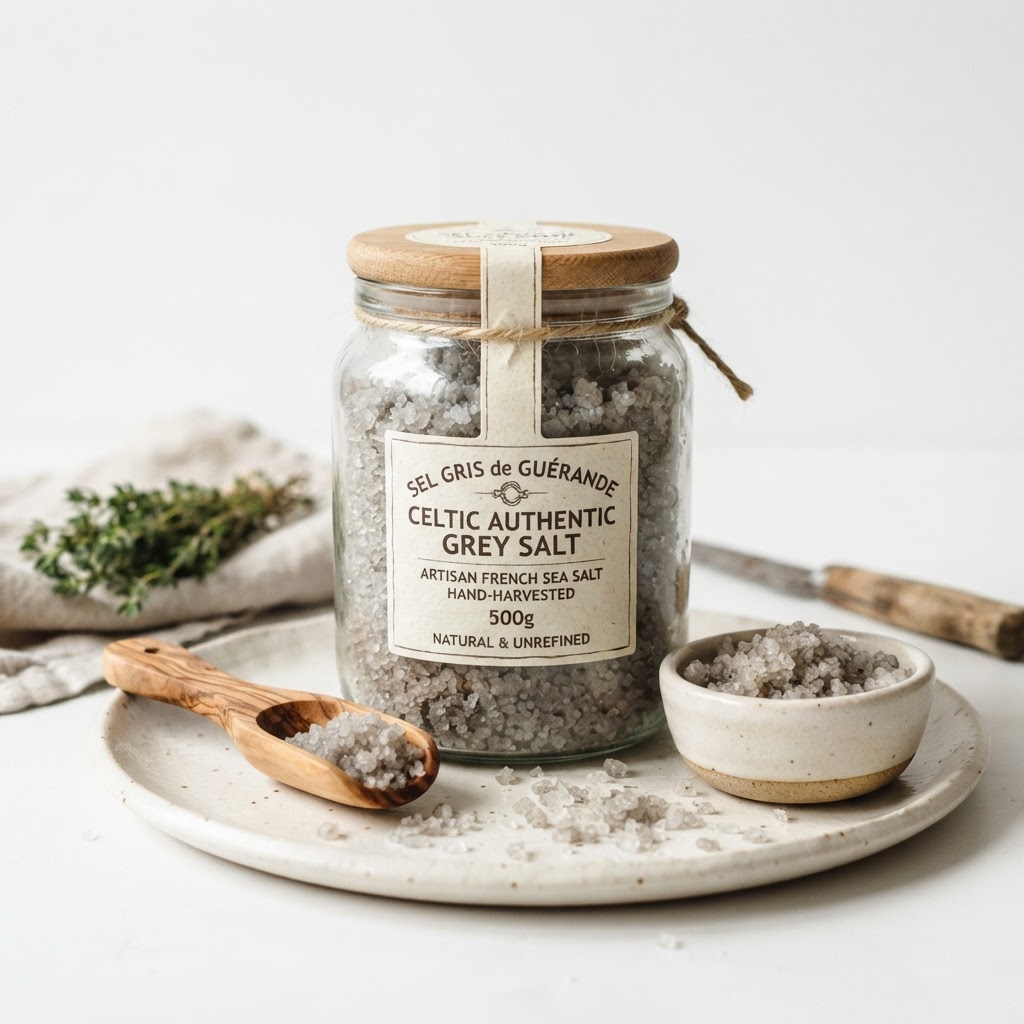
Celtic Authentic Grey Salt – 500g
Hand-harvested · Coarse · Dried · Brittany, France
The practical argument for grey salt in the kitchen is straightforward: it tastes significantly better than refined table salt, particularly as a finishing ingredient. The complex, rounded, oceanic mineral character of authentic grey salt from Guérande adds depth and completeness to food that refined salt cannot match. This is not marketing language — it is the reason professional chefs who work with quality ingredients consistently choose finishing salts over refined table salt.
The difference is most vivid in simple preparations: fresh bread with good butter, a soft-boiled egg, lightly dressed salad greens, a perfectly cooked steak finished at the table. In each case, a pinch of coarse grey salt adds a flavour dimension that changes the dish perceptibly.
Traditional Wellness Uses
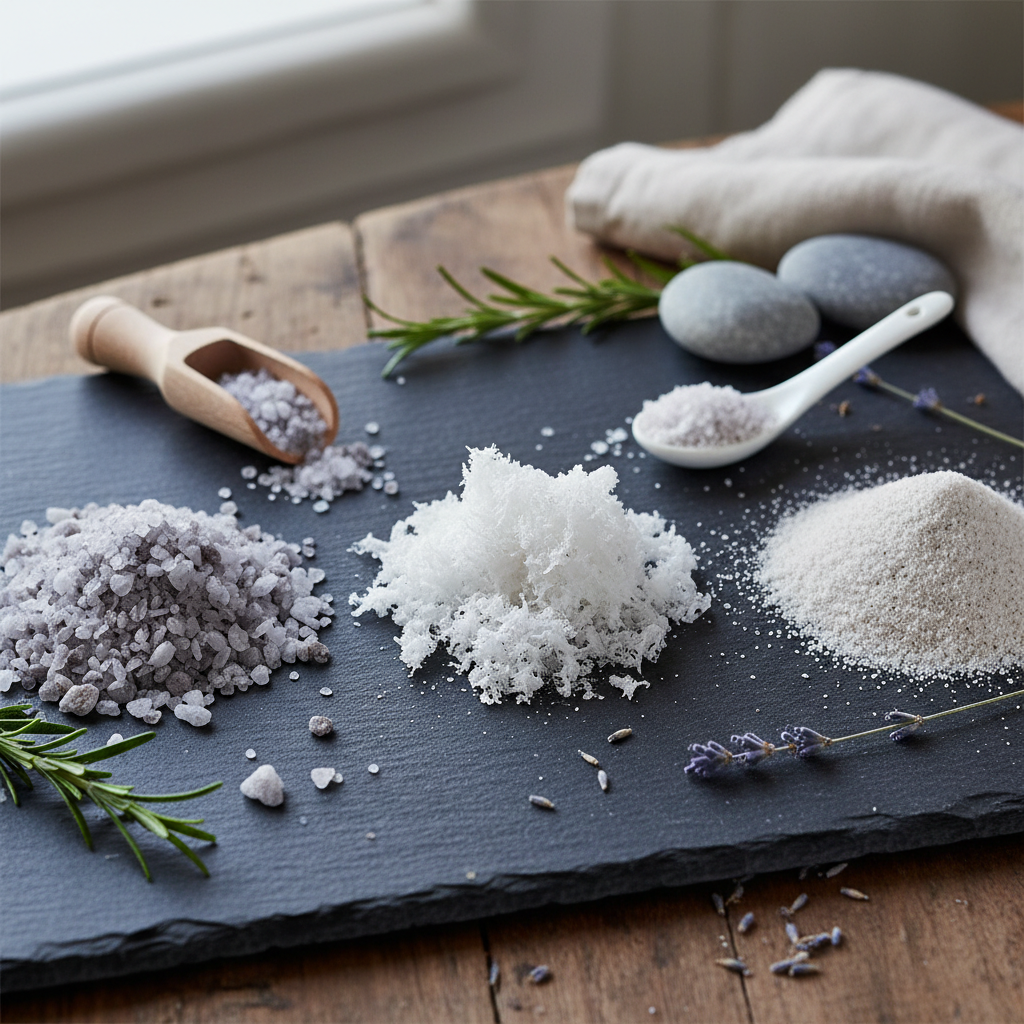
Atlantic coastal communities have used mineral-rich grey salt in traditional wellness practices for centuries — mineral bath soaks, body scrubs mixed with olive oil, and foot treatments. The mineral bath soak (100–150g of coarse grey salt dissolved in a warm bath) draws on the naturally high magnesium chloride content of the salt. Magnesium chloride absorbs through the skin during warm water soaks — a practice used in traditional coastal wellness for generations.
These are traditional practices. They are not medical treatments and should not replace professional medical care.
How to Identify Genuine Grey Salt
Authentic grey salt from Guérande has specific visual and tactile characteristics:
Colour: Naturally grey — not white, not pale beige, not artificially coloured. The grey ranges from light silver to deeper charcoal depending on the specific batch and weather conditions during harvest.
Moisture: Slightly damp when pinched — it should clump rather than pour freely. Bone-dry grey salt has been heat-processed.
Crystal shape: Irregular, angular, slightly variable in size — not uniformly cubic or perfectly regular.
Ingredient list: One ingredient only — unrefined sea salt. No additives, no flow agents.
Certification: IGP mark on the packaging, and clear statement of Guérande, Brittany, France as origin.
CELTIC GREY SALT — IGP GUÉRANDE
Celtic Grey Salt – Guérande 500g
Hand-harvested · Unrefined · Brittany, France
Ships from France · Worldwide delivery · 30-day return guarantee
FEATURED PRODUCT
Celtic Authentic Grey Salt – 500g
$79.99$114.99SAVE 30%
Hand-harvested · Coarse · Dried · Brittany, France
✓ Ships from France · ✓ 30-day return · ✓ Secure checkout
Grey Salt in Daily Use
The simplest and most impactful use of grey salt is as a finishing salt — added at the table or in the last 30 seconds of plating. Keep a small ceramic pinch pot accessible at all times. Apply to any savoury dish just before eating. This one habit, applied consistently, is the most noticeable upgrade most people can make to how their food tastes.
For cooking: use fine grey salt wherever a recipe specifies table salt, reducing quantity by 10–15% to account for grey salt's richer mineral flavour. For brining, curing, and salt-crust cooking: coarse grey salt is the preferred choice, used generously.
Grey Salt in Professional Kitchens
The shift in professional cooking away from refined table salt toward quality finishing salts including grey salt has been consistent and ongoing for decades in serious restaurant kitchens. The reasons are practical: flavour complexity, mineral character, and the visual appeal of irregular crystals as a garnish on finished dishes. Coarse grey salt on a perfectly seared foie gras, on a just-opened oyster, on a slice of house-made charcuterie — these are not decorative choices. The mineral burst of a dissolving grey salt crystal changes the eating experience of the dish in a way that pre-dissolved table salt cannot.
Grey salt also plays a role in curing and preservation in professional kitchens. Charcuterie producers who use grey salt rather than refined salt report a more complex flavour development in cured products — particularly in dry-cured ham and lardo — attributing the difference to the mineral profile of the grey salt interacting with the proteins over the curing period. This is a domain where the difference between unrefined and refined salt has the most time to develop and the most opportunity to become perceptible.
Buying Guide: What to Look For
The most important piece of information on any grey salt label is the origin: Guérande, Brittany, France. Without this, the grey colour and the "Celtic" name are not guaranteed by any legal standard. With the IGP mark, they are.
Look for: grey colour (not white, not pale beige), natural moisture when the product is opened (it should feel slightly damp), irregular crystal shape in the coarse version, and no additives listed beyond "unrefined sea salt." A product meeting all these criteria is almost certainly the genuine article — authentic Celtic grey salt from Guérande, carrying the full mineral profile and artisan character that distinguishes it from every refined alternative on the market.
A Simple, Transparent Ingredient
Grey salt from Guérande is a thousand-year-old artisan product with one ingredient, no additives, full mineral traceability to its Atlantic seawater source, and legal certification of geographic origin and traditional production method. It is the antithesis of the industrial food system's approach to salt. For people who care about what they eat and how it tastes, authentic grey salt is the simplest possible upgrade — with immediate, noticeable results.
Ready to taste the difference?
Celtic Authentic Grey Salt – 500g — Hand-harvested · trace minerals whose levels vary by harvest and product · No additives
Ready to experience authentic Celtic salt?
Hand-harvested from the marshes of Guérande, Brittany · IGP certified · trace minerals whose levels vary by harvest and product
Ships from France · 30-day return guarantee
AVAILABLE NOW — LIMITED STOCK
Experience the Authentic Taste of Guérande Celtic Salt
Celtic Authentic Grey Salt – 500g · Hand-harvested · Coarse · Dried · Brittany, France