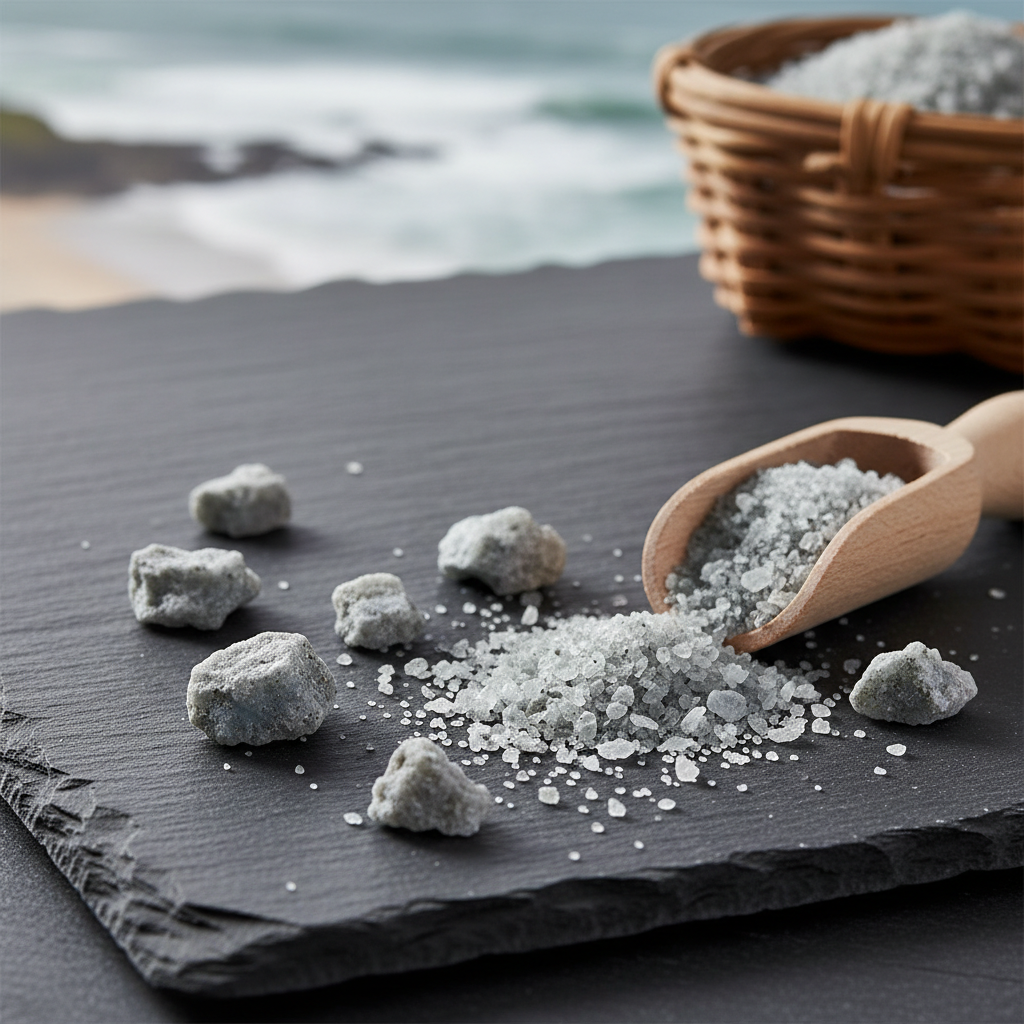
What Is the Best Celtic Salt and Why It Matters in 2026
In a world saturated with processed foods and heavily refined table salts stripped of their natural complexity, the question of what is the best Celtic salt has never been more relevant. Consumers are waking up to the reality that not all salts are created equal — and that the mineral-rich, hand-harvested grey salt from the ancient salt marshes of Guérande, Brittany, France represents something fundamentally different from the white, iodized, free-flowing salt found in most kitchen cabinets. Celtic salt, known in French as sel gris, is experiencing a dramatic surge in popularity among health-conscious cooks, nutritionists, professional chefs, and wellness advocates who understand that real food requires real seasoning. As we move deeper into 2026, this surge shows no signs of slowing down — and for very good reason.
The term "Celtic salt" refers specifically to salt harvested using traditional Celtic methods along the Atlantic coast of France, most notably in the Guérande region of Brittany. This region holds an IGP (Indication Géographique Protégée) certification — the European Union's Protected Geographical Indication — which serves as a legal guarantee that the product genuinely originates from this specific area and is produced according to historically established methods. This is not a marketing gimmick or a loosely applied label. The IGP certification is a rigorous designation that distinguishes authentic Guérande Celtic grey salt from imitations, and it is one of the most important factors to look for when determining which Celtic salt is truly the best. Without this certification, you cannot be certain of the product's origin or production integrity.
What makes the Guérande salt marshes so special is a combination of geography, ecology, and human tradition that has been refined over more than a thousand years. The Atlantic ocean water that flows into the carefully maintained clay-lined salt pans carries with it a complex cocktail of dissolved minerals. As the water evaporates slowly under the Breton sun and wind, it leaves behind not just sodium chloride, but a rich matrix of over 80 trace minerals — including magnesium, calcium, and potassium — that give Celtic grey salt its characteristic moist texture, its subtle grey color from the natural clay, and its distinctly complex, oceanic flavor. This mineral complexity is not incidental; it is the defining characteristic of genuinely superior Celtic salt and the primary reason why so many culinary and wellness experts now consider it indispensable.
In 2026, the stakes around salt quality have also risen because of growing consumer awareness about the long-term health implications of mineral deficiency and the excessive consumption of ultra-processed sodium chloride. Unlike refined table salt — which is chemically processed, bleached, and often supplemented with anti-caking agents and synthetic iodine — authentic Celtic grey salt from Guérande is completely unrefined, contains no additives whatsoever, and delivers sodium in a form that comes naturally balanced with complementary minerals. The best Celtic salt is therefore not simply a seasoning; it is a functional food ingredient that contributes meaningfully to your daily mineral intake while enhancing the flavor of everything it touches. Understanding what separates the best from the rest is the first step toward making an informed, health-driven purchasing decision.
The Science Behind the Best Celtic Salt
To truly understand what makes the best Celtic salt stand apart from ordinary salt, it helps to look at the science of mineral complexity and bioavailability. Authentic Celtic grey salt from Guérande contains over 80 naturally occurring trace minerals in addition to sodium chloride. These minerals — including magnesium, calcium, potassium, iron, zinc, manganese, and many more — exist in ionic form within the moist crystal structure of the salt. Ionic minerals are among the most bioavailable forms that exist in nature, meaning the human body can absorb and utilize them efficiently during digestion. This is in stark contrast to synthetic mineral supplements, which often come in less bioavailable chemical forms, or to refined table salt, which has had virtually all trace minerals removed during industrial processing. The mineral matrix found in genuine Celtic salt is not something that can be replicated artificially — it is the product of a living ecosystem working over time.
The grey color of authentic Celtic salt is itself a scientific indicator of quality and genuineness. The color comes from the natural clay found in the floors and walls of the traditional salt pans used in Guérande. This clay, rich in minerals, comes into direct contact with the crystallizing salt and imparts both its color and additional mineral compounds. When you see a pure white "Celtic salt," that whiteness is a red flag — it suggests the product has either been rinsed, refined, or is simply not authentic Guérande Celtic salt at all. The moist texture of real Celtic grey salt is another scientifically meaningful feature; the moisture is largely the result of magnesium chloride and other hygroscopic mineral salts retained within the crystal matrix, and it serves as evidence that the salt has not been subjected to high-heat drying or industrial processing that would drive off these moisture-retaining mineral compounds.
Researchers studying the effects of mineral-rich unrefined salts on human physiology have noted several areas of interest, particularly regarding electrolyte balance and hydration. Sodium, potassium, magnesium, and calcium are the four primary electrolytes that regulate fluid balance, nerve signal transmission, and muscle contraction in the human body. While refined table salt supplies sodium in isolation — potentially disrupting the sodium-potassium ratio when consumed in excess — Celtic grey salt provides all four of these key electrolytes together, as nature intended. This co-presence of complementary electrolytes may help explain why many people who switch from refined salt to authentic Celtic grey salt report improvements in hydration, reduced muscle cramping, and a more balanced sense of energy throughout the day. These are not merely anecdotal claims; they align logically with established physiological science.
| Property | Authentic Celtic Grey Salt (Guérande) | Standard Refined Table Salt |
|---|---|---|
| Trace Minerals | 80+ naturally occurring minerals | Virtually none (removed in processing) |
| Color | Natural grey (from clay contact) | Bright white (bleached) |
| Texture | Moist, coarse crystals | Dry, fine, free-flowing |
| Additives | None — 100% natural | Anti-caking agents, synthetic iodine |
| Sodium Content | Slightly lower (due to mineral diversity) | ~97–99% pure sodium chloride |
| Certification | IGP (Protected Geographical Indication) | None applicable |
| Harvesting Method | Hand-harvested by trained paludiers | Mechanically mined or evaporated |
| Key Minerals Present | Magnesium, Calcium, Potassium, and more | Sodium only (plus added iodine) |
How to Use the Best Celtic Salt — Complete Guide
One of the most common questions from people who have just discovered authentic Celtic grey salt is simply: how do I use it? The good news is that Celtic salt is extraordinarily versatile and can replace conventional salt in virtually every culinary application. However, its unique properties — the moist texture, the coarser crystal size, and the richer mineral flavor — mean that there are some specific techniques and tips that will help you get the most out of this exceptional ingredient. Whether you are a home cook preparing weeknight dinners or a dedicated food enthusiast exploring artisan ingredients, understanding how to use Celtic salt properly will immediately elevate your cooking.
Everyday Cooking and Seasoning: For most everyday cooking, coarse Celtic grey salt works beautifully as a direct substitute for regular table salt. Because the crystals are larger and the flavor is more complex, you may find that you need slightly less of it to achieve the same perceived saltiness, which is an added benefit. Use it to season pasta water, dissolve it into soups, stews, and sauces, or incorporate it into bread doughs and baked goods. When dissolving it into liquids, the moist crystals dissolve easily with minimal stirring. Many cooks prefer to keep a small pinch bowl of Celtic salt beside the stove for convenient access during cooking.
The difference a real salt makes: Discover Celtic Grey Salt →
Finishing Salt Applications: While coarse Celtic grey salt is excellent for cooking, it also shines as a finishing salt — sprinkled over dishes just before serving to add a burst of mineral complexity and satisfying crunch. Try it over a perfectly cooked steak, scattered across roasted vegetables, or used as a crust on fish fillets. For an even more refined finishing experience, consider Fleur de Sel — the most delicate form of Celtic salt, also available from Guérande. Fleur de Sel forms as a thin, lacy crust on the surface of the salt pans during ideal weather conditions and is considered by many professional chefs to be the finest finishing salt in the world. It is available in a 200g / 7.1 oz format and is particularly exquisite on fresh butter, chocolate desserts, and grilled seafood.
Wellness and Hydration Uses: Beyond the kitchen, many wellness practitioners recommend Celtic salt for its electrolyte-supporting properties. A small pinch of Celtic grey salt dissolved in a glass of water in the morning is a popular practice among those seeking to support natural hydration and mineral balance. Some athletes dissolve Celtic salt in water alongside a squeeze of citrus fruit to create a natural electrolyte drink before or after training. Celtic salt can also be used in bath soaks, where it dissolves in warm water and the minerals may be absorbed through the skin — a centuries-old wellness practice that continues to find appreciation among modern health enthusiasts.
- Start with a pinch bowl: Keep coarse Celtic grey salt in an open pinch bowl near your cooking area for easy, intuitive use throughout the cooking process.
- Taste as you go: The complex mineral flavor of Celtic salt means subtle adjustments can make a significant difference — always taste before adding more.
- Use Fleur de Sel as a finisher: Reserve this more delicate and precious salt variety for cold dishes, raw preparations, and elegant finishing moments.
- Grind when needed: For applications requiring finer salt, use a quality ceramic salt grinder rather than a metal one, as Celtic salt's mineral content can corrode metal mechanisms over time.
- Store correctly: Keep your Celtic salt in a sealed ceramic, glass, or wooden container away from direct sunlight and excess humidity to preserve its natural moisture balance.
- Pair with complementary flavors: Celtic salt pairs extraordinarily well with high-quality olive oil, fresh herbs, aged cheeses, and dark chocolate — let its mineral complexity shine through simple, quality ingredients.
Benefits of the Best Celtic Salt Backed by Evidence
The health benefits of choosing authentic, unrefined Celtic grey salt over heavily processed alternatives are grounded in well-understood nutritional science and the foundational role that minerals play in human physiology. The most immediate and tangible benefit is the delivery of a broad spectrum of trace minerals that are simply absent from refined salt. Magnesium, for example, is involved in over 300 enzymatic reactions in the human body, including energy production, protein synthesis, and the regulation of muscle and nerve function. The fact that authentic Celtic grey salt delivers naturally occurring magnesium — along with calcium and potassium — means that every time you season your food, you are also providing your body with micronutrients that support essential biological processes. This represents a meaningful qualitative difference from a nutritional standpoint, not merely a marketing distinction.