Hand-harvested Guérande salt · Tracked international delivery included
GuideJune 26, 2026· by Celtic Salt Editorial Team
Unrefined sea salt health benefits
What Is Unrefined Sea Salt and Why Its Health Benefits Matter in 2026
In an era defined by ultra-processed foods, synthetic additives, and mounting public skepticism toward industrial food production, the conversation around what we put into our bodies has never been more urgent. Among the most quietly revolutionary shifts happening in kitchens and wellness communities around the world is a return to unrefined sea salt — salt harvested and preserved in its natural state, with none of the bleaching, anti-caking agents, or mineral-stripping processes that define conventional table salt. Understanding the health benefits of unrefined sea salt in 2026 means understanding not just what this mineral-rich substance contains, but what refined salt has taken away from us and why that distinction is increasingly being recognized by nutritionists, integrative medicine practitioners, and food scientists worldwide.
Unrefined sea salt is exactly what its name suggests: salt collected from seawater through natural evaporation — typically sun and wind — and then packaged without further industrial treatment. The result is a salt that retains the full spectrum of minerals present in clean ocean water, including magnesium, calcium, potassium, and over trace minerals whose levels vary by harvest and product that play essential roles in human physiology. By contrast, conventional table salt undergoes a rigorous refining process that removes virtually all of these minerals, leaving behind a product that is nearly pure sodium chloride, then fortified with iodine and treated with anti-caking compounds. While refined salt served important public health goals in the early 20th century — iodine fortification helped eliminate iodine deficiency disorders — the blanket consumption of stripped, chemically altered salt in the 21st century raises legitimate questions about what we are missing from our daily mineral intake.
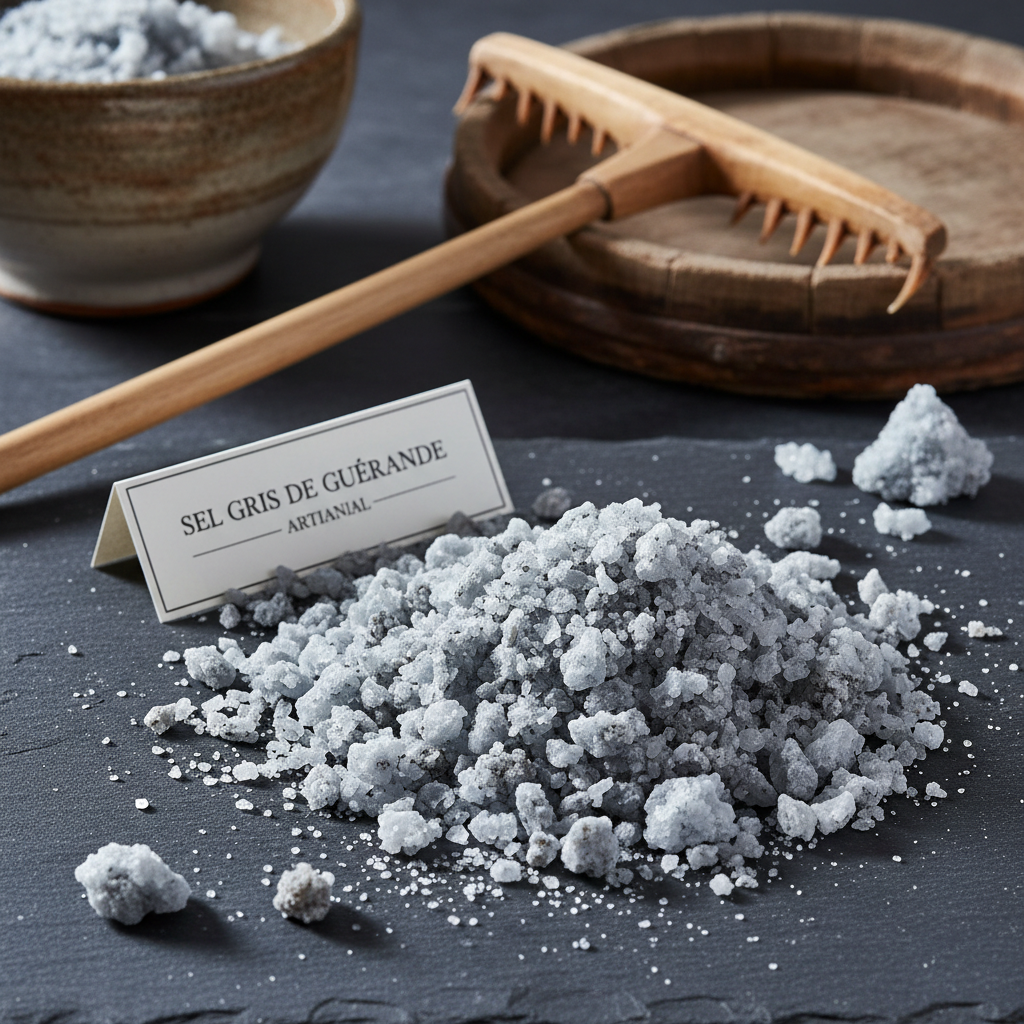
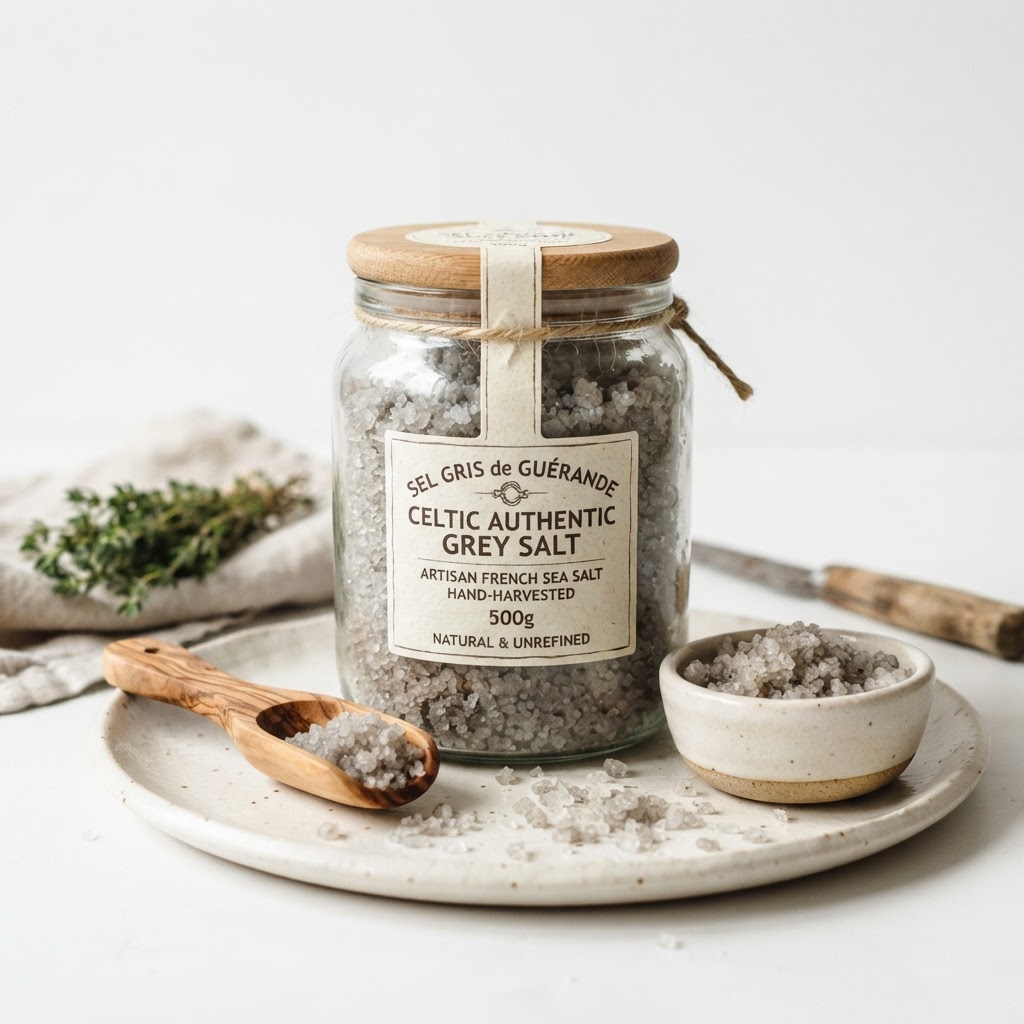
The geography and tradition behind unrefined sea salt production matters enormously for quality and authenticity. One of the most celebrated sources in the world is the coastal region of Guérande in Brittany, France, where salt has been harvested using ancient Celtic techniques for more than a thousand years. The salt marshes — called marais salants — form a delicate ecosystem of clay-lined channels that naturally filter and mineralize the seawater before it evaporates under the Atlantic sun and wind. The resulting salt, often called Celtic grey salt due to its characteristic grayish hue from the clay, carries an IGP (Indication Géographique Protégée) certification — a European designation of protected origin that guarantees authenticity and traceability. This is not a marketing claim; it is a legally protected geographical indication, similar to that given to Champagne or Parmigiano-Reggiano, ensuring that only salt harvested in the Guérande region under traditional methods can carry this name.
In 2026, awareness of unrefined sea salt's health benefits is growing in step with broader consumer trends toward ancestral nutrition, mineral optimization, and clean-label eating. The biohacking community has embraced trace mineral supplementation. Functional medicine practitioners routinely discuss the role of electrolyte balance — particularly magnesium and potassium — in everything from cardiovascular health to sleep quality and cognitive performance. Unrefined sea salt sits at an accessible and delicious intersection of all these concerns. Rather than purchasing synthetic mineral supplements in pill form, many health-conscious individuals are discovering that a daily intake of mineral-rich, unrefined salt can contribute meaningfully to their electrolyte status. As the evidence base grows and more people seek transparency in their food sourcing, the case for choosing unrefined sea salt over refined alternatives becomes increasingly compelling and practically relevant.
The Science Behind Unrefined Sea Salt Health Benefits
The scientific foundation of unrefined sea salt's health advantages rests largely on its mineral complexity. Sodium chloride alone — what you get in refined table salt — performs critical functions: it regulates fluid balance, supports nerve signal transmission, and enables muscle contractions including those of the heart. However, the human body did not evolve consuming isolated sodium chloride. For millions of years, our ancestors consumed sodium alongside a rich matrix of accompanying minerals. Magnesium, for instance, is required as a cofactor for over 300 enzymatic reactions in the human body, including those involved in DNA synthesis, protein production, and energy metabolism. Potassium works in constant dynamic tension with sodium to regulate blood pressure and cellular hydration. Calcium supports not only bone density but also vascular function and hormonal signaling. When you consume unrefined sea salt with its full mineral complement intact, you are providing your body with sodium in the context it recognizes — surrounded by synergistic co-minerals that modulate its effects and contribute independently to physiological health.
Research into electrolyte balance and cardiovascular health increasingly supports the idea that the ratio of minerals, not just the absolute quantity of sodium, determines health outcomes. Studies investigating populations with low rates of hypertension often reveal high dietary intakes of potassium and magnesium alongside moderate sodium consumption. The typical Western diet inverts this balance severely, featuring enormous sodium intake from refined sources while being critically deficient in magnesium and potassium. Incorporating unrefined sea salt into a diet rich in whole foods, fresh vegetables, and adequate hydration offers a way to shift this ratio in a beneficial direction. The trace mineral profile of authentic grey salt from Guérande — which includes over trace minerals whose levels vary by harvest and product — represents a bioavailable delivery mechanism for elements that are simultaneously essential and chronically under-consumed in modern populations. This is a genuinely important distinction that goes far beyond marketing language about "natural" food.
It is also worth examining what refined salt adds that unrefined salt does not. Most commercial table salts contain anti-caking agents such as sodium aluminosilicate or magnesium carbonate — compounds that prevent clumping during storage but whose long-term physiological effects remain subjects of ongoing research. Some formulations include dextrose (a sugar) as a stabilizer for iodine. Bleaching agents are used to achieve the bright white appearance consumers associate with cleanliness. None of these additives are necessary for salt to function as a seasoning or preservative. Unrefined sea salt from Guérande contains none of them — it is harvested by hand by traditional salt farmers called paludiers, dried naturally, and packaged without any processing aids or additives whatsoever. For individuals seeking to minimize their exposure to synthetic food chemicals, this simplicity is itself a meaningful health benefit.
Property
Unrefined Celtic Grey Salt
Standard Refined Table Salt
Sodium Chloride Content
Approximately 84–87%
97–99%+
Trace Mineral Count
trace minerals whose levels vary by harvest and product
Minimal to none (stripped during refining)
Magnesium
Naturally present
Removed during processing
Potassium
Naturally present
Removed during processing
Calcium
Naturally present
Removed during processing
Anti-caking Agents
None
Typically added
Bleaching
None — natural grey color
Chemically whitened
Harvest Method
Hand-harvested by paludiers
Industrial mechanical harvesting
Moisture Content
Higher — retains natural brine
Dried and desiccated
Certifications
IGP certified (Guérande)
None equivalent
How to Use Unrefined Sea Salt for Maximum Health Benefits — Complete Guide
Incorporating unrefined sea salt into your daily life is simultaneously simpler and more nuanced than most people initially expect. Unlike table salt, which is designed to be a uniform, neutral, purely functional seasoning, Celtic grey salt from Guérande has its own flavor profile — mineral-rich, complex, with a slightly briny depth that enhances food rather than merely salting it. Using it well requires a small shift in approach but delivers rewards in both taste and nutritional value. The following guide covers practical applications across cooking, wellness rituals, and daily dietary habits to help you extract maximum benefit from this extraordinary natural product.
Step 1: Start With Hydration and Morning Electrolytes
One of the most impactful ways to use unrefined sea salt is as part of a morning hydration ritual. Many wellness practitioners recommend dissolving a small pinch — approximately one-eighth to one-quarter teaspoon — of Celtic grey salt in a large glass of water first thing in the morning. This creates a gentle electrolyte solution that supports adrenal function, aids in cellular hydration, and delivers a broad spectrum of trace minerals to your system before the demands of the day begin. Unlike commercial sports drinks that contain artificial colors, sweeteners, and isolated electrolytes, this simple preparation provides minerals in their natural ratios. Add a squeeze of fresh lemon juice for enhanced mineral absorption and a touch of potassium.
Step 2: Use as a Finishing Salt for Raw and Cooked Foods
Celtic grey salt's coarser texture and complex mineral flavor make it exceptional as a finishing salt — added to dishes just before serving rather than during cooking. Sprinkle it over avocado toast, roasted vegetables, grilled fish, salads, or soft-boiled eggs. The larger crystals provide satisfying bursts of flavor, and adding salt after cooking rather than during preserves more of its moisture-bound mineral content, which can be partially lost at very high temperatures. For raw applications like salads or fresh sliced tomatoes, unrefined salt is particularly valuable because there is no heat to diminish its mineral properties whatsoever.
Step 3: Salt Your Cooking Water Generously but Wisely
Cooking pasta, rice, grains, and vegetables in well-salted water is both a culinary best practice and a minor mineral delivery mechanism. Using Celtic grey salt for this purpose infuses your starches and vegetables with trace minerals that are absorbed during cooking. While some minerals inevitably leach into the cooking water, those that bind to the food itself contribute to your daily mineral intake in ways that are pleasingly passive and require no additional effort or supplementation habit to maintain.
Step 4: Incorporate Into Baking and Fermentation
Unrefined sea salt is excellent for baking bread, fermenting vegetables, and curing foods. For sourdough bakers, Celtic grey salt contributes to dough structure, fermentation regulation, and flavor complexity in ways that refined table salt simply cannot replicate. For lacto-fermentation of sauerkraut, kimchi, or fermented pickles, using additive-free unrefined salt is actually essential — the anti-caking agents and iodine in refined salt can inhibit the beneficial bacterial cultures you are trying to cultivate. Celtic grey salt, free of all additives, allows fermentation to proceed naturally and successfully.
Daily wellness use: A pinch in morning water for electrolyte support
Cooking: Salt pasta water, brines, soups, and stews for mineral enrichment
Finishing: Sprinkle over finished dishes for complex mineral flavor
Baking: Use in sourdough and artisan breads for structure and taste
Fermentation: Essential for additive-free lacto-fermentation projects
Spa and bath use: Dissolve in warm bathwater for a mineral-rich soak
Oral health: Gargle diluted salt water for throat and gum support
Health Benefits of Unrefined Sea Salt Backed by Evidence