Hand-harvested Guérande salt · Tracked international delivery included
GuideJune 23, 2026· by Celtic Salt Editorial Team
Traditional salt harvesting france
What Is Traditional Salt Harvesting France and Why It Matters in 2026
Traditional salt harvesting in France is one of the oldest and most respected artisanal food practices in the world, rooted in a method that dates back over a thousand years. The process centers on the careful, patient, and entirely human-guided collection of natural sea salt from shallow coastal marshes known as marais salants. Unlike industrial salt production — which relies on heavy machinery, chemical processing, and artificial drying — traditional French salt harvesting depends entirely on the forces of nature: the sun, the wind, the tides, and the careful hand of a skilled artisan called a paludier. This method produces a salt that is fundamentally different from anything modern manufacturing can create, not just in flavor and texture, but in mineral composition and culinary character. In 2026, as consumers grow increasingly skeptical of ultra-processed foods and begin seeking out ingredients with genuine provenance and nutritional integrity, the importance of understanding traditional salt harvesting in France has never been greater.
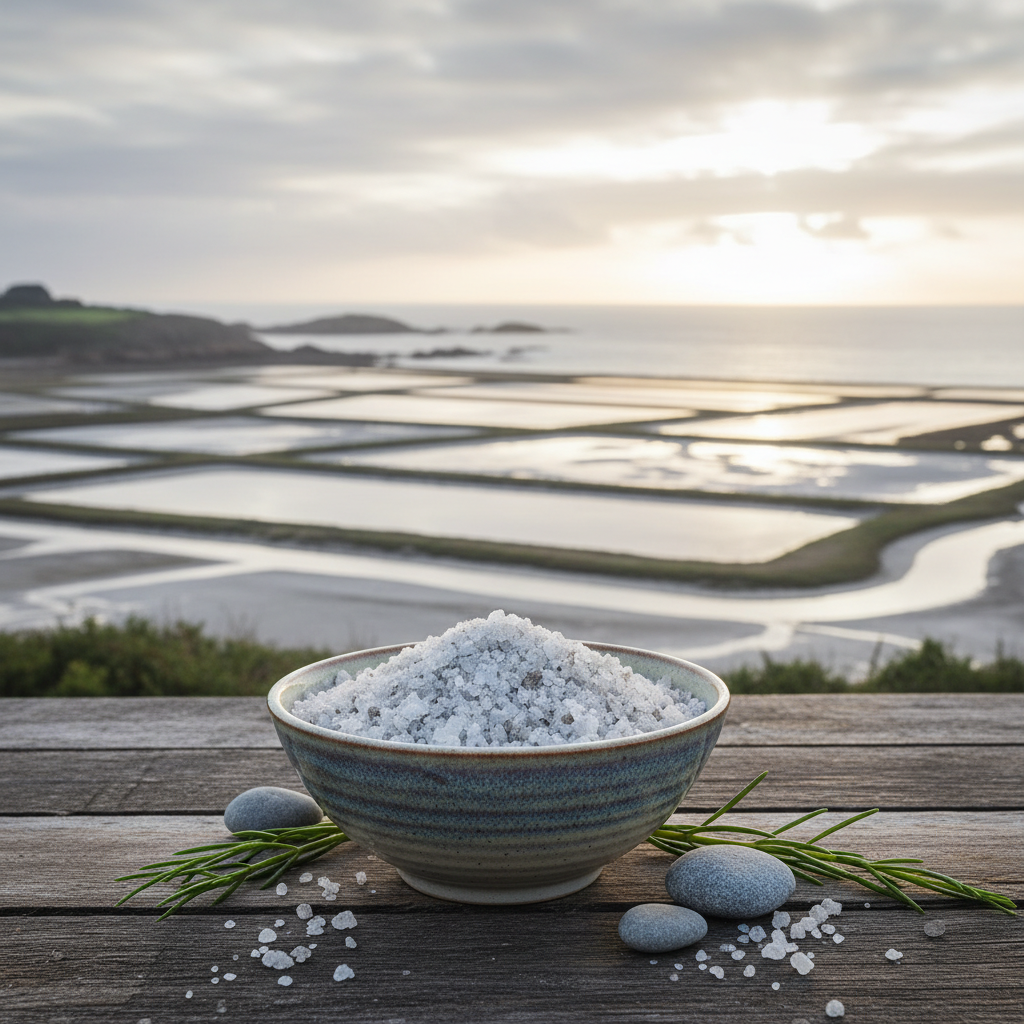
The geographical epicenter of this tradition is the Guérande peninsula in Brittany, a region of northwestern France where the Atlantic Ocean meets a uniquely fertile coastal plain. The salt marshes of Guérande have been cultivated since at least the ninth century, and the landscape itself — an intricate network of clay-lined pools, channels, and earthen banks — has been shaped by generations of salt farmers working in harmony with their environment. The IGP certification (Indication Géographique Protégée) granted to Celtic grey salt from Guérande is a testament to the inseparability of this product from its place of origin. IGP status, the European equivalent of a protected geographical indication, legally guarantees that the salt bearing this designation was produced in this specific region using these specific traditional methods. It is not merely a marketing label; it is a legally enforced promise of authenticity. This matters enormously in an era when food fraud and mislabeling are rampant, and when shoppers deserve to know exactly what they are putting on their tables and into their bodies.
What makes traditional French salt harvesting so compelling in 2026 is its profound sustainability. The marais salants of Guérande function as living ecosystems, supporting diverse communities of birds, fish, crustaceans, and microorganisms. The paludiers who tend these marshes are not extractors in any industrial sense — they are stewards. They remove only what the marsh offers, never depleting or damaging the underlying clay beds that give the salt its distinctive grey color and mineral richness. This is a closed-loop system that has proven itself over more than ten centuries. Modern environmental science has validated what generations of salt farmers already knew intuitively: that traditional, low-impact harvesting preserves biodiversity, maintains water quality, and actually improves the health of coastal wetlands. In a world grappling with the consequences of industrial agriculture and food system collapse, traditional salt harvesting in France stands as a model of what sustainable food production can and should look like.
The cultural dimension of traditional salt harvesting is equally significant and deserves serious attention. The paludiers of Guérande are not simply laborers — they are custodians of an irreplaceable living heritage. Their knowledge, passed down through families and communities across generations, encompasses an intimate understanding of weather patterns, water chemistry, tidal rhythms, and the subtle behavioral cues of the salt itself. This knowledge cannot be replicated by a machine or captured in a manual. It lives in hands, eyes, and instincts honed over years of working in the marshes. UNESCO and various European cultural organizations have recognized the significance of this heritage, and efforts to document and preserve it are ongoing. For consumers, understanding this cultural dimension adds a layer of meaning to every pinch of grey salt they use. They are not simply seasoning a dish — they are participating in a living tradition that connects them to a place, a people, and a practice that has nourished humanity for more than a millennium.
The Science Behind Traditional Salt Harvesting France
The science of traditional salt harvesting begins with the chemistry of seawater and the physics of evaporation. Atlantic seawater contains an average of approximately 35 grams of dissolved salts per liter, composed primarily of sodium chloride but also including significant concentrations of magnesium, calcium, potassium, sulfate, and dozens of trace elements. When seawater is channeled into the shallow pools of the marais salants and exposed to sun and wind, water molecules evaporate while the dissolved minerals remain behind. As the concentration of salts increases, different compounds begin to crystallize at different rates, and the skilled paludier must read the condition of the water carefully to harvest at exactly the right moment. The grey color that distinguishes Guérande salt from white table salt comes from the natural clay of the marsh floor, which imparts both color and a distinctive mineral complexity that no artificial process can replicate.
One of the most scientifically remarkable aspects of traditional French salt harvesting is the preservation of trace mineral content. Industrial salt production typically involves refining processes that strip away everything except sodium chloride, then adding back anti-caking agents, iodine, and other synthetic compounds. Traditional harvesting, by contrast, leaves the mineral matrix entirely intact. Celtic grey salt from Guérande contains over trace minerals whose levels vary by harvest and product, including magnesium, calcium, and potassium — elements that play critical roles in human physiology, from nerve transmission and muscle contraction to bone density and cardiovascular function. The natural moisture retained in traditionally harvested salt (a result of its hygroscopic mineral content, particularly magnesium chloride) is itself a sign of authenticity and mineral richness. Refined salt, by contrast, is bone dry because its mineral compounds have been removed.
The microbiology of the salt marsh is another dimension of the science that is only now receiving the scholarly attention it deserves. Research into the saltern ecosystem — the community of halophilic (salt-loving) microorganisms that inhabit the crystallization pools — has revealed a complex and dynamic biological environment that contributes to the unique character of traditionally harvested salt. These organisms, including various species of halophilic bacteria and archaea, influence the chemical environment of the brine in ways that affect the final mineral composition and flavor profile of the salt. While these microorganisms are not present in meaningful quantities in the finished salt (which is, after all, a highly inhospitable environment for most life forms), their activity during the harvesting process is part of what makes naturally harvested salt so chemically complex and flavorfully interesting compared to its industrially produced counterpart.
Salt Type
Processing Method
Mineral Content
Additives
Moisture
Certification
Celtic Grey Salt (Guérande)
Hand-harvested, unrefined
trace minerals whose levels vary by harvest and product
None
Naturally moist
IGP certified
Standard Table Salt
Mechanically mined, heavily refined
Sodium chloride only
Anti-caking agents, iodine
Dry (mineral-stripped)
None
Fleur de Sel (Guérande)
Hand-skimmed, unrefined
trace minerals whose levels vary by harvest and product
None
Delicately moist
IGP certified
Generic Sea Salt
Evaporated, often refined
Minimal
May include anti-caking agents
Dry
Varies
Rock Salt (generic)
Mined, minimally processed
Some trace minerals
Sometimes
Dry
None
How to Use Traditional Salt Harvesting France — Complete Guide
Understanding how to properly use and appreciate traditionally harvested French salt is as important as knowing where it comes from. The grey salt of Guérande has a distinctly different character from refined table salt, and using it effectively means understanding its texture, moisture content, mineral intensity, and the contexts in which it shines most brilliantly. This is not simply a matter of substituting one salt for another — it is about developing a new relationship with a fundamental ingredient.
Step 1: Choose the Right Format for Your Purpose
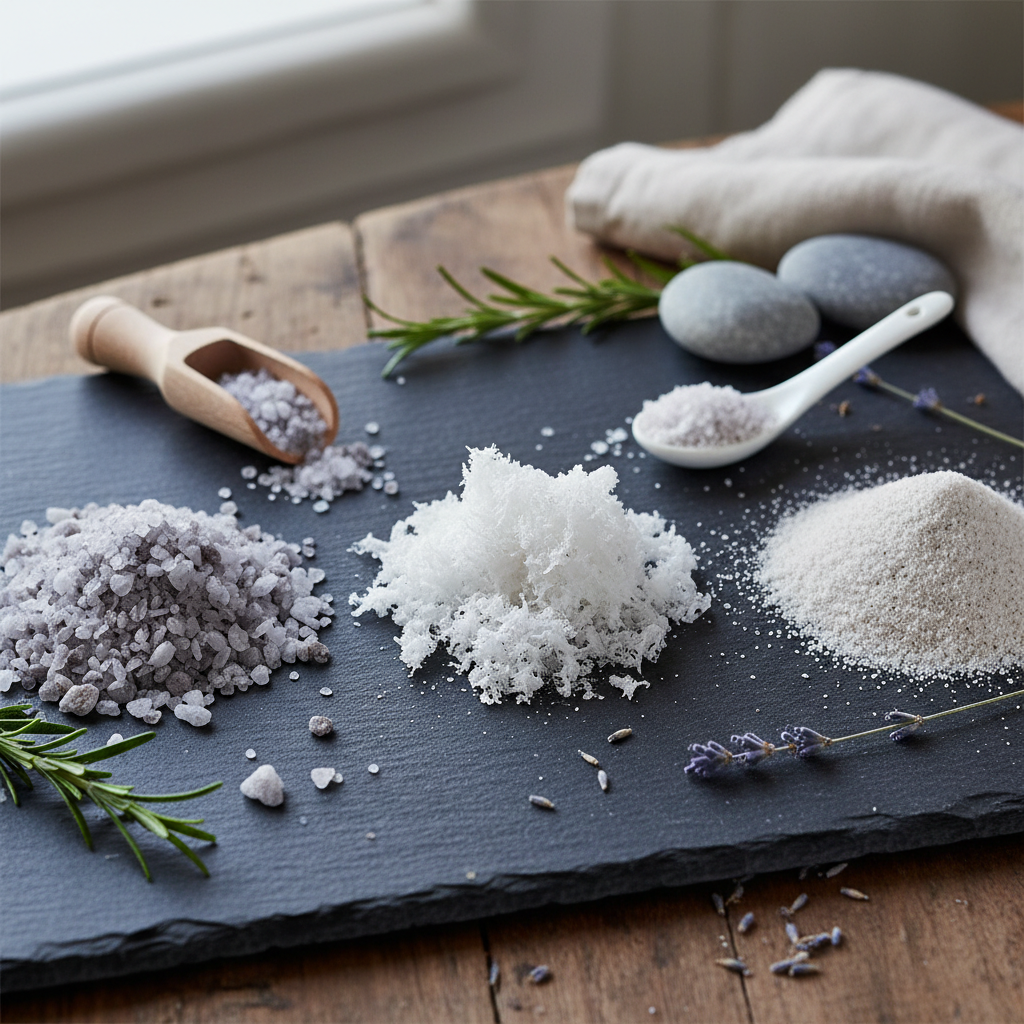
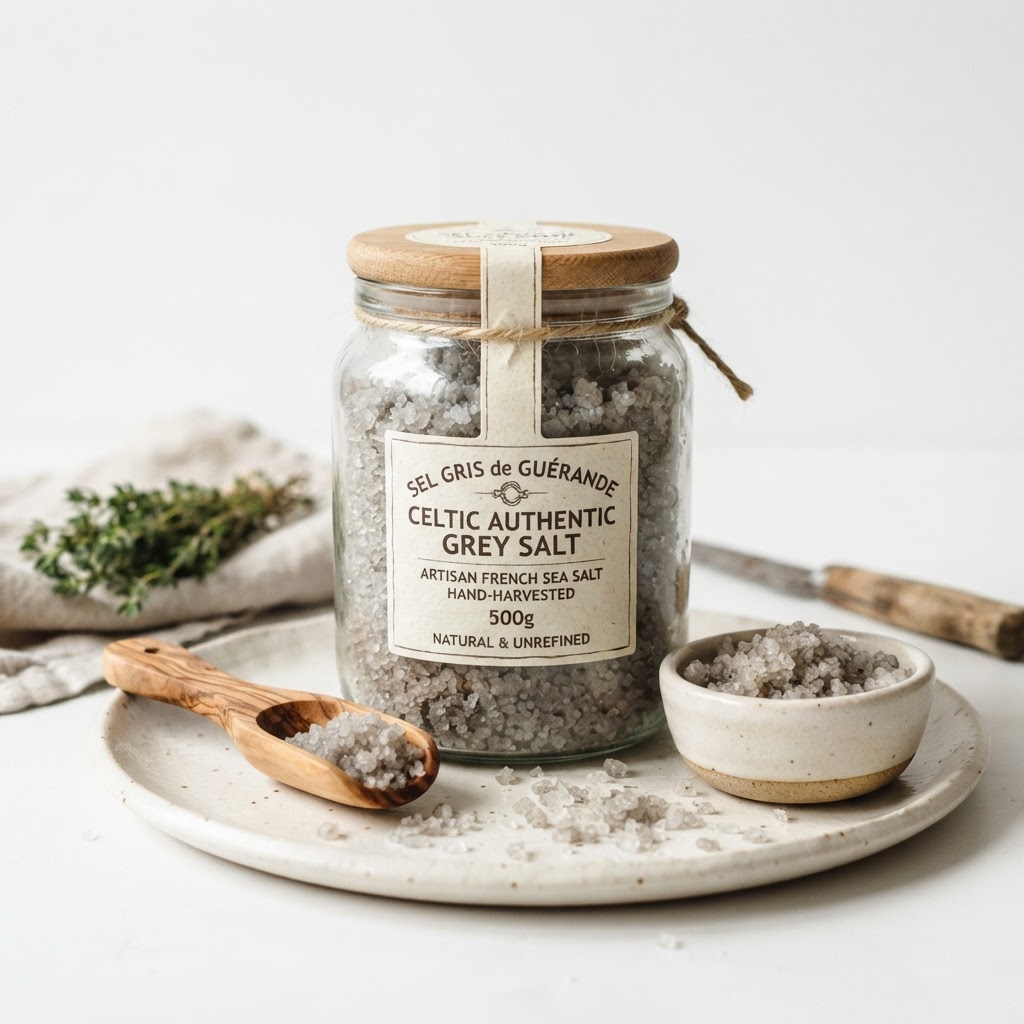
Traditionally harvested French salt from Guérande comes in two primary forms: the coarse grey salt and the delicate Fleur de Sel. Coarse grey salt, available in 500g (17.6 oz) and 250g (8.8 oz) formats, is the workhorse of the kitchen — ideal for salting pasta water, brining meats, seasoning stocks, and finishing hearty dishes. Fleur de Sel, available in a 200g (7.1 oz) format, is the prized surface bloom of the salt marsh, harvested only on calm sunny days when delicate crystals form on the water's surface. It is best used as a finishing salt — sprinkled over dishes just before serving to provide bursts of flavor and a satisfying textural crunch.
Because traditionally harvested grey salt retains its full mineral complexity, it delivers a more rounded, less harsh saltiness than refined table salt. Many cooks find they can use slightly less of it to achieve the same level of seasoning, which is both economically sensible and health-conscious. Begin by using approximately three-quarters of the quantity you would typically use with refined salt, then taste and adjust. Over time, your palate will recalibrate to appreciate the subtler, more complex flavor profile that natural salt provides.
Step 3: Use It at the Right Moment
For cooking purposes, add coarse grey salt to water before boiling, to brines and marinades, and to the cooking vessel when roasting or braising. For finishing purposes, add Fleur de Sel or a pinch of coarse grey salt at the very end — over grilled fish, a ripe tomato, fresh cheese, chocolate desserts, or a perfectly cooked steak. The timing of salt addition profoundly affects its impact on a dish, and traditional salt's mineral complexity makes it especially rewarding when used at the finish, where its full character can be experienced without being cooked away.
Step 4: Store It Properly
Traditional grey salt's natural moisture content, while a sign of its mineral richness, means it requires slightly more careful storage than refined salt. Keep it in a sealed ceramic, glass, or wooden container away from direct sunlight and extreme heat. Avoid plastic containers if possible, as the salt's moisture can interact with certain plastics over time. Properly stored, traditionally harvested salt lasts indefinitely — salt is inherently self-preserving. A small wooden salt cellar kept near the stove is both practical and aesthetically fitting for a product of this character.
Practical Tips for Everyday Use:
Use grey salt liberally in pasta water — a generous pinch per liter of water seasons the pasta from within and doesn't require as much finishing salt at the table
Crush coarse crystals between your fingers before adding to delicate dishes for more even distribution
Use Fleur de Sel on fresh butter and bread as a standalone experience — it needs nothing else to demonstrate its quality
Add to salad dressings and vinaigrettes where its mineral depth adds complexity without harshness
Use in baking — bread, focaccia, and butter-based pastries respond especially well to the earthy undertone of naturally harvested salt
Experiment with salt-crusted preparations for fish or poultry, using coarse grey salt generously to create an aromatic, mineral-rich crust
Benefits of Traditional Salt Harvesting France Backed by Evidence
One of the most frequently discussed benefits of traditionally harvested French salt is its mineral profile, which stands in stark contrast to that of refined salt. The over trace minerals whose levels vary by harvest and product found in Celtic grey salt from Guérande — including magnesium, calcium, and potassium — are not present by accident or by design, but because they occur naturally in Atlantic seawater and are preserved through the unrefined harvesting process. Magnesium, for instance, plays a role in over 300 enzymatic reactions in the human body, supporting everything from energy metabolism to protein synthesis to muscle and nerve function. While salt is not a primary dietary source of magnesium, using a mineral-rich salt rather than a stripped-down refined product means that every pinch contributes to rather than detracts from nutritional completeness. This is a genuine, evidence-based distinction between traditional and industrial salt, not a marketing fiction.