What Is Sustainable Sea Salt Harvest and Why It Matters in 2026
Sustainable sea salt harvest is the practice of collecting salt from coastal tidal marshes, lagoons, and evaporation basins using traditional, low-impact methods that preserve local ecosystems, maintain biodiversity, and ensure that salt production can continue for generations to come. Unlike industrial salt mining — which involves mechanical extraction, chemical processing, and the disruption of enormous tracts of land and ocean floor — sustainable sea salt harvesting works with the natural environment rather than against it. In regions like Guérande, Brittany, in northwestern France, this practice has been refined over more than a thousand years, creating a model of food production that is simultaneously ancient and urgently relevant in 2026, as consumers and policymakers increasingly demand accountability from the industries that feed them.
The urgency of this conversation has never been greater. In 2026, the global food system faces compounding crises: rising sea levels, coastal erosion, overfishing, and the industrialization of nearly every agricultural input — including something as seemingly simple as salt. The vast majority of the salt consumed worldwide is produced through large-scale evaporation ponds, rock salt mining, or brine solution mining, all of which carry significant environmental costs. Heavy machinery compacts soil, drainage systems disrupt wetland hydrology, and chemical additives introduced during processing — including anti-caking agents and bleaching compounds — end up in wastewater streams. Against this backdrop, the traditional salt marsh, tended by hand and harvested with wooden tools, represents not just a romantic relic but a working blueprint for responsible mineral extraction.
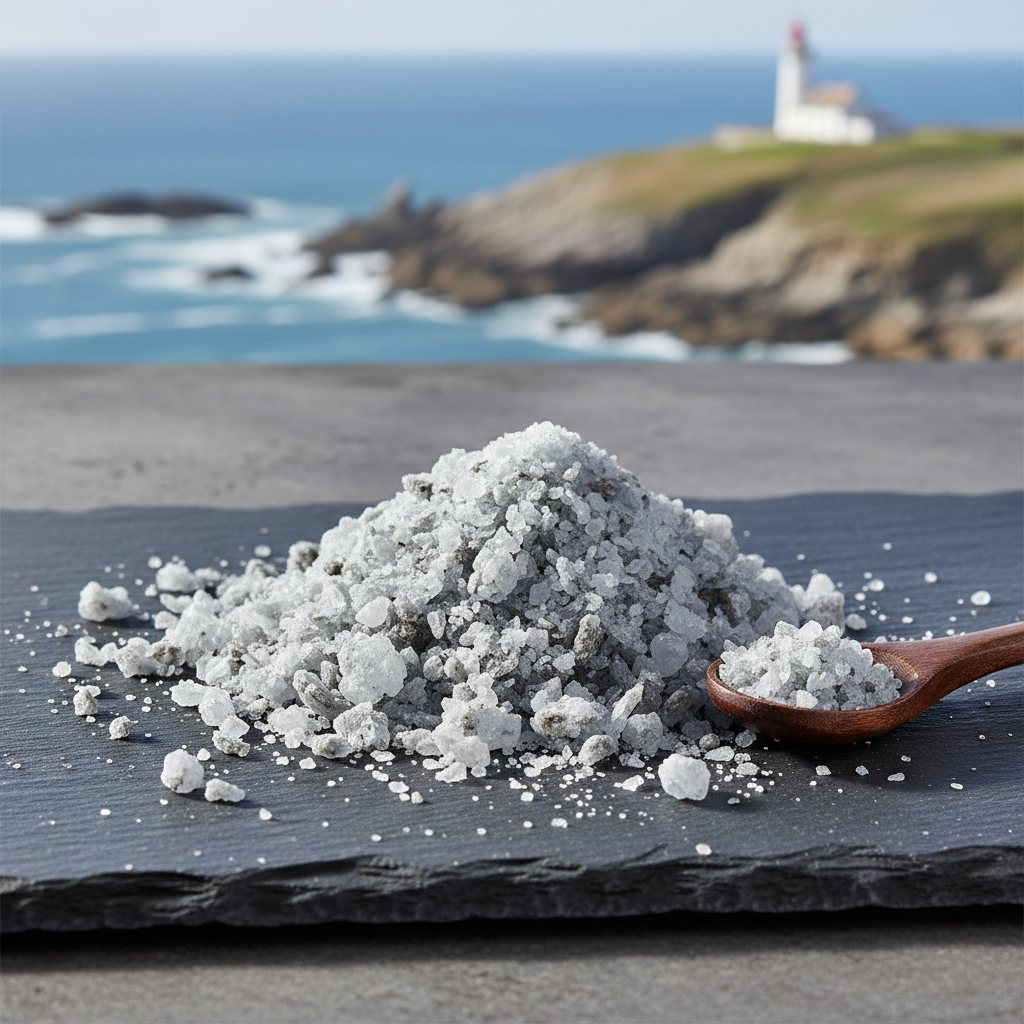
The paludiers of Guérande — the salt farmers who work the iconic grey salt marshes of Brittany — have maintained their craft with minimal alteration for centuries. Their oeillets, the shallow clay-lined harvest ponds, are living ecosystems. Algae, brine shrimp, migratory birds, and a host of invertebrates depend on these carefully managed salt flats. The clay lining of the Guérande ponds, a geological feature unique to the region, naturally imparts the characteristic grey color to the salt while also contributing a spectrum of over 80 trace minerals including magnesium, calcium, and potassium. There are no additives, no bleaching agents, no mechanical drying processes. The salt dries under the Atlantic sun and wind, is raked gently to the edges by the paludier's long-handled lousse, and is collected by hand. This process leaves the marsh intact, ready to produce again with the next tide cycle.
Why does any of this matter to you, sitting at a kitchen table in 2026? Because every purchasing decision is a vote for a food system. When consumers choose industrially produced table salt, they fund a supply chain that strips minerals from the product, adds synthetic compounds back in, and treats coastal wetlands as industrial sacrifice zones. When consumers choose authentic, traditionally harvested grey salt from a place like Guérande — whose production methods are protected and certified under the European IGP (Indication Géographique Protégée) designation — they are supporting living marshes, skilled artisan workers earning fair wages, and a model of low-carbon food production that environmental scientists increasingly recognize as a template for sustainable coastal management. Sustainable sea salt harvest is not a niche concern. It is a case study in how traditional ecological knowledge can solve modern environmental problems.
The Science Behind Sustainable Sea Salt Harvest
To understand why sustainable sea salt harvesting works as an ecological model, it helps to understand the basic science of how tidal salt marshes function. These coastal wetlands — known in France as marais salants — are among the most biologically productive ecosystems on Earth. They filter water, sequester carbon, buffer coastlines against storm surges, and support extraordinary concentrations of wildlife. The Guérande salt marshes, covering roughly 2,000 hectares on the Atlantic coast of Brittany, are classified as a Natura 2000 protected zone, recognizing their status as a habitat of European conservation importance. The key to their ecological value is precisely the thing that makes traditional salt farming possible: a stable, carefully managed system of water flow, evaporation, and mineral concentration driven entirely by tidal and solar energy.
The mineral profile of traditionally harvested grey salt is directly produced by the science of this ecosystem. As Atlantic seawater flows through a sequence of increasingly shallow evaporation ponds, it concentrates progressively. In the early stages, calcium sulfate precipitates out. In the intermediate stages, sodium chloride — ordinary table salt — begins to crystallize. But the final harvest ponds, lined with the specific grey-blue clay of the Guérande subsoil, retain a complex brine in which magnesium chloride, potassium chloride, calcium, and dozens of other trace minerals remain dissolved in the salt crystals as they form. This is why authentic grey salt from Guérande contains over 80 trace minerals and retains measurable moisture — not as a sign of contamination, as some critics mistakenly suggest, but as evidence of an unrefined, mineral-rich product. Industrially produced salt, by contrast, is typically 99.9% sodium chloride, with everything else stripped away during refining.
Carbon footprint science also strongly favors sustainable sea salt harvesting. A life cycle assessment of traditional hand-harvested salt versus industrially produced table salt reveals dramatic differences in energy consumption. Traditional harvesting relies on solar evaporation and human labor — effectively zero direct fossil fuel input at the point of harvest. Industrial salt production, particularly rock salt mining and mechanical sea salt harvesting, requires significant diesel and electrical energy for excavation, conveying, washing, drying, and milling. Research into traditional food production systems consistently identifies hand-harvested salt as among the lowest carbon-intensity food products available. When you factor in the carbon sequestration capacity of intact salt marsh ecosystems — which can store carbon at rates comparable to forest ecosystems — sustainably managed salt marshes become a genuine climate asset rather than a liability.
| Production Method | Mineral Content | Additives | Ecosystem Impact | Carbon Intensity |
|---|---|---|---|---|
| Traditional hand-harvest (Guérande) | 80+ trace minerals | None | Positive — supports wetland biodiversity | Very low (solar/human energy) |
| Industrial sea salt evaporation | Mostly NaCl (refined) | Anti-caking agents, iodine | Moderate to high disruption | Moderate (mechanical processing) |
| Rock salt mining | Mostly NaCl | Various additives | High — land disruption, water table impact | High (excavation machinery) |
| Vacuum evaporated table salt | 99.9% NaCl | Multiple additives | Brine extraction impacts | High (energy-intensive drying) |
How to Use Sustainable Sea Salt Harvest — Complete Guide
Understanding sustainable sea salt harvest is only half the picture. The practical question for most people is: how do I actually use high-quality, traditionally harvested grey salt in my daily life, and how do I get the most from it? The answer lies in understanding the properties that distinguish this salt from the refined white powder most people grew up with, and then letting those properties guide your cooking and wellness practices.
Step 1: Understand the texture and moisture of grey saltAuthentic grey salt from Guérande is moist, coarse, and grey-tinted. The moisture is not a flaw — it is a sign of intact mineral content and an absence of artificial drying. This moisture makes the salt slightly clumping, which is normal. Store it in a ceramic or wooden container rather than a sealed metal tin to allow minor airflow. Avoid glass with tight lids for long-term storage, as condensation can cause excessive clumping. A traditional French clay salt pig is ideal.
The difference a real salt makes: Discover Celtic Grey Salt →
Coarse grey salt performs beautifully as a cooking salt — use it in your pasta water, in brines for poultry and vegetables, in bread doughs, and in slow-cooked soups and stews where its mineral complexity has time to fully dissolve and contribute to flavor depth. The magnesium content in particular contributes a subtle, slightly earthy sweetness that balances bitterness in slow-cooked dishes. For finishing — sprinkling on food just before serving — use it lightly crushed between your fingers. The irregular crystal structure gives pleasing bursts of salinity on steaks, roasted vegetables, chocolate desserts, and fresh cheeses.
Step 3: Explore Fleur de Sel for delicate applicationsFleur de Sel — the delicate crystals that form on the very surface of the evaporation pond on calm, sunny days — is the most prized product of the sustainable harvest. Harvested in even smaller quantities than grey salt, Fleur de Sel has a lighter texture, a flakier crystal structure, and a subtler flavor profile. It is best used exclusively as a finishing salt: on ripe tomatoes, on butter caramels, on poached fish, on a good piece of dark chocolate. Cooking destroys the delicate crystal structure, so save Fleur de Sel for the final moment before eating.
Step 4: Use grey salt in wellness and self-care routinesBeyond the kitchen, grey salt from Guérande has a long tradition of use in therapeutic bathing. A handful of grey salt dissolved in a warm bath provides a gentle mineral soak. The high magnesium content may support muscle relaxation — magnesium is well-documented as essential for neuromuscular function. Use it as a body scrub base by combining with a neutral oil. Some practitioners of traditional European natural wellness also use diluted grey salt solutions as a nasal rinse or gargle, though you should consult a healthcare professional before any therapeutic application.
- Use coarse grey salt in pasta water, brines, and slow-cooked dishes
- Crush lightly between fingers for finishing on meats and roasted vegetables
- Use Fleur de Sel exclusively as a final-touch finishing salt
- Store in ceramic, wood, or unglazed clay containers
- Add to bath water for a mineral soak experience
- Combine with olive oil for an exfoliating body scrub
- Allow natural moisture — do not attempt to oven-dry authentic grey salt
Benefits of Sustainable Sea Salt Harvest Backed by Evidence
The benefits of sustainable sea salt harvest operate simultaneously at multiple levels: ecological, nutritional, economic, and cultural. At the ecological level, the evidence is perhaps most straightforward. Peer-reviewed research published in wetland ecology journals consistently identifies traditionally managed salt marshes as biodiversity hotspots. The Guérande marshes support populations of birds including the black-winged stilt, the avocet, and multiple species of wading birds that would have no habitat in this coastal zone if it were industrialized or allowed to revert to unmanaged scrub. The carefully maintained water levels, controlled salinity gradients, and absence of pesticides or synthetic chemicals create conditions that support the base of the aquatic food chain — phytoplankton, brine fauna, invertebrates — which in turn feed higher species. Sustainable harvesting doesn't just avoid harm; it actively creates and maintains habitat.
From a nutritional standpoint, the scientific case for unrefined, mineral-rich salt over refined table salt is increasingly compelling. Magnesium, one of the 80+ trace minerals present in authentic Guérande grey salt, is involved in over 300 enzymatic reactions in the human body, including protein synthesis, muscle and nerve function, blood glucose control, and blood pressure regulation. The World Health Organization has noted magnesium deficiency as a growing public health concern in populations consuming highly processed diets. While salt should be consumed in moderation and is not a primary dietary source of minerals, the difference between consuming trace minerals in their natural food matrix versus consuming pure sodium chloride with synthetic additives is meaningful over a lifetime of use. Potassium and calcium, also present in grey salt, play complementary roles in cardiovascular and skeletal health respectively.