Hand-harvested Guérande salt · Tracked international delivery included
Guide· by Celtic Salt Editorial Team
Organic French Sea Salt
What Is Organic French Sea Salt and Why It Matters in 2026
Organic French sea salt is one of the most prized and carefully harvested mineral salts available anywhere in the world today. Produced along the Atlantic coastline of France, particularly in the legendary salt marshes of Guérande in Brittany, this exceptional product has been cultivated using traditional hand-harvesting methods that have remained virtually unchanged for over a thousand years. Unlike industrially processed table salt, which is stripped of its natural minerals and often treated with anti-caking agents and chemical additives, organic French sea salt retains the full spectrum of trace minerals that occur naturally in Atlantic seawater. These minerals — including magnesium, calcium, potassium, iron, and dozens of other micro-elements — give the salt its characteristic grey colour, its moist texture, and the complex, briny flavour that professional chefs and home cooks alike have come to treasure. As consumers become increasingly aware of what they are putting into their bodies, the demand for clean, minimally processed, certified organic food products has surged dramatically, and organic French sea salt sits at the very pinnacle of that growing movement.
The term "organic" when applied to sea salt carries a specific and meaningful weight. In France, organic certification for sea salt — often granted under the AB (Agriculture Biologique) label or equivalent European Union organic standards — confirms that the salt has been harvested from unpolluted, carefully managed natural environments, that no synthetic chemicals or artificial treatments have been used at any stage of production, and that the entire supply chain from marsh to packaging meets rigorous independent audit standards. The salt marshes of Guérande, situated on the southern coast of Brittany between the Loire-Atlantique and the Morbihan departments, are protected natural wetland areas. They serve not only as a source of extraordinary salt but also as vital ecological habitats for migratory birds, rare plant species, and diverse marine life. When you choose organic French sea salt sourced from this region, you are supporting a form of land stewardship and food production that actively benefits the natural world rather than depleting it. This is a key reason why awareness of and demand for this product is growing so powerfully as we move deeper into 2026.
The broader food and wellness landscape in 2026 has shifted considerably in favour of whole, unprocessed, and transparently sourced ingredients. Across Europe and North America, consumers are reading labels more carefully than ever before, seeking out products with short ingredient lists, verifiable origin stories, and certifications that mean something real. Organic French sea salt checks every single one of these boxes. It has one ingredient: salt. It comes from a specific, named, historically significant place. It carries certifications that require regular third-party inspection and verification. And it delivers a sensory experience — in terms of texture, flavour complexity, and visual beauty — that mass-produced table salt simply cannot match. Whether you are a professional chef trying to elevate the quality of your dishes, a health-conscious consumer trying to reduce your intake of refined and additive-laden products, or a food enthusiast who simply appreciates the extraordinary, organic French sea salt from Guérande represents one of the most rewarding ingredient upgrades you can make in your kitchen.
Beyond the individual consumer, organic French sea salt matters in 2026 because it represents a broader argument about how we should relate to the food systems that sustain us. Industrial salt production is an extractive, energy-intensive process that produces a product of inferior nutritional and culinary quality. Traditional salt farming, by contrast, is a living, breathing collaboration between human skill and natural forces — the tides, the sun, the wind, and the microorganisms that give Guérande's grey salt its unique mineral signature. The paludiers (salt farmers) of Brittany are custodians of an ancient craft, and each harvest they undertake is a direct continuation of a food tradition that stretches back to the early Middle Ages. Supporting organic French sea salt is, in a very real sense, a vote for this kind of thoughtful, sustainable, ecologically responsible food production over the anonymous, chemically managed alternative. As the global food movement continues to evolve in 2026 and beyond, that vote carries more significance than ever before.
The Complete Guide to Organic French Sea Salt
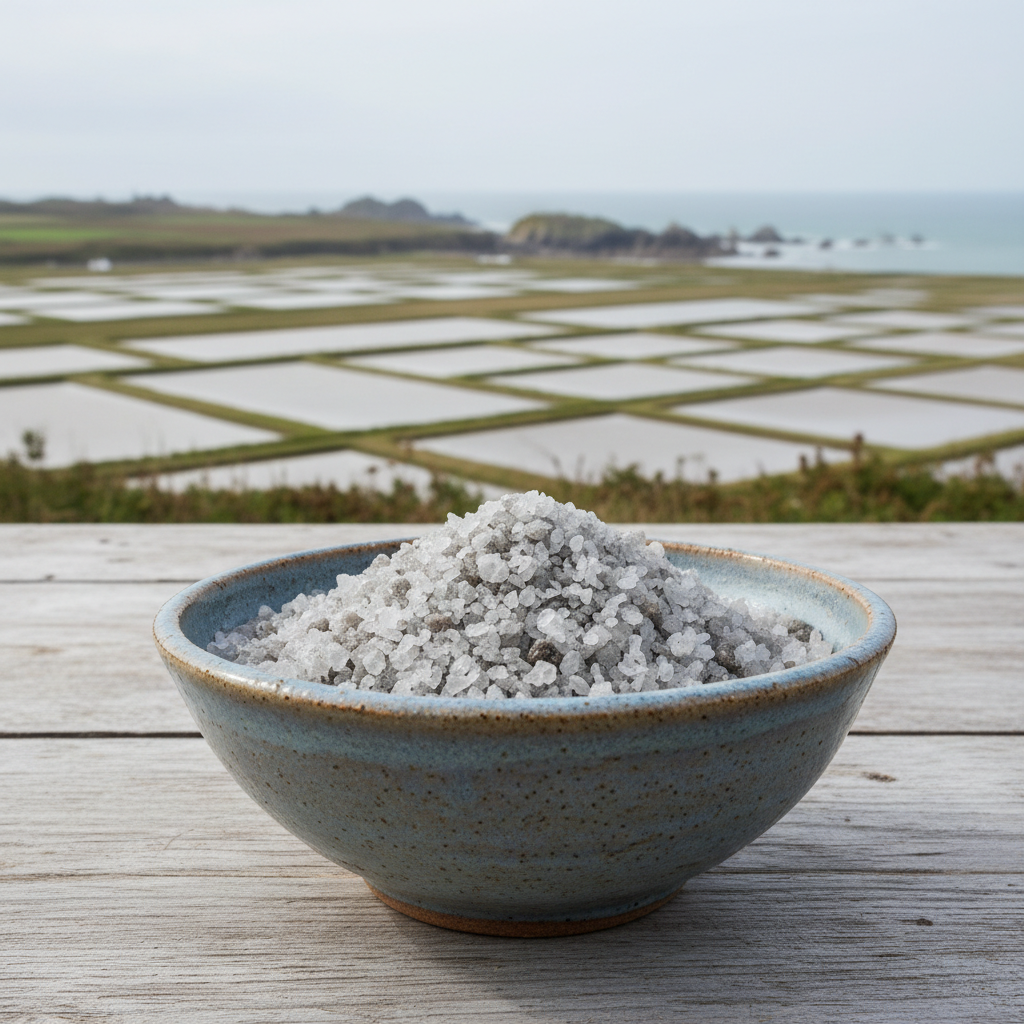
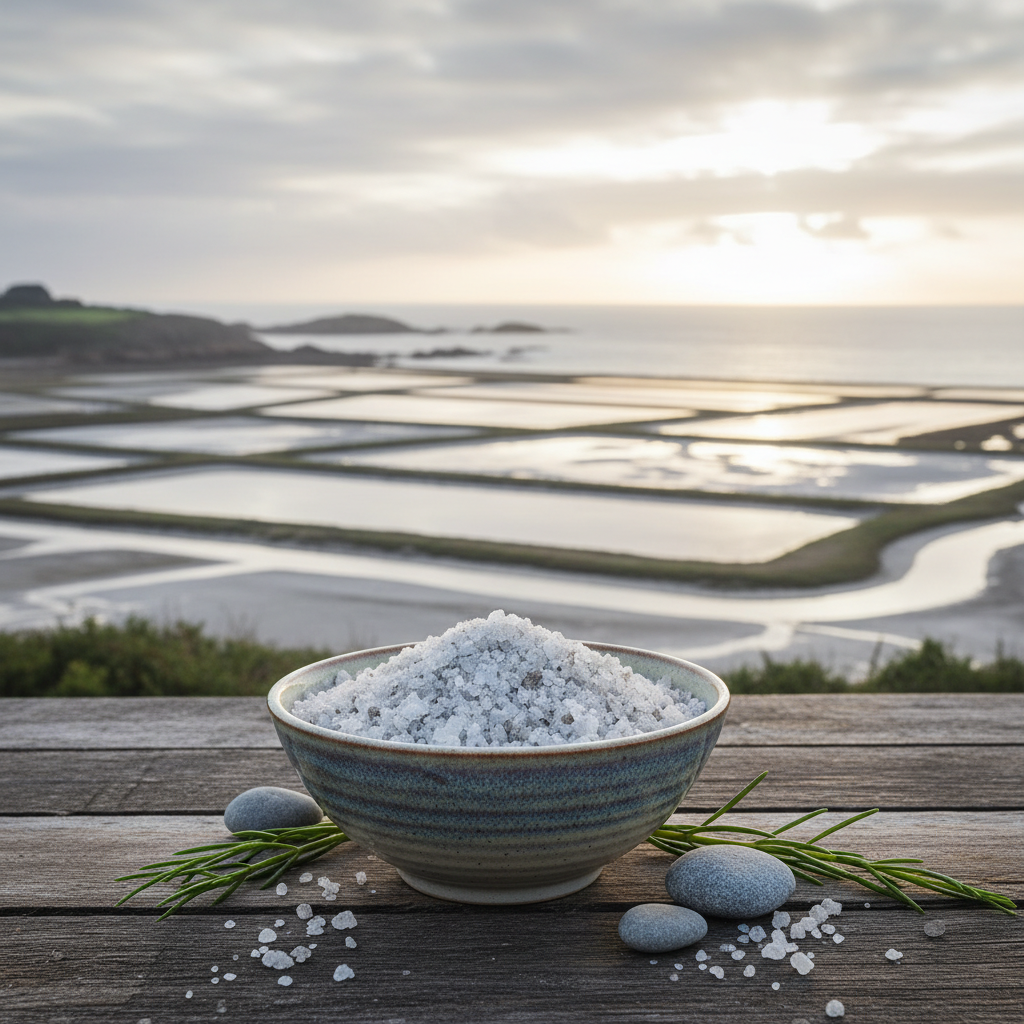
Understanding organic French sea salt fully means understanding where it comes from, how it is made, and what distinguishes the various grades and forms available to consumers. The salt marshes of Guérande stretch across approximately 2,000 hectares of carefully maintained wetland terrain. These marshes are not natural formations in the wild sense — they are elaborate, human-engineered systems of channels, clay-lined basins, and crystallisation pans that have been maintained and refined by generations of paludiers over more than a millennium. Seawater from the Atlantic enters the marsh system through a network of channels, progressively concentrating as it moves through a series of larger reservoirs into smaller, shallower evaporation pans called oeillets. It is in these oeillets that salt crystallises under the combined action of sun and wind during the harvest season, which typically runs from June through September.
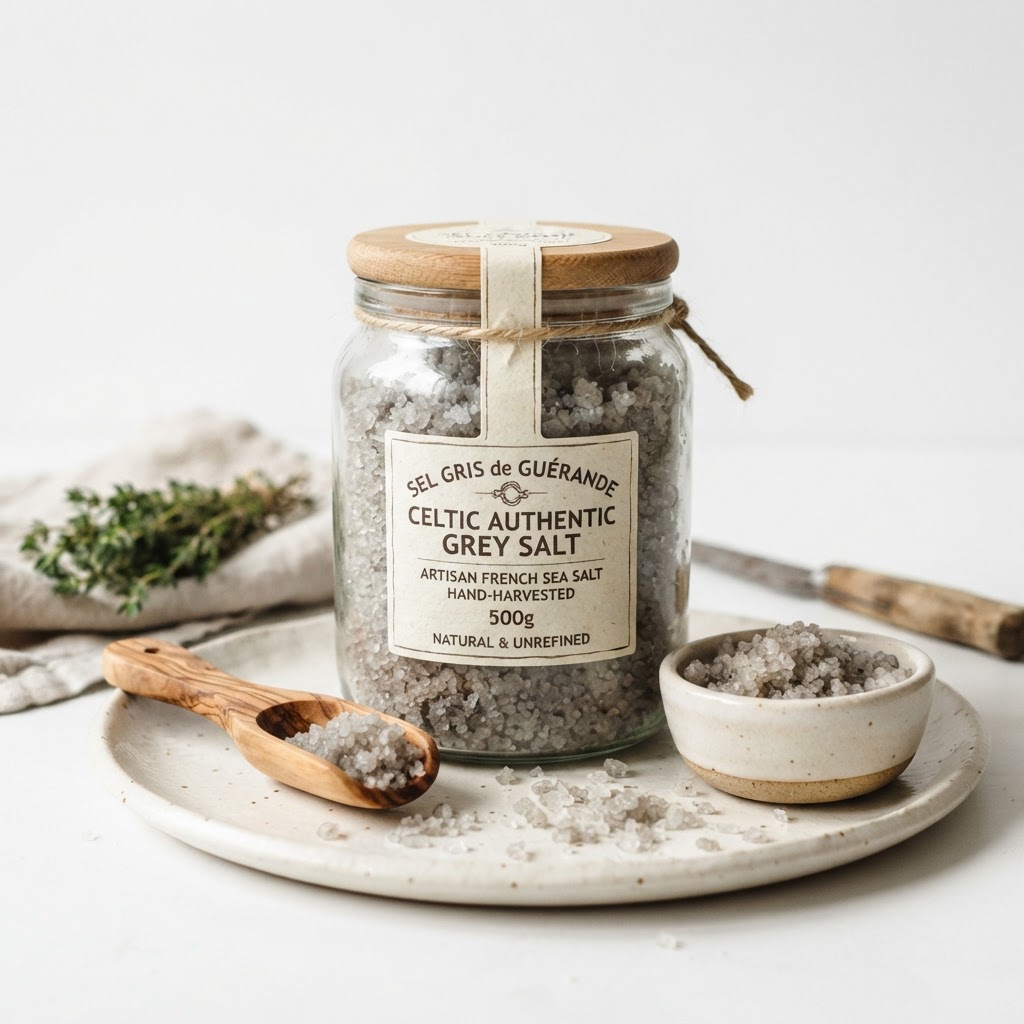
The grey colour that is so characteristic of authentic Guérande sea salt comes from the specific clay minerals present in the floors of these crystallisation pans. As salt crystals form and settle, they absorb trace elements from the clay substrate, giving the finished product both its distinctive colour and a significant portion of its mineral richness. This is not contamination or impurity — it is precisely the quality that makes Guérande grey salt so nutritionally and culinarily valuable. The clay minerals contribute magnesium, silica, and a host of other micro-nutrients that are entirely absent from refined white table salt. The moisture content of authentic grey sea salt is also notable: it should feel slightly damp to the touch, not bone dry. This residual moisture is part of the salt's natural character and helps carry its mineral flavours onto food during cooking and seasoning.
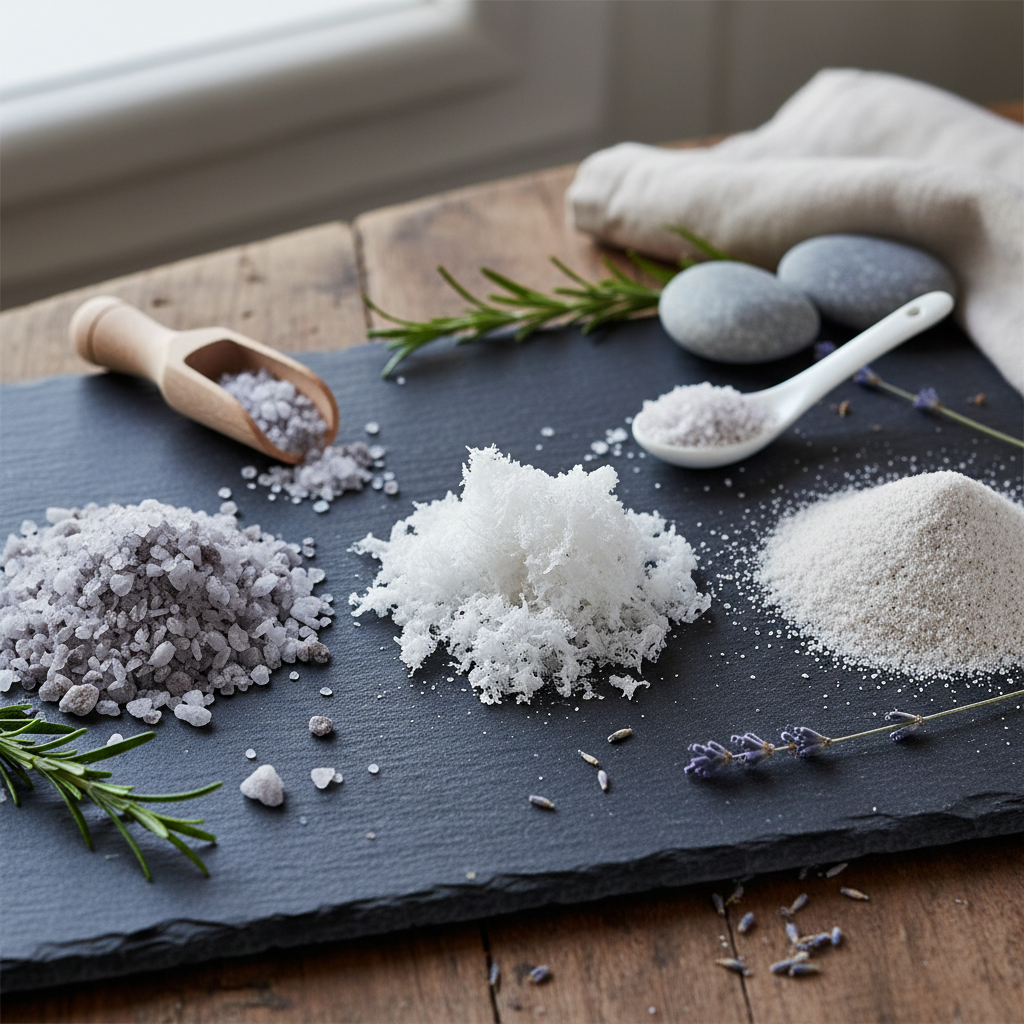
There are two primary grades of organic French sea salt that consumers encounter. The first is the coarse grey salt, known in French as gros sel, which consists of larger crystals harvested from the bottom and sides of the oeillets using a long-handled wooden tool called a las. This coarse salt is ideal for cooking applications where it will be dissolved into water — pasta cooking, brining meats and vegetables, preparing stocks, or seasoning large cuts of meat before slow cooking. The second grade is fleur de sel, the celebrated "flower of salt" that forms as a delicate crust on the surface of the water during particularly calm, sunny days. Fleur de sel is hand-skimmed using a special flat rake and represents the finest, most labour-intensive, and most expensive product of the salt marsh. Its crystals are lighter, crunchier, and more subtly flavoured than coarse grey salt, and it is used almost exclusively as a finishing salt — added to food at the very last moment to provide a burst of mineral flavour and a satisfying textural contrast.
When organic certification is added to the equation, consumers gain additional assurance about the production environment and the harvesting practices. Certified organic French sea salt must be produced in marshes that meet strict environmental standards, free from pesticide runoff, industrial pollution, and other forms of chemical contamination. The certification process also governs packaging and handling, ensuring that no synthetic additives are introduced after harvest. For consumers who are particularly sensitive to additives like sodium ferrocyanide (an anti-caking agent commonly used in table salt) or who follow strict clean-eating protocols, organic certification provides an important layer of confidence and transparency. It is worth noting that genuine Guérande salt, even without organic certification, is traditionally produced without additives of any kind — but organic certification formalises and verifies this commitment through independent auditing. You can explore a carefully curated selection of authentic certified organic products at celtic-salt.com/produits.
Health and Culinary Benefits
The health-related conversation around salt has become considerably more nuanced in recent years, and organic French sea salt sits in an interesting and favourable position within that evolving discussion. For decades, the public health message around sodium was almost universally negative — reduce your salt intake, full stop. While it remains true that excessive sodium consumption is associated with elevated blood pressure in sodium-sensitive individuals, a growing body of nutritional research has begun to distinguish between the effects of refined, additive-laden sodium chloride and the more complex mineral profile offered by natural, unrefined sea salts. The mineral companions to sodium chloride in organic French sea salt — particularly magnesium — may play a role in how the body processes and responds to sodium, though it is important to note that sea salt is not a medicinal product and should not be consumed as a substitute for medical advice or treatment.
What can be said with confidence is that the trace mineral content of authentic Guérande grey salt is genuinely impressive and meaningfully different from that of refined table salt. Magnesium, which is present in notable quantities in grey sea salt, is one of the most commonly deficient minerals in modern Western diets and plays a role in hundreds of enzymatic processes throughout the body. Calcium, potassium, iron, zinc, iodine, and a constellation of other micro-minerals are also present in small but real quantities. While sea salt is not a primary dietary source of these nutrients — the amounts per serving are relatively modest — the fact that they are present at all, compared to their near-total absence in refined salt, represents a meaningful nutritional step in the right direction for everyday cooking. The cumulative effect of using a more mineral-rich salt across thousands of meals over months and years is a consideration worth taking seriously.
From a culinary perspective, the benefits of organic French sea salt are perhaps even more immediately apparent than its nutritional advantages. The flavour profile of grey Guérande salt is often described by professional chefs as "oceanic," "round," "complex," and "lingering" — a stark contrast to the sharp, one-dimensional saltiness of refined table salt. This complexity comes from the mineral content: magnesium and other elements interact with taste receptors in ways that create a more satisfying and multidimensional seasoning experience. Dishes seasoned with authentic grey sea salt often require less total salt to achieve the desired level of seasoning, because the flavour impact is greater. This is a practical culinary benefit that any attentive home cook can verify through direct experimentation. The slightly moist texture of grey salt also means it adheres well to the surface of food — crusts of bread, grilled meats, roasted vegetables — creating pockets of intense mineral flavour at the point of contact.
Fleur de sel, the premium finishing grade of organic French sea salt, delivers an additional textural dimension that has made it indispensable in fine dining kitchens around the world. Its fragile, pyramidal crystals provide a delicate crunch when they meet the palate — an experience that is simultaneously sensory and aesthetic. Used as a finishing touch on a perfectly seared piece of fish, a slice of ripe tomato drizzled with good olive oil, or even a square of high-quality dark chocolate, fleur de sel transforms a good dish into a memorable one. This is not culinary mythology or marketing language — it is a straightforward consequence of using a salt that has not been processed, heated, or stripped of everything that makes it interesting. You can read more about how grey salt and fleur de sel compare in terms of flavour and application in our dedicated article on the complete guide to Guérande salt varieties.