Hand-harvested Guérande salt · Tracked international delivery included
GuideJune 25, 2026· by Celtic Salt Editorial Team
Natural sea salt no additives
What Is Natural Sea Salt No Additives and Why It Matters in 2026
Natural sea salt with no additives is exactly what its name promises: salt harvested directly from seawater, dried by sun and wind, and packaged without any chemical processing, anti-caking agents, bleaching treatments, or artificial enrichments. In an era when food labels grow increasingly complex and consumer awareness has never been higher, understanding what truly belongs in your salt shaker has become a matter of genuine health importance. The global conversation around clean eating, major grocery stores, and minimally processed ingredients has placed natural, additive-free sea salt firmly at the center of thoughtful kitchen decisions. Unlike conventional table salt — which is typically mined, heavily refined, stripped of its natural mineral content, and then treated with additives like sodium ferrocyanide, magnesium carbonate, or silicon dioxide to prevent clumping — genuine natural sea salt retains the full complexity of its oceanic origin. That complexity includes moisture, color, texture, and most importantly, a broad spectrum of naturally occurring trace minerals that refined salt simply cannot offer.
The significance of choosing additive-free sea salt extends well beyond culinary preference. In 2026, a growing body of nutritional awareness points to the importance of not just what nutrients we consume, but what we avoid consuming unnecessarily. Anti-caking agents in conventional table salt, while considered safe at regulatory doses, are chemical compounds that serve no nutritional purpose whatsoever. They exist purely for the manufacturer's convenience — to keep salt flowing freely in humid conditions. When you choose a natural sea salt with no additives, you are making a deliberate decision to simplify your food, to trust the process of nature over industrial chemistry, and to consume a mineral that has nourished human civilizations for thousands of years in its most authentic form. The paludiers — traditional French salt farmers — of Guérande, Brittany, have practiced this philosophy for over a millennium, and their methods have changed remarkably little because they need not change: nature, allowed to operate on its own terms, produces something extraordinary.
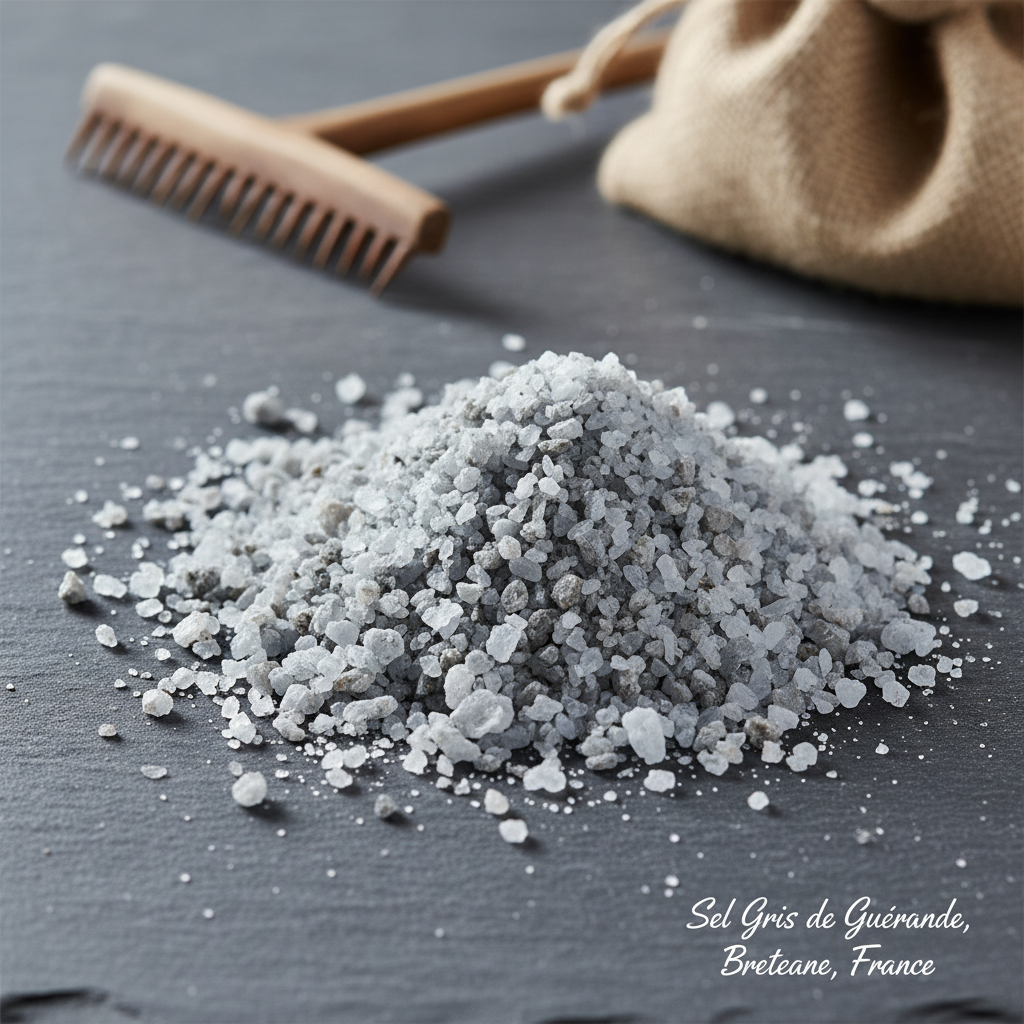
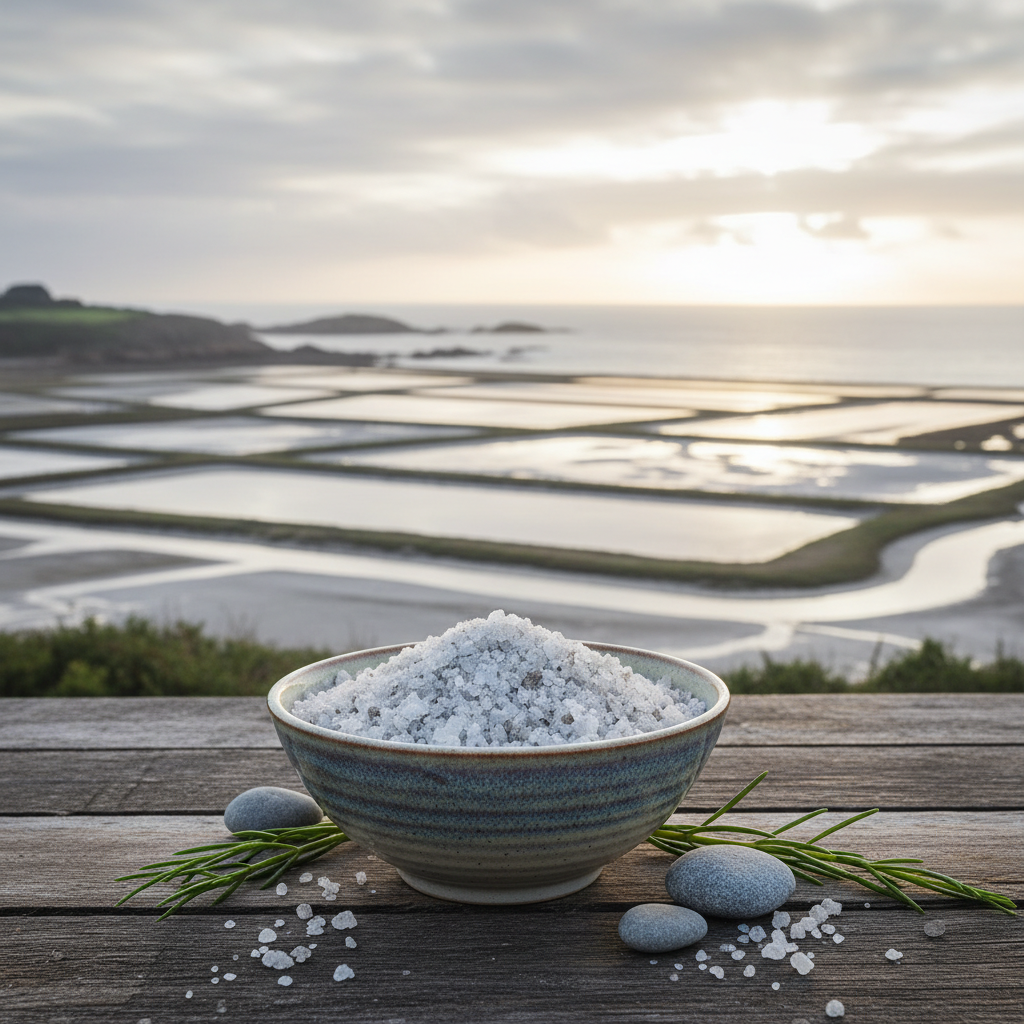
The Guérande salt marshes of Brittany, France, represent one of the most carefully managed and geographically significant salt-producing regions in the world. Protected by IGP certification — Indication Géographique Protégée, a European quality designation that legally ties a product to its place of origin — Celtic grey salt from this region can only bear its name if it is genuinely produced in the Guérande basin, hand-harvested by trained paludiers, and left entirely unrefined. This certification is meaningful because it removes the guesswork for the consumer. You are not relying on marketing language or brand promises; you are relying on a legally enforced standard backed by European regulatory bodies. The grey color itself, which comes from the natural interaction of seawater with the clay-bottomed salt pans, is a visible indicator of authenticity. No additive-free natural sea salt that has been bleached or refined will carry that characteristic grey hue, making color one of the most immediate signals of a salt's genuinely unprocessed nature.
By 2026, the food industry's relationship with additives is under more scrutiny than ever before. Regulatory agencies across Europe and North America have updated guidance on permitted food additives, consumers are reading ingredient labels with unprecedented literacy, and the concept of "clean label" products — those with short, recognizable ingredient lists — has moved from niche health food stores into mainstream grocery culture. In this context, natural sea salt with no additives is not a trend. It is a return to a baseline. Salt, at its most honest, is one ingredient: sodium chloride, accompanied by whatever trace minerals the sea naturally provided. When a salt manufacturer can list only one ingredient — sea salt — that is a statement of integrity. When that one ingredient comes from a certified, traceable, hand-harvested source like the Guérande salt marshes, the value proposition becomes remarkable. The question is no longer whether natural sea salt matters; the question is how to identify, source, and use the best possible version of it in your daily life.
The Science Behind Natural Sea Salt No Additives
To understand why additive-free natural sea salt differs so fundamentally from refined table salt, it helps to follow each product's journey from source to table. Conventional table salt begins as either underground rock salt or industrial brine, which is then subjected to a multi-stage refining process. This process strips away virtually all naturally occurring minerals until what remains is nearly pure sodium chloride — typically 99.7% or higher. At that stage, anti-caking agents are introduced to replace the moisture-absorbing properties that the natural minerals once provided. In some markets, iodine is added back artificially to compensate for the iodine that existed naturally in the original seawater mineral complex. The resulting product is chemically uniform, shelf-stable, and nutritionally simplified. Natural sea salt, by contrast, is never stripped. The roughly 80-plus trace minerals present in Guérande grey salt — including magnesium, calcium, and potassium — remain intact because the salt is simply harvested, lightly rinsed if needed, and packaged. The mineral matrix is complex, naturally balanced, and drawn directly from Atlantic seawater filtered through the unique geology of the Guérande basin.
The mineral profile of genuine natural sea salt plays a role that goes beyond simple nutrition. Magnesium, for example, is present in Guérande grey salt and is one of the most functionally important minerals in the human body, involved in over 300 enzymatic reactions. Calcium supports bone density, nerve signaling, and muscle function. Potassium works in direct partnership with sodium to regulate fluid balance and blood pressure through the sodium-potassium pump mechanism that governs cellular hydration. When sodium arrives in the diet accompanied by its natural mineral co-factors — as it does in unrefined sea salt — the physiological context is different from consuming isolated sodium chloride. This does not mean sea salt is a therapeutic supplement, but it does mean that the mineral complexity of natural sea salt reflects the environment in which the human body evolved to consume salt: as part of a whole, mineral-rich marine substance, not as a chemically isolated compound. The science of mineral synergy is still being studied, but the foundational principle — that whole foods with intact mineral profiles behave differently in the body than refined ones — is well established in nutritional science.
The presence of moisture in natural grey sea salt is another scientifically significant distinction. Because it is unrefined and contains naturally occurring magnesium chloride, authentic Guérande grey salt retains a certain level of natural humidity. This moisture is not a defect; it is evidence of the salt's unprocessed state. It is precisely this moisture that anti-caking agents in table salt are designed to simulate managing. In natural sea salt, the moisture is inherent to the mineral structure and contributes to the salt's ability to dissolve readily on food, distribute flavor evenly, and deliver a rounded, gentle salinity on the palate rather than the sharp, harsh sodium hit of ultra-refined salt. Food scientists and professional chefs have long recognized that the texture and mineral composition of natural sea salt affects how it interacts with other flavors — a phenomenon sometimes described as flavor "bloom," where the complexity of the mineral matrix enhances the overall taste experience in ways that simple sodium chloride cannot replicate.
Industrial mining or brine processing, heat refined
Color
Grey (natural clay mineral interaction)
Pure white (bleached or refined to whiteness)
Moisture Content
Present naturally (magnesium chloride)
Removed; replaced with flow agents
Certification
IGP certified (Guérande origin)
No geographical or quality certification required
Ingredient List
Sea salt (one ingredient)
Salt, anti-caking agent(s), may include iodine additives
How to Use Natural Sea Salt No Additives — Complete Guide
One of the most practical advantages of natural sea salt with no additives is its extraordinary versatility. Whether you are a professional chef or a home cook, the texture, mineral depth, and authentic flavor of Guérande grey salt or Fleur de Sel can transform everyday meals into something genuinely memorable. Understanding how to use these salts correctly — and appreciating the differences between them — is the first step toward getting maximum value from your investment in quality natural salt.
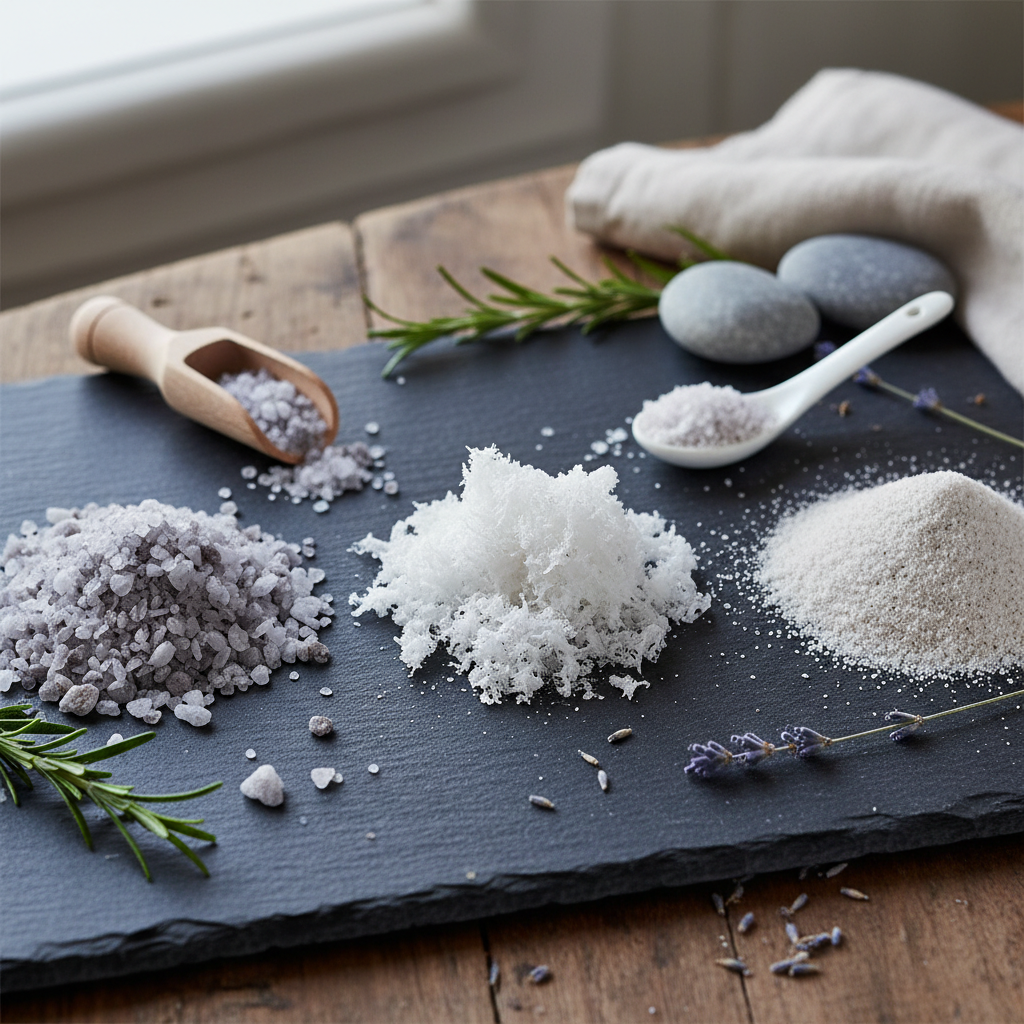
Celtic grey salt from Guérande is available in different grain sizes and types, each suited to different culinary applications. The coarser grey salt is harvested from the bottom of the salt pans and carries a robust mineral character, making it ideal for cooking, brining, and seasoning during preparation. Fleur de Sel, by contrast, is the delicate crystalline "flower of salt" that forms on the surface of the water during ideal weather conditions. It is lighter, more fragile, and carries a subtle complexity that makes it the perfect finishing salt — added just before serving to deliver a final layer of flavor and a gentle textural contrast.
Use coarser grey salt for cooking: Add it to boiling water for pasta, rice, or vegetables. Its mineral content distributes through the liquid and seasons food from the inside out. Use approximately one teaspoon per liter of cooking water as a starting point.
Grind or crush as needed: If your recipe calls for a finer grind, use a ceramic or stainless steel salt grinder to break down coarser grey salt crystals. Avoid metal grinders that may react with the naturally moist salt.
Use Fleur de Sel as a finishing salt: Sprinkle a small pinch over a finished steak, a chocolate dessert, a ripe tomato salad, or buttered bread just before serving. The delicate crystals dissolve slowly on the tongue, releasing layered flavor that cooking would destroy.
Apply to roasted vegetables and meats: Scatter grey salt over vegetables before roasting to draw out moisture and concentrate flavors. Season meats generously at least 30–45 minutes before cooking to allow the salt to penetrate the surface and begin the dry-brining process.
Make a salt crust: Natural grey sea salt, when moistened and packed around a whole fish or chicken, creates a seal that steams the interior while the mineral-rich crust imparts subtle flavor. This is a classic French technique well-suited to Guérande salt.
Use in baking: Natural sea salt can be used in bread dough, pastry, and even sweet baking. The mineral complexity rounds out sweetness and adds depth. Use slightly less by weight than you would refined salt, as natural salt's lower sodium chloride percentage means a marginally reduced saltiness per gram.
Create infused salts: Because natural sea salt has no additives interfering with its surface chemistry, it absorbs flavors exceptionally well. Blend it with dried herbs, citrus zest, smoked wood, or dried chili to create compound salts for specific dishes.
Preserve and ferment: Natural sea salt with no additives is ideal for lacto-fermentation, vegetable pickling, and curing because it contains no iodine (which can inhibit beneficial bacteria) and no anti-caking agents that might affect brine chemistry or preservation quality.
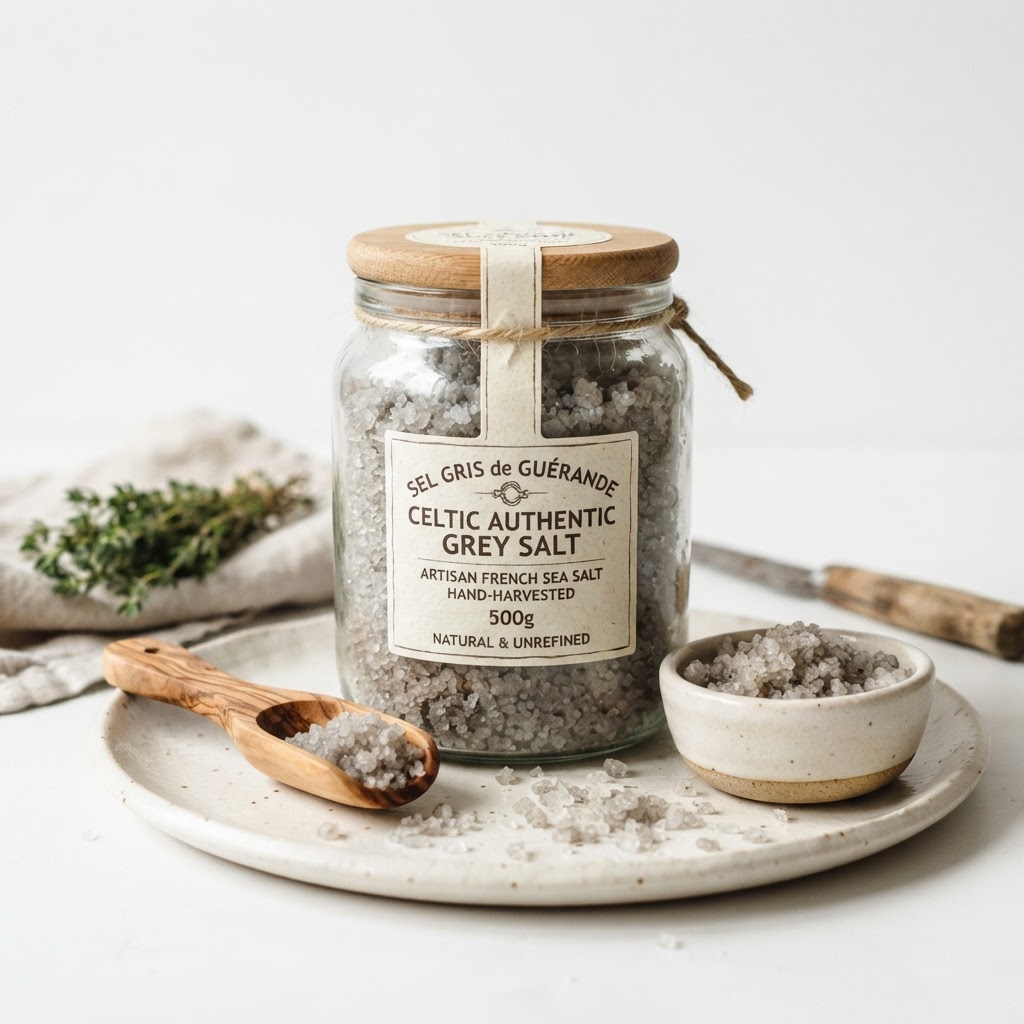
Practical tip: store your natural grey sea salt in a ceramic crock or glass jar with a loose lid rather than a sealed airtight container. Because it retains natural moisture, some airflow prevents any condensation buildup while keeping the salt at its ideal consistency. Keep it away from direct heat sources, and never store it in metal containers. When measuring, remember that coarser salt is less dense than table salt, so use slightly more by volume to achieve the same effect — or, for precision baking, always measure by weight.
Benefits of Natural Sea Salt No Additives Backed by Evidence