Hand-harvested Guérande salt · Tracked international delivery included
Guide· by Celtic Salt Editorial Team
Mineral Salt
Food information, not medical advice. Salt remains a significant source of sodium. Trace-mineral levels can vary by harvest and product, and culinary salt should not be used as a treatment or medical electrolyte supplement.
What Is Mineral Salt and Why It Matters in 2026
Mineral salt is not simply a condiment sitting quietly in a shaker on your kitchen table. It is one of the most ancient, complex, and nutritionally significant substances that humans have ever harvested from the natural world. Unlike the refined white table salt that became dominant throughout the twentieth century, mineral salt retains its full spectrum of naturally occurring trace elements, absorbed over thousands of years from the geological formations and marine environments in which it formed. When we talk about mineral salt in 2026, we are talking about a growing cultural and nutritional movement — one that is reclaiming what salt was always meant to be before industrial processing stripped it down to a single compound: sodium chloride. The difference between a truly mineral-rich salt and a highly refined one is not just philosophical. It is measurable, tangible, and deeply relevant to anyone who cares about what goes into their food and body.
The year 2026 marks a turning point in how consumers approach food ingredients at the most fundamental level. Awareness around ultra-processed foods has never been higher, and salt — once overlooked as a background ingredient — has come squarely into focus. People are asking harder questions: Where was this salt harvested? How was it processed? What minerals does it still contain? These questions are reshaping the market and creating renewed appreciation for artisanal, traditionally harvested mineral salts. Among the most celebrated of these is the grey sea salt harvested by hand from the ancient salt marshes of Guérande, in Brittany, France. This salt has been produced using the same methods for over a thousand years, and its remarkable mineral density is a direct result of that careful, unhurried process. In a world increasingly dominated by shortcuts and synthetic substitutes, mineral salt from a place like Guérande represents something genuinely irreplaceable.
What makes mineral salt so relevant in 2026 is also the broader context of wellness culture and functional nutrition. Consumers are no longer satisfied with empty calories or empty ingredients. They want their food to work for them — to deliver nutrients, to support bodily functions, to connect them to something real and provenance-rich. Mineral salts fit this demand perfectly. They carry within them a complex fingerprint of the ocean, the clay, the tides, and the sun-drenched marshes where they were born. Magnesium, calcium, potassium, iron, zinc, manganese — these are just a few of the trace minerals found in authentic grey salt from Brittany. Each of these plays a role in human biochemistry, from muscle contraction to nerve function to hydration regulation. The return to mineral salt is, in many ways, a return to nutritional common sense.
It is also worth noting that the culinary world has embraced mineral salt with tremendous enthusiasm. Professional chefs across Europe, North America, and beyond now specify the type and origin of their salt just as carefully as they specify the vintage of their olive oil or the breed of their beef. The flavour profile of a high-quality mineral salt is simply richer, more rounded, and more complex than that of refined salt. There is a subtle brininess, an earthy depth, and a lingering minerality that elevates every dish it touches. For home cooks increasingly influenced by restaurant techniques and ingredient-led cooking, the shift to mineral salt is a natural and rewarding one. Celtic grey salt from Guérande has become a benchmark in this conversation — a standard by which other mineral salts are measured.
The Complete Guide to Mineral Salt
To truly understand mineral salt, it helps to understand how it is formed and harvested. Sea salt in its most natural form begins as ocean water — water that contains not just sodium chloride but a remarkable diversity of dissolved minerals drawn from deep geological layers, underwater rock formations, and millennia of oceanic chemistry. When this water is channelled into shallow basins and allowed to evaporate slowly under the sun and wind, the minerals it contains begin to concentrate and crystallise. The specific mineral composition of the resulting salt depends heavily on the geology of the region, the type of clay lining the basalt beds, the temperature, the salinity of the water, and critically, how much human intervention occurs during and after harvesting.
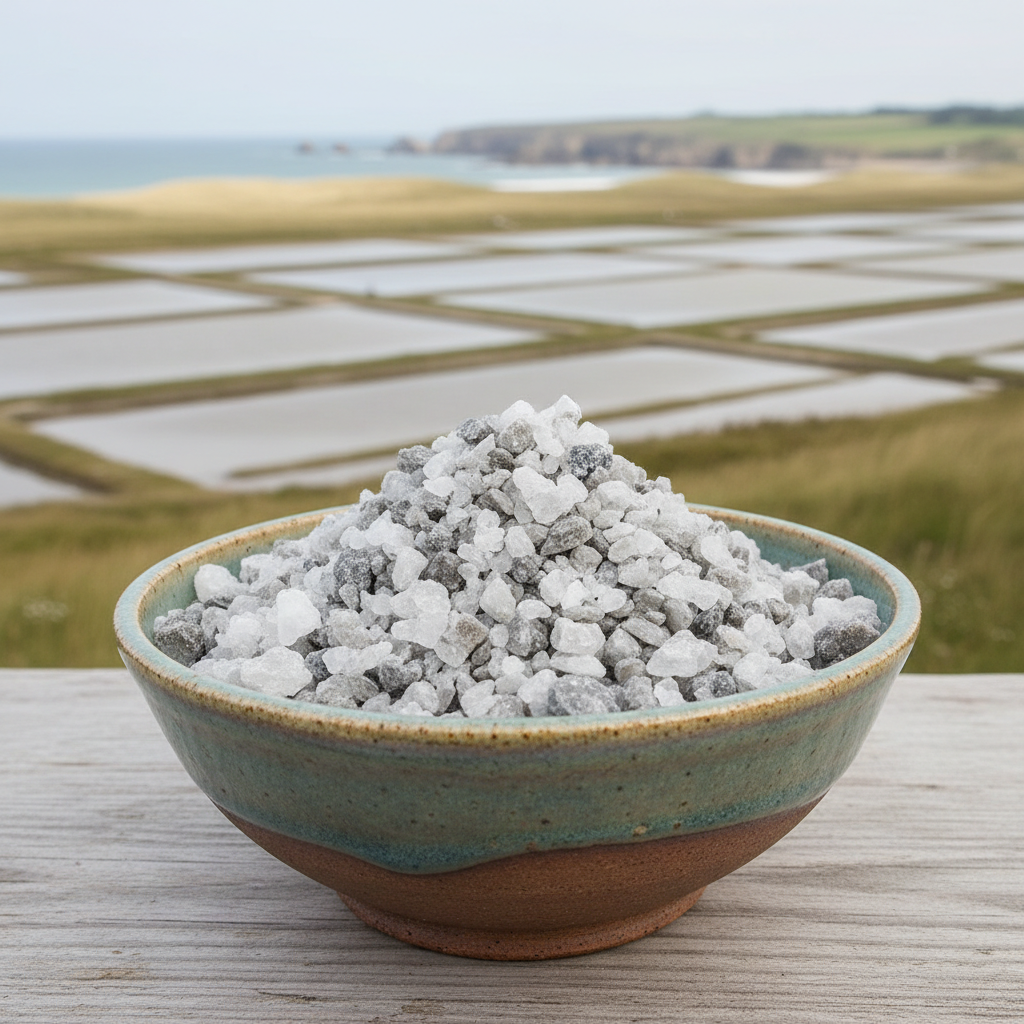
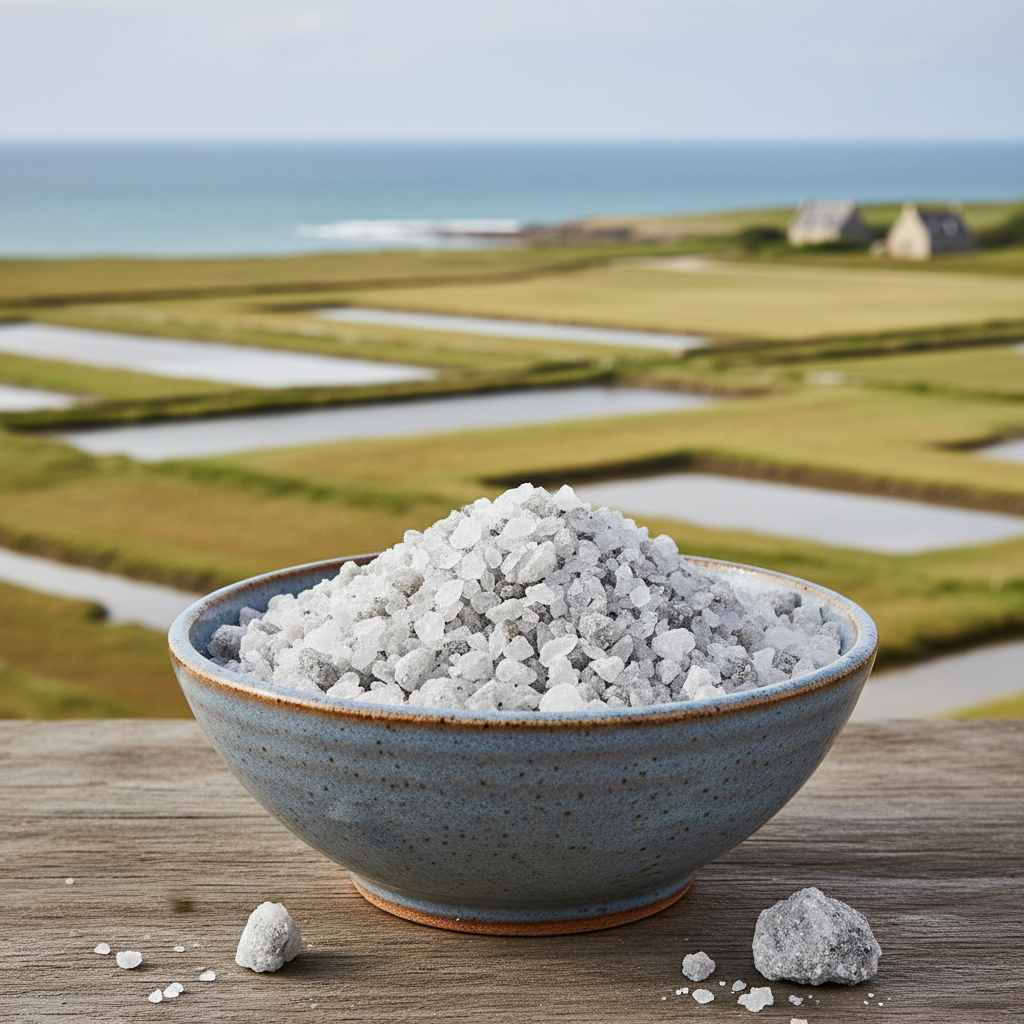
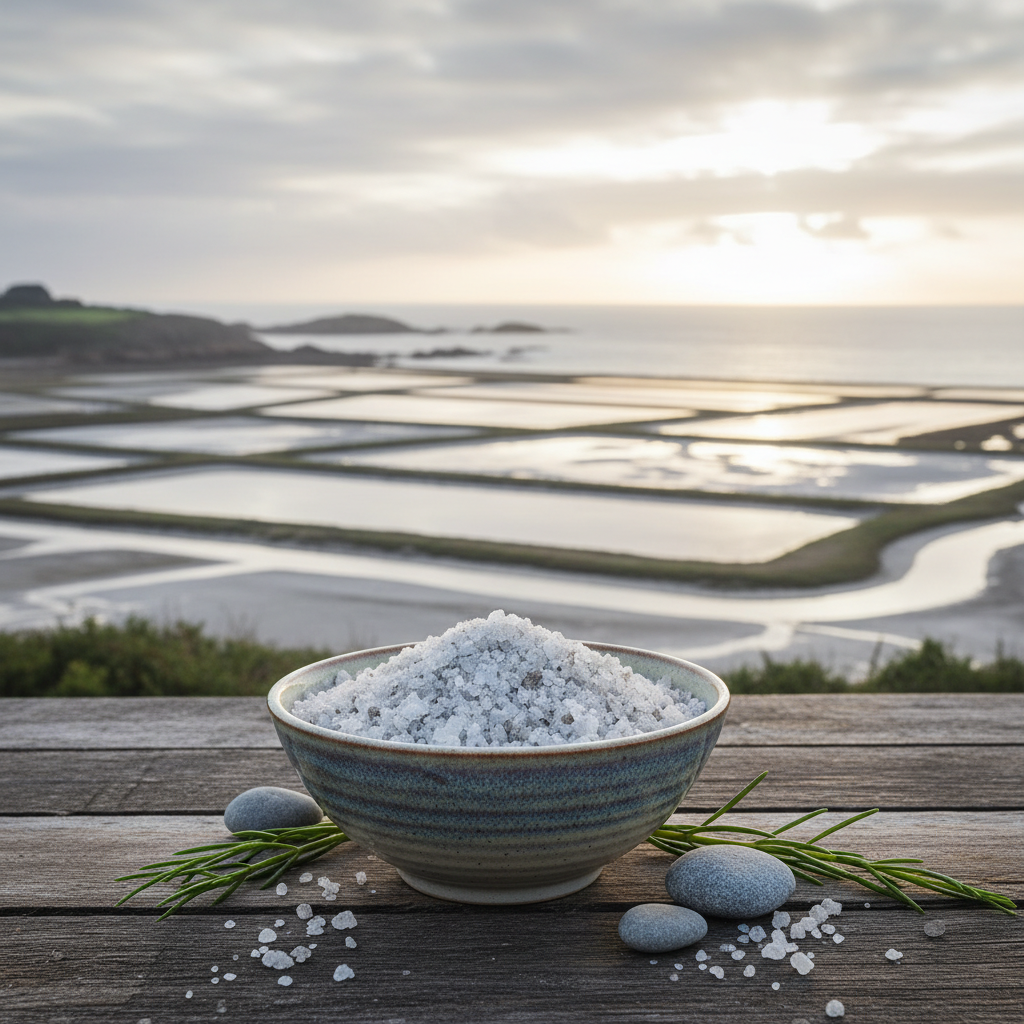
In Guérande, Brittany, the conditions for producing mineral-rich grey salt are exceptionally rare and fortunate. The salt marshes here, known locally as marais salants, have been cultivated since at least the ninth century. The paludiers — the traditional salt farmers of this region — use a system of interlocking pools and channels that guide Atlantic seawater through a natural filtration process before it reaches the harvesting basins. The characteristic grey colour of Guérande salt comes from the particular clay composition of the basalt beds, which imparts minerals including magnesium, calcium, and silica directly into the crystallising salt. No additives are used. No bleaching occurs. No anti-caking agents are introduced. The salt is raked by hand using traditional wooden tools called lousse, collected from the bottom of the basins, and left in its natural state. This is mineral salt in its purest and most authentic expression.
There are several distinct varieties within the broader category of mineral salt, and understanding them helps consumers make informed choices. Fleur de sel is the delicate, flaky crust that forms on the surface of the harvesting basins under optimal weather conditions. It is lighter in colour, finer in texture, and prized for finishing dishes. Grey salt, also known as sel gris, is harvested from the bottom of the basins and carries the most significant mineral load due to its direct contact with the clay floor. Rock salt, which forms underground from ancient dried sea beds, can also be mineral-rich depending on its geological origins, though its mineral profile differs significantly from that of marine salts. Black salt, pink salt, and smoked salts each have their own characteristics. For sheer mineral density and culinary versatility, however, grey sea salt from Guérande occupies a category of its own. You can explore the full range of authentic options at celtic-salt.com/produits.
The processing of salt after harvesting is where most commercially available products lose their mineral character. Industrial salt production involves extensive washing, heating, bleaching, and the addition of chemical anti-caking agents such as sodium ferrocyanide or magnesium carbonate. These processes are efficient and produce a uniform product, but they remove nearly all trace minerals and alter the fundamental chemistry of the salt. What remains is essentially pure sodium chloride — functional, yes, but nutritionally hollow compared to its unrefined counterparts. Some producers re-add certain minerals artificially after processing, most commonly iodine in the form of potassium iodide. While this addresses one specific nutritional concern, it does not replicate the full complexity of a naturally mineral-rich salt. The difference between naturally occurring minerals in a whole food context and synthetic mineral additions is a distinction that nutritional science continues to explore.
Health and Culinary Benefits
The health conversation around mineral salt is nuanced and important to approach carefully. We live in an era of both salt overconsumption and salt misunderstanding. Much of the negative health research historically associated with salt consumption was conducted using highly refined sodium chloride — not unrefined mineral salt with a full trace element profile. This distinction matters because the minerals present in natural sea salt interact with sodium in complex ways. Magnesium, for instance, plays a role in regulating how the body handles sodium, and adequate magnesium intake is associated with healthy blood pressure regulation. When sodium is consumed alongside its natural mineral companions — as it is in authentic mineral salt — the physiological response may differ from the response to pure sodium chloride in isolation. This is an area of ongoing scientific interest, and the emerging research is genuinely fascinating.
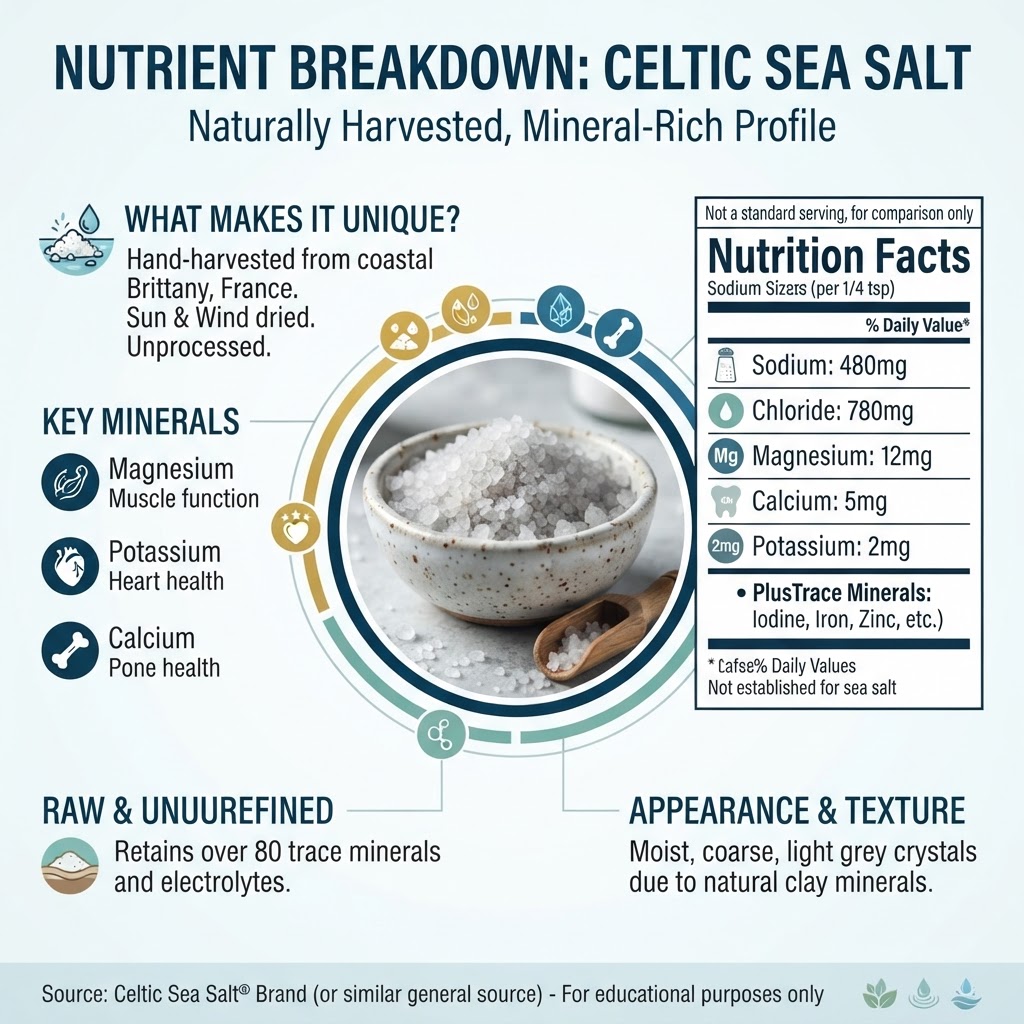
Trace minerals found in grey salt from Guérande include magnesium, potassium, calcium, iron, zinc, copper, and manganese, among others. While the absolute quantities of these minerals in a typical daily serving of salt are relatively modest, they contribute to overall dietary mineral intake in ways that add up over time, particularly for people whose modern diets may already be mineral-depleted. Magnesium, in particular, is a mineral that large proportions of the population in developed countries consume in insufficient amounts. Its presence in grey salt — in a naturally bioavailable form — is one of the reasons why culinary professionals and nutritionally informed consumers specifically seek out this type of salt. Potassium, meanwhile, works in concert with sodium in the body's fluid balance and electrolyte systems, making the potassium content of mineral-rich salt a point of genuine nutritional relevance.
From a culinary perspective, the benefits of mineral salt are immediate and perceptible. The complex mineral profile of grey sea salt from Guérande creates a flavour experience that is markedly different from refined salt. There is depth, roundness, and a certain briney sweetness that experienced cooks immediately recognise. Because mineral salt contains slightly less pure sodium chloride by weight than refined salt — the remaining percentage being occupied by those trace minerals and residual moisture — it is often described as tasting "less harsh" or "less aggressively salty." This means cooks can use it generously to season food without the sharp, one-dimensional saltiness that refined salt delivers. The moisture content of grey salt in particular makes it ideal for certain preparations such as salt crusts, brines, and slow-cooked dishes where it dissolves gradually and seasons deeply. Read more about how traditional salt harvesting methods shape flavour in our deep dive into sel gris de Guérande.
Beyond direct consumption, mineral salt has a long history of therapeutic and wellness applications. Salt baths have been used for centuries across cultures for their purported benefits to skin health, muscle recovery, and relaxation. The mineral content of natural sea salt is considered central to these applications, with magnesium particularly associated with transdermal absorption and muscle relaxation. Salt inhalation therapies, salt scrubs, and saline nasal rinses using mineral-rich salt are all practices with deep roots and contemporary followings. While we stop short of making specific medical claims, it is fair to say that the mineral complexity of authentic grey salt has made it a preferred ingredient not just in kitchens but in a wide range of wellness contexts where the full trace element profile is considered meaningful.
How to Use Mineral Salt — Expert Tips
Using mineral salt well is an art, but it is an accessible one. The first principle is to match the type of mineral salt to the application. For everyday cooking — seasoning water for pasta, adding salt to soups and stews, rubbing onto meats before roasting — coarsely ground grey sea salt is ideal. Its moisture content means it dissolves slightly more slowly than dry refined salt, which is actually an advantage in long-cooking applications because it seasons gradually and evenly. For finishing dishes at the table — sprinkling over a piece of grilled fish, a ripe summer tomato, scrambled eggs, or dark chocolate — a flakier, finer mineral salt delivers the best results, providing bursts of flavour and a satisfying textural crunch.
When baking, the interaction between mineral salt and other ingredients requires a little more attention. Bakers who switch from refined salt to grey sea salt sometimes find they need to adjust quantities slightly, as the lower percentage of sodium chloride and the presence of residual moisture can affect both flavour and dough behaviour. A useful rule of thumb is to use slightly more grey salt by volume than you would use of refined salt, while trusting your palate throughout the process. Many experienced bakers find that mineral salt produces a more complex, satisfying flavour in bread and pastry — a subtle depth that is difficult to achieve with refined alternatives.