What Is Mineral Rich Sea Salt Benefits and Why It Matters in 2026
In a world increasingly saturated with ultra-processed foods, synthetic supplements, and mineral-depleted table salts, the conversation around mineral rich sea salt benefits has never been more relevant. As consumers in 2026 grow more discerning about what they put into their bodies, the distinction between a lifeless, chemically stripped sodium chloride and a living, complex sea salt teeming with over 80 trace minerals is becoming a critical health literacy topic. Mineral rich sea salt is not simply a seasoning — it is a microcosm of the ocean's ancient chemistry, delivering electrolytes, trace elements, and natural compounds that the human body has evolved to recognize and use efficiently. Understanding what these salts are, where they come from, and why they matter puts you firmly ahead of the curve in making smarter nutritional decisions.
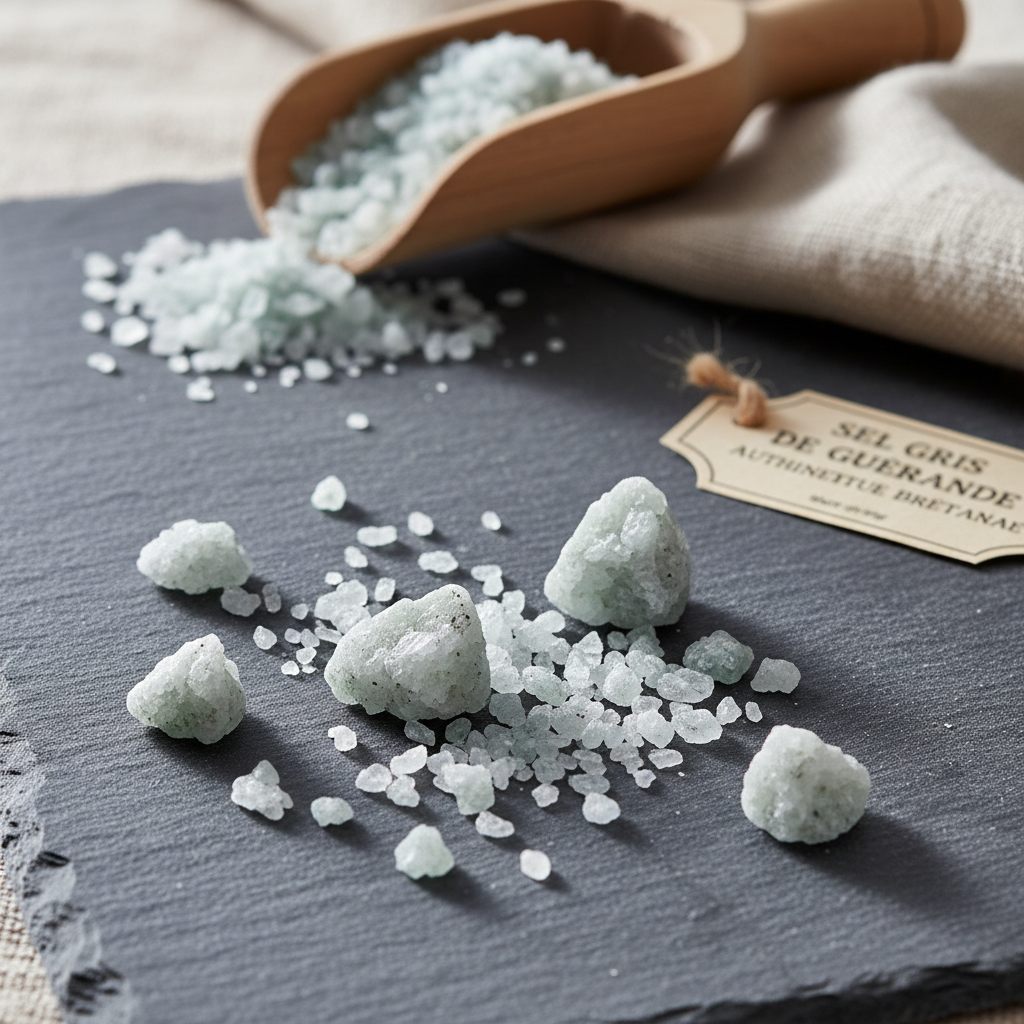
The story of mineral rich sea salt begins at the water's edge, in places like the salt marshes of Guérande in Brittany, France, where a tradition of hand-harvesting salt has been practiced for over a thousand years. These tidal clay ponds, known as oeillets, are carefully managed by skilled artisans called paludiers, who guide Atlantic seawater through a series of shallow evaporation basins. As the water slowly evaporates under the Breton sun and wind, what remains is a complex mineral matrix — a grey, moist salt that retains the full spectrum of the ocean's nutrients. This process stands in stark contrast to industrial salt production, where seawater or rock salt deposits are mechanically stripped, heat-dried, and chemically treated until little more than sodium and chloride remain. The difference is not cosmetic — it is biochemical and profoundly relevant to human health.
Why does this matter in 2026 specifically? Because the evidence base supporting whole-food, mineral-dense nutrition continues to grow, while public health data simultaneously reveals widespread deficiencies in key electrolytes and trace minerals. Magnesium deficiency, for example, is estimated to affect a significant proportion of the adult population in Western countries, contributing to muscle cramps, poor sleep, elevated stress responses, and cardiovascular strain. Potassium, calcium, and dozens of other trace minerals found in genuine sea salt play interconnected roles in enzyme activation, nerve conduction, fluid regulation, and bone density. When you choose a mineral rich sea salt like authentic grey salt from Guérande, you are not just flavoring your food — you are supplementing your diet with a bioavailable mineral complex that synthetic supplements often fail to replicate with the same elegance or efficiency.
Furthermore, the cultural and regulatory landscape surrounding salt quality has matured considerably. Certifications like the IGP (Indication Géographique Protégée) now offer consumers legal guarantees that a product like Guérande grey salt genuinely originates from that protected region and adheres to traditional production standards. This traceability matters enormously in a marketplace crowded with imitation products that label themselves "sea salt" while delivering none of the mineral complexity of the real thing. As you navigate the choices available in 2026, understanding the specific mineral rich sea salt benefits — and the markers of authenticity that guarantee them — is your most powerful tool for making an informed purchase that genuinely supports your wellbeing.
The Science Behind Mineral Rich Sea Salt Benefits
The scientific rationale for choosing mineral rich sea salt over refined alternatives rests on a straightforward biochemical principle: the human body did not evolve consuming pure sodium chloride in isolation. Ocean water, from which all sea salt ultimately derives, contains a broad array of ionic minerals that have been present in Earth's seas for hundreds of millions of years. Our ancestors consumed these minerals through seafood, coastal plants, and naturally occurring salt deposits that had never been industrially purified. The body's cellular machinery — from ion channels in nerve membranes to the enzymatic systems that power metabolism — is calibrated to work with a complex mineral environment, not a single stripped compound. Authentic sea salt from Guérande contains over 80 trace minerals, including magnesium, calcium, and potassium, each playing a distinct and documented physiological role.
Magnesium, often called the "master mineral," participates in over 300 enzymatic reactions in the human body. It is essential for ATP (adenosine triphosphate) synthesis — the fundamental energy currency of every cell — as well as for protein synthesis, muscle and nerve function, blood glucose regulation, and blood pressure management. Calcium, beyond its famous role in bone and tooth mineralization, is critical for intracellular signaling, cardiac muscle contraction, and neurotransmitter release. Potassium works in concert with sodium to maintain the electrochemical gradient across cell membranes, a dynamic balance essential for nerve impulse transmission and proper hydration at the cellular level. When all these minerals arrive together in the natural ratios found in genuine grey sea salt, the body can utilize them synergistically — a concept known in nutritional science as mineral co-dependency, where the presence of one mineral enhances the absorption and function of another.
Research into trace mineral intake has also shed light on lesser-known elements present in unrefined sea salt — including iodine, zinc, selenium, manganese, and iron — each of which supports specific aspects of immune function, thyroid health, antioxidant defense, and oxygen transport. While these minerals are present in small quantities in sea salt, they contribute to a dietary pattern that is fundamentally broader and more complete than one relying solely on refined salt. The grey color characteristic of Guérande salt, often misunderstood or even viewed suspiciously by consumers unfamiliar with it, is in fact derived from the natural clay minerals of the salt pan floor — including traces of bentonite-type clays that carry their own mineral content and contribute to the salt's distinctive moist texture and complex flavor profile.
| Mineral | Role in the Body | Present in Guérande Grey Salt |
|---|---|---|
| Magnesium | 300+ enzymatic reactions, energy production, muscle function | Yes — naturally occurring |
| Calcium | Bone health, cardiac function, cell signaling | Yes — naturally occurring |
| Potassium | Electrolyte balance, nerve transmission, hydration | Yes — naturally occurring |
| Iodine | Thyroid hormone synthesis, metabolic regulation | Yes — trace amount |
| Zinc | Immune defense, wound healing, enzyme function | Yes — trace amount |
| Iron | Oxygen transport, cellular energy | Yes — trace amount |
| Manganese | Antioxidant defense, bone formation | Yes — trace amount |
| Selenium | Thyroid function, antioxidant protection | Yes — trace amount |
| Silica | Connective tissue support, skin health | Yes — from clay minerals |
How to Use Mineral Rich Sea Salt Benefits — Complete Guide
Understanding mineral rich sea salt benefits is one thing; incorporating them effectively into your daily life is another. The good news is that using authentic grey sea salt is no more complicated than using any other salt — but a few key practices will help you maximize both the flavor and the nutritional value it brings to your diet. The most fundamental principle is this: do not substitute refined salt for unrefined sea salt and expect identical results in every application. Grey salt from Guérande has a more complex, rounded flavor that is slightly less aggressively salty than table salt, meaning you may find you use marginally less of it to achieve the same seasoning effect. This is a direct consequence of its mineral complexity — the interplay of magnesium, potassium, and calcium compounds modulates the perception of saltiness in a way that pure sodium chloride does not.
For everyday cooking, grey sea salt works beautifully as a general-purpose seasoning. Add it to pasta water, use it to season meats before roasting, dissolve it into soups and stews, or incorporate it into bread doughs. Because it retains natural moisture, it dissolves readily and integrates seamlessly into both wet and dry preparations. For finishing applications — where the textural crunch and visual appeal of the salt matter as much as the flavor — consider using Fleur de Sel, the hand-skimmed flower of salt harvested from the surface of the same Guérande salt pans. Its delicate flaky crystals are extraordinary as a finishing salt on salads, grilled fish, chocolate desserts, and fresh vegetables, where each crystal delivers a brief but intense burst of mineral-rich ocean flavor.
Beyond the kitchen, mineral rich sea salt has a long tradition of therapeutic and wellness applications. Salt water gargles using genuine grey sea salt can support oral health and soothe irritated throat tissue, thanks to the antimicrobial and osmotic properties of the solution. Nasal saline rinses made with unrefined sea salt provide relief from sinus congestion while delivering trace minerals to sensitive mucous membranes. Salt baths — using a generous handful of grey sea salt dissolved in warm water — have been used for centuries to support skin health, ease muscle soreness, and promote relaxation. The transdermal absorption of magnesium through salt baths, while still a subject of ongoing scientific discussion, is widely reported anecdotally by practitioners of integrative wellness.
The difference a real salt makes: Discover Celtic Grey Salt →
- Store grey sea salt in a sealed glass or ceramic container to preserve its natural moisture content and prevent it from drying out and losing some of its mineral richness.
- Use a pinch of grey sea salt in your morning water or herbal tea to support early-day electrolyte balance — a practice favored by athletes and wellness practitioners.
- Add a small amount to homemade sports drinks or post-workout smoothies as a natural electrolyte source in place of synthetic powder supplements.
- Season foods at the end of cooking when possible, to preserve the full flavor complexity of the salt rather than cooking it away.
- Use Fleur de Sel exclusively as a finishing salt — its delicate texture and nuanced flavor are best appreciated raw, not dissolved into cooked dishes.
- Incorporate grey sea salt into homemade fermentation projects (sauerkraut, kimchi, brined vegetables) where the trace minerals support a healthy microbial environment.
- Experiment with salt-crusted cooking techniques — packing fish, chicken, or root vegetables in a thick crust of moistened grey salt before roasting creates an extraordinarily flavorful and evenly cooked dish.
A key practical consideration is quantity. While mineral rich sea salt delivers genuine nutritional benefits over refined alternatives, it remains a sodium-containing food and should be used with the same mindfulness as any salt. The goal is not to increase your total salt consumption but to upgrade the quality of the salt you already use, ensuring that every gram you consume delivers the full mineral spectrum nature intended rather than a chemically abbreviated version of it. Discover more about cooking with authentic grey salt from Guérande in our dedicated guide, where we explore specific recipes and culinary techniques in detail.