Hand-harvested Guérande salt · Tracked international delivery included
Guide· by Celtic Salt Editorial Team
Light Grey Celtic Coarse Sea Salt
What Is Light Grey Celtic Coarse Sea Salt and Why It Matters in 2026
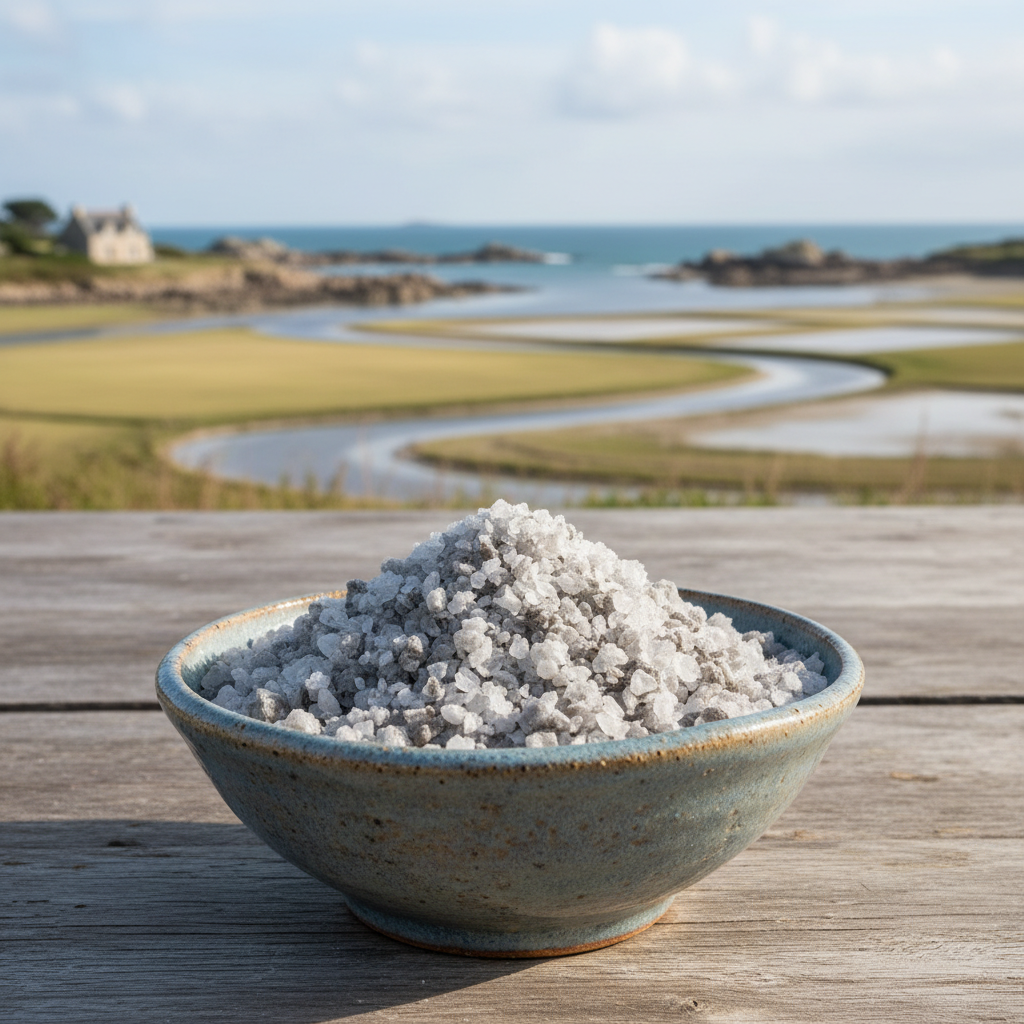
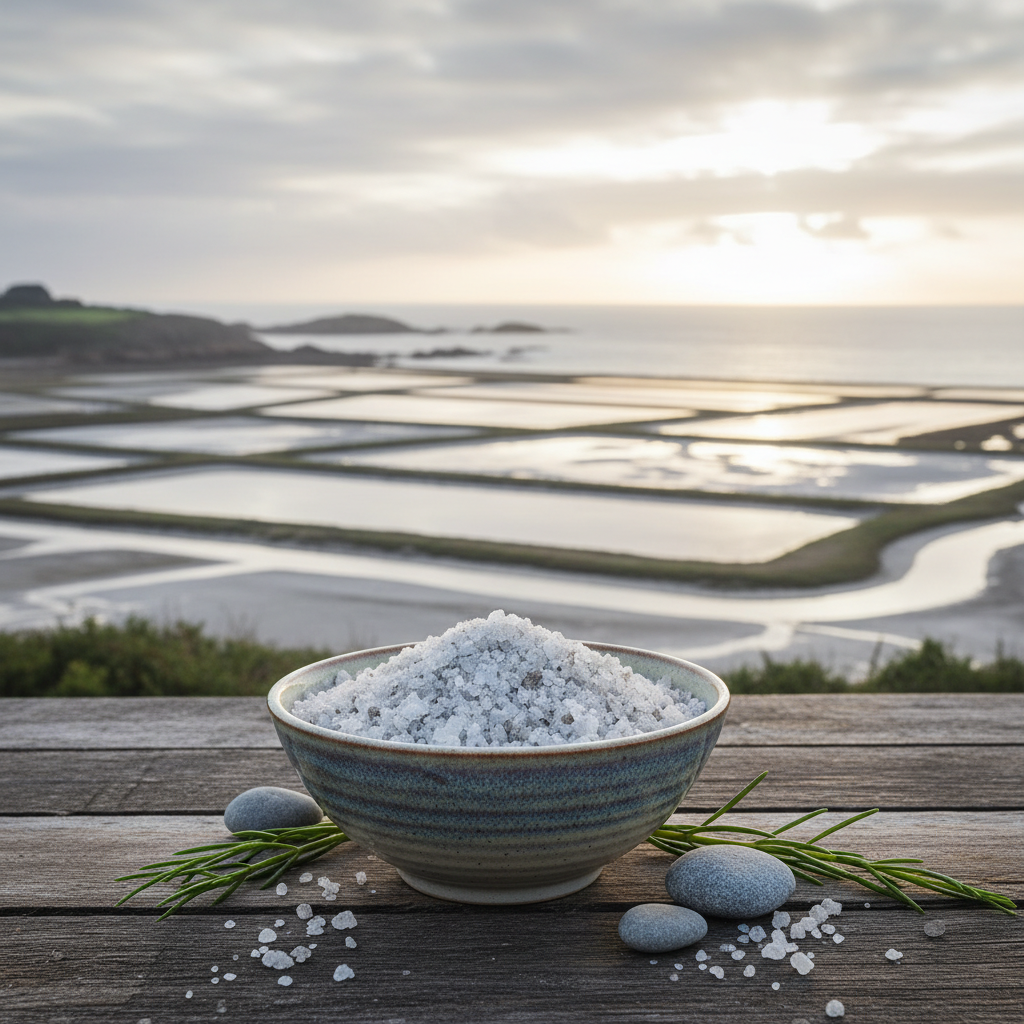
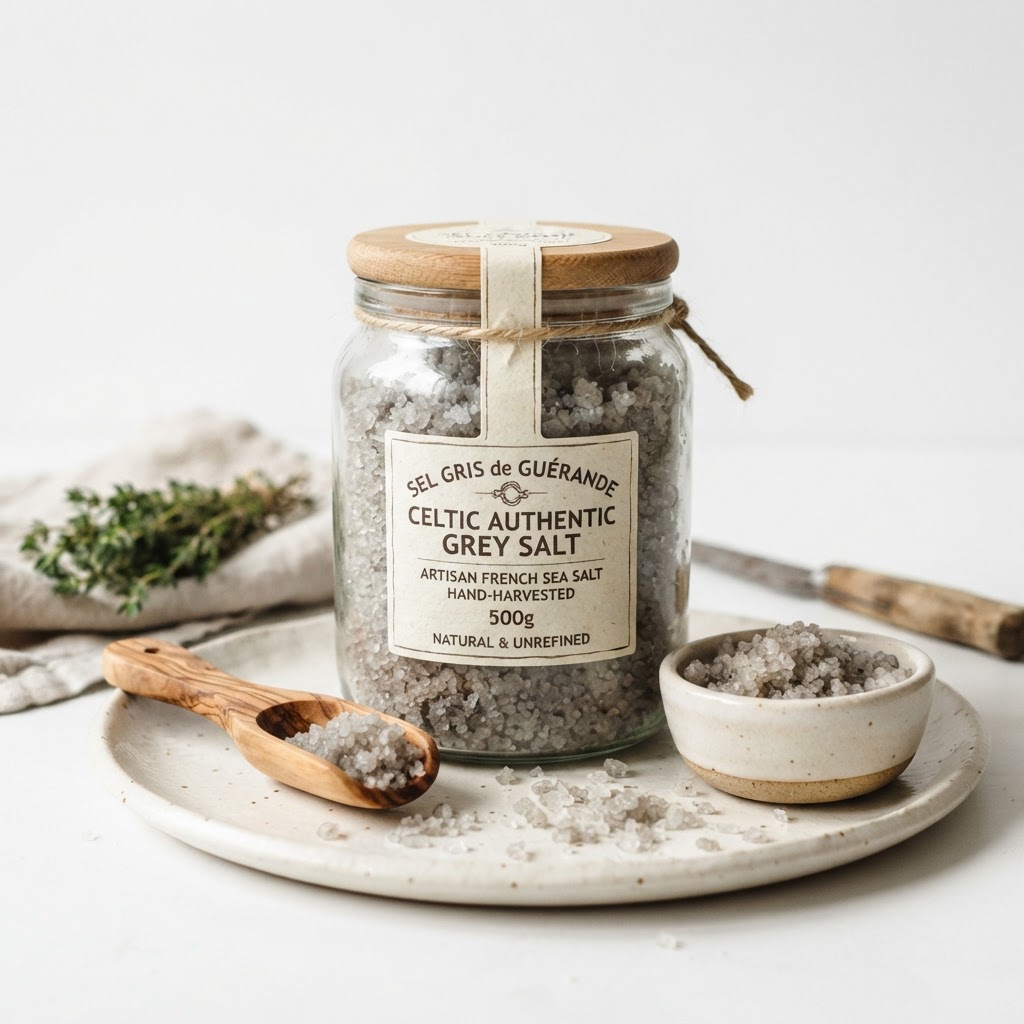
Light grey Celtic coarse sea salt is one of the most distinctive and celebrated natural salts in the world, harvested by hand from the ancient salt marshes of Guérande, located along the southern coast of Brittany in northwestern France. Unlike heavily processed table salts or refined sea salts that have been stripped of their natural mineral content, light grey Celtic coarse sea salt retains its characteristic moisture, its soft grey hue, and its extraordinary complexity of flavour — all of which are direct results of the traditional harvesting methods that have remained virtually unchanged for over a thousand years. This is not simply a seasoning; it is a product of geography, craft, and time that connects every grain to a living ecosystem of clay-lined salt pans, Atlantic tides, and generations of skilled salt farmers known as paludiers.
The term "light grey" refers specifically to the colour that develops in the salt as it is raked from the bottom and sides of the salt pans, where it absorbs trace minerals from the clay substrate. The grey tone is not a sign of impurity — quite the opposite. It is a visual indicator that the salt has been left in its natural state, with its full complement of magnesium, calcium, potassium, and dozens of other trace minerals still intact. The coarse grain size is equally important, as it means the salt has not been ground, dried artificially, or processed in any way that would diminish its natural character. When you hold a pinch of light grey Celtic coarse sea salt, you are holding something genuinely raw and alive — still moist from the Atlantic, still carrying the mineral signature of the Breton marshes.
In 2026, the relevance of light grey Celtic coarse sea salt has never been greater. As consumers become increasingly aware of what goes into their food, as health-conscious cooking continues to rise in popularity, and as the global conversation about food provenance and sustainability deepens, authentic traditionally harvested salts have moved from niche health food shops to the kitchens of serious home cooks, professional chefs, nutritionists, and food artisans around the world. The demand for clean-label, minimally processed ingredients is reshaping how people stock their pantries, and salt — something most people once considered entirely interchangeable — is now recognised as a product where origin, method, and mineral content genuinely matter. Light grey Celtic coarse sea salt sits at the very top of this growing appreciation.
Beyond its culinary appeal, light grey Celtic coarse sea salt carries significant cultural and environmental weight. The Guérande salt marshes are protected as a site of outstanding natural importance, and the paludiers who work them are guardians of a craft that has been recognised by UNESCO for its cultural heritage value. When you choose light grey Celtic coarse sea salt, you are participating in something much larger than a simple purchase — you are supporting a sustainable agricultural tradition, a living ecosystem that filters and purifies Atlantic seawater naturally, and a community of artisans who have dedicated their lives to producing salt the right way. This matters enormously in an era when industrial food production has become the norm and genuine artisanal products are increasingly rare.
The Complete Guide to Light Grey Celtic Coarse Sea Salt
To truly understand light grey Celtic coarse sea salt, it helps to understand exactly how it is made — because the production process is inseparable from the product itself. The salt marshes of Guérande are a complex network of shallow clay-lined pools arranged in a carefully designed system that channels Atlantic seawater through a series of progressively shallower basins. As the water moves through this system, driven by tides and carefully managed by the paludiers, it slowly evaporates under the influence of sun and wind. The process is entirely natural and entirely dependent on weather conditions, which is why production volumes can vary significantly from year to year. This is not a factory product — it is an agricultural one, subject to all the beautiful unpredictability of nature.
As the water evaporates and the salt concentration rises, crystals begin to form. The coarse grey salt — known in French as gros sel gris — forms at the bottom and edges of the harvesting pools, where it comes into contact with the clay floor. This contact is what gives the salt its characteristic grey colour and its elevated mineral content. The paludiers rake this salt by hand using long-handled wooden tools called ladles, working methodically across the surface of the pools. The harvested salt is then piled into large mounds at the edges of the salt pans, where it continues to drain naturally. It is never heated, never dried artificially, and never treated with anti-caking agents or other additives. What reaches your kitchen is exactly what came out of the marsh.
The coarse grain size of light grey Celtic sea salt makes it particularly versatile and particularly suited to a range of culinary applications that finer salts cannot match. The large, irregular crystals dissolve slowly, which means they release their flavour gradually — ideal for salting pasta water, brining meats, preserving vegetables, or finishing a grilled fish where you want the salt to provide textural contrast as well as seasoning. The natural moisture content of the salt, which can be quite noticeable when you first open a bag or jar, is another distinctive feature. Because it has not been kiln-dried, light grey Celtic coarse sea salt retains a small percentage of brine — the residual mineral-rich water from the salt pan — which contributes to its complex, slightly briny, deeply oceanic flavour profile.
It is worth taking a moment to understand what distinguishes light grey Celtic coarse sea salt from other sea salts on the market. Standard commercial sea salts are typically harvested mechanically, dried at high temperatures, refined to remove minerals, and treated with additives to prevent clumping. The result is a product that is chemically nearly identical to ordinary table salt — almost pure sodium chloride, with little of the mineral complexity or flavour depth of a traditional salt. Even many salts marketed as "sea salt" or "natural salt" have been through significant processing. Light grey Celtic coarse sea salt, by contrast, is defined precisely by what has not been done to it. No refining, no drying, no additives, no mechanical harvesting. Its purity is preserved by the absence of intervention, which is a rare quality in modern food production.
Storage of light grey Celtic coarse sea salt is straightforward but worth understanding correctly. Because of its natural moisture content, it should be stored in a container that allows some airflow — a ceramic crock, a wooden salt box, or a loose-lidded jar all work well. Airtight containers can cause the salt to clump over time as the moisture redistributes, though this does not affect quality in any way. If your salt does clump, simply break it apart with a spoon. The salt will not spoil, as salt is by its nature an antimicrobial preservative. Store it away from direct heat sources like hobs and ovens, and away from steam-producing appliances, and it will keep indefinitely while maintaining its characteristic moisture and flavour.
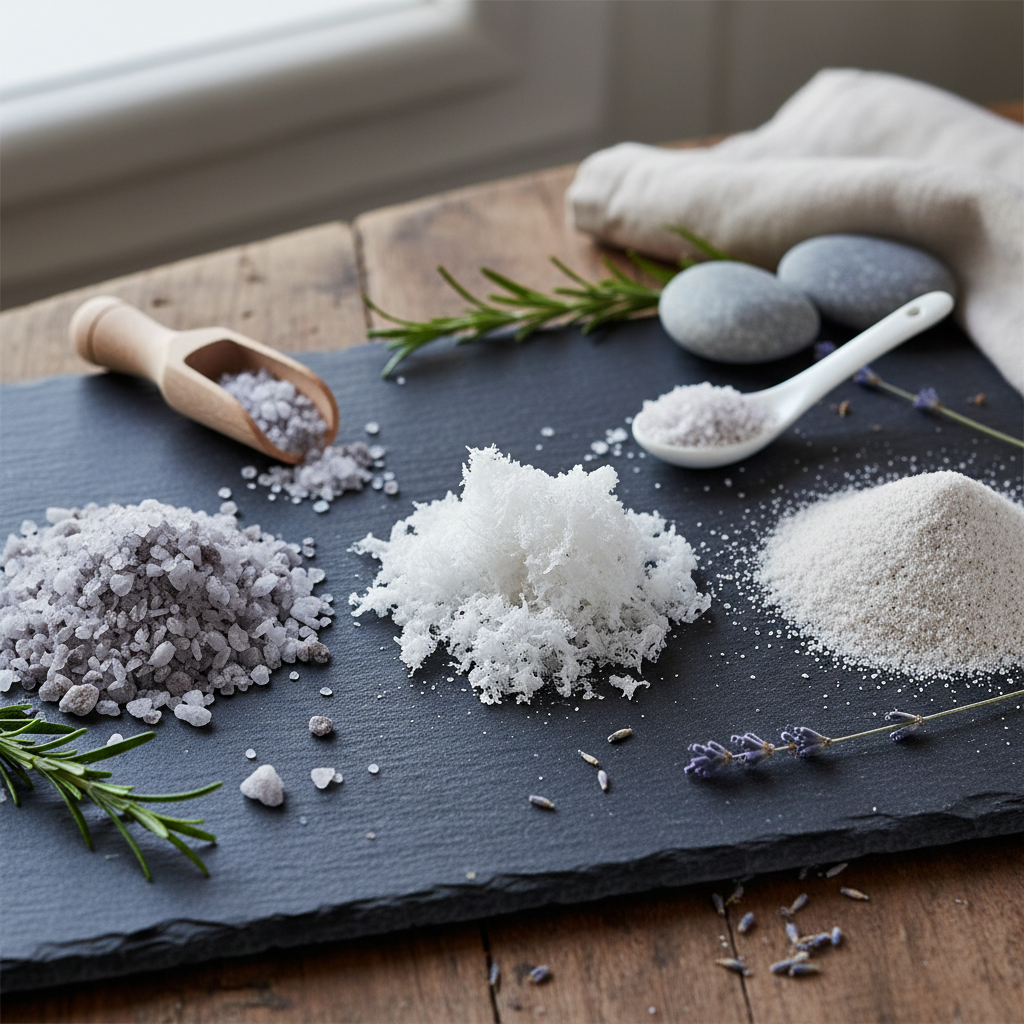
For those who want to explore the full range of what authentic Breton salt has to offer, read our detailed guide to the different types of Celtic salt, which covers everything from fine grey salt to fleur de sel and their respective uses in the kitchen.
Health and Culinary Benefits of Light Grey Celtic Coarse Sea Salt
One of the most compelling aspects of light grey Celtic coarse sea salt is its mineral profile. Unlike refined table salt, which is stripped back to near-pure sodium chloride during processing, light grey Celtic coarse sea salt contains a broad spectrum of naturally occurring trace minerals. These include magnesium, which plays a role in hundreds of enzymatic processes in the human body; calcium, essential for bone density and muscle function; potassium, which supports healthy fluid balance and cardiovascular function; and iron, iodine, and zinc, among many others. The specific mineral composition reflects the unique geochemistry of the Guérande marshes and varies slightly from harvest to harvest, in much the same way that a wine reflects the specific conditions of its terroir each vintage.
From a culinary standpoint, the mineral complexity of light grey Celtic coarse sea salt translates directly into flavour. Salt is not simply about saltiness — it is about how it interacts with and enhances the other flavours in a dish. The magnesium and other minerals in grey Celtic salt contribute subtle notes that go beyond the sharp, one-dimensional saltiness of refined table salt. Many experienced cooks describe the flavour as rounder, more complex, and more oceanic — a salinity that enhances without overwhelming, that brings out the natural sweetness of vegetables and the depth of meats without making everything taste simply "salty." This is why light grey Celtic coarse sea salt has become a staple in professional kitchens, not just health food circles.
The natural moisture content of light grey Celtic coarse sea salt also contributes to its culinary performance in ways that dry, refined salts cannot replicate. The residual brine in the salt helps it adhere to food surfaces more effectively, ensuring more even seasoning. When used in brines for poultry or pork, the full mineral spectrum of the salt penetrates the meat more evenly, contributing to both flavour and texture. When used to finish a dish, the moist crystals dissolve partially on contact with warm food, releasing their flavour in a layered, gradual way rather than all at once. These are not abstract qualities — they are practical advantages that become apparent the first time you use a genuinely good coarse sea salt compared to a refined alternative.
It is important to note that while light grey Celtic coarse sea salt does contain a broader mineral profile than refined salt, we are not making specific medical or health claims here. Salt consumption should always be considered as part of an overall balanced diet. What we can say with confidence is that for those who season their food — and most of us do — choosing a minimally processed salt with a natural mineral profile is a simple, meaningful way to bring more of nature's complexity into your cooking. The nutritional difference between a pinch of light grey Celtic coarse sea salt and a pinch of refined table salt may be modest in absolute terms, but the culinary difference is immediately apparent. Explore our in-depth article on the mineral content of Celtic salt for a more detailed breakdown of what makes this salt nutritionally distinctive.
How to Use Light Grey Celtic Coarse Sea Salt — Expert Tips
The coarse grain size of light grey Celtic sea salt opens up a wide range of culinary applications, and understanding how to use it effectively will transform your cooking. The most fundamental principle is matching the grain size to the application. Because the crystals are large and dissolve slowly, light grey Celtic coarse sea salt works best in situations where you want gradual, sustained salt release — or where you need to season large quantities of liquid, food surface area, or protein.
For pasta water, light grey Celtic coarse sea salt is exceptional. The conventional wisdom is that pasta water should taste "like the sea," and with this salt, you are quite literally using water that came from the sea and was salted by Atlantic tides. Use generously — a full tablespoon per litre of water is not excessive — and you will notice immediately that your pasta has a depth of flavour that no amount of sauce adjustment can replicate. The minerals in the salt interact with the starch in the pasta during cooking, creating a more complex flavour foundation for whatever you serve it with.
Brining is another application where light grey Celtic coarse sea salt excels. Whether you are dry-brining a chicken before roasting, wet-brining a pork loin, or quick-brining fish fillets before grilling, the mineral-rich composition of this salt works in concert with the protein fibres of the meat to improve texture and flavour simultaneously. A simple dry brine of light grey Celtic coarse sea salt and fresh herbs, applied to a chicken 24 hours before roasting, produces a bird with incomparably crisp skin and deeply seasoned, juicy meat. For a wet brine, dissolve the salt fully in cold water before adding your protein, using roughly 50 grams of salt per litre of water as a starting ratio.