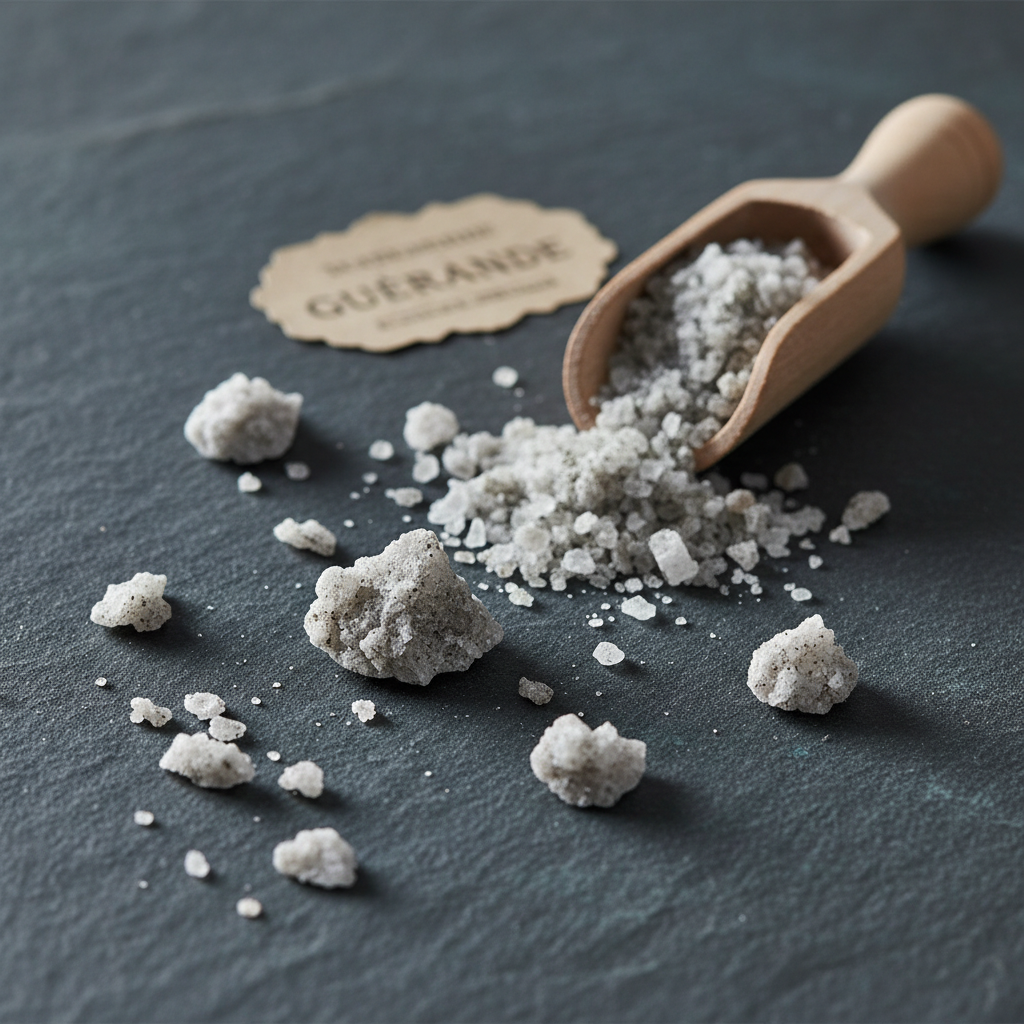
What Is Celtic Salt the Best and Why It Matters in 2026
In a world saturated with processed foods and refined table salts stripped of virtually everything nature intended, the question of which salt truly deserves the title of "best" has never been more relevant. Celtic salt — hand-harvested from the storied salt marshes of Guérande, Brittany, in northwestern France — has risen dramatically in popularity among health-conscious consumers, professional chefs, nutritionists, and wellness advocates alike. But is the enthusiasm justified? Is Celtic salt genuinely the best salt available on the market today, or is it simply clever marketing wrapped around an ancient tradition? In 2026, with more people than ever scrutinizing the quality of every ingredient that enters their bodies, these questions carry real weight. This pillar article examines every dimension of Celtic salt's claim to excellence — from its mineral content and traditional harvesting methods to its culinary applications and comparative advantages over mass-produced alternatives.
Celtic salt from Guérande carries an IGP certification — Indication Géographique Protégée — which is the European Union's protected geographical indication. This certification is not merely a marketing badge; it is a legally enforced standard that guarantees the salt was produced within a specific geographic region using traditional methods. The salt marshes of Guérande have been actively cultivated for over a thousand years, and the techniques used by modern paludiers (salt farmers) remain remarkably faithful to those ancestral practices. The grey color of authentic Celtic salt comes from the clay-lined basins in which the seawater slowly evaporates, and that same clay contributes a range of trace minerals to the final product. Unlike refined table salt, which is industrially processed, bleached, and supplemented with anti-caking agents and iodine, Celtic grey salt is left entirely unrefined and additive-free. What you get in the bag is exactly what the ocean and the Breton sun produced together.
The trace mineral profile of Celtic salt is one of its most compelling differentiators. Containing over 80 trace minerals — including significant levels of magnesium, calcium, and potassium — it offers a complexity that simply cannot be replicated by any refined salt product. These minerals are not added artificially; they occur naturally through the evaporation process and the mineral-rich coastal ecosystem of Brittany. Magnesium, for instance, is a mineral that plays roles in hundreds of enzymatic reactions in the human body, and it is almost entirely absent from commercially refined salt. The presence of naturally occurring minerals in Celtic salt means that every pinch delivers not just sodium chloride but a broader spectrum of electrolytes that support hydration, nerve function, and overall cellular health. This is precisely why so many athletes, biohackers, and integrative medicine practitioners have made Celtic salt a staple in their daily routines.
Understanding why Celtic salt matters in 2026 requires stepping back and looking at the broader context of modern dietary habits. The average person consumes an enormous quantity of sodium daily, but almost all of it comes from highly refined sources in ultra-processed foods. That sodium is stripped of companion minerals and combined with additives that serve industrial rather than nutritional purposes. Against this backdrop, choosing an authentic, unrefined salt like Celtic grey salt from Guérande is not just a lifestyle preference — it is a meaningful dietary decision. When you season your food with genuine Celtic salt, you are replacing an industrially manufactured substance with a living mineral product that has been shaped by millennia of oceanic and geological processes. In 2026, as wellness culture becomes increasingly sophisticated and consumers demand greater transparency from food producers, Celtic salt stands as a clear answer to the question of what the best salt actually looks like.
The Science Behind Celtic Salt Being the Best
To evaluate whether Celtic salt is truly the best option available, we must examine the science with rigor rather than simply relying on tradition or anecdote. The fundamental chemistry of Celtic grey salt is straightforward: it is primarily sodium chloride, as all salts are, but it retains a host of secondary and trace minerals that are eliminated during the refining process used to create table salt. The grey coloration and slightly moist texture of authentic Guérande Celtic salt are direct indicators of its mineral richness. The moisture content is largely attributable to magnesium chloride, a highly hygroscopic compound that draws water from the environment. This moisture is a quality marker — if your Celtic salt is bone dry and perfectly white, it has almost certainly been processed in a way that strips these valuable mineral compounds away.
Research into unrefined sea salts consistently shows that the mineral composition varies based on the geography and ecological conditions of the harvest location. The Guérande region benefits from a uniquely favorable combination of Atlantic Ocean tidal waters, a warm microclimate protected by natural geography, and clay-rich salt pan floors that contribute additional mineral content to the evaporating brine. Studies examining the mineral content of naturally harvested sea salts have demonstrated that products from this region contain measurable levels of magnesium, potassium, calcium, iron, zinc, and over 80 additional trace elements. While the concentrations of individual trace minerals may be small, their presence in a naturally balanced, bioavailable form distinguishes this salt from synthetically enriched alternatives. The concept of food synergy — the idea that nutrients work more effectively when consumed in their natural combinations rather than in isolation — supports the value of a mineral-rich, whole-food salt like Celtic grey salt.
From a culinary science perspective, Celtic salt also demonstrates superiority in ways that can be measured and tasted. Its larger, irregular crystal structure and residual moisture content alter the way it interacts with food during cooking and at the table. The salt dissolves more gradually than fine-grained refined salt, which means it can be more forgiving in cooking applications — less likely to cause accidental over-salting — while delivering a more complex, rounded flavour profile that professional chefs consistently prefer. The grey salt's umami-enhancing mineral content also contributes to what sommeliers and food scientists call "mouthfeel" — the overall sensory experience of tasting food. When salt contains only sodium chloride, it delivers a sharp, one-dimensional saltiness. When it retains its full complement of trace minerals, the flavour is broader, more satisfying, and more deeply integrated into the food's natural taste.
| Salt Type | Processing Level | Trace Minerals | Additives | Certification |
|---|---|---|---|---|
| Celtic Grey Salt (Guérande) | None — unrefined | 80+ including Mg, Ca, K | None | IGP Certified |
| Standard Table Salt | Heavy industrial refining | Virtually none | Anti-caking agents, added iodine | None |
| Generic Sea Salt | Moderate refining | Minimal | Sometimes anti-caking agents | Varies |
| Fleur de Sel (Guérande) | None — hand-skimmed | High — similar profile | None | IGP Certified |
| Generic Kosher Salt | Refined | Minimal | Sometimes anti-caking agents | None |
How to Use Celtic Salt — Complete Guide
One of the most common questions asked by those new to Celtic salt is simply: how do I use it? The good news is that Celtic grey salt from Guérande is extraordinarily versatile. It can be used in virtually every cooking context, from seasoning pasta water to finishing a perfectly seared steak, from baking bread to curing fish. However, because it is a premium, mineral-rich product with distinct textural characteristics, there are approaches that will help you get the absolute most out of every grain. Understanding the salt's properties — its slightly moist texture, its larger irregular crystals, its complex mineral flavour — will allow you to use it with confidence and precision in any kitchen context.
Step-by-Step Guide to Using Celtic Grey Salt:- Cooking Water: Add a generous pinch of Celtic grey salt to water when boiling pasta, vegetables, or grains. Its slow-dissolving nature means it integrates beautifully into the cooking liquid, seasoning food from the inside out rather than just coating the surface.
- Meat and Fish Seasoning: Apply Celtic grey salt to proteins at least 30-45 minutes before cooking. The salt draws moisture to the surface initially, then reabsorbs it along with the mineral content, creating a deeply seasoned, tender result. This is particularly effective for steaks, chicken breasts, and salmon fillets.
- Roasting Vegetables: Toss vegetables with olive oil and Celtic grey salt before roasting. The minerals in the salt enhance the natural sweetness of root vegetables and caramelized alliums in ways that refined salt simply cannot replicate.
- Baking: Use Celtic grey salt in bread doughs, pastry crusts, and cookie recipes. Note that because it is coarser and slightly moist, you may want to grind it lightly or account for its texture in delicate recipes. Its flavour complexity adds depth to both sweet and savoury baked goods.
- Finishing: Some cooks prefer to reserve Celtic grey salt as a finishing touch — added at the table or just before serving. A pinch over avocado toast, scrambled eggs, or chocolate dessert delivers an impressive burst of mineral flavour that elevates the entire dish.
- Brining: Celtic salt is exceptional for brining meats and vegetables. Its mineral content contributes to a more complex flavour profile in the final brined product, whether you are making pickles, cured meats, or a simple overnight brine for poultry.
- Electrolyte Drinks: Many health-conscious individuals add a small pinch of Celtic grey salt to water, lemon juice, and a natural sweetener to create a homemade electrolyte drink. The broad mineral profile makes it far more effective for hydration than a pinch of refined table salt would be.
- Salt Baths and Wellness Applications: Beyond the kitchen, Celtic grey salt can be dissolved in warm bathwater for a mineral-rich soak. The magnesium content in particular is valued for its potential relaxing and skin-softening properties.
Practical Tips: Store your Celtic grey salt in a cool, dry place in a sealed container to preserve its natural moisture without allowing it to become excessively wet. A wooden salt cellar or ceramic pot is ideal, as these materials regulate humidity gently. Because the salt contains natural moisture, it may clump slightly over time — this is normal and not a defect. Simply break up any clumps with a fork or your fingertips before use. When substituting Celtic grey salt for table salt in recipes, start with a slightly smaller quantity than the recipe calls for and adjust to taste, as the mineral complexity means it can taste more satisfying with less volume.
The difference a real salt makes: Discover Celtic Grey Salt →
Benefits of Celtic Salt Backed by Evidence
The case for Celtic salt as the best salt rests significantly on its documented health benefits relative to refined alternatives. Perhaps the most important benefit is its comprehensive electrolyte profile. Electrolytes — minerals that carry an electrical charge and play critical roles in hydration, nerve transmission, and muscle function — are fundamentally important to human health. Most people associate electrolytes exclusively with sodium, but the body requires a balanced ratio of sodium alongside potassium, magnesium, calcium, and other minerals to function optimally. Refined table salt provides only sodium chloride, meaning that consuming it exclusively can contribute to electrolyte imbalances over time. Celtic grey salt's naturally occurring magnesium, potassium, and calcium content means that its use supports a more balanced electrolyte intake, which is particularly beneficial for physically active individuals, those recovering from illness, or anyone dealing with chronic dehydration.