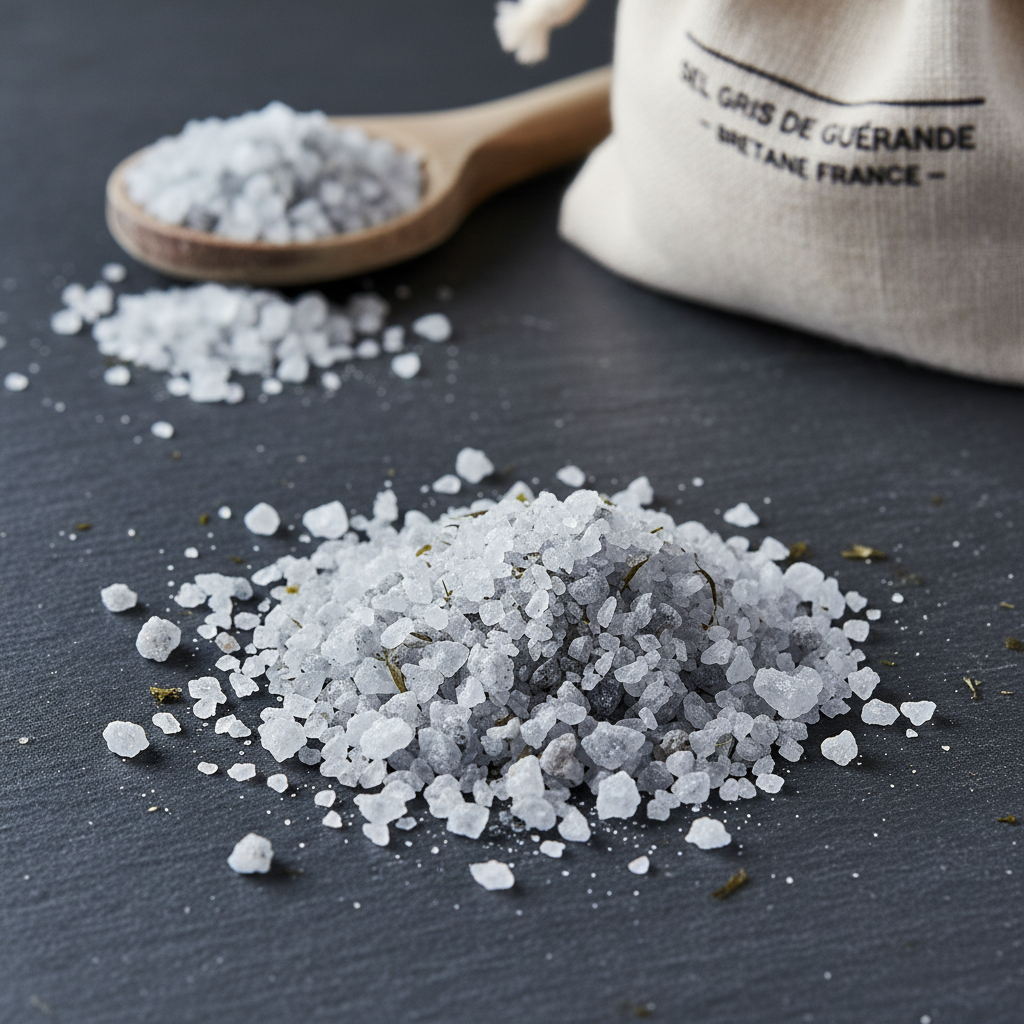
What Is How Do You Use Celtic Salt and Why It Matters in 2026
Celtic salt — particularly the authentic grey variety harvested from the salt marshes of Guérande in Brittany, France — has experienced a remarkable resurgence in kitchens, wellness routines, and even athletic recovery protocols over the past several years. But despite growing awareness, many people who purchase this mineral-rich seasoning still find themselves asking the same fundamental question: how do you use Celtic salt effectively, and is there a right or wrong way to incorporate it into daily life? The answer is more nuanced than simply sprinkling it on food, and understanding the full range of applications can genuinely transform how you cook, how you feel, and how you think about seasoning altogether.
In 2026, the conversation around salt quality has shifted dramatically. Consumers are no longer satisfied with the overly processed, stripped-down table salt that dominated supermarket shelves for decades. Refined table salt is chemically treated, bleached, and reduced to nearly pure sodium chloride, with anti-caking agents added to keep it free-flowing. By contrast, authentic Celtic grey salt from Guérande, France, is hand-harvested by skilled artisans known as paludiers, left completely unrefined, and contains over 80 trace minerals including magnesium, calcium, and potassium. These minerals are not mere marketing points — they represent a fundamentally different product that interacts with food, water, and the human body in genuinely distinct ways. Knowing how to use this salt properly means you can take full advantage of those differences.
What makes 2026 especially relevant is the broader cultural and scientific context. Nutrition researchers, professional chefs, and integrative health practitioners have increasingly turned their attention to the role of mineral diversity in diet. The standard Western diet is often low in magnesium and potassium, and while Celtic salt is not a supplement, it does offer a practical, food-based way to introduce these trace minerals daily. When you replace your current seasoning habit with authentic, IGP-certified Celtic grey salt and use it correctly across cooking, finishing, and wellness applications, the cumulative effect over weeks and months can be meaningful. This guide covers every layer of that transition in detail.
Finally, it's worth addressing why the phrase "how do you use Celtic salt" generates so much search interest. Most people are familiar with salt as a binary ingredient — either present or absent in a dish. But Celtic grey salt invites a more thoughtful approach. Its moisture content, coarser texture, and complex mineral profile mean that it behaves differently than fine table salt in recipes, on the tongue, and even in water. You might dissolve it in warm water for a morning electrolyte drink, use it as a finishing salt on roasted vegetables, blend it into a body scrub, or add it to a bath soak. Each of these applications requires slightly different handling. This article walks through all of them with practical, actionable guidance grounded in both culinary tradition and modern understanding of mineral nutrition.
The Science Behind How Do You Use Celtic Salt
To truly understand how to use Celtic salt well, it helps to understand what makes it chemically and structurally distinct from other salts. Authentic Celtic grey salt from Guérande contains sodium chloride as its primary component, but unlike refined table salt which is typically 99%+ sodium chloride, unrefined grey salt retains a complex matrix of over 80 trace minerals. These include magnesium, calcium, potassium, sulfur, iron, zinc, iodine, and manganese, among others. The grey color itself comes from the clay-lined salt pans where the water evaporates under Atlantic winds and Breton sun. That clay interaction during the harvesting process contributes minerals and gives the salt its characteristic slightly moist texture. This moisture is a natural feature, not a flaw — it is part of what distinguishes a living, mineral-rich salt from an industrially processed one.
The mineral composition of Celtic grey salt has practical implications for how it behaves in cooking. Because it is coarser and moister than fine table salt, it dissolves more slowly in cold water and adheres differently to food surfaces. When used as a finishing salt on warm dishes, the crystals partially melt on contact, releasing a burst of flavor that is more rounded and less sharp than the piercing sodium hit of refined salt. The presence of magnesium in particular is thought to contribute to this softer taste profile — magnesium chloride has a slightly bitter, mineral edge that balances and rounds out the pure sodium chloride sharpness. This is why chefs who work with unrefined salts often describe them as tasting "deeper" or "more complete" than standard table salt.
From a physiological standpoint, the mineral co-factors in Celtic grey salt may support better absorption and utilization at the cellular level. Sodium does not function in isolation in the body — it works in concert with potassium, magnesium, and calcium to regulate fluid balance, nerve signaling, and muscle contraction. When these minerals are present together in their natural ratios, as they are in unrefined sea salt, the body may process them more efficiently than when consuming isolated sodium chloride. This is a developing area of research, and it is important not to overstate the case, but the principle of mineral synergy is well established in nutritional biochemistry.
| Property | Celtic Grey Salt (Guérande, IGP) | Standard Refined Table Salt |
|---|---|---|
| Sodium Chloride Content | Approximately 84–87% | Approximately 99–99.9% |
| Trace Minerals | 80+ including Mg, Ca, K, Fe, Zn | Negligible (stripped during processing) |
| Additives | None — completely unrefined | Anti-caking agents, bleaching agents |
| Moisture Content | Naturally moist (~13%) | Bone dry (0% intentional) |
| Texture | Coarse, irregular crystals | Fine, uniform granules |
| Flavor Profile | Round, complex, mineral-forward | Sharp, flat, one-dimensional |
| Certification | IGP (Protected Geographical Indication) | None applicable |
| Harvesting Method | Hand-harvested by paludiers | Industrial mining or evaporation |
How to Use Celtic Salt — Complete Guide
Using Celtic grey salt well is both an art and a practical skill. The first thing to understand is that because of its coarser texture and higher moisture content, you may need to adjust quantities slightly compared to fine table salt. A teaspoon of coarse Celtic grey salt contains less actual sodium than a teaspoon of fine table salt, simply because the larger crystals pack less densely. This means you may end up using more by volume to achieve the same level of saltiness — which is worth noting, though most experienced users find they need less overall because the flavor is more satisfying and complex from the start.
In Everyday Cooking:- Pasta and boiling water: Add Celtic grey salt generously to boiling water before adding pasta, rice, or vegetables. The salt seasons from the inside out, creating a much more flavorful base than salting at the end.
- Meat and fish seasoning: Salt proteins 30–60 minutes before cooking using coarse Celtic grey salt. This draws out surface moisture briefly, then allows the meat to reabsorb a seasoned brine, resulting in juicier, more evenly flavored results.
- Soups and stews: Add Celtic grey salt in layers — a pinch at the start of cooking to build foundational flavor, and a final adjustment at the end. The minerals in the salt interact with the cooking liquid over time to develop rounded depth.
- Baking: For bread, pizza dough, and savory pastries, Celtic grey salt integrates beautifully. Note that the moisture in the salt can slightly affect dough hydration in very precise recipes — grind or crush the salt finely if consistency is critical.
One of the most elegant uses of Celtic grey salt is as a finishing touch. After cooking eggs, grilled meats, roasted vegetables, or even chocolate desserts, a few pinched crystals scattered over the surface just before serving elevate the entire dish. The crystal structure provides a textural crunch, a brief burst of minerality, and a visual appeal. For this purpose, the slightly larger crystals are an asset rather than a challenge. Many chefs keep a small pinch bowl of Celtic grey salt beside the stove and at the table specifically for this purpose.
The difference a real salt makes: Discover Celtic Grey Salt →
- Morning electrolyte water: Dissolve a small pinch (approximately ⅛ teaspoon) of Celtic grey salt in a glass of warm water upon waking. This simple practice supports electrolyte replenishment after overnight fasting and may help kickstart digestive function. The trace minerals dissolve well in warm water and are quickly available.
- Post-exercise rehydration: Add a pinch to water or to a fresh juice blend after physical activity. Athletes and active individuals use this approach to replace not just sodium but the broader spectrum of minerals lost through sweat.
- Bath soaks: Add 1–2 cups of Celtic grey salt to a warm bath. The minerals, particularly magnesium, are absorbed transdermally and may support muscle relaxation. This is a popular recovery practice among athletes and those with physically demanding lifestyles.
- Body scrubs: Mix Celtic grey salt with a carrier oil such as coconut, almond, or jojoba oil to create a mineral-rich exfoliant. The coarse texture sloughs away dead skin cells while the minerals nourish. Add a few drops of essential oil if desired.
- Store Celtic grey salt in a ceramic, glass, or wooden container rather than metal, which can react with the natural moisture and minerals over time.
- If you find the coarse texture inconvenient for some applications, grind it with a mortar and pestle or a dedicated salt grinder rather than a pepper mill — the moisture can clog standard grinders.
- Taste as you go. The mineral complexity of this salt means a little goes a long way in terms of satisfaction. Many users report using less salt overall once they switch from refined to unrefined grey salt.
- For brine solutions (for pickling, fermentation, or meat curing), Celtic grey salt is an excellent choice. Use by weight rather than volume for consistency.
Benefits of Using Celtic Salt Backed by Evidence
One of the most widely cited potential benefits of using authentic, unrefined Celtic grey salt is its contribution to a more diverse mineral intake. Magnesium deficiency is extremely common in modern populations — estimates suggest that a substantial portion of adults in developed countries consume less than the recommended daily amount of magnesium. While Celtic grey salt should not be positioned as a primary dietary supplement, the fact that it naturally contains magnesium in bioavailable form means that regular use contributes meaningfully to overall intake. Magnesium is essential for over 300 enzymatic reactions in the body, including energy production, protein synthesis, blood glucose control, and nerve function. Using a salt that delivers even a small amount of magnesium alongside sodium is nutritionally superior to using a salt that delivers sodium alone.
Celtic grey salt also appears to support better electrolyte balance compared to refined salt, particularly when consumed as part of a whole-food diet. Electrolyte balance is fundamental to hydration — it is not simply about how much water you drink, but about the mineral ratios in your body fluids. Sodium, potassium, magnesium, and calcium must be present in appropriate proportions for cells to maintain proper fluid balance, for muscles to contract and relax correctly, and for nerve impulses to fire efficiently. Refined table salt tips this balance heavily toward sodium alone, while unrefined Celtic grey salt provides sodium alongside its natural mineral partners. This distinction becomes particularly important for athletes, older adults, and people managing cardiovascular health under medical supervision.
From a culinary perspective, the benefits of using Celtic grey salt include significantly enhanced flavor development in cooking. Experienced cooks consistently report that dishes made with unrefined sea salt taste more complex, require less overall seasoning, and have a more satisfying "roundness" that is difficult to achieve with refined salt. This is not merely subjective preference — it reflects the genuine chemical interaction of mineral compounds with food molecules during cooking and seasoning. Less sodium chloride sharpness and more mineral complexity means you can season food to a point of full satisfaction while potentially using slightly less salt overall. This can have long-term implications for sodium intake and cardiovascular health, though individual responses vary.