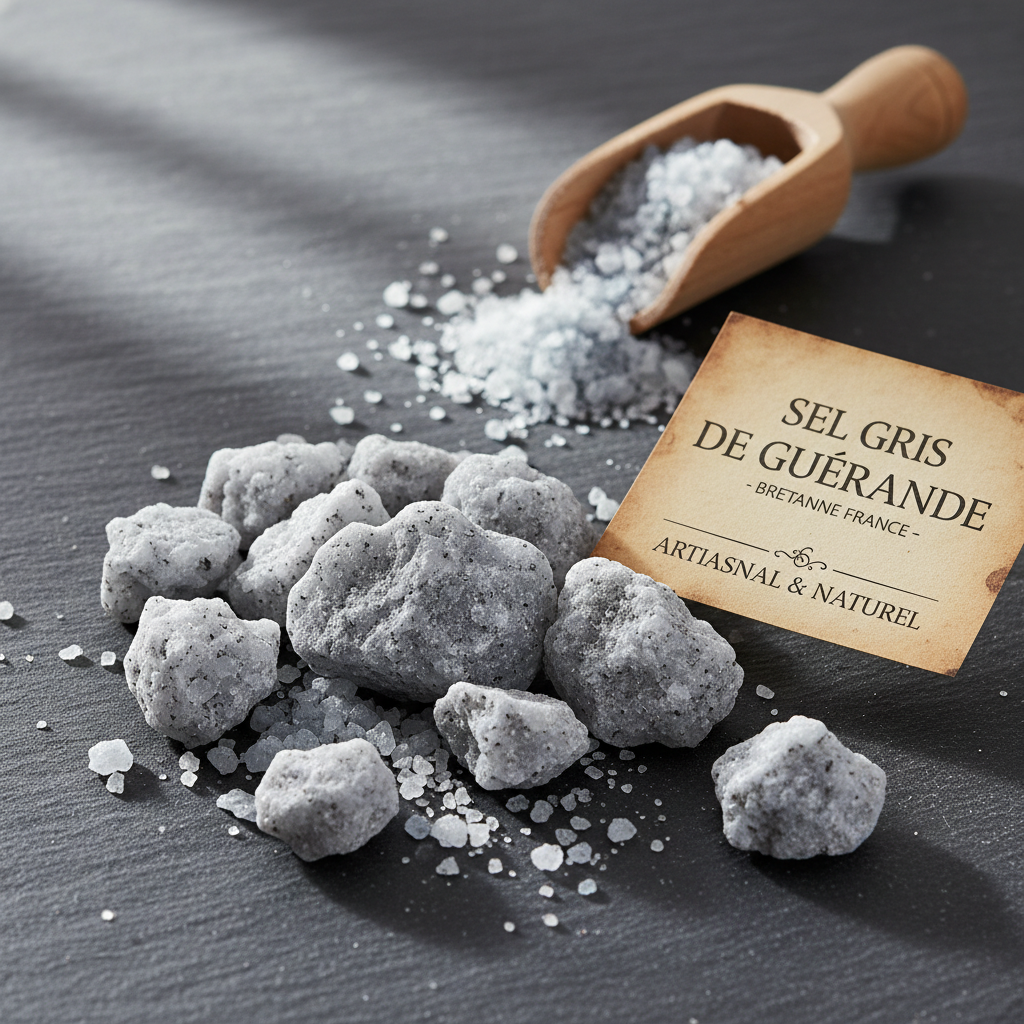
What Is How Do You Take Celtic Salt and Why It Matters in 2026
Celtic salt is not simply a seasoning you shake onto your food without thought. Understanding how do you take Celtic salt properly is one of the most important questions any health-conscious person can ask in 2026, as awareness of mineral-rich, unprocessed salts continues to grow across the globe. Unlike conventional table salt, which is heavily processed, bleached, and stripped of virtually all naturally occurring minerals, authentic Celtic grey salt from Guérande, Brittany, France retains the full spectrum of over 80 trace minerals including magnesium, calcium, and potassium. This makes the question of how you take it — when, how much, in what form, and for what purpose — genuinely meaningful to your overall well-being. The method of consumption directly affects how your body absorbs and utilizes those minerals, and getting it right can make a measurable difference in your energy, hydration, and daily vitality.
The phrase "how do you take Celtic salt" encompasses a surprisingly broad range of practices. Some people dissolve a small pinch in warm water first thing in the morning, a tradition rooted in naturopathic practice. Others use it exclusively as a finishing salt over meals, allowing its complex, briny, mineral-laden flavor to elevate food while ensuring they consume it in an uncooked state that preserves the most delicate mineral compounds. Still others incorporate it into electrolyte-rich drinks, athletic recovery protocols, or even topical applications for skin health. The variety of methods reflects the versatility of authentic, hand-harvested Celtic grey salt and speaks to the depth of knowledge that has accumulated around this ancient product over centuries. The paludiers — the salt farmers of Guérande who hand-harvest this salt using techniques unchanged for over a thousand years — have always understood that this salt is food as medicine.
In 2026, the conversation around how to take Celtic salt has become more sophisticated and evidence-informed than ever before. Functional medicine practitioners, nutritionists, integrative health coaches, and everyday consumers are all asking more precise questions: Should I take it on an empty stomach? How much is optimal? Does cooking it destroy its mineral content? Is there a difference between taking the coarse grey variety versus Fleur de Sel? These are exactly the kinds of questions this comprehensive guide will address. What we know with certainty is that the quality of the salt you choose is the foundation upon which every method of taking it rests. An IGP-certified Celtic grey salt from Guérande, harvested by hand, without additives, anti-caking agents, or heat processing, gives your body what it actually needs — not a synthetic facsimile of mineral nutrition.
The relevance of this topic in 2026 also connects to broader shifts in how people think about sodium. For decades, mainstream health messaging treated all salt as a single, homogenous substance to be feared and minimized. That simplistic view is rapidly being replaced by a more nuanced understanding: that natural, unrefined salts provide a matrix of minerals that the human body co-evolved with over millennia, and that the complete removal of salt from the diet — or its replacement with heavily processed alternatives — can actually undermine hydration, nerve function, and adrenal health. This is why learning how to take Celtic salt correctly is not a fringe wellness trend, but a meaningful, evidence-informed approach to daily nutrition. Whether you are new to Celtic salt or have been using it for years, understanding the best methods for consumption will help you derive the maximum benefit from every grey, mineral-rich grain.
The Science Behind How Do You Take Celtic Salt
The science of how Celtic salt interacts with the human body begins with its mineral composition. Authentic Celtic grey salt from Guérande contains sodium chloride as its primary component, but crucially, it also retains the naturally occurring trace minerals present in the Atlantic seawater from which it is harvested. These include magnesium, which plays a critical role in over 300 enzymatic reactions; calcium, essential for bone density, muscle contraction, and nerve signaling; and potassium, which works in tandem with sodium to regulate the body's fluid balance and support cardiovascular function. The presence of these co-minerals is not incidental — it is what distinguishes a living, complex salt from a chemically isolated substance. When you take Celtic salt, you are not just ingesting sodium chloride; you are delivering a bioavailable mineral complex to your system.
From a physiological standpoint, how you take Celtic salt influences its bioavailability — that is, how effectively your body can absorb and use its mineral content. Dissolving Celtic salt in water, for example, creates an ionic solution in which the minerals exist in their most readily absorbed form. The stomach's hydrochloric acid further assists in breaking down mineral compounds, but when minerals are already in ionic form from dissolution, the digestive burden is reduced and absorption through the intestinal lining is more efficient. Conversely, consuming Celtic salt in solid, undissolved form over food means the minerals pass through the digestive tract more slowly, releasing gradually as the food is broken down and digested. Both methods have their place, and the optimal approach depends on your individual goals — rapid mineral replenishment versus sustained, food-integrated mineral intake.
Research into electrolyte balance and hydration has increasingly highlighted the critical role of the sodium-potassium pump in cellular function. Every cell in the human body relies on this electrochemical mechanism to regulate what enters and exits the cell membrane. Sodium, when sourced from a natural, mineral-complete salt like Celtic grey salt, works synergistically with potassium and magnesium to keep this pump operating efficiently. Dehydration, muscle cramps, brain fog, and fatigue are all symptoms that can indicate an electrolyte imbalance, and simply increasing water intake without adequate mineral-containing salt may not resolve them. This is why athletes, health practitioners, and biohackers have increasingly turned to Celtic salt as a physiologically intelligent way to support hydration and cellular energy — not despite its sodium content, but because of its complete mineral profile.
| Method of Taking Celtic Salt | Primary Benefit | Best Time | Absorption Rate |
|---|---|---|---|
| Dissolved in warm water (morning drink) | Rapid electrolyte replenishment, hydration | Morning, fasted | High — ionic mineral form |
| Sprinkled over meals | Food-integrated mineral intake, flavor enhancement | With any meal | Moderate — digestion-dependent |
| Added to electrolyte drinks | Athletic recovery, sustained hydration | Pre/post exercise | High — liquid medium |
| Used in cooking (broths, soups) | Mineral enrichment of whole meals | Any meal | Moderate — heat-stable minerals |
| Topical application (bath, scrub) | Skin mineralization, relaxation | Bathing, skincare | Transdermal — slow |
How to Use How Do You Take Celtic Salt — Complete Guide
Taking Celtic salt correctly begins with choosing the right form for your intended use. The coarse Celtic grey salt, available in 500g / 17.6 oz portions, is ideal for culinary applications, morning water rituals, and electrolyte drinks. Its moisture-retaining grey crystals are a hallmark of genuine Guérande salt, indicating the natural clay-filtered moisture and mineral richness that sets it apart. The finer ground version is more suitable for direct use at the table or in recipes where a finer texture is preferred. Fleur de Sel, available in 200g / 7.1 oz, is the hand-skimmed cream of the salt harvest — used as a premium finishing salt, added at the very last moment before serving or at the table, never cooked, so that its delicate flavor and most volatile mineral compounds are preserved intact for your palate and your body.
The morning Celtic salt water ritual is perhaps the most widely practiced method among those who take Celtic salt for health purposes. Here is how to do it correctly:
- Fill a glass (approximately 250–300ml) with clean, filtered water — ideally at room temperature or slightly warm.
- Add a small pinch of Celtic grey salt — approximately 1/8 to 1/4 teaspoon. Start at the lower end and adjust based on how your body responds.
- Stir gently until the salt is fully dissolved, creating a clear, slightly mineral-tasting solution.
- Drink this on an empty stomach, at least 20–30 minutes before your first meal or coffee.
- Follow with an additional glass of plain water to support overall morning hydration.
Using Celtic salt in cooking is the most traditional and widely practiced method. Add a pinch to boiling water for pasta, rice, or vegetables. Season meats, fish, and roasted vegetables before or during cooking. Add to stocks, soups, and broths as a mineral-rich base seasoning. While high-temperature cooking does not destroy the minerals in Celtic salt — as minerals are inherently heat-stable elements — it does evaporate some of the delicate aromatic compounds. For the fullest sensory experience and maximum mineral complexity, reserve a portion of your Celtic salt use for finishing: adding it after cooking is complete, directly to the plate.
The difference a real salt makes: Discover Celtic Grey Salt →
For athletic and active use, dissolve 1/4 teaspoon of Celtic grey salt in 500ml of water along with a squeeze of fresh citrus for a natural electrolyte drink. This can be consumed before, during, or after exercise. Many athletes find this preferable to commercially produced electrolyte products, which often contain artificial flavors, colors, and synthetic mineral forms. Celtic grey salt's naturally occurring magnesium and potassium complement the sodium in a way that supports muscle function and prevents the cramping and fatigue associated with electrolyte depletion during sustained physical activity.
Practical tips for consistent, effective use:
- Keep a small dish of Celtic grey salt on your dining table for easy, habitual use with every meal.
- Store your salt in a ceramic or glass container — avoid metal containers, which can react with the natural moisture and mineral content of unrefined salt.
- If your Celtic salt clumps, this is a sign of its authentic, moisture-retaining character. Simply break apart the clumps with a spoon — it does not indicate spoilage.
- Do not measure Celtic salt the same way you measure processed table salt. Its coarser grain and retained moisture mean that a pinch of Celtic salt contains slightly less sodium by volume than the same apparent volume of fine table salt.
- Pair your Celtic salt use with adequate water intake throughout the day. Natural salts support hydration, but only when consumed as part of a well-hydrated diet.
Benefits of How Do You Take Celtic Salt Backed by Evidence
One of the most well-documented benefits of taking Celtic salt in the ways described above relates to electrolyte balance and hydration. Electrolytes — sodium, potassium, magnesium, and calcium — are essential for virtually every electrical process in the human body, from heartbeat regulation to nerve impulse transmission to muscle contraction. When the body's electrolyte balance is compromised, symptoms can range from fatigue and muscle cramps to headaches, difficulty concentrating, and in severe cases, cardiac irregularities. The morning Celtic salt water ritual, in particular, provides a rapid, gentle replenishment of these electrolytes after the overnight fasting period, during which the body continues to excrete sodium and minerals through urine and respiration. Starting the day with this simple practice can meaningfully support the body's hydration status before any food or other beverages are consumed.
The trace mineral content of Celtic grey salt from Guérande supports a range of physiological functions that go beyond simple sodium-chloride nutrition. Magnesium, present in Celtic grey salt in naturally occurring amounts, is involved in protein synthesis, blood glucose regulation, and blood pressure management. Many adults in modern societies are functionally deficient in dietary magnesium, in part because soil depletion has reduced the magnesium content of many plant foods. While Celtic salt alone cannot serve as a primary magnesium supplement, regular consumption as part of a mineral-rich diet contributes meaningfully to total daily intake. Similarly, the calcium and potassium in Celtic grey salt complement dietary sources of these minerals, supporting bone health, cardiovascular function, and the maintenance of healthy blood pressure within normal ranges.