What Is Celtic Salt Pronunciation and Why It Matters in 2026
If you have ever stood in a specialty grocery store or browsed a gourmet food website and found yourself quietly mouthing the words "Celtic salt," wondering whether you are saying it correctly, you are far from alone. The pronunciation of Celtic salt is one of the most searched questions among food enthusiasts, health-conscious shoppers, and culinary professionals in 2026. The question seems simple on the surface, but it opens a fascinating doorway into the history, culture, and geography of one of the world's most celebrated artisanal sea salts. Getting the pronunciation right is not merely a matter of social confidence — it reflects a genuine respect for the traditions and the people behind this extraordinary product.
So, how do you pronounce Celtic salt? The correct pronunciation is KEL-tik salt — with a hard "K" sound at the beginning, not a soft "S" sound. Many English speakers default to saying "SEL-tik," particularly those who are fans of the famous Scottish football club, but in linguistic and historical contexts, the hard "K" pronunciation is the academically accepted standard. The word "Celtic" derives from the ancient Greek word Keltoi and the Latin Celtae, both of which use a hard consonant. Linguists, historians, and anthropologists have long established "KEL-tik" as the etymologically correct form, and this is the pronunciation used throughout most of Europe, including France — the homeland of authentic Celtic grey salt.
Understanding this distinction matters especially in 2026 because the artisanal food movement has brought Celtic salt into mainstream kitchens and restaurant menus around the world. As more people discover the rich mineral complexity and culinary superiority of authentic grey salt from Guérande, Brittany, the conversation around it naturally includes questions of authenticity — and pronunciation is a meaningful part of that authenticity. When you walk into a Michelin-starred restaurant in Paris, a health food cooperative in Brooklyn, or a farm-to-table bistro in Melbourne and order a dish finished with "KEL-tik salt," you signal that you understand what you are talking about. You connect yourself to a tradition that stretches back over a thousand years along the Atlantic coast of northwestern France.
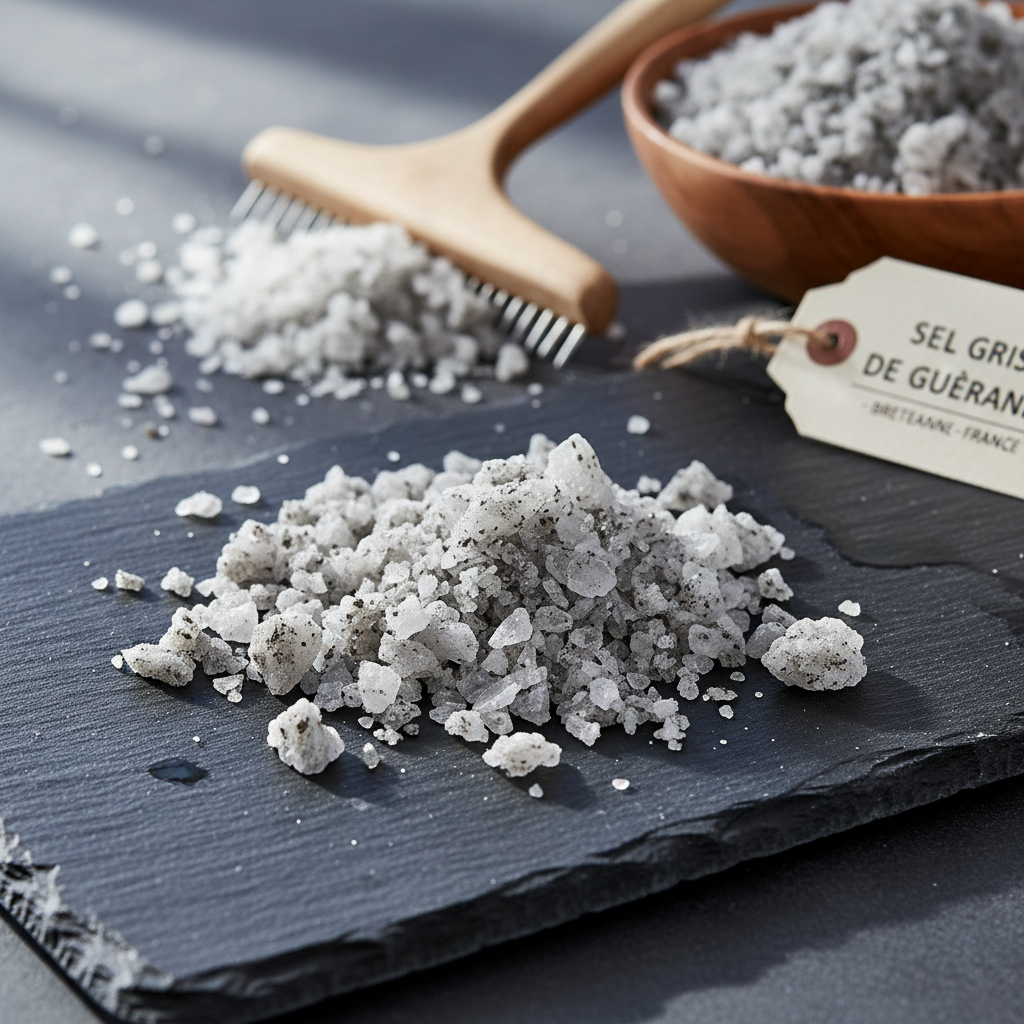
Beyond social etiquette, the pronunciation question is also a gateway to deeper education about this remarkable salt. Authentic Celtic grey salt — the kind harvested by hand by skilled artisans called paludiers in the salt marshes of Guérande, Brittany — carries IGP certification, which stands for Indication Géographique Protégée, a European designation that protects the product's regional identity much like Champagne protects the famous sparkling wine. When you learn to say "KEL-tik salt" correctly and understand what it means, you begin to appreciate why this salt commands a premium price, why it looks and feels different from ordinary table salt, and why chefs and nutritionists worldwide are increasingly choosing it over processed alternatives. Pronouncing it correctly is simply the first step in a much richer journey of discovery.
The Science Behind Celtic Salt Pronunciation — Language, History, and Linguistics
The linguistic science behind the pronunciation of "Celtic" is rooted in the study of Proto-Indo-European languages and the evolution of Celtic languages across ancient Europe. The Celts were a group of tribal societies sharing similar languages, cultures, and religious practices who spread across much of Europe from approximately 800 BCE onward. The ancient Greeks called them Keltoi, a word that begins unmistakably with the hard "K" sound. When Latin absorbed this term as Celtae, the "C" in classical Latin was always pronounced as a hard "K" — there was no soft "S" sound for the letter "C" in classical Latin. So etymologically and historically, "KEL-tik" has always been the correct form. The "SEL-tik" pronunciation is a later English development, rooted in certain regional dialects and popularized largely through the naming of sports clubs in the 19th century, particularly in Ireland and Scotland.
Modern linguistics organizations, university language departments, and major international dictionaries — including Merriam-Webster and the Oxford English Dictionary — list "KEL-tik" as the primary and preferred pronunciation in virtually all non-sporting contexts. The soft "SEL-tik" is acknowledged as an accepted variant specifically in reference to certain athletic teams, but even the Oxford English Dictionary makes the distinction clear: when referring to Celtic peoples, Celtic languages, Celtic culture, or Celtic foods such as Celtic salt, the hard "K" sound is standard. In France, where authentic Celtic grey salt originates, the French equivalent "celtique" is pronounced with the hard "K" sound universally, and French-speaking paludiers in Guérande would never use a soft "S" form.
What makes this topic particularly relevant to the world of artisanal food is that language authenticity and product authenticity often go hand in hand. Celtic grey salt from Guérande, Brittany carries IGP certification, which means its geographic and cultural identity is legally protected. The salt's connection to the ancient Celtic peoples who first inhabited the Atlantic coast of Brittany is not merely marketing — it is a historical and cultural reality embedded in the landscape, the harvesting methods, and the mineral composition of the product itself. Saying "KEL-tik salt" properly honors that heritage in the same way that correctly pronouncing "Guérande" or "fleur de sel" honors the French origin of those terms.
| Pronunciation Form | Phonetic Spelling | Context | Accepted By |
|---|---|---|---|
| KEL-tik | /ˈkɛltɪk/ | Historical, cultural, culinary | Linguists, dictionaries, historians, food world |
| SEL-tik | /ˈsɛltɪk/ | Sports teams (specific clubs) | Sports media, certain regional dialects |
| KEL-tik salt | /ˈkɛltɪk sɔːlt/ | Gourmet food, health, culinary arts | Chefs, nutritionists, food writers globally |
| Sel Celtique | /sɛl sɛlˈtik/ | French language context | French speakers, Breton producers |
How to Use Celtic Salt — A Complete Pronunciation and Culinary Guide
Now that you know that "KEL-tik salt" is the correct pronunciation, let us talk about how to confidently use that knowledge — and how to use the salt itself to maximum culinary effect. Knowing how to say something correctly gives you confidence, and confidence in the kitchen and at the dining table transforms the entire experience of cooking and eating. Celtic grey salt from Guérande is a versatile, deeply flavorful salt that can enhance virtually every dish you prepare, and understanding how to discuss it properly makes you a more authoritative host, chef, and food advocate.
Step-by-Step Guide to Pronouncing and Discussing Celtic Salt:- Break it into syllables: Say "KEL" — as in "kelp" or "Kelly" — followed by "tik" as in "tick." Put them together: KEL-tik. Practice this three times out loud and you will never revert to the incorrect form.
- Use it in context: Try saying "I season my roasted vegetables with KEL-tik grey salt from Guérande." The natural flow of the sentence will reinforce the pronunciation.
- Correct others gently: If a friend says "SEL-tik salt," you can simply model the correct pronunciation in your response: "Yes, I love KEL-tik salt too — especially the grey variety from Brittany."
- Pair the pronunciation with knowledge: Knowing that Celtic salt is hand-harvested, unrefined, and rich in over 80 trace minerals including magnesium, calcium, and potassium makes your use of the term far more credible and compelling.
- Explore regional pronunciations: In Brittany, locals may refer to the product as "sel gris" (grey salt) or "sel celtique." Learning these French terms alongside the English pronunciation adds cultural depth to your understanding.
- Use coarse Celtic grey salt as a finishing salt on grilled meats, roasted root vegetables, and hearty soups where its bold, briny flavor can shine.
- Dissolve Celtic grey salt in warm water as a natural electrolyte drink after exercise — its 80+ trace minerals make it a nutritionally rich alternative to commercial sports drinks.
- Use it in baking bread, particularly sourdough, where the complex mineral profile contributes depth of flavor that refined table salt simply cannot match.
- Sprinkle it over dark chocolate desserts for a stunning sweet-savory contrast that professional pastry chefs have championed for decades.
- For a special presentation, use Fleur de Sel — the delicate flower of the salt harvest from Guérande — as a final flourish on oysters, salads, and fine fish dishes.
Understanding the correct pronunciation also helps you navigate menus at high-end restaurants, where Celtic salt is increasingly listed as a specific ingredient or condiment. When you can say "KEL-tik grey salt" with ease and explain that it comes from IGP-certified salt marshes in Guérande, Brittany, you participate meaningfully in the conversation that serious food culture demands in 2026. This is not elitism — it is the natural extension of caring deeply about what you eat and where it comes from.
The difference a real salt makes: Discover Celtic Grey Salt →
Benefits of Understanding Celtic Salt — Pronunciation, Culture, and Nutrition Backed by Evidence
The benefits of getting the pronunciation right extend well beyond linguistic accuracy. When you say "KEL-tik salt" correctly, you demonstrate cultural literacy that opens doors — to deeper conversations with chefs, producers, and food writers; to a richer understanding of why this salt is considered superior to ordinary table salt; and to a more meaningful relationship with the food you consume every day. In 2026, consumers are increasingly sophisticated, and the ability to speak accurately about the provenance, production methods, and cultural heritage of artisanal foods is a genuine form of social and culinary capital.
From a nutritional standpoint, authentic Celtic grey salt from Guérande offers benefits that are directly tied to its unrefined, traditionally harvested nature. Unlike refined table salt, which is stripped of its mineral complexity and often treated with anti-caking agents and bleaching compounds, Celtic grey salt retains over 80 trace minerals in their natural ratios. These include magnesium, which plays a critical role in muscle function, nerve transmission, and sleep regulation; calcium, essential for bone density and cardiovascular health; and potassium, which supports healthy blood pressure and electrolyte balance. The grey color of the salt is itself a marker of mineral richness — it comes from the clay-lined basins of the Guérande salt marshes, and it is a visible sign of authenticity that no amount of processing can replicate.
The hand-harvesting process carried out by paludiers — the skilled salt farmers of Guérande — ensures that the salt is collected at the perfect moment of crystallization, preserving both its moisture content and its mineral profile. Unlike industrially produced salts that are mechanically extracted and heated to high temperatures, Celtic grey salt is never subjected to processes that would alter its natural composition. This means the salt you sprinkle on your food retains the full spectrum of trace elements that the Atlantic Ocean deposited in those ancient marshes over centuries. The IGP certification that authentic Guérande Celtic salt carries guarantees that every grain you consume has been produced according to these strict traditional methods.
Cultural understanding also has measurable benefits. Research in food psychology and consumer behavior consistently shows that people who understand the origins and production methods of their food enjoy it more, waste less, and make better purchasing decisions. When you know that a 500g bag of authentic Celtic grey salt from Guérande represents the labor of skilled artisans, the minerality of an ancient Atlantic coastline, and the protection of a centuries-old tradition, you use it more thoughtfully. You season with intention rather than habit, and that mindfulness transforms not only the flavor of your food but the entire experience of nourishing yourself and the people you cook for. Explore the full health benefits of Celtic grey salt to deepen your understanding of what makes this salt nutritionally extraordinary.