Hand-harvested Guérande salt · Tracked international delivery included
GuideJune 26, 2026· by Celtic Salt Editorial Team
Guerande igp certification meaning
What Is Guérande IGP Certification Meaning and Why It Matters in 2026
When you see the letters IGP printed on a package of Guérande salt, you are looking at one of the most meaningful quality guarantees in the entire food world. IGP stands for Indication Géographique Protégée in French, which translates in English to Protected Geographical Indication. This certification is granted by the European Union and serves as a legally binding promise that the product you are holding was genuinely made in a specific geographic region, using methods and traditions tied directly to that place. In the case of Guérande salt, the certification confirms that every granule was harvested from the ancient salt marshes of the Guérande peninsula in Brittany, France — one of the most carefully protected and historically significant salt-producing regions on Earth. Understanding what this certification means is no longer a matter of academic curiosity; in 2026, with food fraud at an all-time high and the market flooded with imitation products, the IGP label is one of the few reliable tools consumers have to make truly informed purchasing decisions.
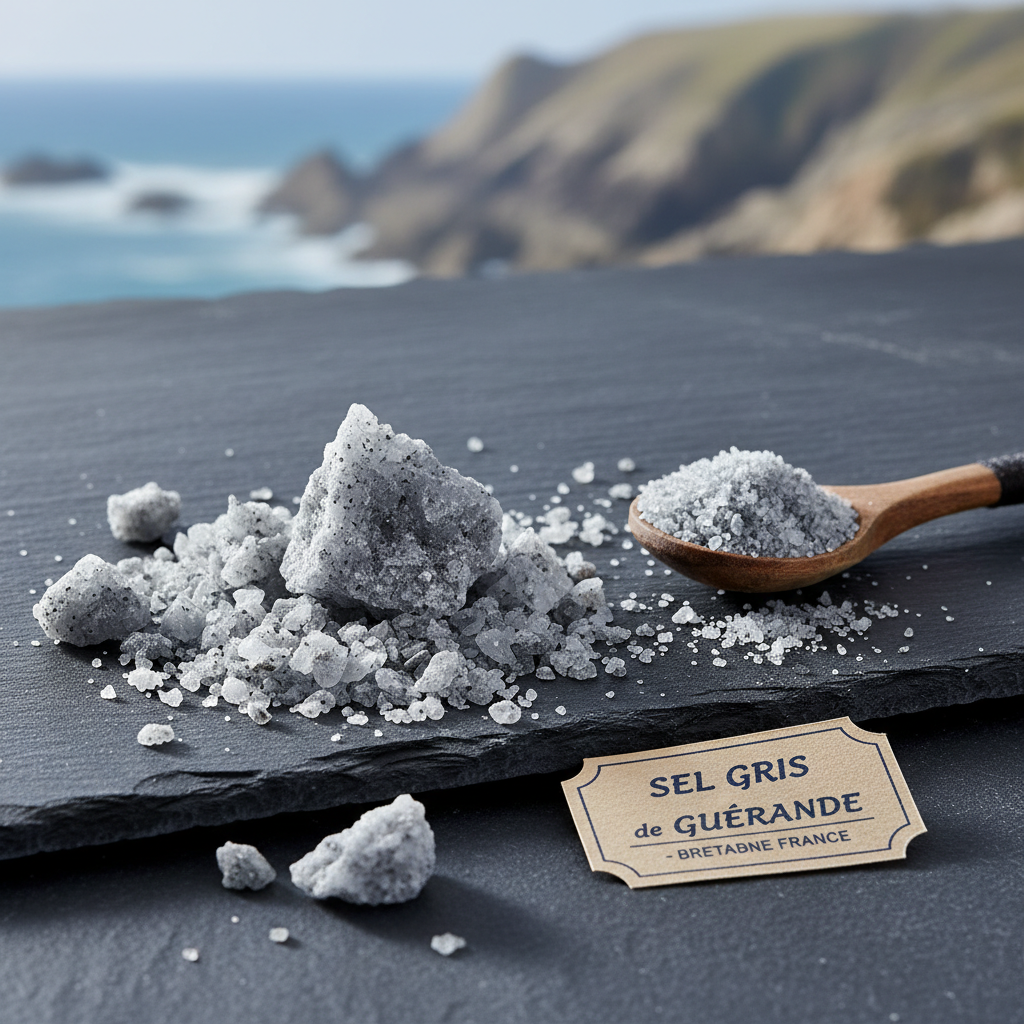
The story of IGP certification for Guérande salt is deeply rooted in centuries of tradition. The salt marshes of Guérande, known locally as marais salants, have been actively cultivated since at least the ninth century. Monks and local salt workers, called paludiers, developed intricate systems of clay channels, basins, and collection ponds that work entirely with the natural forces of tidal movement, wind, and solar evaporation. Over generations, this knowledge was refined and passed down, creating a living craft that is inseparable from the land and the community that tends it. The IGP certification was formally awarded to the salts of Guérande to recognize this unbreakable bond between geography, tradition, and product quality. It ensures that no factory in another country can slap the Guérande name on a bag of industrially produced salt and sell it to unsuspecting consumers. The certification is, in essence, a defense of authenticity — protecting both the paludiers who make the salt and the consumers who seek it out.
In the context of 2026, the IGP designation carries even greater weight than it did when it was first introduced. Global supply chains have become extraordinarily complex, and the salt industry is no exception. Salt is one of the most counterfeited and mislabeled food products in the world, with many brands marketing heavily processed, additive-laden salts under misleading "natural" or "artisan" labels. Against this backdrop, the IGP certification functions as a rigorous, third-party-verified standard that cuts through marketing noise. To receive and maintain IGP status, producers must submit to regular audits, maintain detailed production records, and comply with a tightly defined product specification called a cahier des charges. This document outlines everything from the geographic boundaries of production to the acceptable harvesting tools, the permitted processing steps (which are minimal by design), and the moisture content of the finished product. When you buy Guérande IGP-certified salt, you are buying a product that has been examined and validated at every stage of its journey from saltwater to your table.
Perhaps the most important reason the Guérande IGP certification matters in 2026 is what it says about what is not in the salt. Conventional table salt undergoes heavy industrial processing that strips away naturally occurring trace minerals, then adds anti-caking agents, flow agents, and often synthetic iodine. Guérande IGP-certified salt, by contrast, is required to be unrefined and free of additives. The certification standard explicitly prohibits the addition of any substance to the salt after harvesting. What you receive is exactly what the ocean and the sun and the clay beds of Brittany created — a complex, mineral-rich product that retains over trace minerals whose levels vary by harvest and product including magnesium, calcium, and potassium. This nutritional integrity is not an accident; it is a direct consequence of the IGP standard itself. The certification does not merely protect a name — it protects a philosophy of production that prioritizes purity, tradition, and respect for the natural environment.
The Science Behind Guérande IGP Certification Meaning
To truly appreciate what the Guérande IGP certification guarantees, it helps to understand the precise geological and ecological conditions that make this particular stretch of Brittany's coastline so exceptional. The Guérande peninsula sits at a latitude and angle that maximizes solar exposure during the harvesting season, which runs from May through September. The underlying geology is equally important: the salt marshes are built on a foundation of ancient blue clay, known locally as argile bleue. This clay is impermeable, meaning it prevents the salt water from seeping down into the soil, and it also imparts a subtle mineral character to the salt that is impossible to replicate artificially. When wind and sun evaporate the water from the collection basins, the salt crystallizes in direct contact with this clay, absorbing trace elements from it. This is why authentic Guérande grey salt has its characteristic grey-beige color and its distinctly moist texture — two features that are scientifically inseparable from the IGP-defined production environment.
The mineral composition of IGP-certified Guérande salt is genuinely remarkable from a scientific standpoint. Because the salt is harvested unrefined and without any additive treatment, all of the naturally occurring trace minerals remain present in the final product. Researchers who have analyzed authentic Guérande grey salt consistently find over 80 distinct trace minerals, with magnesium, calcium, and potassium appearing in particularly notable concentrations relative to industrially refined salt. Magnesium, for instance, plays a critical role in over 300 enzymatic reactions in the human body, including protein synthesis, muscle contraction, and nerve signal transmission. The fact that Guérande salt delivers magnesium alongside sodium chloride — rather than pure sodium chloride in isolation — means it provides a more nutritionally complex contribution to the diet. These are not invented marketing claims; they are measurable, verifiable differences that flow directly from the IGP production standard, which mandates that the salt remain in its natural, unprocessed state.
The IGP certification also enforces specific harvesting protocols that have direct scientific implications for product quality. Paludiers are required to use traditional wooden tools — specifically a long-handled rake called an lousse for grey salt — to collect salt from the bottom of the collection basins. This hand-harvesting process is not merely romantic tradition; it has practical consequences for the salt's structure and mineral retention. Machine harvesting, which is used in industrial salt production worldwide, generates heat and mechanical pressure that can alter the crystal structure and cause mineral loss. Hand harvesting with wooden tools, as mandated by the IGP cahier des charges, preserves the delicate crystal lattice and ensures that the mineral-rich brine clinging to each crystal is retained rather than stripped away. The result is a salt with a complex, layered flavor profile and a measurably higher mineral content than any conventionally harvested alternative.
Feature
Guérande IGP-Certified Salt
Standard Industrial Salt
Non-Certified "Natural" Salt
Geographic Verification
Legally verified, audited annually
Not applicable
Not verified
Trace Minerals
80+ including Mg, Ca, K
Stripped during refining
Variable, unverified
Additives
None permitted by certification
Anti-caking agents common
Often undisclosed
Harvesting Method
Hand-harvested by paludiers
Mechanically extracted
Varies, often undisclosed
Processing
Unrefined, sun-dried only
Heat-dried, chemically treated
Processing level unclear
Legal Protection
EU law enforced
Not applicable
None
Flavor Profile
Complex, briny, mineral-rich
Sharp, one-dimensional
Inconsistent
How to Use Guérande IGP Certification as Your Buying Guide — Complete Guide
Understanding what the Guérande IGP certification means is only the first step; knowing how to use that knowledge practically is what transforms you from a passive consumer into a genuinely informed buyer. The most important starting point is learning to read packaging critically. A genuine Guérande IGP-certified salt product will display the official EU Protected Geographical Indication logo — a yellow circle with blue stars and an emblem indicating the protected status. This logo is not decorative; it is a legally controlled mark that producers can only use if their product has been certified and verified by an accredited body. If a salt package claims to be "from Guérande" or "Breton salt" without displaying the IGP mark, you have no legal guarantee that the product actually originated in the Guérande marshes or was produced according to the traditional methods.
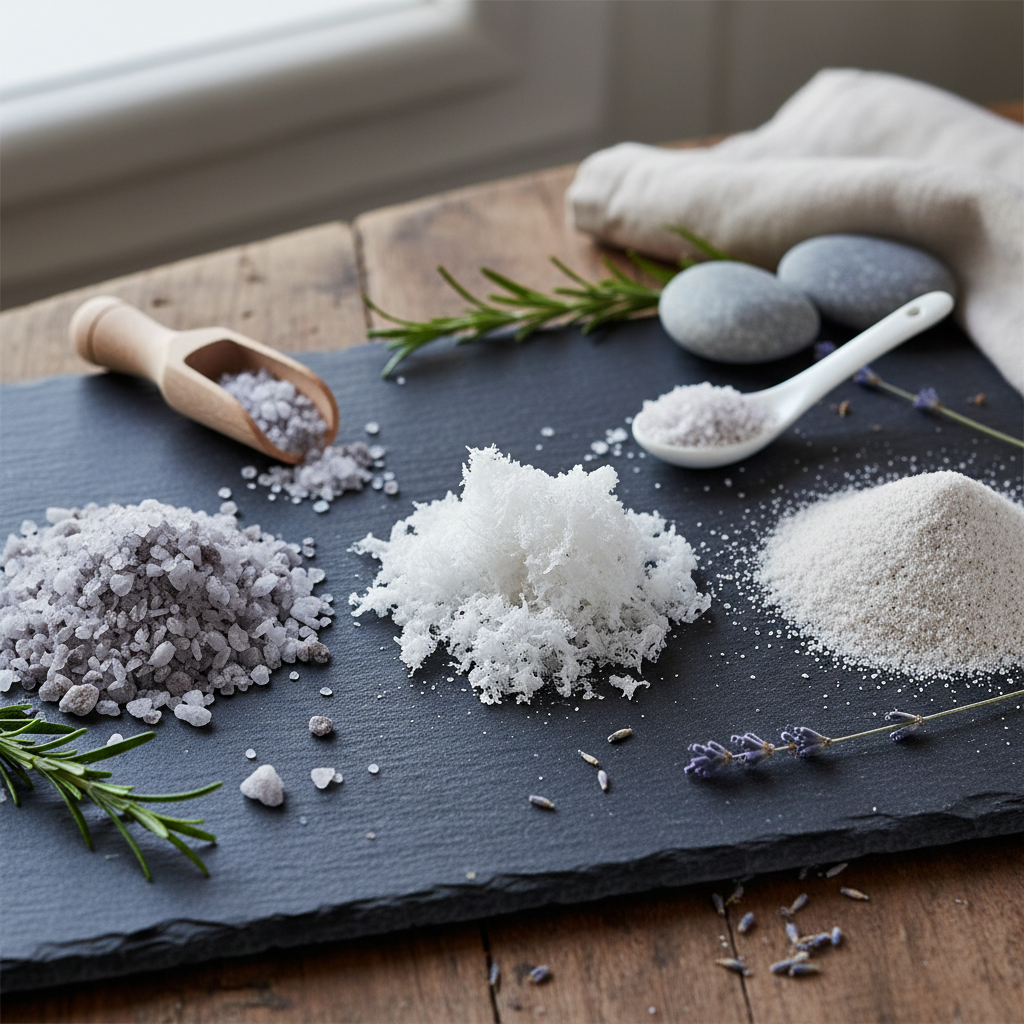
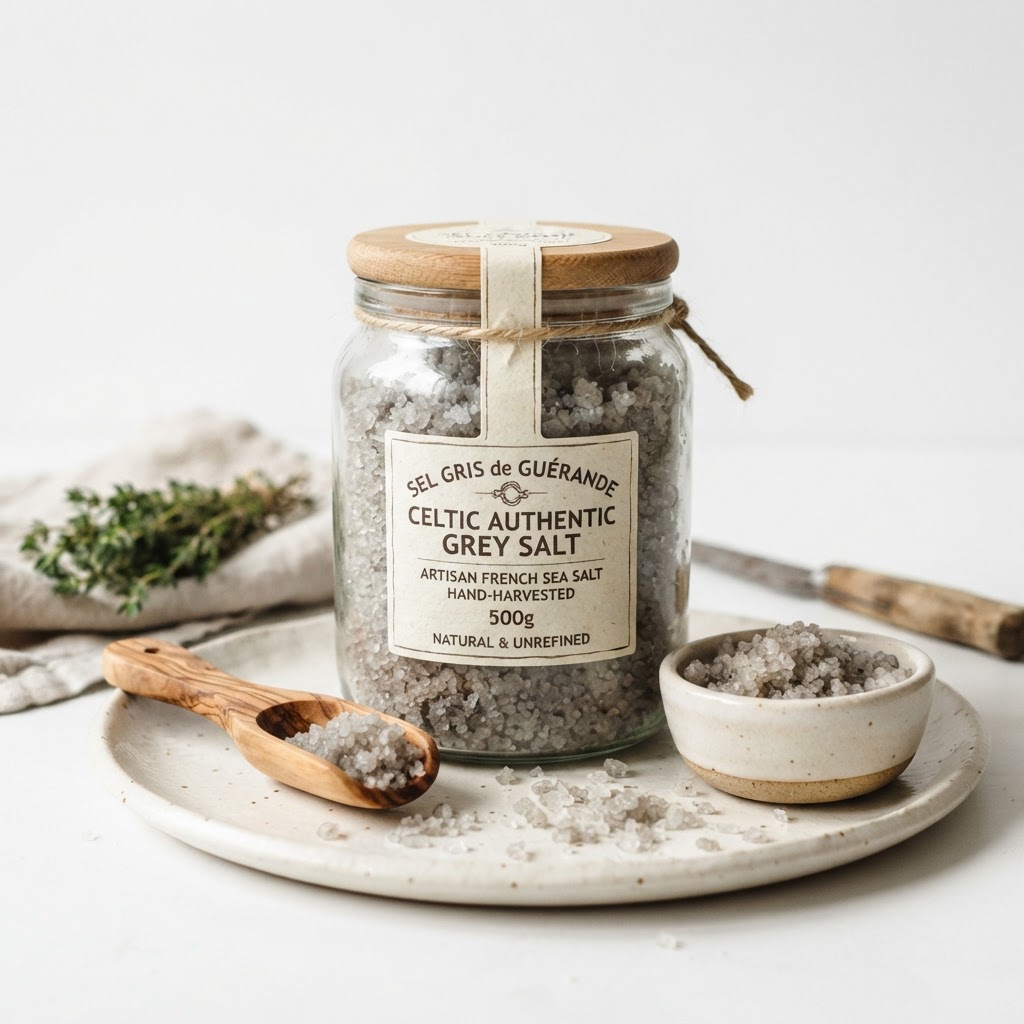
When shopping for Guérande salt, pay close attention to the product's color and texture as secondary verification tools. Authentic Guérande grey salt, known in French as sel gris de Guérande, should have a naturally grey to beige color caused by contact with the argile bleue clay of the marshes. It should feel moist to the touch — not wet, but distinctly damp — because the unrefined nature of the product means it retains some of the brine from which it crystallized. If you encounter a "Guérande-style" salt that is perfectly white and dry, this is a strong indicator that it has been refined and processed, which is incompatible with genuine IGP certification. Similarly, Fleur de Sel de Guérande — the delicate flower of salt harvested from the surface of the basins — should be off-white to very light grey and have a slightly flaky, irregular crystal structure. Both the grey salt and the Fleur de Sel are covered under the Guérande IGP, but they are distinct products with distinct characteristics.
Here is a practical step-by-step guide to using your knowledge of Guérande IGP certification when making a purchase:
Look for the official EU IGP logo on the front or back of the packaging. It should be prominently displayed and clearly legible.
Check the ingredient list. The only ingredient should be salt (sodium chloride). Any additional ingredients — including anti-caking agents, iodine, or flow agents — indicate a product that does not meet IGP standards.
Examine the color and texture through the packaging where possible. Grey salt should be visibly grey and slightly irregular in grain size.
Verify the origin statement. The packaging should specifically state Guérande, Loire-Atlantique, Brittany, France — not merely "French salt" or "Atlantic salt."
Research the producer or brand. Reputable sellers of IGP-certified Guérande salt will have detailed information about their supply chain, their relationship with paludiers, and the certification body that audits their product.
Consider the price point. Authentic, hand-harvested, IGP-certified salt is inherently more expensive than mass-produced alternatives due to the labor-intensive production process and the limited geographic area where it can be made. Prices that seem dramatically lower than market rate for artisan Guérande salt should prompt additional scrutiny.
Look for the specific product variety. IGP-certified Guérande salt comes in two primary forms: the traditional grey salt (sel gris) and the premium Fleur de Sel. Both should carry the IGP designation. Be cautious of products described only as "sea salt" without the specific Guérande IGP claim.