Hand-harvested Guérande salt · Tracked international delivery included
Guide· by Celtic Salt Editorial Team
Grey Celtic Salt
What Is Grey Celtic Salt and Why It Matters in 2026
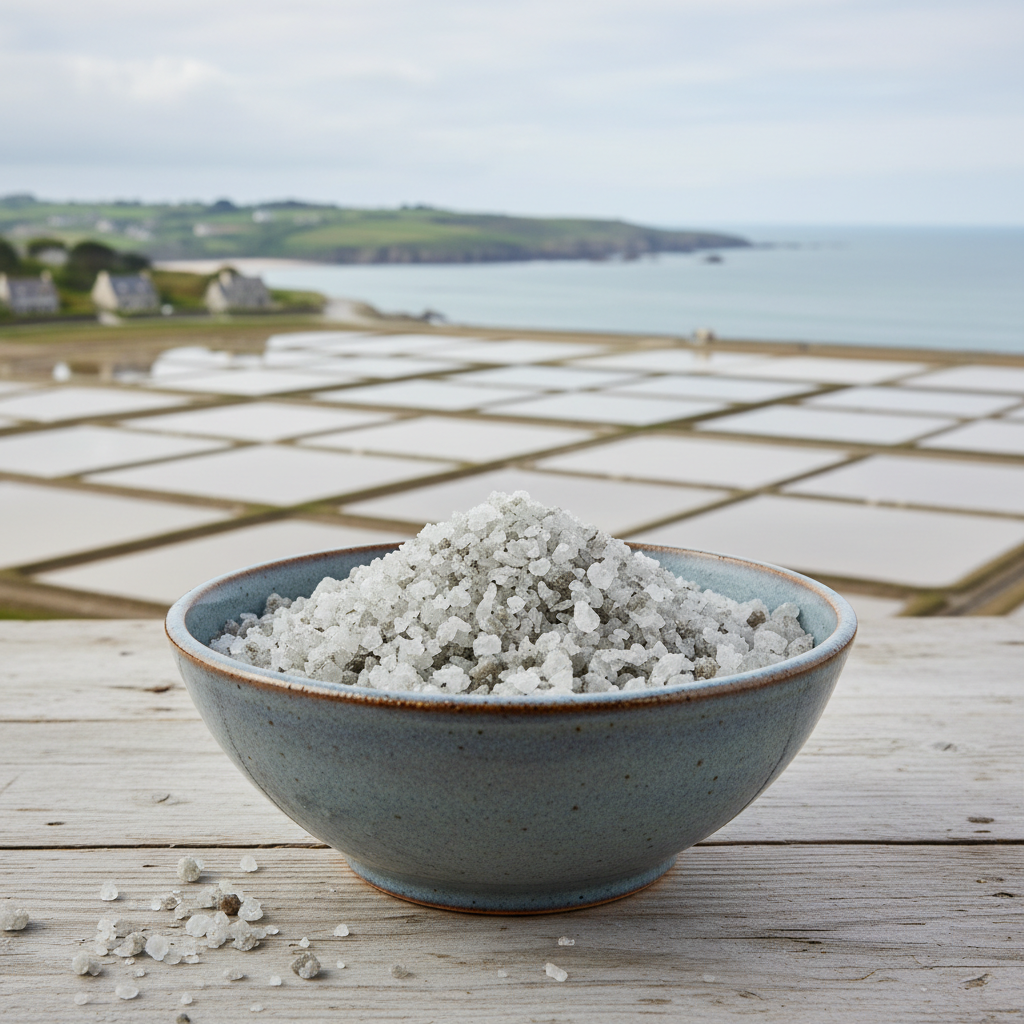
Grey celtic salt is one of the most ancient and revered mineral salts in the world, harvested by hand from the pristine salt marshes of Guérande in Brittany, France. Unlike the refined, bleached table salt that dominates supermarket shelves across the globe, grey celtic salt retains its natural moisture, its full spectrum of trace minerals, and the distinctive grey hue that comes from the rich clay sediment of the Atlantic tidal flats. This is not simply a condiment — it is a living mineral product, shaped by centuries of artisanal tradition and the unique geography of the Breton coastline. In a world increasingly dominated by highly processed food ingredients, grey celtic salt stands apart as a product of extraordinary purity and depth of character.
The story of grey celtic salt begins with the paludiers — the salt farmers of Guérande who have practised their craft for over a thousand years. Using traditional wooden tools called lousse and simoussi, these skilled artisans rake the salt crystals from the floor of carefully constructed salt pans known as œillets. The process is entirely manual, entirely natural, and entirely dependent on the rhythms of sun, wind, and tide. No machinery, no chemicals, no artificial drying processes are involved. The result is a coarse, moist salt that carries with it the full mineral complexity of the Atlantic Ocean, plus the unique contributions of the grey Breton clay that lines the bottom of the salt pans. This clay is not a contaminant — it is a feature, providing natural mineral compounds including magnesium, calcium, potassium, and dozens of other trace elements that are systematically removed during conventional salt refining.
In 2026, consumer interest in grey celtic salt has reached a new peak, driven by a broader cultural shift toward whole foods, mineral-rich diets, and a rejection of over-processed ingredients. Health-conscious cooks, professional chefs, nutritionists, and food enthusiasts are all turning to grey celtic salt as a foundational ingredient in their kitchens. This growing demand is not a trend built on hype — it reflects a genuine understanding that the mineral content of salt matters, that the source of salt matters, and that the method of production matters. Grey celtic salt delivers on all three counts in ways that mass-produced sodium chloride simply cannot. As awareness grows around the importance of dietary minerals and the dangers of ultra-processed foods, grey celtic salt has become a symbol of conscious, intentional eating.
Furthermore, grey celtic salt is deeply embedded in the cultural and gastronomic heritage of France and, specifically, Brittany. The Guérande salt marshes are protected as a site of outstanding natural and cultural importance, and the production methods used there are recognised as an intangible cultural heritage. When you use grey celtic salt in your kitchen, you are not simply choosing a better salt — you are participating in a living tradition that stretches back to the Celtic peoples who first recognised the extraordinary resource of the Breton coast. In an age of industrial food production and globalised supply chains, that connection to place, history, and craft carries real meaning. It is one of the reasons why grey celtic salt continues to earn the loyalty of discerning cooks and health-conscious consumers around the world, year after year.
The Complete Guide to Grey Celtic Salt
Understanding grey celtic salt fully requires a look at its origins, its production process, its mineral composition, and the ways in which it differs from other salts on the market. Guérande, located on the southern coast of Brittany in western France, is the spiritual and geographic home of grey celtic salt. The region's unique geography — a series of shallow coastal marshes fed by Atlantic tidal water — creates the ideal conditions for natural salt crystallisation. The shallow basins trap seawater, which evaporates under the action of the sun and the strong Breton winds, gradually concentrating the brine until salt crystals begin to form. The grey clay substrate beneath these basins plays an essential role: it provides a natural filter for the brine, contributes trace minerals, and gives the finished salt its characteristic grey colour and moist texture.
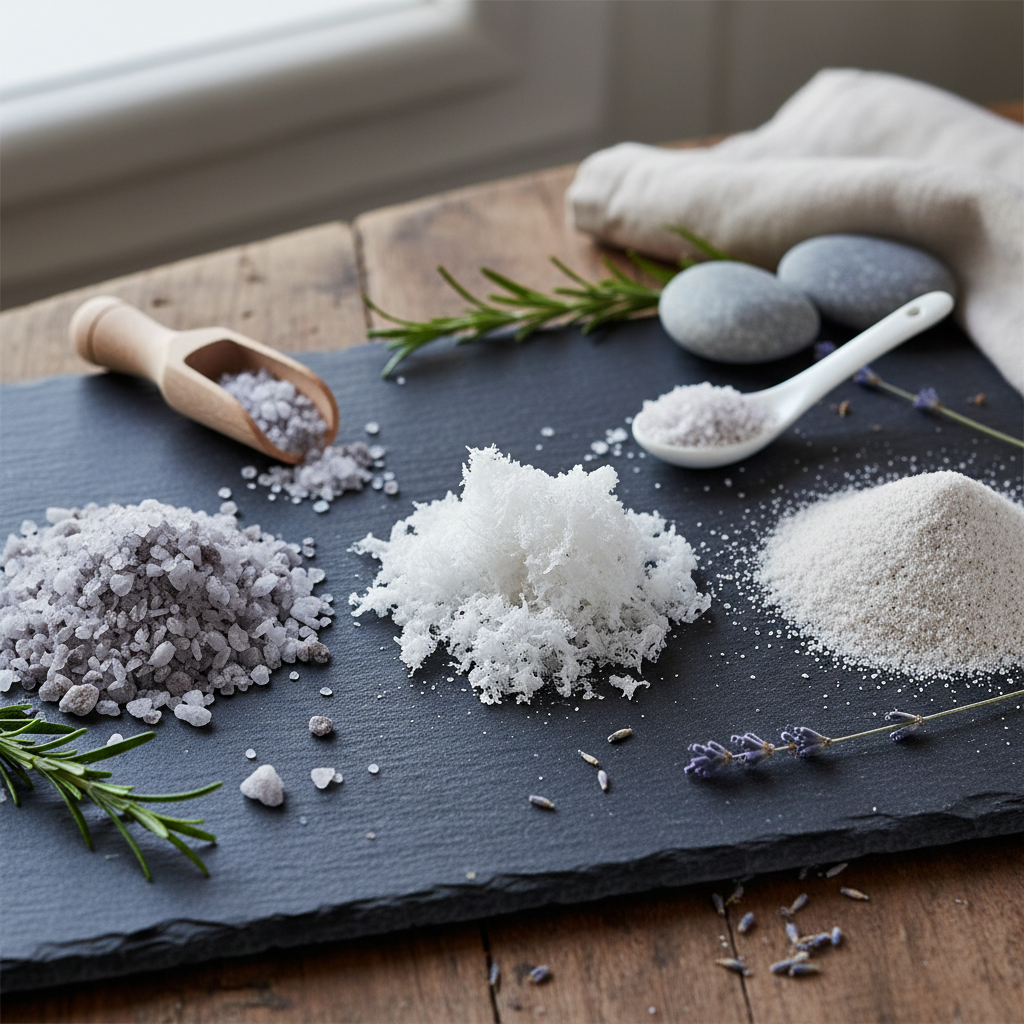
Grey celtic salt is harvested primarily in two forms. The first is the coarse grey salt — gros sel gris — which consists of larger crystals raked from the floor of the salt pan. This is the workhorse of the kitchen, ideal for seasoning cooking water, brining, curing, and any application where the salt will dissolve into food during cooking. The second is fleur de sel, which forms as a delicate crust on the surface of the brine on calm, sunny days. Fleur de sel is lighter in colour and texture, with a more delicate flavour profile, and is typically used as a finishing salt. Both products originate from the same salt pans and share the same heritage, but they differ in texture, moisture content, and culinary application. Grey celtic salt in its coarse form is arguably the more versatile and economical choice for everyday cooking.
The mineral profile of grey celtic salt is one of its most compelling attributes. While refined table salt is essentially pure sodium chloride — sometimes with anti-caking agents added — grey celtic salt contains a rich array of naturally occurring minerals. Magnesium is present in significant quantities, as are calcium, potassium, iron, zinc, manganese, and a range of other trace elements. These minerals are not artificially added; they are simply retained by the traditional harvesting process that avoids the washing, bleaching, and refining steps that strip conventional salt of its natural complexity. The moist texture of grey celtic salt is itself a sign of mineral richness — the moisture is largely brine held within the salt crystals, saturated with magnesium and other compounds. Dry, white, free-flowing salt has been stripped of this natural moisture along with many of its minerals.
The geography and climate of Guérande make it uniquely suited to producing salt of exceptional quality. The Atlantic winds that sweep across the Breton marshes are essential to the evaporation process, and the relatively warm summers provide the solar energy needed for crystallisation. The tidal system that feeds the salt pans with fresh Atlantic seawater ensures a constant supply of mineral-rich brine. The paludiers manage this system with extraordinary skill, controlling the flow of water through a series of channels, basins, and pans to optimise salt production while protecting the delicate ecosystem of the marshes. This ecosystem — which supports a remarkable diversity of birds, plants, and aquatic life — is itself evidence of the non-polluting, sustainable nature of traditional salt production. Grey celtic salt is, in every meaningful sense, a product of environmental stewardship as much as culinary craft.
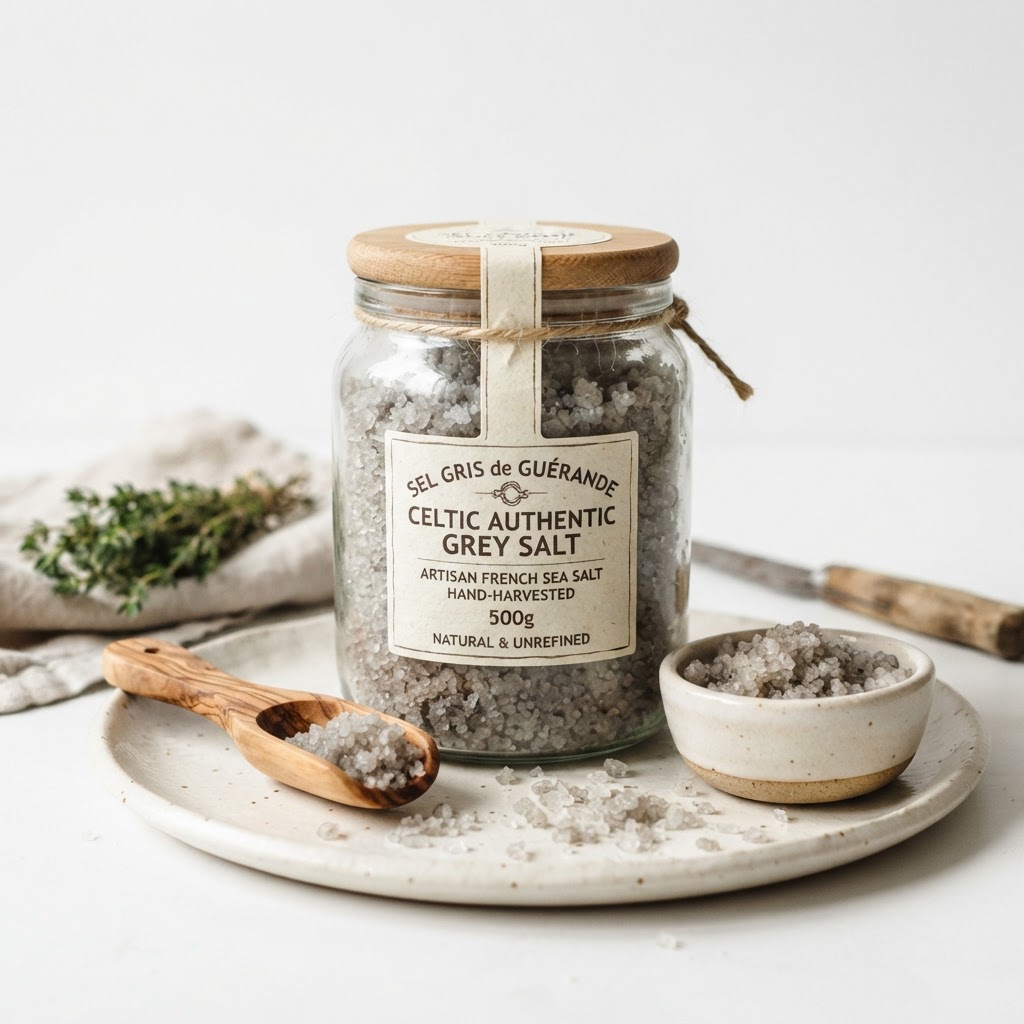
It is also worth noting the regulatory and certification landscape around grey celtic salt. Authentic Guérande grey salt may carry the Label Rouge designation, which is a French government quality certification indicating that the product meets rigorous standards of origin, production method, and quality. It may also be available in organic certified versions, where the production process has been formally verified to meet organic standards. When purchasing grey celtic salt, these certifications provide meaningful assurance of authenticity and quality. A salt labelled as "grey celtic salt" that lacks any provenance information or certification should be approached with caution, as there are cheaper imitations on the market that do not share the same origin, mineral content, or production standards as authentic Guérande grey salt. For more information on how to identify authentic products, see our guide on how to identify authentic celtic salt.
Health and Culinary Benefits of Grey Celtic Salt
The health-related conversation around grey celtic salt centres primarily on its mineral richness and its status as a minimally processed whole food ingredient. From a nutritional standpoint, the most significant difference between grey celtic salt and refined table salt lies in what has been removed versus what has been retained. Conventional salt refining removes not only the natural moisture and trace minerals, but also frequently adds synthetic anti-caking agents such as sodium ferrocyanide or silica dioxide to keep the product free-flowing. Grey celtic salt contains no additives whatsoever. What you receive is precisely what the ocean and the Breton marshes produced — nothing added, nothing taken away. For individuals who are mindful about food additives and who prefer ingredients in their most natural form, this distinction is highly meaningful.
The magnesium content of grey celtic salt deserves particular attention. Magnesium is a mineral that plays a role in hundreds of enzymatic reactions in the human body, and many people in Western countries have insufficient dietary magnesium intake. Grey celtic salt contains naturally occurring magnesium chloride and magnesium sulfate, both of which contribute to its characteristic bitterness and complexity of flavour. While salt is not a primary dietary source of magnesium, every contribution counts, and choosing a salt that retains its natural magnesium rather than one from which it has been removed is a rational choice for those paying attention to their mineral nutrition. Similarly, the presence of calcium, potassium, and other trace minerals in grey celtic salt means that it contributes a more complex micronutrient profile than refined salt, however modest the absolute quantities may be.
From a culinary perspective, the benefits of grey celtic salt are immediately and tangibly apparent. The flavour of grey celtic salt is noticeably different from that of refined table salt — it is rounder, more complex, and less sharply saline. This is partly due to the presence of other minerals, which modulate the clean, harsh saltiness of pure sodium chloride with bitter, umami, and oceanic notes. Professional chefs consistently report that food seasoned with grey celtic salt requires less salt overall to achieve the desired flavour impact, which has implications both for the cooking experience and for sodium intake. The moist texture of the salt also affects how it dissolves and how it interacts with food surfaces — it clings to ingredients rather than bouncing off, which makes it particularly effective for seasoning raw meat, fish, and vegetables.
The culinary application of grey celtic salt extends well beyond simple seasoning. Its coarse texture makes it ideal for salt crusts — a classic technique in which meat or fish is entirely encased in a thick layer of coarse salt and baked, creating a sealed cooking environment that produces exceptionally moist and evenly cooked results. Grey celtic salt is also widely used for brining poultry and pork, where its mineral complexity contributes subtle flavour notes to the finished dish. In bread baking, it provides an authentic flavour backbone. In cheesemaking and charcuterie, it serves both as a preservative and a flavour contributor. For a deeper exploration of culinary applications, visit our article on celtic salt in the kitchen.
How to Use Grey Celtic Salt — Expert Tips
Using grey celtic salt well is a matter of understanding its properties and matching them to the appropriate applications. The most important thing to understand is that grey celtic salt is a coarse, moist salt — it does not dissolve instantly, it does not pour freely, and it should not be used in the same way as fine table salt. For everyday cooking, the most practical approach is to keep a small ceramic or glass dish of grey celtic salt near the stove and to pinch it directly into food during cooking. This gives you tactile control over the quantity you are adding and allows you to feel the texture of the salt crystals, which itself helps calibrate seasoning by hand.
When seasoning pasta water or blanching water, grey celtic salt is excellent — add a generous quantity to a large pot of water and allow it to dissolve fully before adding the pasta or vegetables. The mineral complexity of the salt will contribute subtly to the flavour of the food being cooked. For seasoning meat before cooking, apply grey celtic salt at least 30 to 45 minutes before cooking to allow the salt to begin drawing moisture to the surface and then reabsorb it, a process that seasons the meat more deeply and contributes to better browning during cooking. This technique, often associated with dry brining, works exceptionally well with grey celtic salt due to its moisture content and mineral richness.