Hand-harvested Guérande salt · Tracked international delivery included
GuideJune 25, 2026· by Celtic Salt Editorial Team
French salt marshes brittany tradition
What Is French Salt Marshes Brittany Tradition and Why It Matters in 2026
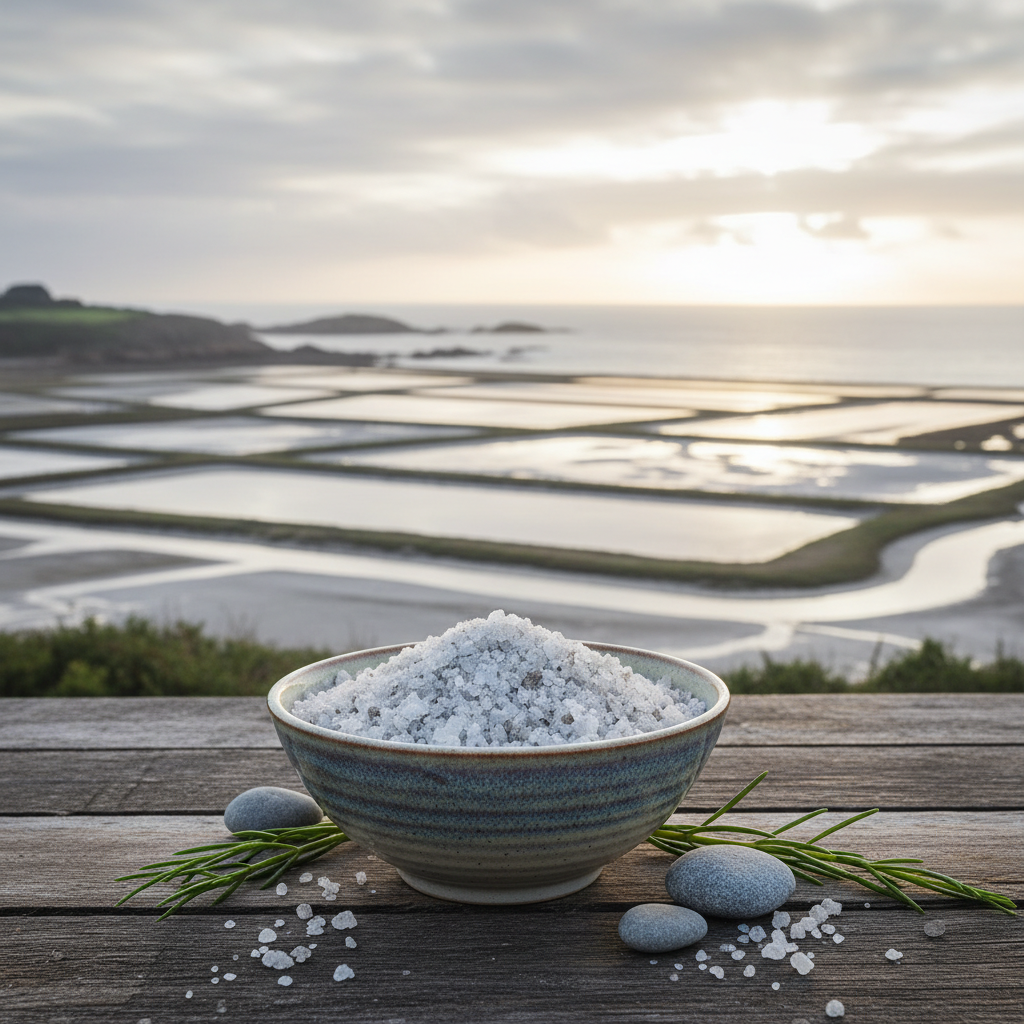
The salt marshes of Brittany, France, represent one of the oldest and most meticulously preserved food traditions in the Western world. Stretching along the Atlantic coastline of northwestern France, these ancient coastal wetlands — known in French as marais salants — have been producing salt for over a thousand years. The most celebrated of these marshes are found in the Guérande peninsula, a low-lying landscape of interlocking clay-lined basins, channels, and ponds that capture Atlantic seawater and allow the sun and wind to slowly evaporate it into crystalline salt. This is not industrial production. This is a living craft, handed down through generations of skilled salt workers called paludiers, whose expertise and patience coax mineral-rich salt from the sea one careful harvest at a time. In 2026, as the world grows increasingly attentive to where food comes from and how it is made, the Breton salt marsh tradition stands as a powerful answer to those questions.
What makes this tradition so compelling is its remarkable continuity. Written records of salt production in the Guérande region date back to the ninth century, and archaeological evidence suggests the practice may be even older. The monks of nearby abbeys cultivated and refined the marsh system during the medieval period, creating the intricate network of basins and channels that still operates today. Unlike so many ancient food crafts that have been replaced by industrial alternatives, the Guérande salt marsh tradition survived — partly through geographical luck, partly through cultural stubbornness, and partly because the product itself is so distinctly superior that there has always been a market willing to pay for it. The clay-lined basins are not simply practical containers; they are the secret to the grey color and the dense mineral profile of Breton Celtic salt. The clay imparts trace minerals, particularly magnesium and potassium, that give this salt its characteristic moisture and complex flavor.
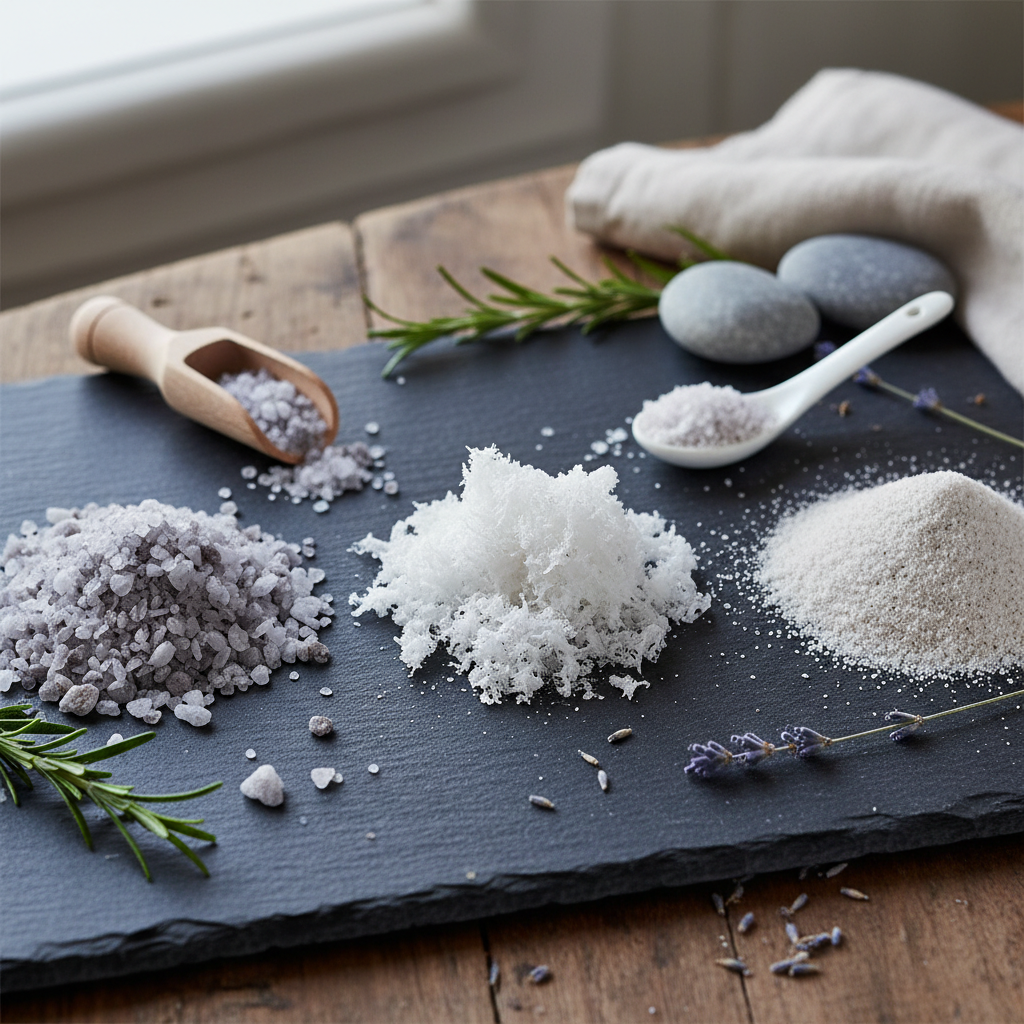
In practical terms, the salt marshes of Brittany produce two main products that have become internationally recognized symbols of culinary excellence. The first is the grey salt — sel gris — a coarse, moist, mineral-rich salt that is harvested from the bottom and edges of the salt pans using long-handled wooden rakes called las. The second is Fleur de Sel, or "flower of salt," a delicate, flaky salt that forms as a thin crystalline crust on the surface of the brine on calm, sunny afternoons and is skimmed off by hand using a flat wooden tool called a lousse. Both products carry the IGP certification — Indication Géographique Protégée — which is the European Union's geographic protection designation, confirming that the product genuinely originates from the Guérande region and is produced according to traditional methods. This certification is not merely bureaucratic; it is a legal guarantee of authenticity that protects consumers from imitations.
Why does this tradition matter specifically in 2026? The answer lies in a convergence of cultural, nutritional, and environmental forces. Consumers worldwide are moving away from highly processed foods and toward products with transparent origins, minimal processing, and demonstrable nutritional value. Refined table salt — stripped of minerals, bleached, and mixed with anti-caking agents — is increasingly being questioned by health-conscious cooks and nutrition researchers alike. At the same time, the culinary world has undergone a profound shift toward what might be called "ingredient consciousness," the recognition that the quality of fundamental ingredients like salt, fat, and acid shapes every dish at the most foundational level. In this context, the Brittany salt marsh tradition is not nostalgic or niche — it is genuinely forward-looking. It offers a model of food production that is ecologically sustainable, nutritionally sound, and rooted in genuine craft expertise. For anyone who cares about what goes on their food and why, this tradition deserves serious attention.
The Science Behind French Salt Marshes Brittany Tradition
The science of Breton salt production begins with geology and hydrology. The Guérande peninsula sits at a point where the Atlantic Ocean meets a broad, sheltered estuary, creating ideal conditions for solar salt evaporation. The shallow basins — called oeillets — are constructed from the local grey-blue clay, a material with a specific mineral composition that distinguishes it from the sandy or rocky substrates found in other salt-producing regions of the world. As seawater flows through a carefully designed series of channels and progressively shallower basins, it concentrates through evaporation driven by Atlantic winds and Breton sunshine. The clay substrate acts not only as a structural material but as a mineral exchange medium: the water in contact with the clay absorbs trace elements including magnesium, calcium, potassium, and a range of other minerals. By the time crystallization occurs, the resulting salt carries a mineral signature that reflects both the Atlantic seawater and the unique chemistry of the Guérande clay.
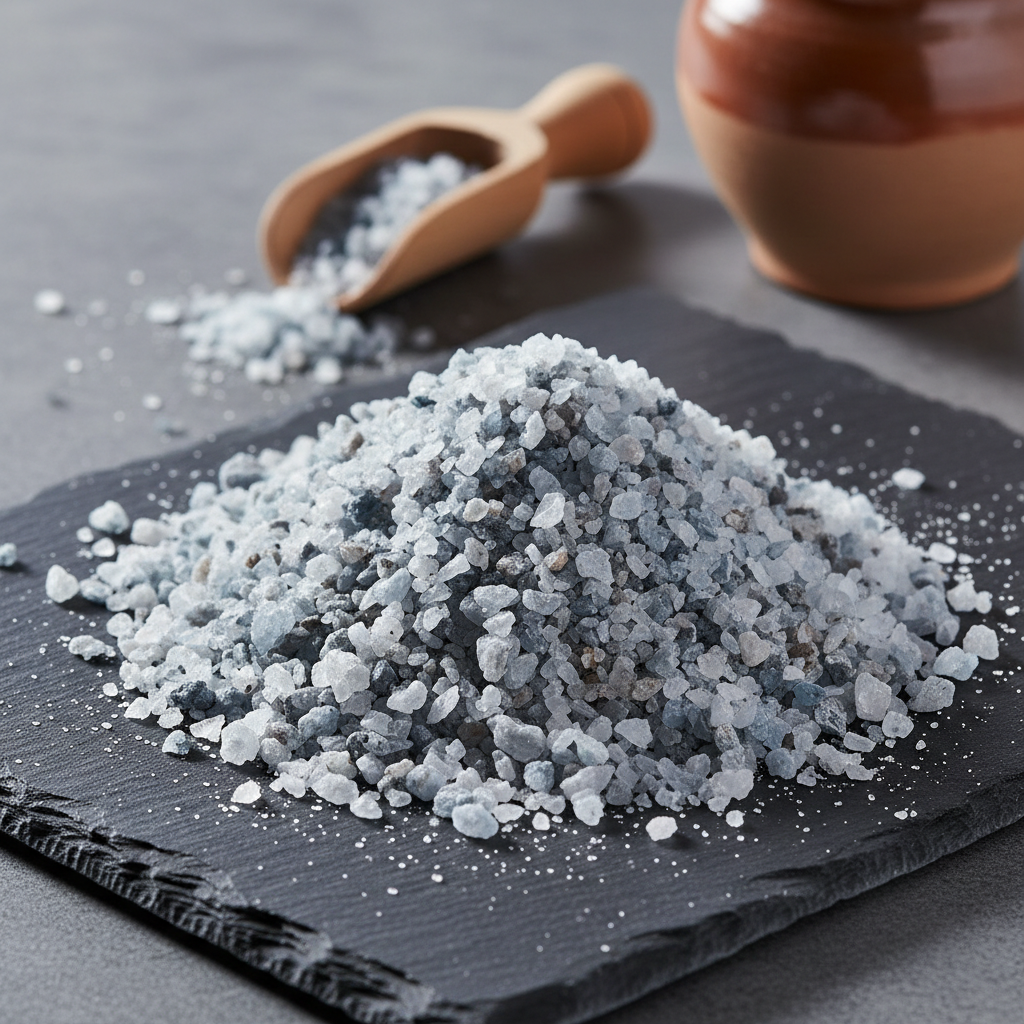
The mineral richness of Breton grey salt is not a marketing claim — it is a chemically verifiable reality. Standard refined table salt is essentially pure sodium chloride, typically 99% or more, with virtually all trace minerals removed during industrial processing. Breton grey salt from Guérande, by contrast, retains over 80 distinct trace minerals in their natural proportions. Among the most significant are magnesium, which plays a central role in hundreds of enzymatic reactions in the human body; calcium, essential for bone density and muscle function; and potassium, which works in concert with sodium to regulate fluid balance and nerve transmission. The lower sodium chloride concentration of grey salt relative to refined salt also means that a given volume of Breton salt delivers somewhat less pure sodium, which may be relevant for individuals monitoring their sodium intake. The grey color itself — ranging from pale silver to deep charcoal — is a direct visual indicator of these mineral impurities, confirming the salt has not been processed to remove them.
The moisture content of grey salt is another scientifically interesting feature. Unlike dried, free-flowing table salt, genuine Breton grey salt retains a natural moisture level that keeps the crystals slightly clumped and heavy. This moisture is not simply residual seawater; it is bound into the crystal structure and to the surface of the crystals in a way that carries dissolved minerals. This is why authentic grey salt should never be fully dried — the drying process would drive off the surface-bound mineral compounds and alter the salt's sensory and nutritional profile. The Fleur de Sel, harvested from the surface of the brine, has a distinct crystal morphology: thin, hollow pyramidal flakes that form when water evaporates rapidly from the brine surface. These delicate crystals dissolve more slowly and completely on the palate than cubic sodium chloride crystals, producing a longer, more complex flavor experience that professional chefs specifically seek out for finishing applications.
Property
Breton Grey Salt (Guérande)
Standard Refined Table Salt
Sodium Chloride Content
~84% (natural variation)
~99.5%+
Trace Minerals
80+ including Mg, Ca, K
Negligible (removed in processing)
Color
Grey (clay-derived minerals)
Pure white (bleached/refined)
Moisture Content
Natural moisture retained
Fully dried, anti-caking agents added
Harvesting Method
Hand-raked by paludiers
Industrial mechanical harvesting
Processing
Unrefined, no additives
Refined, bleached, anti-caking agents
Certification
IGP (EU Geographic Protection)
None (generic commodity)
Flavor Profile
Complex, mineral, briny
Sharp, one-dimensional
How to Use French Salt Marshes Brittany Tradition — Complete Guide
Understanding how to use authentic Breton salt effectively is as important as understanding why it is worth using. Because grey salt and Fleur de Sel are not simply interchangeable substitutes for refined table salt, they reward thoughtful application. The following guide walks through the primary uses for each type, with specific techniques drawn from professional culinary practice and home cooking alike.
Using Grey Salt in Cooking
Grey salt from Guérande is the workhorse of Breton salt — robust, mineral-rich, and well-suited to applications where the salt dissolves into the food during cooking. Its coarse texture and natural moisture mean it disperses slowly and evenly when added to water or rubbed onto proteins. For boiling pasta, vegetables, or legumes, add a generous pinch of grey salt to the water at the beginning of boiling; the mineral complexity it imparts to the water subtly flavors whatever is cooked in it. For roasting meats, rub the surface with grey salt and a small amount of fat at least an hour before cooking, or ideally overnight — the salt will draw moisture to the surface, dissolve, and be reabsorbed into the meat in a process sometimes called dry brining, which seasons the interior deeply and creates superior browning on the exterior.
The Fleur de Sel — available in a 200g / 7.1 oz format — is best used as a finishing salt, added at the very end of cooking or directly at the table. Its delicate crystal structure means it dissolves quickly on contact with moist food, delivering an immediate burst of mineral flavor followed by a lingering, complex salty note. Sprinkle it over a freshly seared steak just before serving, scatter it across ripe sliced tomatoes dressed with olive oil, or use it on chocolate desserts where the contrast between sweet and salt creates one of the most pleasurable flavor combinations in cooking. The key is restraint: Fleur de Sel should be used to highlight, not overwhelm.
Practical Tips for Storage and Measurement
Store grey salt in a ceramic, glass, or wooden container — avoid metal, which can react with the salt's mineral compounds over time.
Do not fully dry grey salt — its moisture is part of its character. A slightly damp salt cellar is ideal.
Use by weight, not volume — because grey salt is irregular and moist, volume measurements can vary significantly. A kitchen scale gives consistent results.
Start with less than you think you need — the flavor intensity of mineral-rich salt often surprises first-time users accustomed to refined salt.
Use a pinch bowl or salt cellar at the table — it allows precise hand-pinch dosing rather than pouring, which tends to over-salt.
Pair with quality fats — good butter, extra-virgin olive oil, and other quality fats amplify the mineral character of the salt beautifully.
Experiment with curing — grey salt from Guérande is excellent for home-curing fish, charcuterie, and preserved vegetables, where its slow-dissolving crystals and mineral content produce superior results.
Applications by Food Category
Meat and poultry: Dry-brine with grey salt 12-24 hours before cooking for optimal seasoning and texture.
Fish and seafood: Use grey salt for light cures or add to court-bouillon for poaching; use Fleur de Sel to finish grilled fish.
Vegetables: Salt blanching water generously; finish roasted or raw vegetables with Fleur de Sel.
Bread and baking: Grey salt integrates well into bread doughs; Fleur de Sel on the crust adds visual appeal and flavor bursts.
Desserts: A small pinch of Fleur de Sel on caramel, chocolate, or butterscotch is transformative.
Salad dressings: Dissolve grey salt in the acidic component of a vinaigrette before emulsifying with oil.
Benefits of French Salt Marshes Brittany Tradition Backed by Evidence