What Is Fine Sea Salt for Baking and Why It Matters in 2026
Fine sea salt for baking is not simply a seasoning agent — it is a foundational ingredient that shapes the chemistry, texture, flavor, and even the visual appeal of everything you bake. Unlike table salt, which is heavily processed, stripped of its mineral content, and often laced with anti-caking agents or added iodine, fine sea salt is harvested directly from evaporated seawater and retains a complex mineral profile that influences every stage of the baking process. In 2026, as home bakers and professional pastry chefs alike continue to demand higher-quality, cleaner ingredients, the conversation around salt has evolved dramatically. Bakers are no longer reaching for whatever generic white granules sit in the pantry; they are making deliberate, informed choices about which salt goes into their sourdough loaves, their croissants, their butter cakes, and their chocolate chip cookies.
The distinction between fine sea salt and standard table salt matters enormously in baking for several reasons. First, fine sea salt dissolves more readily into batters, doughs, and liquid mixtures, ensuring that its flavor is evenly distributed throughout the final product rather than concentrated in pockets. Second, because fine sea salt is unrefined or minimally processed, it carries trace minerals — including magnesium, calcium, and potassium — that contribute subtle complexity to baked goods. These minerals do not just add flavor; they actively participate in the biochemical reactions that define baking, including gluten development, yeast fermentation, and caramelization. Understanding this distinction is what separates truly exceptional bakers from those who treat salt as an afterthought.
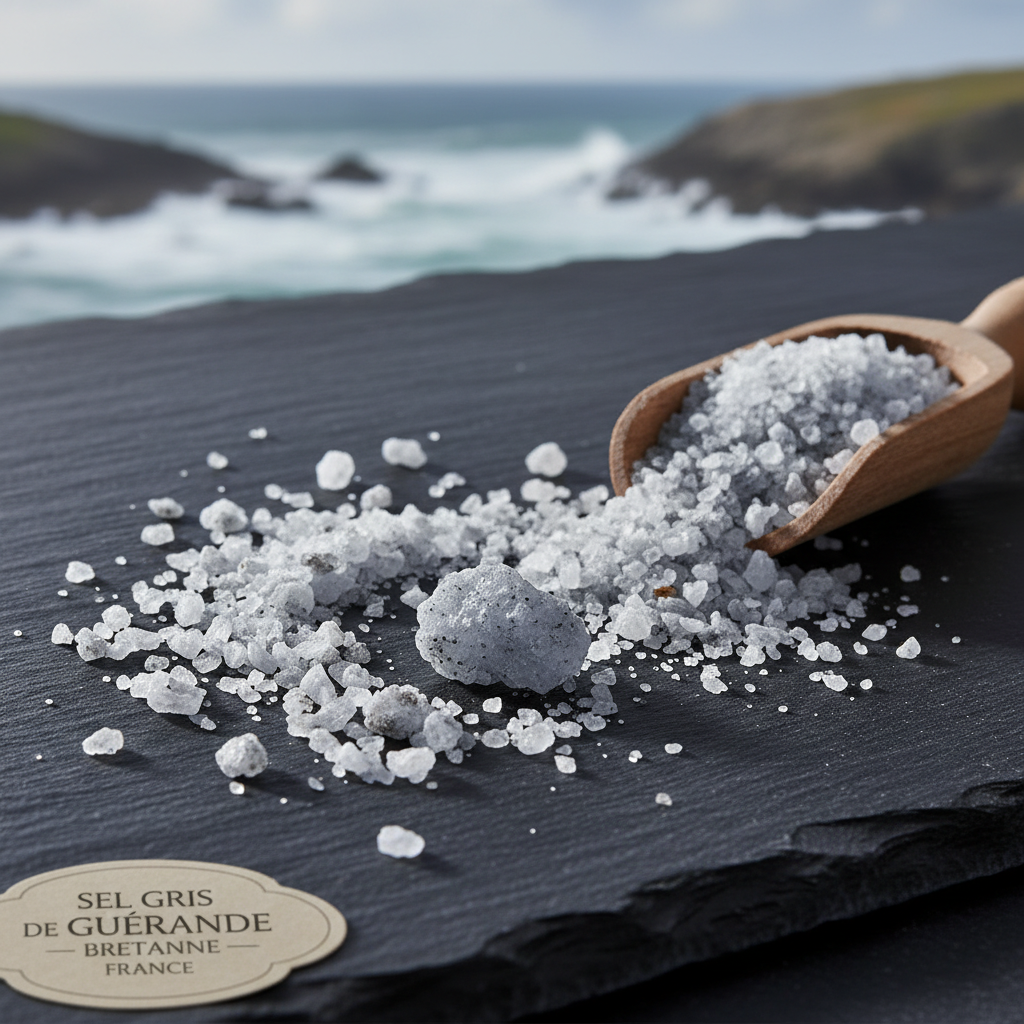
In the context of Guérande, Brittany, France — one of the most celebrated salt-producing regions on Earth — fine sea salt takes on an even more specific meaning. The grey Celtic salt harvested by traditional paludiers (salt farmers) from the ancient clay-lined salt marshes of the Guérande peninsula carries an IGP (Indication Géographique Protégée) certification, a European designation that guarantees both the geographic origin and the authenticity of the production method. This certification is not cosmetic; it means that every grain of grey Celtic sea salt you use in your baking was harvested by hand, dried naturally, and delivered to you without any additives, bleaching, or chemical processing whatsoever. For bakers who care about ingredient integrity, this matters deeply.
By 2026, the clean-label movement in food has matured into a mainstream expectation rather than a niche preference. Consumers are reading ingredient lists more carefully than ever, and the idea of using a salt that contains nothing but pure, mineral-rich sea salt — harvested sustainably from a protected coastal ecosystem — aligns perfectly with broader values around health, transparency, and craftsmanship. Fine sea salt for baking is not a luxury upgrade reserved for professional kitchens; it is an accessible, practical improvement that any home baker can make today. The difference shows up immediately in the taste of a well-made loaf of bread, the crumb structure of a properly fermented dough, and the depth of flavor in a simple shortbread. Once you bake with genuine fine sea salt, it becomes genuinely difficult to go back.
The Science Behind Fine Sea Salt for Baking
Salt's role in baking is far more complex than simply adding a salty taste. On a biochemical level, sodium chloride — the primary component of any sea salt — plays at least four distinct functional roles in baked goods. First, it strengthens gluten networks by tightening the bonds between glutenin and gliadin proteins in wheat flour, resulting in doughs that are more elastic, more cohesive, and easier to shape. Without adequate salt, bread dough becomes slack and difficult to handle, and the final loaf may collapse or produce an overly open, gummy crumb. Second, salt controls yeast fermentation rates by drawing water away from yeast cells through osmosis, slowing their activity and preventing over-fermentation. This regulatory function is critical in long-fermented doughs such as sourdough, baguettes, and enriched brioche, where fermentation must be carefully paced to develop flavor without exhausting the yeast prematurely.
Third, salt significantly enhances the perception of other flavors in a baked product. This is not a subjective claim — sodium ions suppress the sensory receptors responsible for bitterness while simultaneously amplifying sweet, savory, and aromatic flavor compounds. This is why a chocolate cake without salt tastes flat and one-dimensional, and why a croissant with well-measured salt tastes complex and buttery in a way that seems impossible to replicate with butter alone. The fine grain size of quality sea salt is especially important here because it ensures complete and even dissolution into the batter or dough, meaning every bite carries the full flavor-enhancing effect rather than leaving it to chance. Fourth, salt affects moisture retention and crust formation in bread. It slows the evaporation of water from the crumb during baking, contributing to a moist, tender interior, while simultaneously promoting the Maillard reaction on the crust for a deeper, more complex golden-brown color.
The trace mineral content of an unrefined fine sea salt adds yet another layer of scientific interest. Magnesium, which is present in meaningful concentrations in authentic Guérande grey salt, plays a role as an enzyme cofactor in yeast metabolism, subtly influencing fermentation dynamics. Calcium ions interact with gluten proteins in ways that can improve dough extensibility and resilience. Potassium contributes to osmotic balance within the dough system. While these mineral effects are nuanced rather than dramatic, they are cumulative — and experienced bakers who switch from refined table salt to an unrefined fine sea salt consistently report improvements in dough handling, rise consistency, and finished flavor that align precisely with what the science predicts.
| Salt Type | Processing Level | Trace Minerals | Additives | Dissolution Rate | Best Use in Baking |
|---|---|---|---|---|---|
| Fine Sea Salt (Guérande Celtic) | Unrefined / Hand-harvested | 80+ including Mg, Ca, K | None | Excellent | Doughs, batters, pastry, bread |
| Standard Table Salt | Heavily refined | Minimal to none | Anti-caking agents, iodine | Very fast | Basic baking (less preferred) |
| Kosher Salt | Refined, coarse flakes | Minimal | Sometimes anti-caking | Moderate | Topping, finishing; not ideal in batters |
| Fleur de Sel | Unrefined / Hand-skimmed | High mineral content | None | Moderate | Finishing, decorative topping |
| Iodized Salt | Highly refined | None (iodine added artificially) | Iodine, anti-caking agents | Very fast | Not recommended for quality baking |
How to Use Fine Sea Salt for Baking — Complete Guide
Using fine sea salt effectively in baking requires both knowledge of its properties and a few practical adjustments to technique. The most important starting point is understanding that not all salts measure the same by volume. Table salt is denser and more compacted than fine sea salt, meaning that if a recipe calls for one teaspoon of table salt and you substitute fine sea salt by volume, you may be using slightly less sodium by weight. As a general rule, when substituting fine sea salt for table salt in baking recipes, you can use the same volume measurement and then taste and adjust. Over time, as you become familiar with the saltiness intensity of your specific fine sea salt, you will naturally calibrate your measurements to suit your palate and recipes.
Here is a complete step-by-step guide to incorporating fine sea salt from Guérande into your baking practice:
- Choose the right grind for your application. Fine sea salt is ideal for mixing directly into doughs, batters, and pastry doughs because it dissolves completely and distributes evenly. Coarser grey Celtic sea salt can be ground at home in a salt mill if needed for specific applications, but for most baking purposes, fine grain is the correct starting point.
- Add salt at the right time in bread baking. In yeast-leavened doughs, many experienced bakers use the autolyse method — mixing flour and water first, then adding salt after a 20-30 minute rest. This allows gluten to begin forming without salt's tightening effect, resulting in a more extensible, well-developed dough. Salt is then incorporated thoroughly by folding and kneading.
- Never add salt directly onto active yeast. When adding ingredients to a stand mixer or bowl, keep salt and yeast on opposite sides of the flour until mixing begins. Direct contact between salt and active dry yeast or fresh yeast can inhibit or kill the yeast before it activates.
- Use precise measurements by weight, not volume. For serious baking, especially bread, always weigh your salt using a kitchen scale. A standard formula for bread is approximately 1.8–2.2% of total flour weight. For a 500g flour loaf, this means 9–11g of fine sea salt.
- Adjust for enriched doughs. Doughs containing butter, eggs, or sugar (brioche, challah, sweet rolls) typically require slightly less salt since dairy and eggs provide their own savory notes. Start at 1.5% of flour weight and adjust upward to taste.
- For cookies and cakes, dissolve salt in wet ingredients when possible. Adding fine sea salt to your liquid ingredients before combining with dry ones ensures perfect even distribution throughout the final baked product.
- Finish with Fleur de Sel where appropriate. While fine sea salt goes into the recipe itself, Fleur de Sel — the hand-skimmed flower of salt harvested from the same Guérande marshes — makes an exceptional finishing salt for chocolate chip cookies, caramel tarts, and brownies, where its delicate crunch and mineral sweetness create a sophisticated counterpoint to richness.
Practical tips from experienced bakers who use Guérande Celtic grey salt consistently suggest storing your fine sea salt in a sealed glass or ceramic container away from steam and humidity. Because this salt is unrefined and retains natural moisture, it can clump slightly over time — this is completely normal and actually a sign of its authenticity. A gentle press with a spoon or a brief stir will break up any clumps before measuring. Some bakers keep a small pinch bowl of fine sea salt near their mixing station for easy, intuitive seasoning during the baking process, adding a pinch here and there as they taste developing batters or doughs.
The difference a real salt makes: Discover Celtic Grey Salt →
Benefits of Fine Sea Salt for Baking Backed by Evidence
The most immediately tangible benefit of using fine sea salt in baking is flavor enhancement. Sodium chloride has a well-documented neurological effect on taste perception: it suppresses bitter taste receptors while simultaneously potentiating sweet and savory flavors. In practical baking terms, this means that a chocolate cake made with proper fine sea salt will taste more chocolatey, a lemon tart will taste more lemony, and a buttery shortbread will taste more richly buttery — all without any change to the actual amounts of chocolate, lemon, or butter in the recipe. This flavor-amplifying property is the reason professional pastry chefs are so precise about their salt measurements; even small variations can shift the entire flavor profile of a finished baked good. The fact that fine sea salt carries this effect alongside a complex mineral background means that it does not just amplify flavor — it adds its own subtle, briny, oceanic depth that simply cannot be replicated with refined salt.
Beyond flavor, fine sea salt delivers measurable structural benefits in bread and laminated doughs. As previously noted, salt strengthens gluten networks by promoting tighter protein bonding, which translates directly into better oven spring (the final rise of bread when it first hits oven heat), a more uniform crumb structure, and greater tolerance for longer fermentation times. Bakers working with sourdough in particular notice a marked improvement in dough handling when using properly measured fine sea salt — the dough holds its shape better during shaping, resists tearing during scoring, and produces a more consistent ear (the raised ridge created by the scoring cut) during baking. These structural benefits are not trivial; they represent the difference between a loaf that looks and tastes professional and one that looks and tastes like a home experiment.