Hand-harvested Guérande salt · Tracked international delivery included
GuideJune 25, 2026· by Celtic Salt Editorial Team
Celtic salt magnesium content
Food information, not medical advice. Salt remains a significant source of sodium. Trace-mineral levels can vary by harvest and product, and culinary salt should not be used as a treatment or medical electrolyte supplement.
What Is Celtic Salt Magnesium Content and Why It Matters in 2026
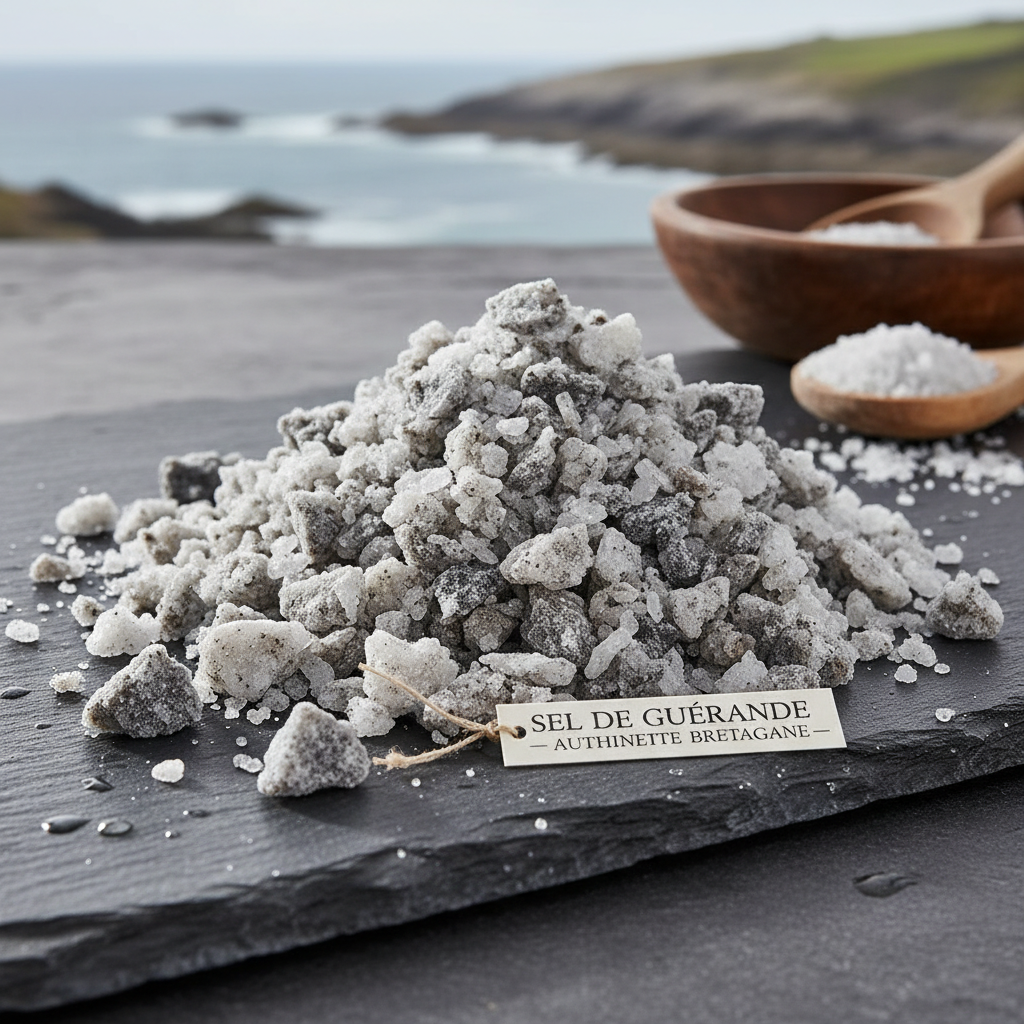
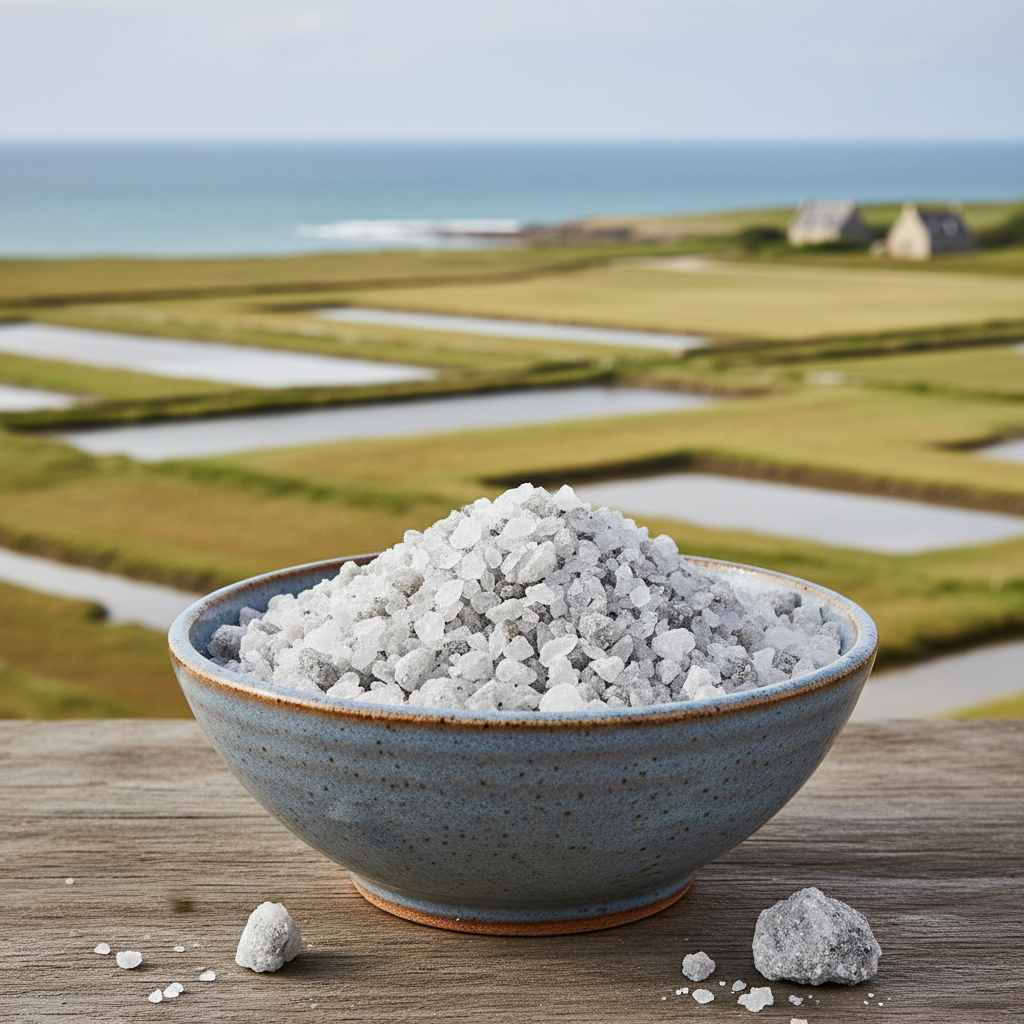
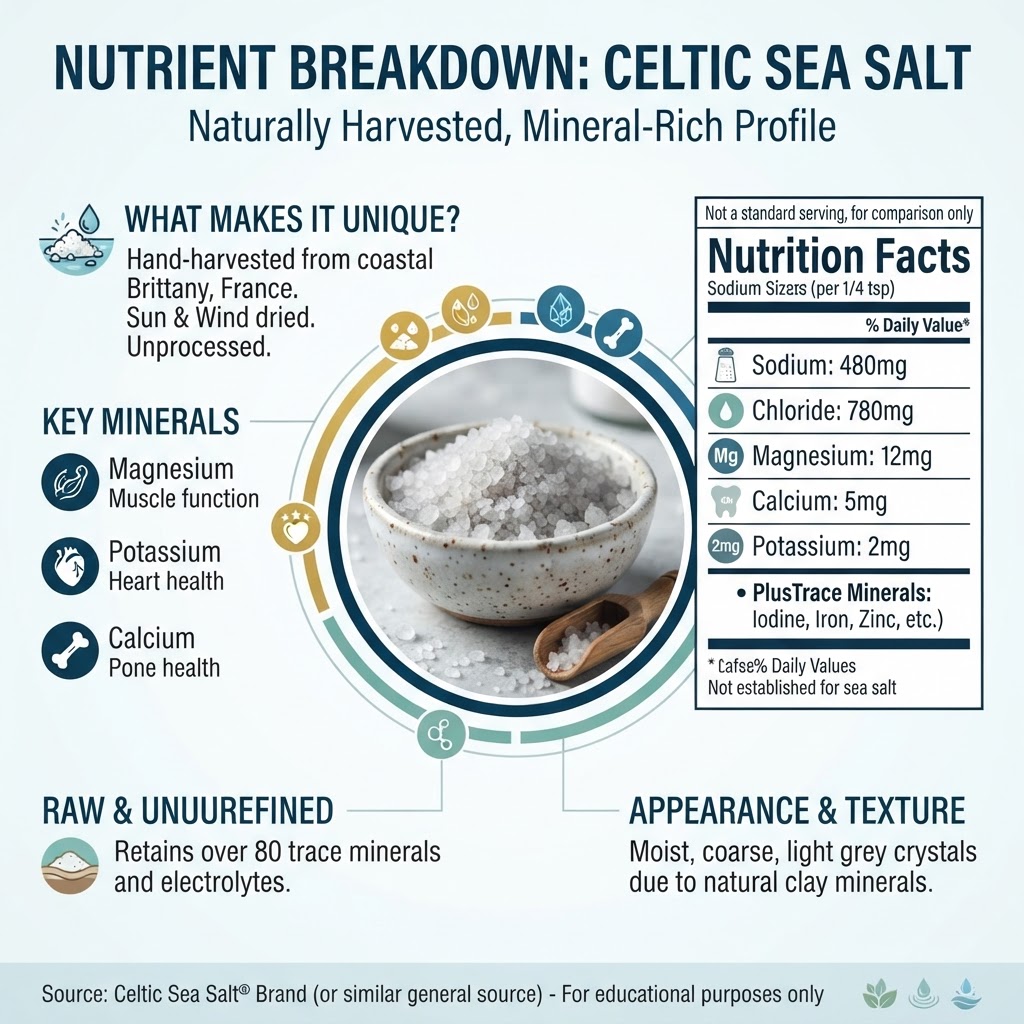
Celtic grey salt, hand-harvested from the ancient salt marshes of Guérande in Brittany, France, has earned a devoted global following not simply because of its distinctive briny flavour and moist grey texture, but because of what it carries within its crystalline structure: a remarkable spectrum of naturally occurring trace minerals. Among these, magnesium stands out as one of the most nutritionally significant. Unlike refined table salt, which is stripped of virtually everything except sodium chloride and then treated with anti-caking agents, authentic Celtic grey salt from Guérande retains the mineral-rich brine of the Atlantic Ocean. This means every pinch delivers not only sodium but also meaningful concentrations of magnesium, calcium, potassium, and more than 80 additional trace elements. In 2026, as awareness of magnesium deficiency continues to grow across the developed world, the magnesium content of Celtic salt has become one of its most discussed and celebrated attributes.
Magnesium is an essential macromineral involved in over 300 enzymatic reactions in the human body. It plays a critical role in energy production, protein synthesis, muscle and nerve function, blood glucose regulation, and bone development. Yet surveys consistently show that a substantial portion of adults in North America and Western Europe consume less than the recommended daily amount of magnesium. This widespread shortfall has been linked to fatigue, muscle cramps, poor sleep, anxiety, and increased risk of cardiovascular issues. While dietary supplements and magnesium-rich foods like leafy greens, nuts, and legumes are the primary routes of intake, there is growing appreciation for how even modest dietary additions — like switching from refined salt to unrefined Celtic grey salt — can contribute incrementally to overall mineral balance. It is within this context that understanding the magnesium content of Celtic salt becomes genuinely important for health-conscious consumers.
The distinction between Celtic grey salt and ordinary refined salt is not merely a matter of marketing or culinary preference — it is a chemical reality rooted in the production process. Refined salt undergoes extensive processing: washing, evaporation under high heat, chemical treatment, and bleaching. This process effectively removes magnesium, along with virtually all other trace minerals, leaving behind sodium chloride in a purity exceeding 99%. Celtic grey salt, by contrast, is harvested by paludiers — traditional salt farmers — using centuries-old hand-harvesting techniques from clay-lined salt ponds in the Guérande region. The salt is never heated, never chemically treated, and never augmented with additives. The moisture that gives it its characteristic grey colour is itself rich in magnesium chloride and other dissolved salts. This process-driven difference is why Celtic grey salt can legitimately be considered a dietary source of magnesium in a way that refined salt simply cannot.
In 2026, as consumers become increasingly sophisticated about reading labels, understanding mineral bioavailability, and questioning the quality of their food inputs, the magnesium content of Celtic salt has moved from a niche conversation among wellness enthusiasts to a mainstream concern. Functional nutrition practitioners, integrative medicine doctors, and sports dietitians are increasingly recommending unrefined salts as part of broader mineral repletion strategies. The IGP (Indication Géographique Protégée) certification held by Guérande Celtic grey salt provides an important quality assurance layer — it guarantees the geographic origin and traditional production method of the salt, meaning consumers can trust they are getting the authentic, mineral-intact product rather than an imitation. This certification, combined with the growing body of research on magnesium's health importance, makes the conversation around Celtic salt and magnesium content more relevant than ever.
The Science Behind Celtic Salt Magnesium Content
The magnesium found in Celtic grey salt exists primarily in the form of magnesium chloride (MgCl₂), which is highly soluble and considered one of the more bioavailable forms of magnesium. Unlike magnesium oxide — a common and relatively poorly absorbed supplement form — magnesium chloride dissolves readily in water and is believed to be efficiently absorbed in the gastrointestinal tract. The natural brine, or bittern, that saturates authentic Celtic grey salt crystals is particularly rich in magnesium chloride. This is not incidental; seawater itself contains roughly 1,272 milligrams of magnesium per litre, and the traditional harvesting techniques used by paludiers in Guérande ensure that this oceanic mineral profile is preserved rather than eliminated. The result is a salt that carries a meaningful magnesium payload alongside its sodium content — a ratio more closely resembling that found in ancient seas than in the sanitised product on most grocery store shelves.
Mineral analysis of authentic Guérande Celtic grey salt reveals that magnesium is consistently among its most prominent trace minerals, alongside calcium, potassium, iron, zinc, and manganese. The exact concentration of magnesium can vary somewhat depending on the specific harvest location within the marshes, the season, and the level of moisture retained in the crystals. However, independent laboratory analyses of genuine Guérande sea salt have documented magnesium levels significantly higher than those found in refined table salt or even in most commercially processed sea salts. It is also worth noting that Celtic grey salt contains over trace minerals whose levels vary by harvest and product in total — a diversity that reflects the full mineral spectrum of Atlantic Ocean water. This complexity matters because minerals rarely act in isolation within the body; they work synergistically, and consuming them in naturally balanced ratios, as found in unrefined salt, may support better utilisation than isolated supplemental forms.
From a scientific standpoint, one of the most compelling aspects of Celtic salt's magnesium content is the form and matrix in which it is delivered. Research in mineral nutrition increasingly emphasises that food matrix effects — the way minerals are bound and presented within a natural food structure — can significantly influence their bioavailability and metabolic effect. The complex ionic environment of Celtic grey salt, where magnesium exists alongside dozens of other electrolytes and trace elements, may provide a more physiologically harmonious delivery mechanism than a single-mineral supplement taken in isolation. While large-scale clinical trials specifically studying Celtic salt magnesium absorption are limited, the foundational science of mineral bioavailability and the well-documented chemistry of unrefined sea salt together support a plausible mechanism by which Celtic grey salt could contribute meaningfully to magnesium intake.
Salt Type
Approximate Magnesium Content
Processing Level
Additives
Trace Minerals Retained
Celtic Grey Salt (Guérande)
High — naturally retained from brine
None — hand-harvested, unrefined
None
80+ including Mg, Ca, K, Fe, Zn
Standard Refined Table Salt
Negligible — removed during processing
Extensive — heated, washed, bleached
Anti-caking agents, sometimes iodine
Essentially none
Generic Commercial Sea Salt
Low to moderate — varies by brand
Moderate — often partially refined
Sometimes present
Some, but reduced
Fleur de Sel (Guérande)
Moderate — surface crystals, less brine
None — hand-skimmed, unrefined
None
80+ but slightly lower Mg than grey salt
How to Use Celtic Salt for Its Magnesium Content — Complete Guide
Getting the most out of Celtic grey salt's magnesium content begins with understanding how to incorporate it thoughtfully into your daily diet. The good news is that Celtic grey salt is not merely a supplement to be measured out in clinical doses — it is a genuine culinary ingredient with exceptional flavour that enhances virtually every type of food. The key is replacing refined salt entirely with authentic Guérande Celtic grey salt in your kitchen, so that every meal salted becomes an opportunity to support your mineral intake rather than consume a nutritionally empty seasoning.
Step 1: Replace all refined salt in your kitchen. Begin by removing standard table salt and replacing it with Celtic grey salt across the board. Use it for cooking pasta and grains, seasoning vegetables, finishing proteins, and salting soups and broths. Because Celtic grey salt is slightly less intense in pure sodium taste per volume (owing to its lower sodium chloride percentage and higher moisture content), you may find you use similar or even slightly less salt overall while gaining significant mineral benefits.
Step 2: Use it raw or as a finishing salt. While Celtic grey salt can withstand heat and is excellent for cooking, some of its more volatile trace mineral compounds are best preserved when it is used as a finishing salt — sprinkled over food just before serving. This is particularly effective on eggs, salads, avocado, grilled meats, roasted vegetables, and even desserts like dark chocolate. The moist crystals dissolve beautifully on food surfaces and deliver a burst of complex mineral flavour.
Step 3: Add it to drinking water. A small pinch of Celtic grey salt — roughly ¼ teaspoon — dissolved in a large glass of water or a litre bottle is a practice popular among athletes, biohackers, and functional health practitioners. This creates a naturally electrolyte-enhanced drink that supports hydration at a cellular level. The magnesium and potassium in the salt help facilitate cellular fluid balance, making this a particularly useful strategy before or after exercise, in hot weather, or when recovering from illness.
Step 4: Use it in electrolyte recipes. Celtic grey salt pairs beautifully in homemade electrolyte drinks alongside citrus juice, raw honey, and water. The natural mineral profile provides a balanced electrolyte base without the artificial colours and sweeteners found in commercial sports drinks. This is an excellent way to consciously increase magnesium intake while supporting broader hydration needs.
Practical Tips:
Store Celtic grey salt in a sealed container away from direct sunlight — its natural moisture is an asset, not a flaw, but it should be kept from drying out completely or absorbing unwanted odours.
Use a wooden or ceramic salt dish rather than a metal one, as the chloride content of the moist salt can accelerate corrosion of metal containers over time.
If you are cooking for people on sodium-restricted diets, consult a healthcare provider before significantly increasing any salt intake, even mineral-rich Celtic grey salt.
Because the salt is unrefined and hand-harvested, slight colour variations between batches are completely normal and a hallmark of authenticity.
For baking, grind larger crystals in a salt grinder or use the coarser texture to your advantage in bread crusts and pretzel-style baked goods.
Benefits of Celtic Salt Magnesium Content Backed by Evidence
One of the most widely recognised benefits of adequate magnesium intake — and therefore of choosing a magnesium-containing salt like authentic Celtic grey salt — is its role in supporting restful sleep and reducing the symptoms of stress and anxiety. Magnesium regulates the activity of the hypothalamic-pituitary-adrenal (HPA) axis, which controls the stress response. It also plays a key role in the regulation of gamma-aminobutyric acid (GABA), an inhibitory neurotransmitter that promotes calm and relaxation. Studies have found that magnesium deficiency is associated with heightened anxiety levels, hyperreactivity to stress, and insomnia. While Celtic grey salt alone cannot replace a comprehensive approach to sleep and stress management, its magnesium content positions it as a supportive dietary element within such a strategy — particularly for individuals who are already consuming a mineral-depleted diet dominated by processed foods and refined salt.