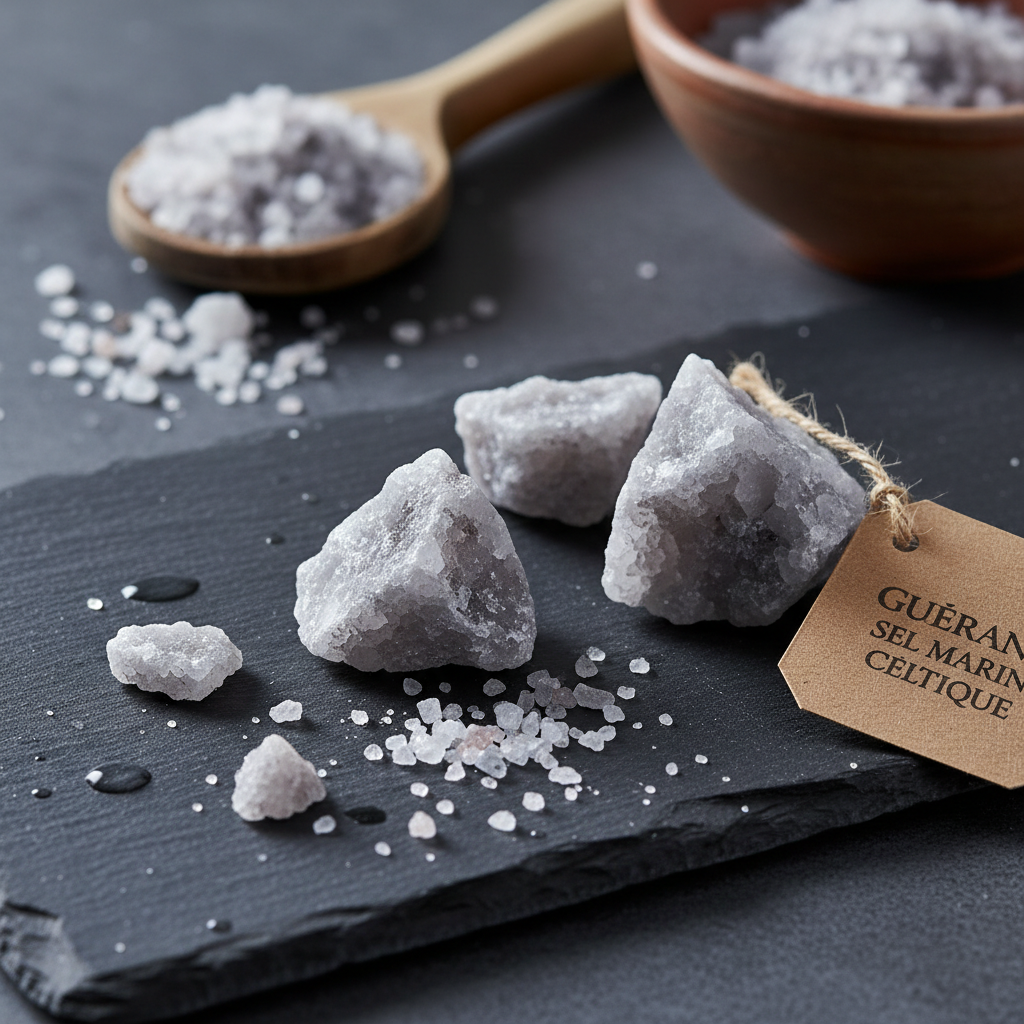
What Is Celtic Salt and Lyme Disease and Why It Matters in 2026
Lyme disease remains one of the most complex and debated chronic illnesses of our time. Caused by the bacterium Borrelia burgdorferi and transmitted through tick bites, Lyme disease affects hundreds of thousands of people every year across North America and Europe. In 2026, awareness of Lyme disease has grown substantially, and so has the interest in complementary, supportive strategies that may help the body manage its symptoms and support recovery alongside conventional medical treatment. Among these complementary approaches, the role of mineral-rich, unrefined salts — particularly authentic Celtic grey salt from Guérande, Brittany — has attracted growing attention from integrative health communities, nutritionists, and individuals living with chronic Lyme disease.
When people search for "Celtic salt Lyme disease," they are typically exploring how this ancient, hand-harvested sea salt might support the body during the physical and neurological challenges that Lyme disease presents. The connection is not necessarily about Celtic salt curing or treating Lyme disease — that is an important distinction we will address throughout this article. Rather, the interest lies in the dense mineral profile of authentic Celtic grey salt and how those minerals may support hydration, adrenal function, immune response, nervous system health, and overall cellular resilience — all areas that are commonly compromised in individuals dealing with Lyme disease and its co-infections.
It is also worth noting why the specific quality and origin of salt matter so much in this conversation. Not all salts are created equal. Standard refined table salt has been stripped of virtually all trace minerals, leaving behind primarily sodium chloride with added anti-caking agents. This is a fundamentally different substance from Celtic grey salt harvested from the clay-lined salt pans of Guérande, Brittany, which retains over 80 trace minerals in their naturally occurring ratios. These minerals — including magnesium, calcium, potassium, and dozens of others — are the very nutrients that play critical roles in enzymatic function, nerve conduction, muscle recovery, and immune modulation. For someone battling the systemic demands of Lyme disease, the difference between mineral-depleted refined salt and a mineral-abundant unrefined salt could be meaningful in supporting the body's foundational biochemistry.
In 2026, the integrative health movement has matured significantly. More physicians, naturopaths, functional medicine practitioners, and Lyme-literate doctors are looking at the totality of a patient's diet and mineral intake as part of a comprehensive support protocol. This article is written to explore the intersection of authentic Celtic salt and Lyme disease support in a thorough, honest, and evidence-informed way. We will examine what the science says about mineral deficiencies in Lyme patients, how Celtic grey salt's nutritional profile may offer supportive benefits, how to use it practically in daily life, and what to look for when choosing a high-quality product. This is not medical advice, and we strongly encourage anyone dealing with Lyme disease to work with qualified healthcare professionals. But for those seeking to optimize their nutritional environment during their healing journey, this guide offers a comprehensive starting point.
The Science Behind Celtic Salt and Lyme Disease
To understand why Celtic grey salt has become a topic of interest in the Lyme disease community, it is important to first look at what Lyme disease does to the body at a biochemical and systemic level. Borrelia burgdorferi is a spirochetal bacterium that, once established in the body, can trigger a cascade of inflammatory responses, immune dysregulation, and neurological disturbances. Chronic Lyme disease — sometimes referred to as Post-Treatment Lyme Disease Syndrome (PTLDS) — is associated with persistent fatigue, cognitive difficulties (commonly called "Lyme brain fog"), musculoskeletal pain, sleep disturbances, and autonomic nervous system dysfunction. Many of these symptoms are linked, at least in part, to deficiencies and imbalances in key electrolytes and minerals. Research has shown that chronic inflammatory conditions, including vector-borne illnesses like Lyme, can dramatically increase the body's demand for minerals such as magnesium, potassium, and calcium, while simultaneously impairing the gut's ability to absorb them effectively.
Magnesium deserves special attention in this context. Magnesium is involved in over 300 enzymatic processes in the human body, including those governing energy production (ATP synthesis), neurotransmitter regulation, muscle function, and immune cell activity. Studies on individuals with chronic inflammatory conditions consistently find lower intracellular magnesium levels, and Lyme disease is no exception. Many people with chronic Lyme report symptoms that overlap precisely with the clinical picture of magnesium deficiency: muscle cramps, heart palpitations, anxiety, insomnia, and heightened sensitivity to light and sound. Celtic grey salt from Guérande naturally contains meaningful amounts of magnesium chloride, absorbed from the ocean water during the traditional evaporation process. While Celtic salt should not be viewed as a primary magnesium supplement, its contribution as a whole-food mineral source — consumed daily in food preparation — adds up meaningfully over time as part of a broader nutritional strategy.
The adrenal glands also play a pivotal role in the Lyme disease picture. Many individuals with chronic Lyme develop what functional medicine practitioners call adrenal fatigue or HPA axis dysregulation — a condition where the adrenal glands are overtaxed from the sustained stress response triggered by chronic infection and inflammation. The adrenal glands are heavily dependent on sodium and other minerals to produce their stress hormones, including cortisol and aldosterone. Aldosterone, in particular, governs sodium and potassium balance in the body, and when adrenal function is compromised, individuals often experience low blood pressure, dizziness, salt cravings, and electrolyte imbalances. In this context, using a mineral-rich, unrefined salt like Celtic grey salt — which provides sodium alongside naturally balanced trace minerals — may help support the electrolyte environment that stressed adrenal glands depend upon. This is why some integrative practitioners suggest that switching from refined table salt to unrefined mineral-rich salt may be a simple but meaningful dietary modification for Lyme patients.
| Mineral | Role in the Body | Relevance to Lyme Disease | Found in Celtic Grey Salt |
|---|---|---|---|
| Magnesium | Enzymatic function, nerve conduction, energy production | Deficiency common in chronic inflammation; linked to muscle cramps, anxiety, insomnia | Yes — naturally occurring |
| Potassium | Cellular fluid balance, heart rhythm, muscle function | Electrolyte imbalance common in adrenal dysregulation | Yes — naturally occurring |
| Calcium | Bone health, nerve signaling, immune regulation | Important for musculoskeletal symptoms of Lyme | Yes — naturally occurring |
| Sodium | Fluid regulation, adrenal support, nerve function | Critical for adrenal support and electrolyte stability | Yes — primary mineral |
| Trace Minerals (80+) | Cofactors for hundreds of metabolic reactions | Support overall immune and cellular resilience | Yes — full spectrum retained |
How to Use Celtic Salt for Lyme Disease Support — Complete Guide
Using Celtic grey salt as part of a supportive wellness routine for Lyme disease is about consistency, quality, and integration into daily dietary habits. The first and most important step is to replace all refined table salt in your kitchen with authentic, unrefined Celtic grey salt. This applies to cooking, seasoning at the table, and any recipes that call for salt. Because Celtic grey salt retains its natural moisture and mineral content, it has a different texture and slightly different flavour profile than dry, refined salt — it is notably more complex, with a subtle oceanic depth that many people find enhances the flavour of food without requiring as much salt overall.
The difference a real salt makes: Discover Celtic Grey Salt →
Here is a practical step-by-step guide to incorporating Celtic grey salt into a Lyme-supportive lifestyle:
- Replace your table salt immediately. Empty your refined salt shaker and replace it with a small ceramic or glass dish of Celtic grey salt. The moist texture of Celtic grey salt may require a small spoon or salt pincher rather than a traditional shaker.
- Add a small pinch to your morning water. Many functional medicine practitioners who work with Lyme patients recommend adding a small pinch (approximately ⅛ to ¼ teaspoon) of Celtic grey salt to a glass of water first thing in the morning. This supports adrenal function, enhances cellular hydration, and provides an immediate mineral boost at the start of the day.
- Use it in bone broths and mineral-rich soups. Bone broth is already a mineral-dense food highly recommended for gut healing and immune support in chronic illness. Adding Celtic grey salt to bone broth during preparation amplifies its mineral content further.
- Season vegetables and proteins generously. Rather than under-salting food in fear of sodium, use Celtic grey salt to season roasted vegetables, grilled proteins, and grain dishes. The trace minerals in the salt are delivered alongside macronutrients in a food matrix that enhances absorption.
- Consider a mineral-rich bath. Some Lyme-literate practitioners suggest mineral salt baths as a way to support transdermal mineral absorption, reduce muscle pain, and promote relaxation. While Celtic grey salt is primarily a culinary product, using it in warm baths is a practice embraced by many in the integrative wellness community.
- Track your intake relative to overall hydration. Increasing mineral-rich salt intake should always be paired with adequate fluid consumption. Lyme patients are often advised to stay well-hydrated to support lymphatic drainage and detoxification pathways.
- Work with a healthcare provider. Before making significant dietary changes related to sodium and mineral intake — especially if you are on medications for heart, kidney, or blood pressure conditions — consult with a qualified healthcare professional who understands your full medical picture.
Practical tips for daily use include keeping a small jar of Celtic grey salt on your dining table and in your kitchen prep area so it is always accessible. The 500g (17.6 oz) size from celtic-salt.com is ideal for regular household cooking use, offering excellent value and ensuring you always have sufficient supply on hand. For those who enjoy finishing dishes with a more delicate, floral salt, the Fleur de Sel (200g / 7.1 oz) offers a refined option harvested from the surface of the same Guérande salt pans, with an even more concentrated mineral bloom and exceptional texture for finishing.
Benefits of Celtic Salt for Lyme Disease Support Backed by Evidence
One of the most well-documented areas of mineral research relevant to Lyme disease is the role of electrolytes in autonomic nervous system function. The autonomic nervous system — which governs involuntary functions like heart rate, blood pressure, digestion, and glandular secretion — is frequently dysregulated in individuals with chronic Lyme disease. This dysregulation, sometimes manifesting as dysautonomia or POTS (postural orthostatic tachycardia syndrome), involves sodium and fluid retention dysfunction at a physiological level. Increasing dietary sodium from a whole-food, mineral-rich source like Celtic grey salt is, in fact, one of the commonly prescribed dietary interventions for POTS and dysautonomia management. The sodium in Celtic grey salt, delivered alongside a naturally balanced array of potassium, magnesium, and other minerals, may help support better electrolyte equilibrium than isolated sodium chloride supplements or heavily refined salt.
Immune system support is another area where the mineral profile of Celtic grey salt may offer meaningful benefit to Lyme disease patients. The immune system's ability to mount and regulate its response to pathogens is intricately dependent on trace mineral availability. Zinc, selenium, and manganese — minerals found within the 80+ trace mineral spectrum of Guérande Celtic grey salt — are all essential cofactors for immune cells, antioxidant enzymes (such as superoxide dismutase), and inflammatory signaling pathways. While the concentrations of these trace minerals in salt are modest compared to dedicated supplements, the synergistic, food-matrix delivery of these minerals from an unrefined source may offer bioavailability advantages that isolated supplements do not always replicate.