Hand-harvested Guérande salt · Tracked international delivery included
Guide· by Celtic Salt Editorial Team
Celtic Salt Flower Of The Ocean
What Is Celtic Salt Flower of the Ocean and Why It Matters in 2026
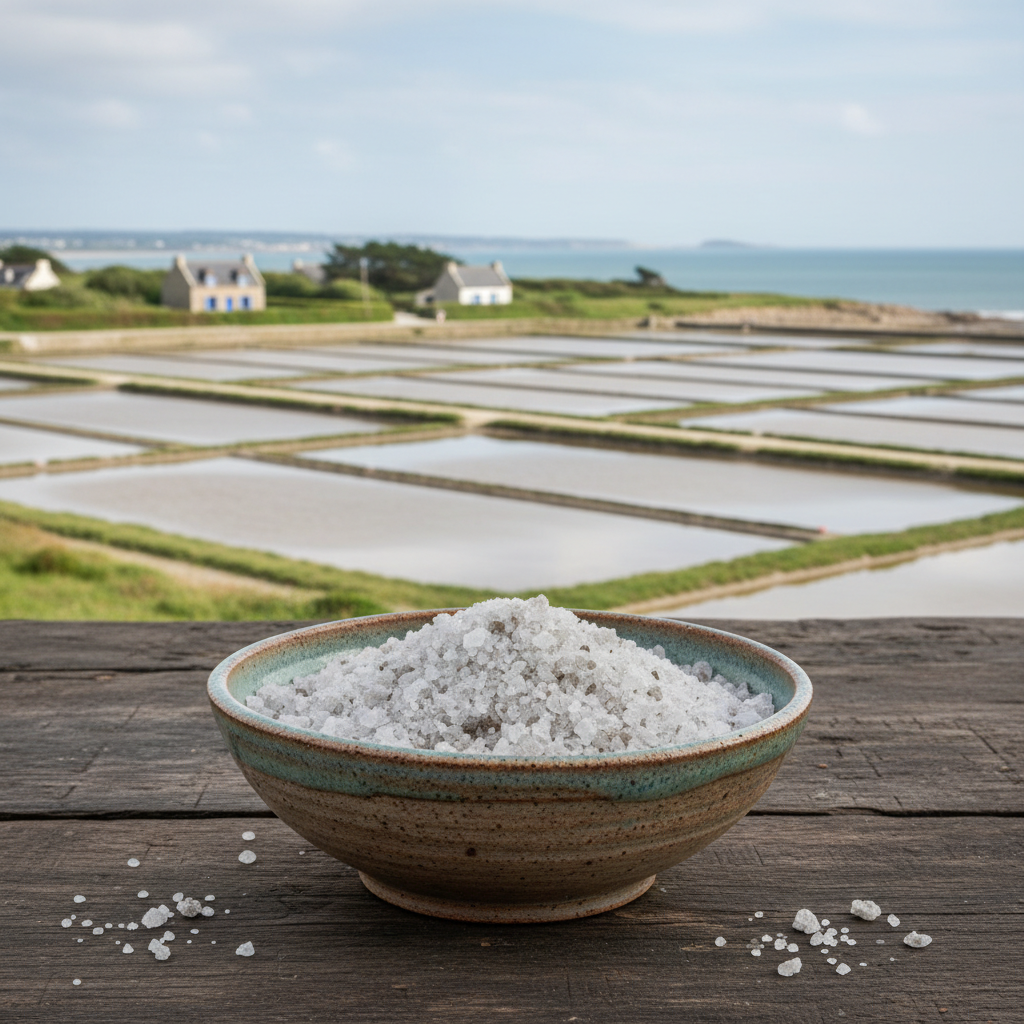
Among the most prized and sought-after natural salts in the world, Celtic salt flower of the ocean — known in French as fleur de sel — stands apart as a truly exceptional finishing salt harvested by hand from the ancient salt marshes of Guérande, in the Brittany region of northwestern France. This extraordinary salt is not simply a seasoning; it is a product of centuries of artisanal tradition, unique coastal geography, and the delicate interplay of sun, wind, and tidal waters. In 2026, as more consumers worldwide are moving away from heavily processed foods and industrially refined table salts, the demand for authentically harvested, mineral-rich Celtic salt flower of the ocean has never been greater. People are becoming more conscious about what they put on their plates, and the quiet renaissance of traditional food craftsmanship is pushing fleur de sel from Guérande to the very forefront of gourmet and health-conscious kitchens globally.
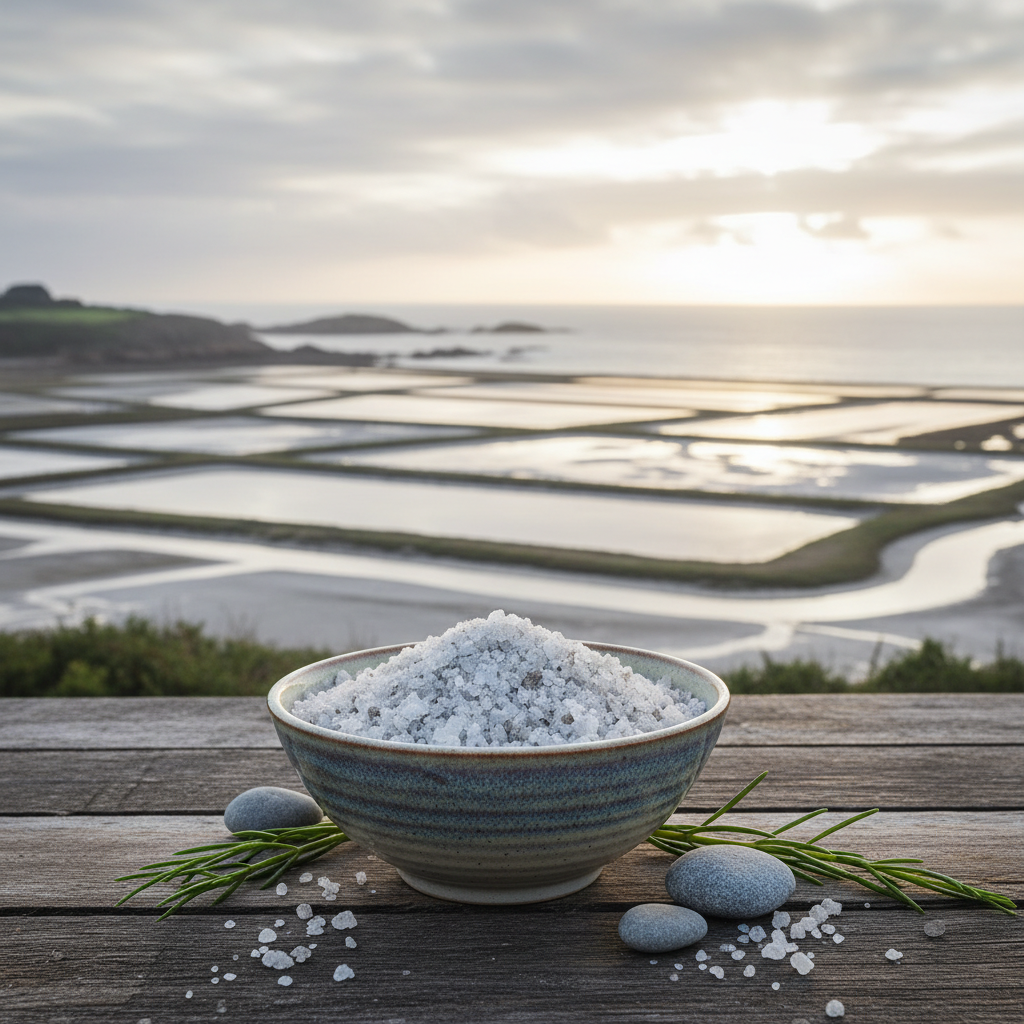
To understand why Celtic salt flower of the ocean matters so deeply, one must appreciate how it is formed and collected. Unlike standard sea salt or even the more commonly known grey Celtic salt (gros sel or sel gris), fleur de sel forms only under very specific meteorological conditions. On warm, dry, and gently windy afternoons, a thin, delicate crust of salt crystals rises to the surface of the shallow salt pans called œillets. These crystalline formations are incredibly fragile — if the wind picks up too strongly or rain falls, they sink immediately into the brine below and are lost forever. The paludiers, the skilled salt farmers of Guérande, must skim this surface bloom with a flat wooden rake called a lousse with extraordinary care and precision. This painstaking process cannot be mechanized; it is entirely dependent on human skill, patience, and an intimate knowledge of the tides and weather cycles. The result is a salt so rare and so naturally perfect that it has earned the nickname "the caviar of salts."
In 2026, the wellness and culinary worlds are converging in ways that make Celtic salt flower of the ocean particularly relevant. The global movement toward whole, unprocessed foods has illuminated the stark contrast between industrially refined sodium chloride — stripped of all natural minerals and often treated with anti-caking agents and bleaching compounds — and the living complexity of a naturally harvested salt like fleur de sel. Celtic salt flower of the ocean retains a full spectrum of trace minerals, including magnesium, calcium, potassium, and iron, all naturally present in the Atlantic seawater from which it is born. These minerals contribute not only to a more nuanced, complex flavor profile but also to the broader nutritional integrity of the salt. Chefs and home cooks alike are rediscovering that the right finishing salt can transform an ordinary dish into an extraordinary one, and fleur de sel from Guérande is consistently the choice of the world's most discerning palates.
Beyond its culinary prestige, Celtic salt flower of the ocean carries profound cultural and environmental significance. The Guérande salt marshes are a UNESCO-recognized biosphere reserve, and the traditional paludier methods have been practiced largely unchanged for over a thousand years. In an age of industrial agriculture and mass food production, supporting authentic Guérande fleur de sel means supporting a living heritage, a fragile ecosystem, and the livelihoods of the families who have dedicated generations to mastering this ancient craft. By choosing authentic Celtic salt flower of the ocean, consumers are making a statement about the kind of food system they want to support. They are voting for tradition over convenience, for mineral complexity over sterile uniformity, and for a deeper, more meaningful connection to the natural world through the food on their table.
The Complete Guide to Celtic Salt Flower of the Ocean
Celtic salt flower of the ocean, or fleur de sel de Guérande, is classified as a finishing salt — meaning it is not intended to be dissolved into cooking water or used during high-heat preparation. Its magic lies precisely in its texture and structure: the crystals are irregularly shaped, slightly moist, and carry a gentle crunch that delivers a burst of pure, clean oceanic flavor exactly where it is needed most. This textural quality is one of the defining characteristics that sets it apart from any other salt on the market. When you pinch fleur de sel between your fingers and scatter it over a finished dish, the crystals catch the light with an almost luminescent quality, and when they dissolve on the tongue, they release layers of flavor that simple table salt could never replicate.
The production season for Celtic salt flower of the ocean is concentrated primarily during the summer months, from June through September, when the conditions along the Atlantic coast of Brittany are most favorable. The Guérande peninsula, with its unique clay-based geology, its proximity to the Atlantic Ocean, and its particular microclimate, creates conditions that cannot be replicated anywhere else on Earth. While fleur de sel is harvested in other regions — notably the Camargue in southern France and the Algarve in Portugal — connoisseurs and culinary experts consistently identify Guérande fleur de sel as superior in both flavor complexity and mineral content. The grey-white color, the slight moisture, and the distinctive aroma of the sea that clings to authentic Guérande fleur de sel are the hallmarks of a product of irreplaceable provenance.
Understanding how to store Celtic salt flower of the ocean properly is essential to preserving its remarkable qualities. Because it retains natural moisture — part of what gives it that characteristic soft crunch and mineral intensity — it should never be stored in a standard salt grinder or shaker with a tight metal lid that could cause it to clump or react with the metal. The ideal storage vessel is a small ceramic or wooden salt cellar, left slightly open or loosely covered to allow minimal air circulation. Stored correctly, fleur de sel will keep its quality essentially indefinitely, though for the most vibrant flavor experience, using it within one to two years of harvest is recommended. Keep it away from steam, direct heat sources, and strong-smelling foods that could compromise its delicate oceanic aroma.
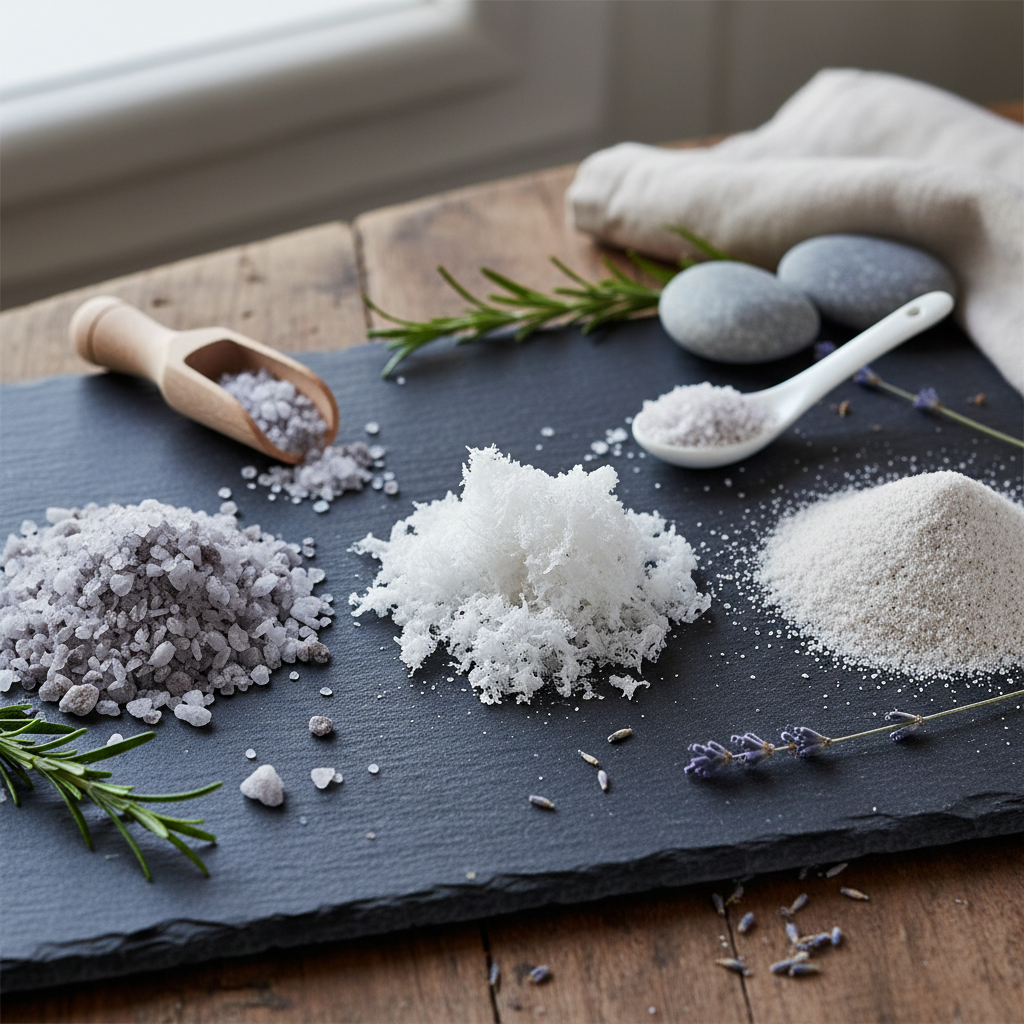
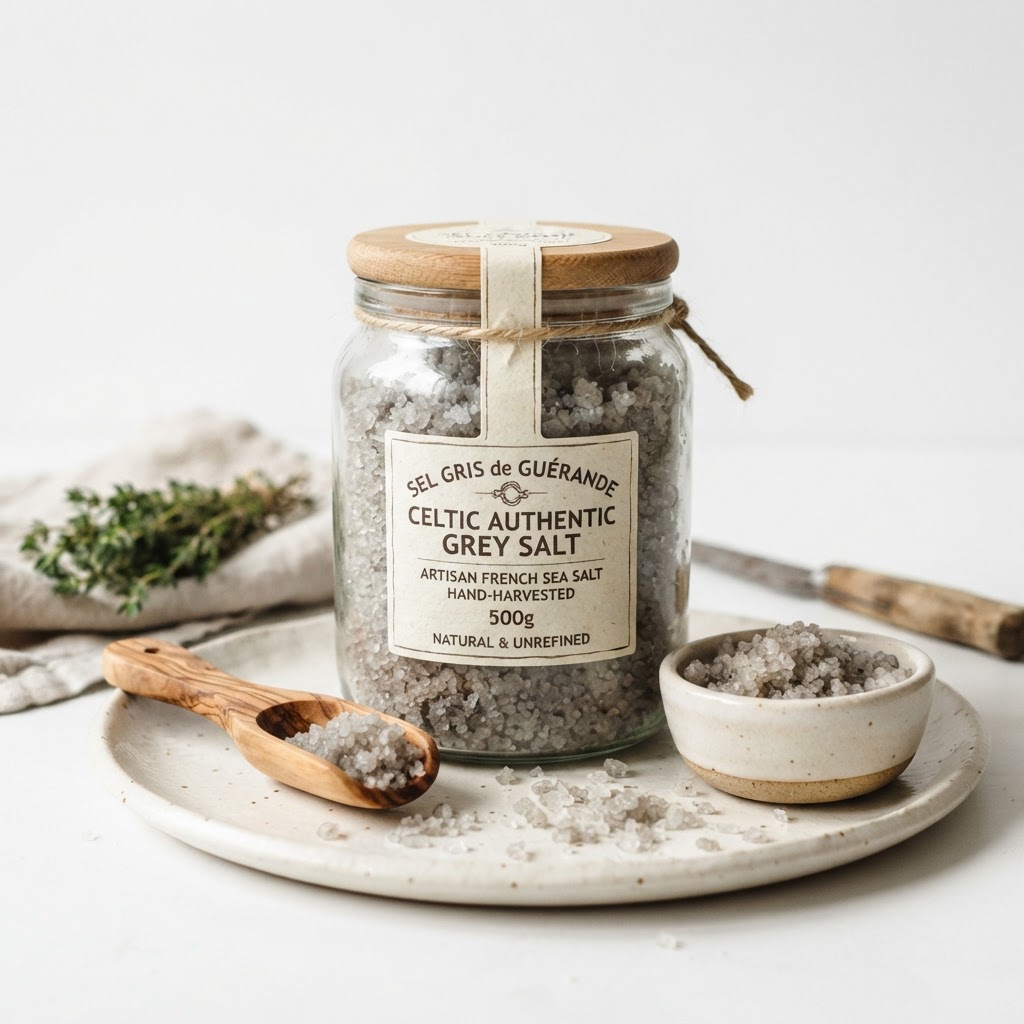
It is also worth noting the difference between Celtic salt flower of the ocean and its sibling product, grey Celtic salt (sel gris). While both come from the same Guérande salt marshes and share the same paludier tradition, they are harvested differently and used quite differently. Grey Celtic salt is collected from the bottom and sides of the salt pans, where it takes on its characteristic grey color from the clay-rich soil of the Guérande basin. It is coarser, denser, and more robustly mineral in flavor, making it ideal for cooking — dissolving into soups, stews, brines, and boiling water. Fleur de sel, by contrast, is the delicate surface bloom: lighter in color, more complex in flavor, and best reserved for finishing. Together, the two salts represent the complete traditional Guérande salt-making tradition, and many serious cooks keep both on hand for different culinary applications. To explore the full range of these traditional salts, visit the Celtic Salt product collection.
Health and Culinary Benefits of Celtic Salt Flower of the Ocean
The health and culinary benefits of Celtic salt flower of the ocean are rooted in what it contains and, equally importantly, in what it does not contain. Unlike refined table salt, which is processed at extremely high temperatures and stripped of all naturally occurring minerals before being treated with additives such as potassium iodide, sodium bicarbonate, and flow agents like silicon dioxide, Celtic salt flower of the ocean is harvested in its natural state and undergoes no chemical processing whatsoever. What arrives in your kitchen is precisely what the Atlantic Ocean and the Guérande salt marshes produced: sodium chloride in its natural form, accompanied by a rich profile of trace minerals that occur naturally in seawater.
Among the trace minerals found in authentic Celtic salt flower of the ocean are magnesium, an essential mineral involved in hundreds of enzymatic processes in the human body including muscle function and nervous system regulation; calcium, critical for bone density and cardiovascular health; potassium, which plays a key role in fluid balance and cellular function; and iron, important for oxygen transport in the blood. These minerals are present in small but meaningful quantities, and while Celtic salt flower of the ocean should not be thought of as a primary mineral supplement, the fact that they are naturally present in a bioavailable form alongside a complex matrix of other micronutrients means the body may process and utilize them more efficiently than synthetic mineral supplements. This is the fundamental philosophy behind whole-food nutrition: that nutrients consumed in their natural context are more beneficial than isolated compounds consumed in isolation.
From a culinary standpoint, the benefits of Celtic salt flower of the ocean are immediately apparent to anyone who has experienced the difference between a great finishing salt and ordinary table salt. The flavor of fleur de sel is oceanic, complex, and subtly sweet, with none of the harsh, metallic bitterness that characterizes heavily refined salts. This complexity comes directly from the mineral profile: magnesium salts, in particular, contribute a slightly bitter-sweet depth that rounds out the sodium chloride sharpness and creates a more balanced, nuanced flavor impact on the palate. Chefs describe fleur de sel as having a "long finish" — meaning the flavor lingers pleasantly on the tongue after the initial burst of saltiness, adding dimension and depth to everything from a simple slice of ripe tomato to a perfectly seared piece of fish or a square of high-quality dark chocolate.
The moisture content of Celtic salt flower of the ocean also plays an important role in its culinary function. The slight dampness of the crystals means they adhere more readily to food surfaces than dry, powdery salts, ensuring even distribution and consistent flavor delivery. When scattered over a finished steak or a creamy burrata, the crystals stay precisely where they are placed rather than rolling off or dissolving prematurely. This means less salt is needed to achieve a satisfying flavor impact — an important consideration for those who are mindful of overall sodium intake. The natural complexity of fleur de sel means that a small pinch delivers far more sensory satisfaction than a larger quantity of a bland, refined alternative. You can read more about the broader nutritional context of this tradition on our deep dive into the minerals found in Celtic salt.
How to Use Celtic Salt Flower of the Ocean — Expert Tips
The cardinal rule of using Celtic salt flower of the ocean is to apply it after cooking, never before or during. Heat destroys the delicate crystal structure that makes fleur de sel special, dissolving those elegant, irregular crystals into the dish and eliminating the textural contrast that defines the finishing salt experience. If you are making a pasta dish, season the cooking water generously with grey Celtic salt, cook and sauce the pasta, and then — just before plating — add a finishing pinch of fleur de sel over the top. This two-salt approach is standard practice in professional kitchens and delivers both depth of flavor throughout the dish and a vibrant mineral pop on the surface.
For grilled or pan-seared proteins — steaks, lamb chops, chicken thighs, salmon fillets — allow the meat to rest after cooking, then apply a generous pinch of Celtic salt flower of the ocean in the final moments before serving. The residual heat of the meat will soften the crystals slightly without fully dissolving them, creating a gentle crunch and an explosion of oceanic flavor with every bite. The pairing of umami-rich proteins with the mineral complexity of fleur de sel is one of the most satisfying flavor combinations in all of cooking, and once experienced, it is nearly impossible to go back to ordinary salt.
In the world of baking and confectionery, Celtic salt flower of the ocean has become something of a cult ingredient. Scattered over chocolate chip cookies just before they go into the oven — or added to the tops of brownies, caramels, and tarts at the moment of serving — fleur de sel creates the magical sweet-salt contrast that has defined modern pastry for the last decade. The salt amplifies sweetness, suppresses bitterness, and adds an unexpected dimension of complexity that elevates simple baked goods to something truly memorable. Salted caramel made with authentic fleur de sel de Guérande is in an entirely different category from caramel salted with ordinary table salt: the mineral depth of the fleur de sel weaves through the caramel's butterscotch richness in a way that is genuinely extraordinary.
Vegetables, too, are transformed by Celtic salt flower of the ocean. A bowl of freshly sliced cucumber, a plate of ripe avocado, a salad of heirloom tomatoes — all of these simple preparations are elevated dramatically by a careful application of fleur de sel at the moment of serving. The salt draws out the natural juices of the vegetables, concentrating their flavors while simultaneously adding its own mineral character. Roasted root vegetables — beets, carrots, parsnips — finished with fleur de sel just as they come out of the oven develop a complex, caramelized-mineral flavor profile that is deeply satisfying. Even simple boiled eggs, sliced in half and sprinkled with a few crystals of fleur de sel, become something worth savoring slowly. For more inspiration on integrating this salt into everyday cooking, explore our guide to cooking with Celtic salt.