Hand-harvested Guérande salt · Tracked international delivery included
Guide· by Celtic Salt Editorial Team
Celtic Gray Sea Salt
What Is Celtic Gray Sea Salt and Why It Matters in 2026
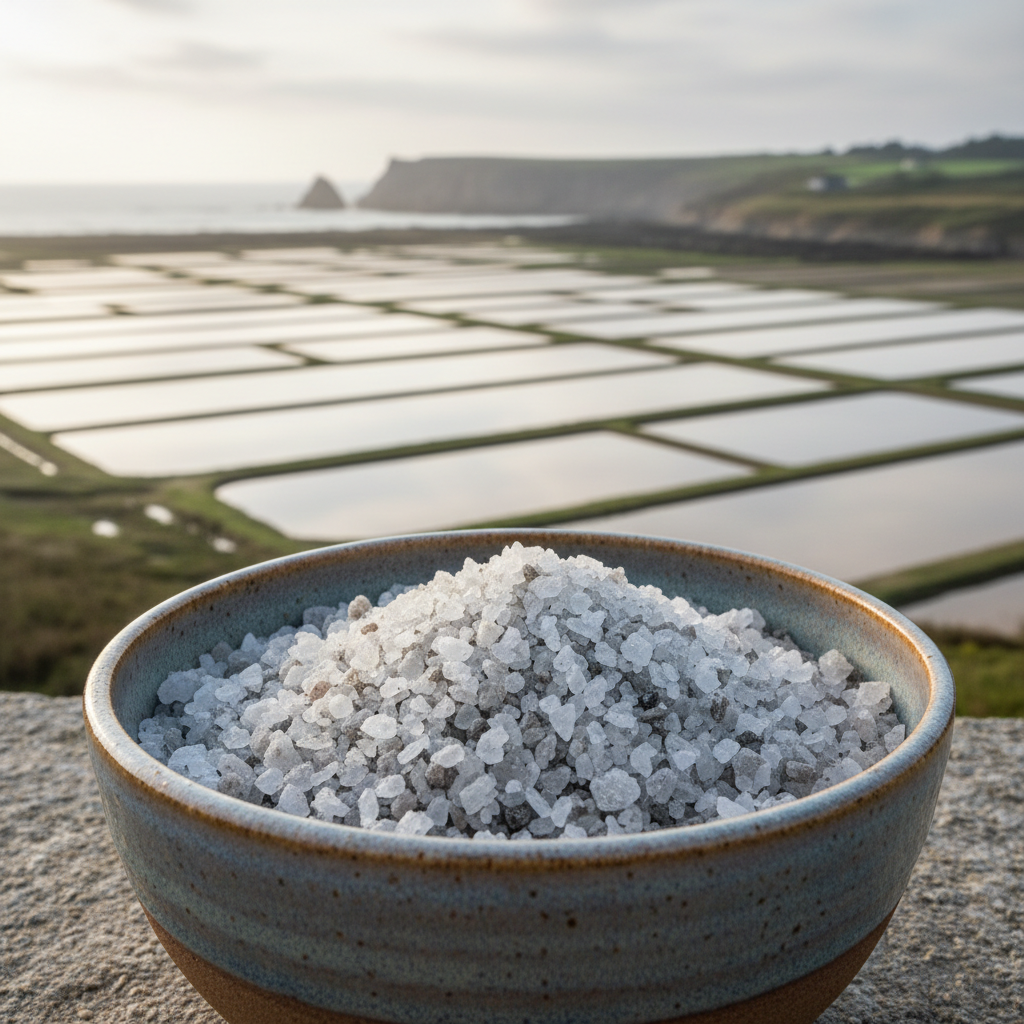
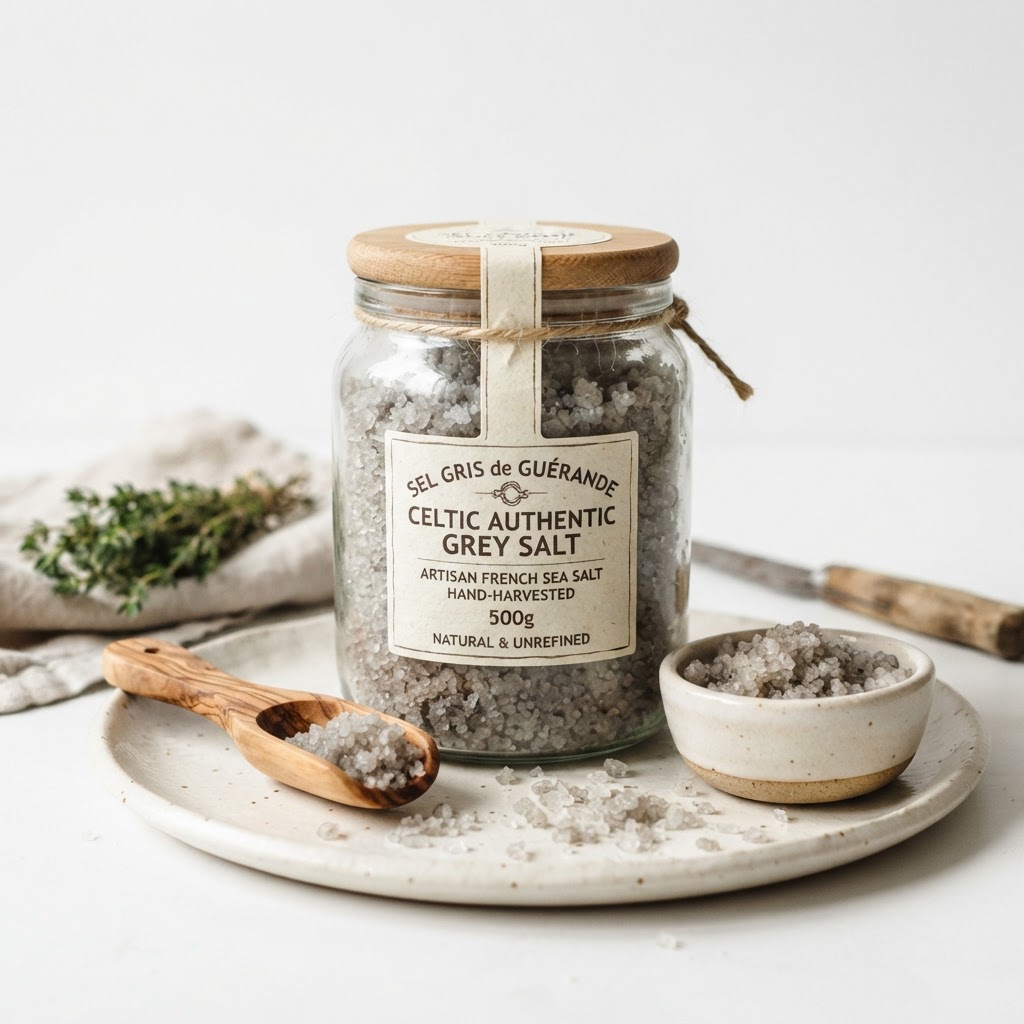
Celtic gray sea salt is one of the most celebrated and sought-after natural salts in the world, harvested by hand from the ancient salt marshes of Guérande, located along the rugged Atlantic coastline of Brittany, France. Unlike the refined white table salt that dominates supermarket shelves, celtic gray sea salt retains its naturally moist texture, its characteristic slate-gray color, and a complex mineral profile that has made it a staple ingredient in gourmet kitchens, wellness communities, and traditional households for centuries. The gray hue itself is not a sign of impurity — quite the opposite. It comes from the natural clay lining of the salt pans, known locally as œillets, which imparts trace minerals and gives the salt its distinctive appearance and earthy, briny depth of flavor. In an era when consumers are increasingly scrutinizing food labels and demanding transparency about sourcing and processing, celtic gray sea salt stands out as a product that has remained virtually unchanged for over a thousand years.
The story of celtic gray sea salt begins with the paludiers — the salt farmers of Brittany who have maintained their craft across generations, using wooden tools and traditional techniques that date back to the early Middle Ages. These artisans work in harmony with the tides, the wind, and the sun to coax salt crystals from shallow pools of Atlantic seawater. The process is entirely natural: seawater flows through a series of channels and evaporation basins before finally concentrating in the harvest pans, where the salt crystallizes and settles. The paludiers use a broad, flat rake called a las to gather the heavier gray crystals from the bottom of the pans — this is the coarse celtic gray sea salt. The lighter, more delicate fleur de sel floats at the surface and is skimmed off separately. This painstaking, labor-intensive process means that each batch of celtic gray sea salt is a direct product of nature and human skill, with no chemical additives, no bleaching agents, and no anti-caking compounds introduced at any stage.
Why does celtic gray sea salt matter so much in 2026? The answer lies in a growing global awareness of what we put into our bodies and where our food comes from. Over the past decade, nutritional science has increasingly highlighted the importance of mineral diversity in the human diet. Modern refined table salt is stripped of everything except sodium chloride — sometimes with iodine added back artificially — and often contains additives like aluminum silicate to prevent clumping. Celtic gray sea salt, by contrast, contains naturally occurring magnesium, calcium, potassium, iron, zinc, and dozens of other trace elements, all in forms that the body recognizes and can absorb. While we are careful not to make specific medical claims, the nutritional literature is consistent in suggesting that a broader mineral intake supports overall bodily function in ways that sodium chloride alone cannot. For health-conscious consumers in 2026, switching to celtic gray sea salt is not a trend — it is a return to something fundamentally more natural.
Beyond nutrition, celtic gray sea salt matters because it represents a commitment to sustainable, artisanal food production at a time when industrialized food systems are under intense scrutiny. The Guérande salt marshes are a protected natural habitat — a UNESCO-recognized landscape that supports diverse bird species, plant life, and marine ecosystems. The paludiers who work this land are not merely food producers; they are environmental stewards whose livelihoods depend on keeping the marshes clean and biologically vibrant. Every purchase of authentic celtic gray sea salt from Guérande is therefore a vote for biodiversity, for traditional craftsmanship, and for a slower, more intentional food culture. In kitchens from Paris to Tokyo to New York, chefs and home cooks alike are rediscovering this ancient mineral treasure — and finding that it transforms everything from a simple boiled egg to a slow-braised lamb shoulder into something truly extraordinary.
The Complete Guide to Celtic Gray Sea Salt
Understanding celtic gray sea salt fully requires looking at its origins, its production methods, its physical properties, and how it differs from other salts on the market. Let us start with geography. Guérande is a small medieval town on the Presqu'île de Guérande, a peninsula in the Loire-Atlantique department of western France. The surrounding marshes — known as the Marais Salants de Guérande — cover approximately 2,000 hectares and have been used for salt production since at least the ninth century. The region's unique geography, with its flat coastal terrain, mild Atlantic climate, and natural clay substrates, creates ideal conditions for artisanal salt harvesting. The salt marshes are fed by Atlantic seawater, which arrives carrying a rich cargo of dissolved minerals accumulated during its journey across thousands of miles of open ocean.
The production cycle for celtic gray sea salt is intimately tied to the seasons. Harvesting typically takes place between June and September, when sunlight and Atlantic winds are strong enough to evaporate the water from the salt pans at a useful rate. A paludier managing a typical set of salt pans — roughly 60 to 80 individual œillets — will harvest the gray salt daily during this window, working in the early morning when conditions are optimal. The crystals that form overnight are gathered before midday heat begins to affect their quality. After harvesting, the salt is allowed to drain naturally, retaining some of its moisture — this residual moisture, often around 10 to 13 percent by weight, is actually a quality marker. It indicates that the salt has not been dried, processed, or altered in any way. This moisture also helps the salt maintain its mineral content, because many trace minerals are carried in the water molecules surrounding each crystal.
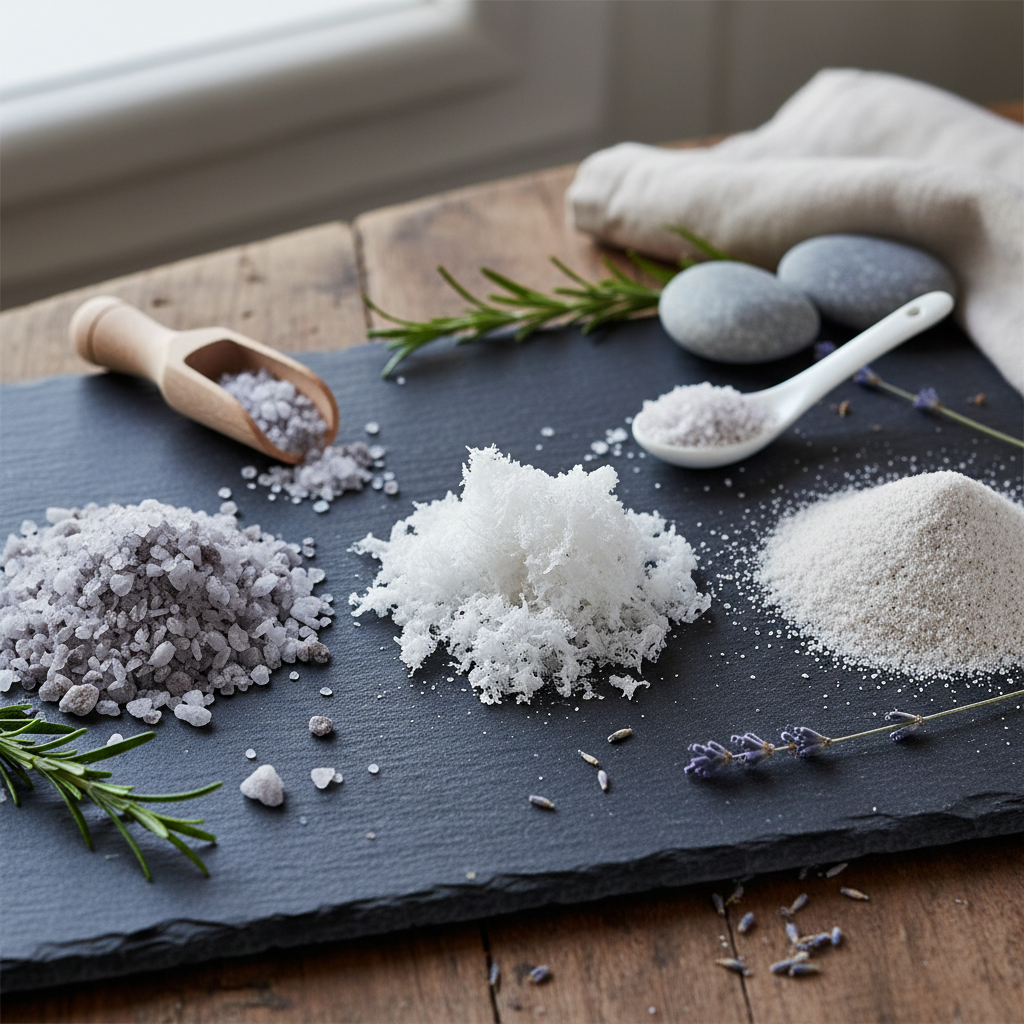
Celtic gray sea salt is available in several grain sizes, each suited to different culinary applications. The most commonly available form is coarse celtic gray sea salt, with irregular crystals that range from about 2mm to 5mm in size. This is ideal for grinding at the table, for brining meats and fish, for cooking pasta and vegetables in boiling water, and for use in salt crusts and marinades. A finer-ground version, sometimes called fine celtic gray sea salt, is more suitable for baking, for finishing delicate dishes, and for use in any application where you want the salt to dissolve quickly and distribute evenly. Some producers also offer a medium grain size that bridges these two uses. Regardless of grain size, all authentic celtic gray sea salt from Guérande should share the same fundamental characteristics: a moist, slightly clumped texture, a gray to blue-gray color, and a rich, complex flavor that goes far beyond simple saltiness.
One important aspect of the complete guide to celtic gray sea salt is understanding its moisture content and how to store it properly. Because this salt retains natural moisture, it should be stored in a breathable container — a wooden salt box, a ceramic crock, or a clay pot — rather than in airtight plastic containers, which can cause the moisture to condense and make the salt overly wet or even develop unwanted odors over time. A traditional French salt pig, an open-topped ceramic container with a small roof-like cover, is ideal. Keep it away from direct heat sources like the stovetop, which can cause excessive drying, and away from steam-prone areas like directly beside the kettle. Stored correctly, celtic gray sea salt has an essentially indefinite shelf life — salt is one of the world's oldest and most effective preservatives, and it preserves itself just as well as it preserves anything else. You can learn more about proper storage techniques in our detailed guide on how to store celtic salt correctly.
Health and Culinary Benefits of Celtic Gray Sea Salt
The health and culinary benefits of celtic gray sea salt are deeply intertwined, because the same mineral richness that makes it nutritionally interesting also makes it culinarily superior. From a nutritional standpoint, the key differentiator between celtic gray sea salt and refined table salt is mineral complexity. Celtic gray sea salt contains over trace minerals whose levels vary by harvest and product and elements, including magnesium chloride, calcium sulfate, potassium chloride, iron oxide — which contributes to the gray color — manganese, zinc, copper, and many others. These minerals are present in trace amounts, but their diversity and bioavailability matter. The human body requires a wide range of minerals to support enzyme function, nerve transmission, muscle contraction, bone density, and fluid balance, among many other processes.
Magnesium is perhaps the most noteworthy mineral found in celtic gray sea salt beyond sodium itself. Magnesium deficiency is remarkably common in modern populations, largely because industrial food processing strips magnesium from many foods before they reach our plates. While celtic gray sea salt is not a primary source of dietary magnesium — you would need to consume very large quantities to meet daily requirements through salt alone — it does contribute a meaningful supplemental amount compared to refined salt, which contains essentially none. Similarly, the calcium and potassium in celtic gray sea salt help to somewhat offset the hypertensive effects of sodium, as both minerals are associated with healthy blood pressure regulation. It bears emphasizing that these are observations from nutritional science, not medical claims, and anyone with specific health concerns about sodium intake should consult their healthcare provider.
From a culinary perspective, the benefits of celtic gray sea salt are immediately apparent to any experienced cook. The complex mineral matrix means that the flavor of this salt is multi-dimensional — there is the expected saltiness, of course, but also a subtle minerality, a faint oceanic sweetness, and a lingering depth that refined table salt simply cannot replicate. Professional chefs describe it as a salt that seasons food without overwhelming it, enhancing natural flavors rather than masking them. The moisture content also plays a role in how the salt interacts with food: moist salt crystals adhere more readily to the surface of meats, fish, and vegetables, dissolving gradually and penetrating more evenly than dry crystals that roll off surfaces. This makes celtic gray sea salt particularly effective for dry-brining techniques, where the salt is applied to raw protein and left to work for several hours or overnight before cooking.
Celtic gray sea salt is also highly valued in fermentation and preservation. Traditional French charcuterie, from rillettes to saucisson, relies on salt that brings genuine mineral complexity to the curing process. Sauerkraut, kimchi, lacto-fermented vegetables, and artisanal pickles all benefit from a salt that carries the natural minerals needed to support the microbial communities responsible for fermentation. Unlike iodized salt, which can inhibit fermentation by disrupting microbial populations, celtic gray sea salt is free of additives and fully compatible with all forms of traditional food preservation. Bakers have also discovered that small quantities of celtic gray sea salt in bread dough contribute not only to flavor but to crust development and even fermentation balance in sourdough cultures. For more information on how celtic salt enhances fermentation, visit our guide on using celtic salt for fermentation.
How to Use Celtic Gray Sea Salt — Expert Tips
Knowing how to use celtic gray sea salt effectively can transform your cooking from competent to genuinely exceptional. The first and most important rule is to treat it as a finishing salt as well as a cooking salt — many cooks make the mistake of reserving fine finishing salts for the table while using cheap table salt during cooking, but celtic gray sea salt is equally suited to both roles, and using it throughout the cooking process builds layers of flavor that simply cannot be achieved by adding salt only at the end.
For meat and fish, the technique of dry-brining with coarse celtic gray sea salt is perhaps the single most impactful thing you can do to improve your cooking. Apply a generous amount of coarse celtic gray sea salt to all surfaces of your protein — a thick steak, a whole chicken, a salmon fillet — and allow it to rest uncovered in the refrigerator for anywhere from two hours to 48 hours depending on the size of the piece. During this time, the salt draws moisture to the surface initially, but then the moisture is reabsorbed along with the dissolved salt, penetrating deep into the meat and seasoning it from within rather than just on the exterior. The result is meat that is seasoned evenly throughout, with a better crust when seared and a noticeably more complex flavor. Use approximately 1 teaspoon of coarse celtic gray sea salt per pound of meat for best results.