Hand-harvested Guérande salt · Tracked international delivery included
Guide· by Celtic Salt Editorial Team
Celtic Fine Ground Sea Salt
What Is Celtic Fine Ground Sea Salt and Why It Matters in 2026
Celtic fine ground sea salt is one of the most prized and nutritionally complete salts available to home cooks, professional chefs, and health-conscious consumers around the world. Harvested from the ancient salt marshes of Guérande in Brittany, France, this remarkable salt begins its journey as the same mineral-rich grey salt that has been collected by hand for over a thousand years. The "fine ground" designation simply refers to the particle size — the natural grey crystals are carefully milled into a finer texture that dissolves quickly and distributes evenly across food. Unlike table salt, which is heavily processed, bleached, and stripped of virtually all trace minerals, Celtic fine ground sea salt retains its full spectrum of naturally occurring minerals, including magnesium, calcium, potassium, iron, and dozens of other trace elements that contribute both to flavour and to nutritional value. In 2026, as consumers become increasingly sophisticated about ingredient quality, transparency, and provenance, Celtic fine ground sea salt stands apart as a product with genuine heritage, verified origin, and demonstrable superiority over conventional refined salt.
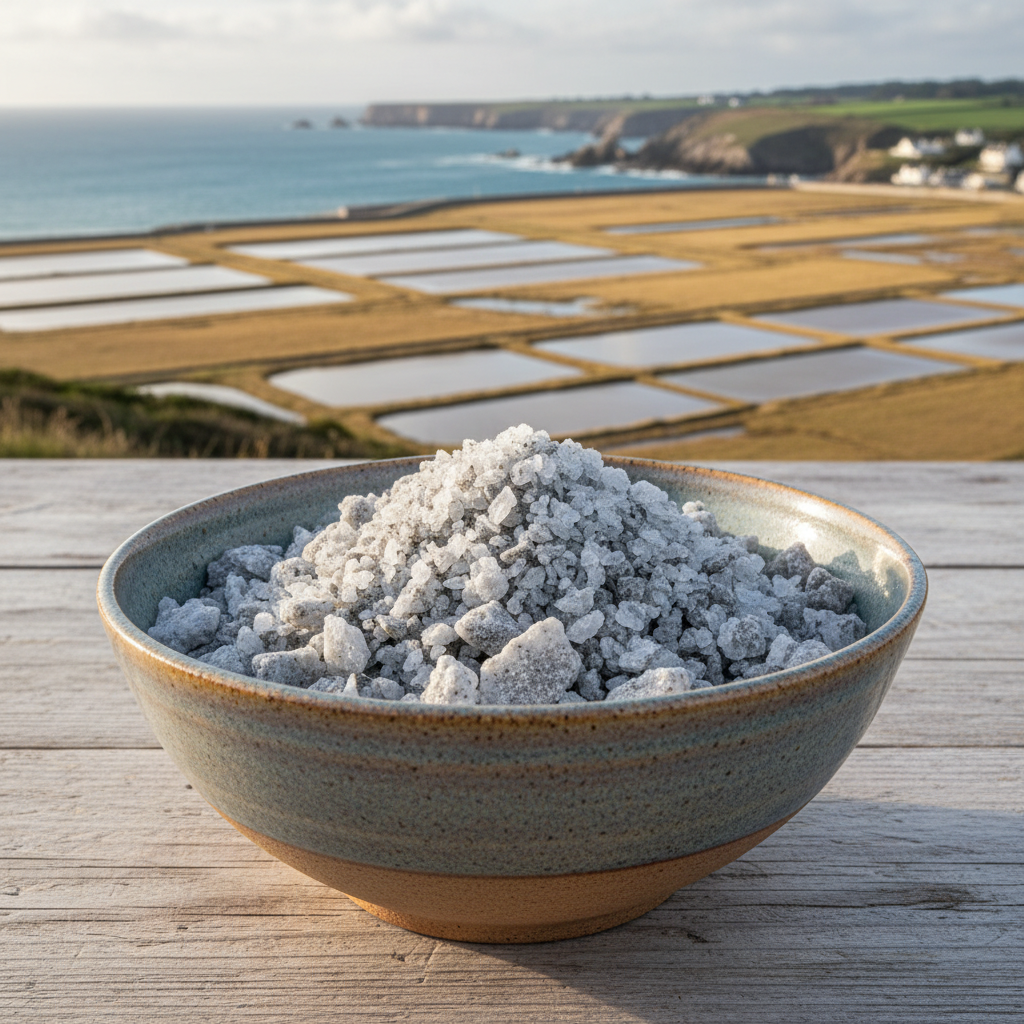
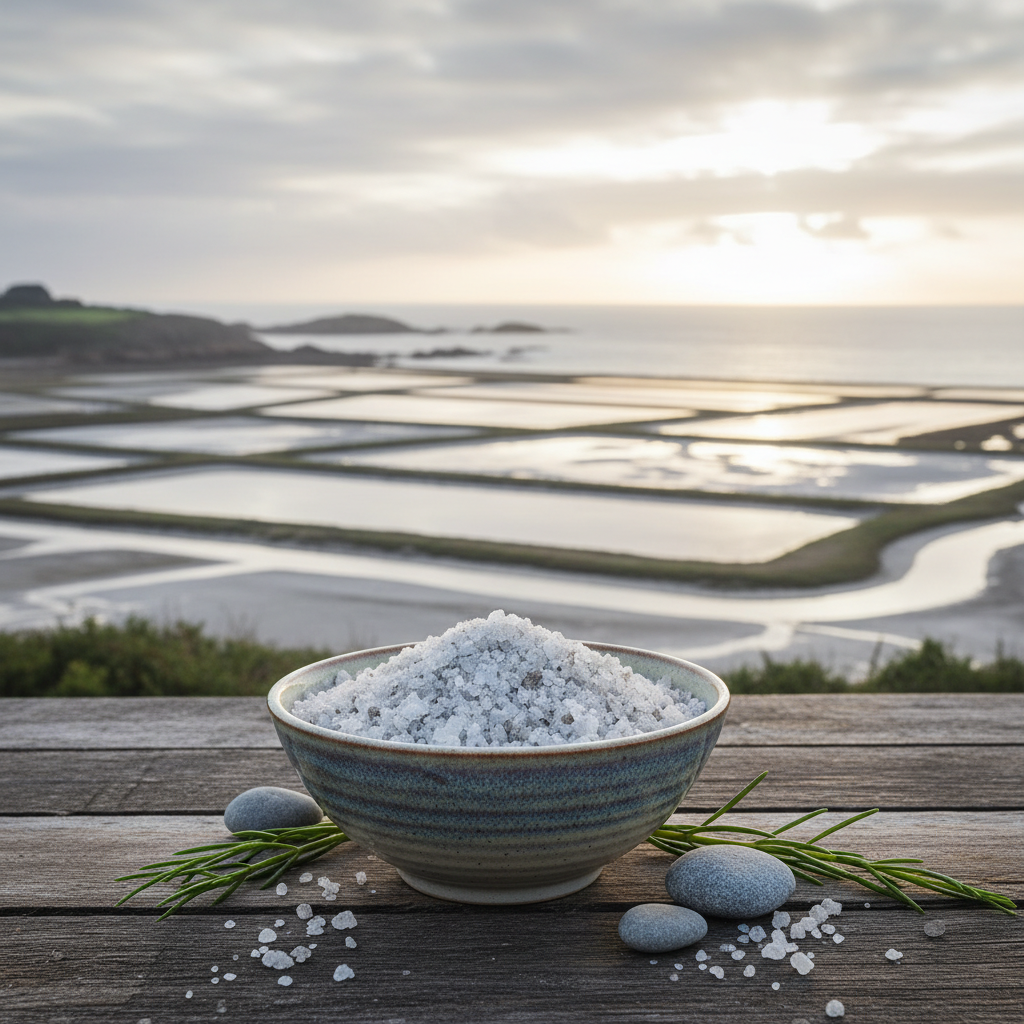
The region of Guérande has been producing salt since at least the ninth century, and the methods used there today would be recognisable to salt farmers — known as paludiers — from centuries past. The salt marshes, called marais salants, are a UNESCO-recognised landscape, a testament to both their ecological significance and their cultural importance. Seawater from the Atlantic Ocean flows into a complex system of shallow clay-lined ponds, where it slowly evaporates under the sun and wind of the Breton coast. The natural grey colour of Celtic salt comes directly from the clay lining of these ponds, which imparts beneficial minerals and gives the salt its characteristic moist texture and earthy, complex flavour. When this salt is finely ground, the result is a versatile, mineral-rich seasoning that can be used in virtually every cooking application, from delicate pastry to robust braises, from everyday seasoning at the table to professional-grade culinary finishing. The fine grind makes it especially convenient for modern kitchens where precision and consistency matter.
Why does Celtic fine ground sea salt matter particularly in 2026? Because the conversation around food quality, mineral density, and the hidden costs of ultra-processed ingredients has never been more prominent in mainstream culture. Nutritionists, functional medicine practitioners, and culinary professionals are increasingly vocal about the difference between refined sodium chloride — which is essentially a single chemical compound stripped of everything nature placed alongside it — and a whole, unrefined sea salt that carries the full complexity of its marine and mineral origins. Studies examining the mineral content of traditional unrefined salts consistently show significantly higher levels of magnesium and other trace minerals compared to refined table salt. While we are careful not to make specific medical claims, it is well established that trace minerals play important roles in many bodily functions, and obtaining them from whole food sources, including quality salt, is a sensible dietary approach. The fine ground form of Celtic salt makes this nutritional richness accessible in a format that works seamlessly in modern cooking.
Beyond nutrition, there is the matter of flavour — and here Celtic fine ground sea salt truly distinguishes itself. Professional chefs have long understood that the salt you use is not merely a delivery mechanism for sodium; it is an ingredient in its own right, one that can add depth, complexity, and a subtle mineral character to food that refined salt simply cannot replicate. The fine ground form of Celtic grey salt dissolves rapidly into sauces, batters, doughs, and dressings, distributing its nuanced flavour evenly throughout a dish. It seasons more gently than table salt because of its mineral complexity — you often find that you need slightly less of it to achieve the same perceived saltiness, which is a natural consequence of the way trace minerals interact with our taste receptors. In 2026, with artisan food culture flourishing and consumers actively seeking authentic, provenance-verified ingredients, Celtic fine ground sea salt represents both a practical choice and a statement of culinary values.
The Complete Guide to Celtic Fine Ground Sea Salt
Understanding Celtic fine ground sea salt fully requires looking at the entire journey from Atlantic seawater to the fine white-grey powder that ends up in your kitchen. The process begins each spring when the paludiers — the traditional salt farmers of Guérande — open the sluice gates of their marshes and allow Atlantic seawater to flow into the outer holding ponds. Over weeks and months, this water moves progressively through a series of shallower ponds, becoming increasingly concentrated as evaporation does its work. The clay beds that line these ponds are not incidental; they are a critical part of what makes Guérande salt unique. The specific mineralogy of the Breton clay, combined with the particular ecology of the marsh — which includes specific algae and microorganisms — contributes directly to the mineral profile and flavour of the finished salt.
When the brine reaches sufficient concentration in the final evaporation ponds, called oeillets, salt crystals begin to form. The bulk of the harvest is grey salt, called gros sel or sel gris, which settles to the bottom and sides of the pond and is raked up by hand using traditional long-handled tools called las. This grey salt is naturally moist, coarse, and heavy with minerals. It is this salt — nothing added, nothing removed — that becomes Celtic fine ground sea salt when it is passed through a careful milling process. The milling must be done thoughtfully to preserve the moisture content and mineral integrity of the salt. Low-temperature, slow milling methods are preferred to prevent the heat-driven loss of volatile aromatic compounds and to maintain the natural moisture that keeps the mineral profile intact. The result is a fine, slightly off-white to grey powder with a subtle damp feel, very different in texture and character from the dry, bright white flow of standard table salt.
One of the most important things to understand about Celtic fine ground sea salt is how it compares to other salts in terms of mineral content. Standard table salt is typically 99.9% sodium chloride, with added anti-caking agents and often iodine. It has been purified to remove virtually all trace minerals. Himalayan pink salt, while popular, is a mined rock salt with a different mineral profile and a geological origin rather than a marine one. Celtic fine ground sea salt, by contrast, is a living product of a specific coastal environment, carrying with it magnesium (in particularly notable quantities compared to other salts), calcium, potassium, iron, zinc, manganese, and numerous other trace elements. The magnesium content is especially significant because magnesium is a mineral that many people in Western diets do not get in adequate quantities, and it plays roles in hundreds of enzymatic processes in the body.
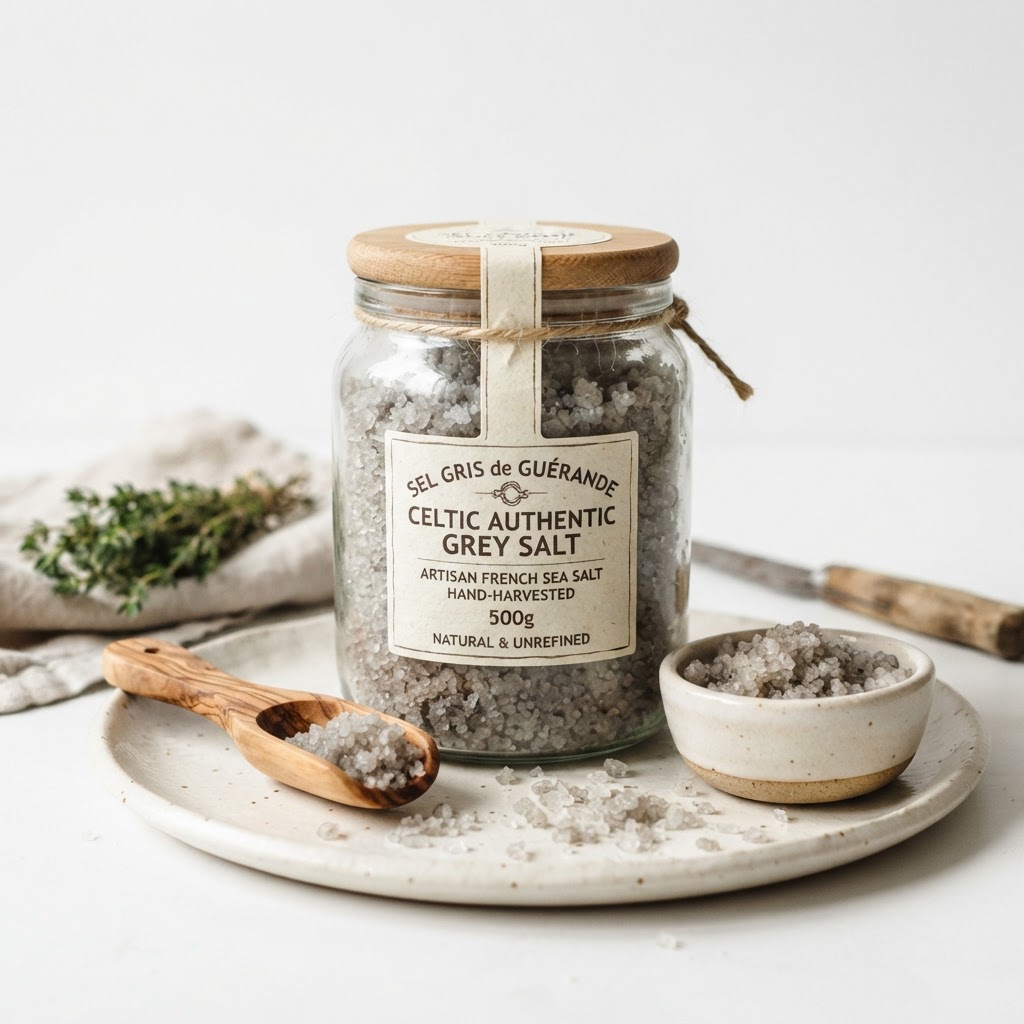
Storage and handling of Celtic fine ground sea salt deserve attention because the salt's natural moisture content, which is one of its strengths, also means it requires proper storage to maintain its quality. Unlike refined table salt, which is engineered to flow freely regardless of humidity, Celtic fine ground sea salt should be stored in an airtight container, ideally ceramic, glass, or a quality wooden salt box with a tight-fitting lid. Kept away from direct heat and moisture, it will last indefinitely — salt does not expire. If it clumps slightly, this is completely normal and is simply a sign of its natural moisture content; a brief stir or a gentle press with a spoon will break up any clumps. For cooking use, a small ceramic salt cellar near the stove is ideal, allowing you to pinch and apply the salt with precision and keeping it accessible during active cooking.
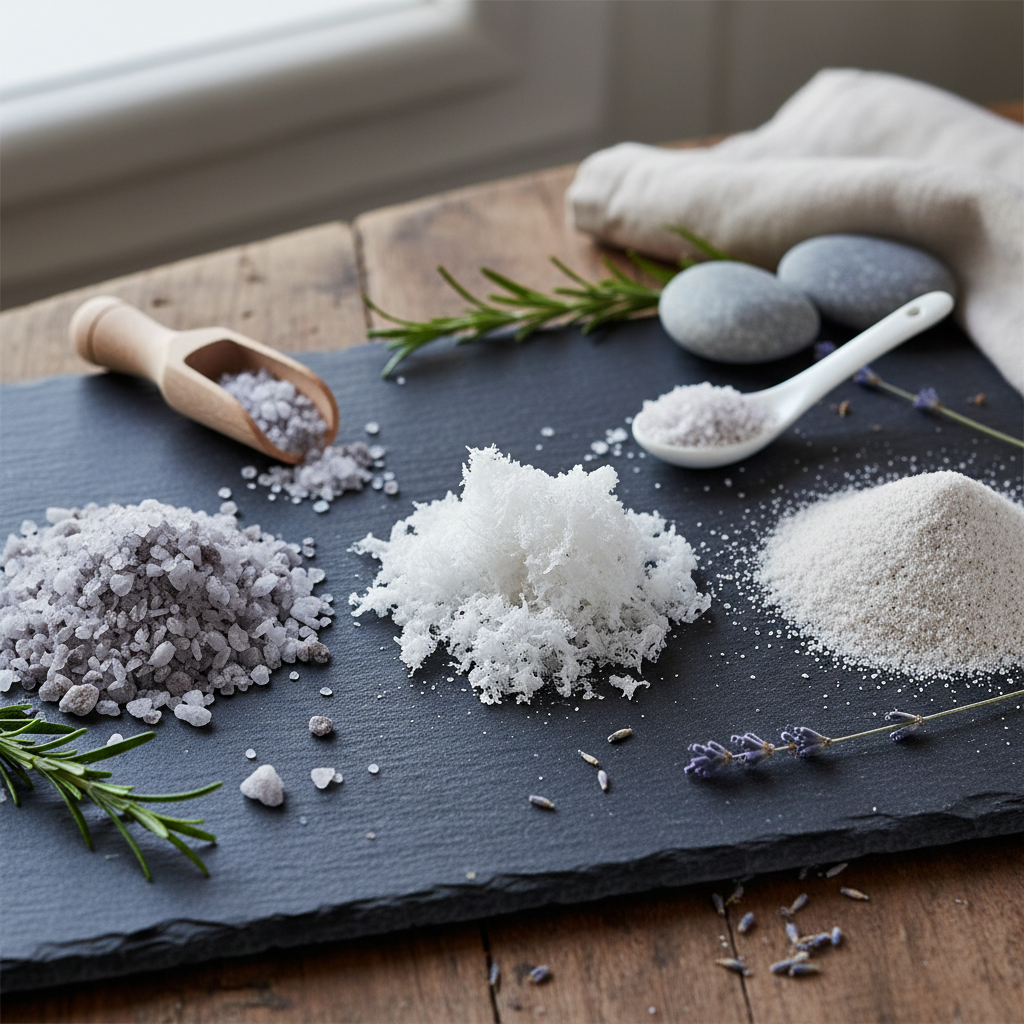
The fine ground format offers specific practical advantages over coarser Celtic salt varieties. Because the particles are small, Celtic fine ground sea salt dissolves almost instantly in liquid, making it ideal for salad dressings, marinades, brines, sauces, soups, and any application where you need the salt to integrate fully into the dish. It also measures more predictably than flaky or coarse salts, making it a better choice for baking and recipe-following applications where accuracy matters. If you are transitioning from table salt to Celtic fine ground sea salt in your cooking, a useful starting point is a roughly one-to-one substitution by volume, then adjusting to taste — many people find they prefer slightly less Celtic fine ground sea salt than they would have used of table salt, because of the fuller, more complex flavour. You can explore more about the different forms of this salt and how they compare at our guide to Celtic grey salt varieties.
Health and Culinary Benefits of Celtic Fine Ground Sea Salt
The health-related conversation around salt is often dominated by simplistic messaging that treats all salt as equivalent — essentially as pure sodium chloride — and focuses exclusively on the risks of excessive sodium intake. This framing misses important nuance. While it is absolutely true that excessive sodium consumption is associated with cardiovascular risk, the conversation becomes considerably more interesting when you consider the full mineral matrix of an unrefined sea salt like Celtic fine ground sea salt. Sodium does not exist in isolation in the human body; it works in dynamic balance with potassium, magnesium, calcium, and other electrolytes. When you consume refined salt, you are delivering sodium in isolation, unaccompanied by its natural mineral partners. When you consume Celtic fine ground sea salt, you are delivering sodium alongside meaningful quantities of these balancing minerals, which changes the physiological picture substantially.
Magnesium is perhaps the most nutritionally significant of the minerals found in Celtic fine ground sea salt in notable quantities. Modern diets are frequently low in magnesium, a mineral involved in over three hundred enzymatic reactions, including those governing muscle function, nerve transmission, blood sugar regulation, and protein synthesis. The relatively high magnesium content of Celtic grey salt — particularly compared to refined table salt and even to some other natural salt varieties — means that regular use of this salt as your primary seasoning contributes meaningfully, if modestly, to your overall magnesium intake. Calcium, another mineral present in Celtic fine ground sea salt, supports bone density, nerve function, and muscle contraction. Potassium works in opposition to sodium to regulate fluid balance and blood pressure. The presence of all these minerals together in their natural ratios, as they occur in Atlantic seawater, is what makes Celtic fine ground sea salt nutritionally distinct from its refined counterparts.
From a purely culinary standpoint, the benefits of Celtic fine ground sea salt are perhaps even more immediately apparent than the nutritional ones. The flavour of this salt is genuinely complex in a way that is difficult to describe but immediately recognisable on the palate. There is a clean, oceanic quality — not fishy, but genuinely marine — underpinned by a subtle mineral earthiness that comes from the clay and the ecosystem of the Guérande marshes. This complexity means that food seasoned with Celtic fine ground sea salt tastes more fully developed, more rounded, and more satisfying than the same food seasoned with refined table salt. Chefs often describe it as making food taste "more like itself" — amplifying and clarifying the natural flavours of ingredients rather than simply adding a sharp saline note. In baking, for example, a pinch of Celtic fine ground sea salt in a chocolate cake batter does not make the cake taste salty; it deepens the chocolate flavour, balances the sweetness, and adds a complexity that is noticeable in its absence.
The fine ground format is particularly well suited to applications where uniform seasoning is essential. In bread baking, for instance, coarse salt can create uneven distribution in the dough, leading to occasional bursts of saltiness. Fine ground Celtic salt disperses evenly throughout the dough, ensuring consistent seasoning in every bite. The same principle applies to spice rubs for meat, dry brines for poultry, seasoning blends, and any preparation where the salt needs to coat surfaces or integrate into a mixture uniformly. For athletes and active individuals, the electrolyte profile of Celtic fine ground sea salt makes it particularly interesting as a seasoning choice — the combination of sodium, potassium, and magnesium is essentially a natural electrolyte blend, and many endurance athletes have discovered that seasoning their food with quality unrefined salt supports hydration and recovery in ways that refined salt does not. For more on the nutritional aspects of Celtic salt, see our detailed overview at Celtic salt minerals and nutrition.
How to Use Celtic Fine Ground Sea Salt — Expert Tips