Hand-harvested Guérande salt · Tracked international delivery included
Guide· by Celtic Salt Editorial Team
Atlantic Sea Salt: Mineral Content and Culinary Uses
Food information, not medical advice. Salt remains a significant source of sodium. Trace-mineral levels can vary by harvest and product, and culinary salt should not be used as a treatment or medical electrolyte supplement.
What Is Atlantic Sea Salt: Mineral Content and Culinary Uses and Why It Matters in 2026
Atlantic sea salt is one of the most ancient and revered culinary ingredients in the world, harvested directly from the waters of the Atlantic Ocean through a process that has remained largely unchanged for thousands of years. Unlike industrially processed table salt, which is stripped of its natural character through intense refining, bleaching, and chemical treatment, authentic Atlantic sea salt retains a complex matrix of naturally occurring minerals and trace elements that give it a distinctly superior flavour profile and a nutritional depth that simply cannot be replicated in a laboratory. As consumers in 2026 become increasingly sophisticated in their approach to food sourcing and wellness, the demand for genuine, minimally processed sea salts has grown dramatically, with chefs, nutritionists, home cooks, and health-conscious households all seeking out the real thing. Understanding what Atlantic sea salt truly is — its origins, its mineral complexity, and its extraordinary range of culinary applications — is the first step toward making smarter, more rewarding choices in the kitchen and beyond.
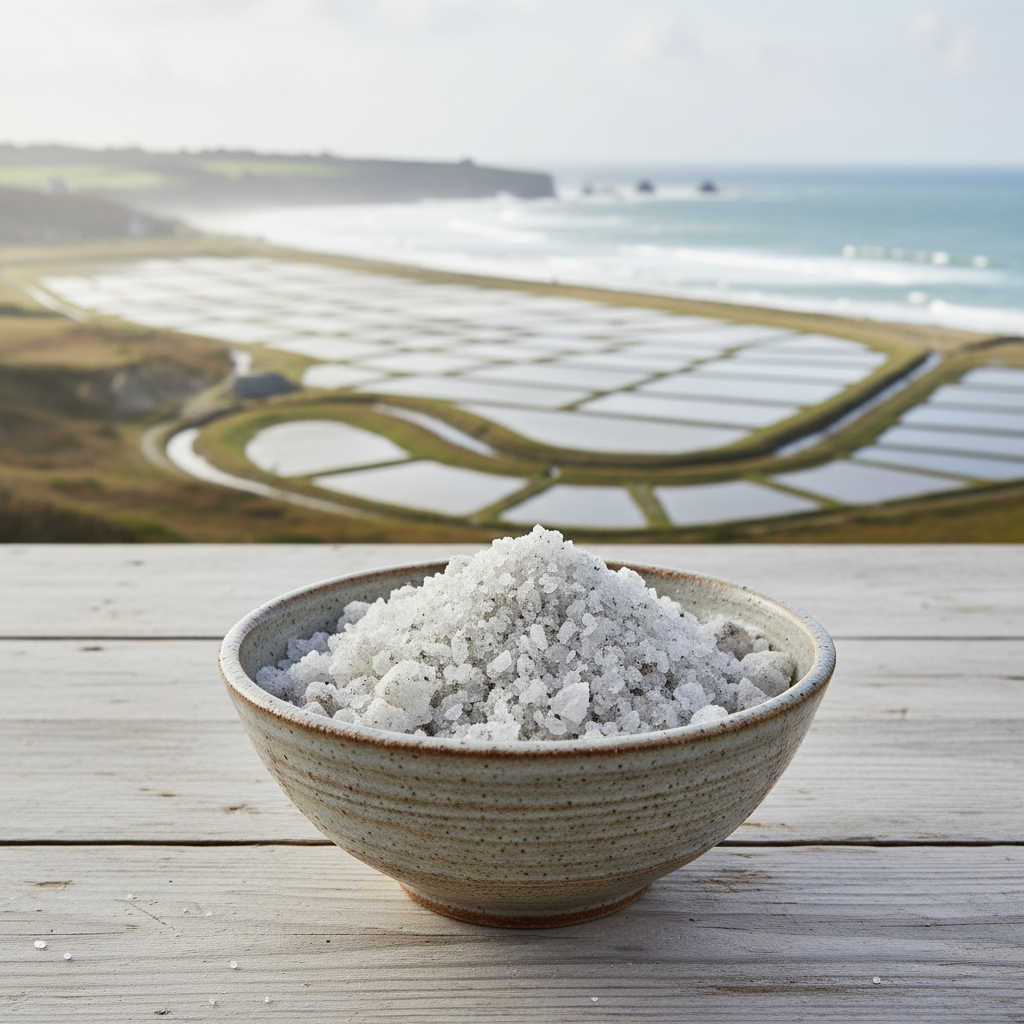
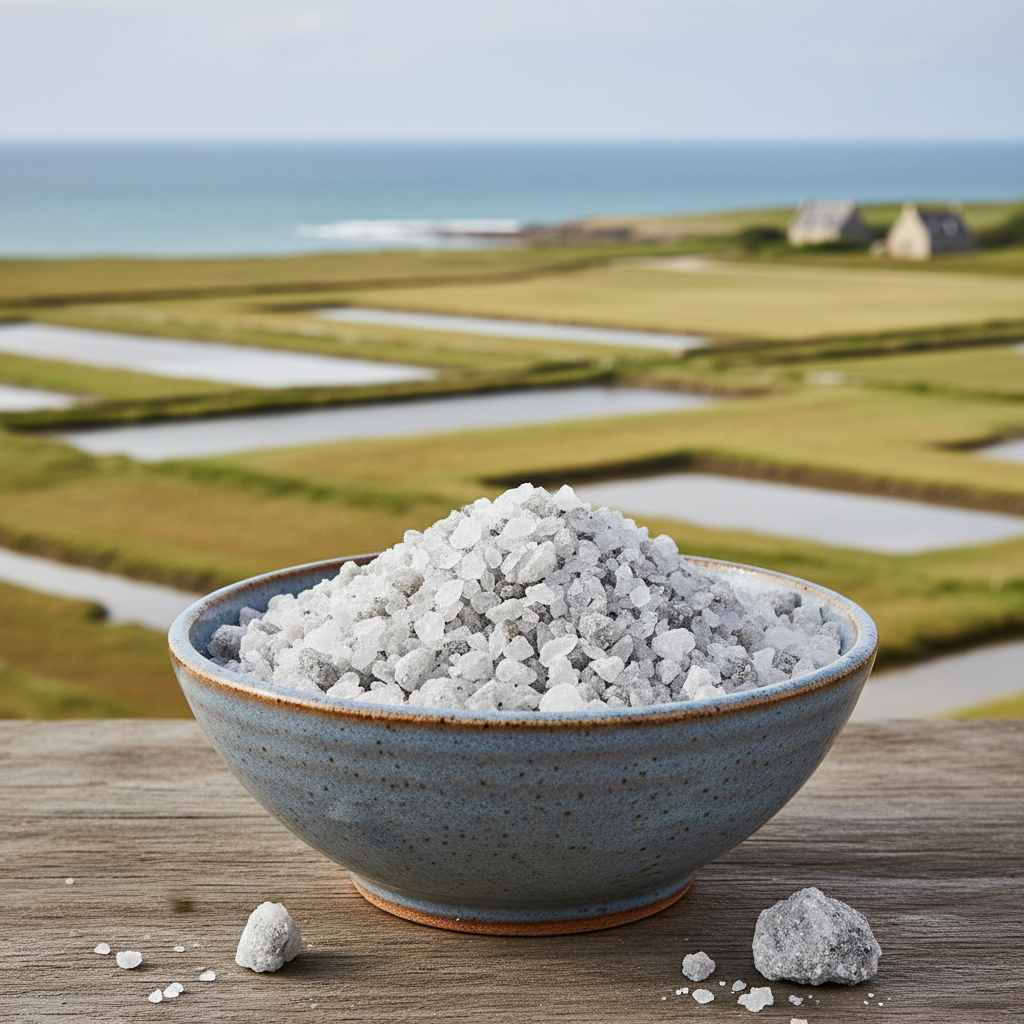
The Atlantic Ocean, stretching from the icy waters of the Arctic down to the warm equatorial currents of the tropics, is a vast and mineral-rich body of water. The seawater that laps the coasts of northwestern France, particularly the legendary salt marshes of Guérande in Brittany, carries within it an exceptional concentration of dissolved minerals accumulated over millennia. When this seawater is carefully channelled into shallow clay-lined ponds known as oeillets, and then allowed to evaporate slowly under the influence of wind and sun in a traditional paludier-managed system, what remains is far more than simple sodium chloride. The resulting salt crystals are embedded with magnesium, potassium, calcium, iron, zinc, iodine, manganese, and over eighty other trace minerals in their most natural, bioavailable ionic forms. This mineral complexity is what distinguishes authentic Atlantic sea salt from the sterile, uniform product found in most supermarket shakers. It is a living product of the ocean, as complex and nuanced as the waters from which it comes.
In 2026, the importance of understanding Atlantic sea salt's mineral content and culinary uses has never been greater for several converging reasons. First, the global conversation around ultra-processed foods has intensified, with consumers actively seeking whole, unprocessed alternatives in every category of their diet — including salt. Second, the culinary world has experienced a remarkable democratisation of professional-grade knowledge, with home cooks now approaching salt selection with the same care and curiosity once reserved for wine or olive oil. Third, scientific research into the role of trace minerals in human health has expanded significantly, drawing greater attention to the difference between consuming a mono-mineral refined product and a full-spectrum natural salt. Finally, the environmental and cultural heritage story behind traditional salt harvesting — particularly in protected biosphere regions like Guérande — has become a powerful narrative for conscious consumers who want their food choices to support sustainable, artisanal practices. Atlantic sea salt is no longer simply a seasoning; it is a statement of values.
The specific geography and geology of the Atlantic coastline play a crucial role in producing salt of exceptional quality. The Guérande peninsula in southern Brittany sits at a unique confluence of oceanic, climatic, and geological conditions that have made it the world's most celebrated source of natural sea salt for over a thousand years. The clay subsoil of the salt marshes — a dense, grey-blue argile — imparts a characteristic mineral signature and the distinctive grey colour that has become synonymous with premium Atlantic sea salt. The protective designation of these marshes as a UNESCO Biosphere Reserve underscores just how rare and precious this environment is. When you use authentic Atlantic grey salt from Guérande, you are not simply salting a dish; you are participating in a tradition of craftsmanship and environmental stewardship that connects the modern kitchen to centuries of human wisdom about the land, the sea, and the nourishment they provide together.
The Complete Guide to Atlantic Sea Salt: Mineral Content and Culinary Uses
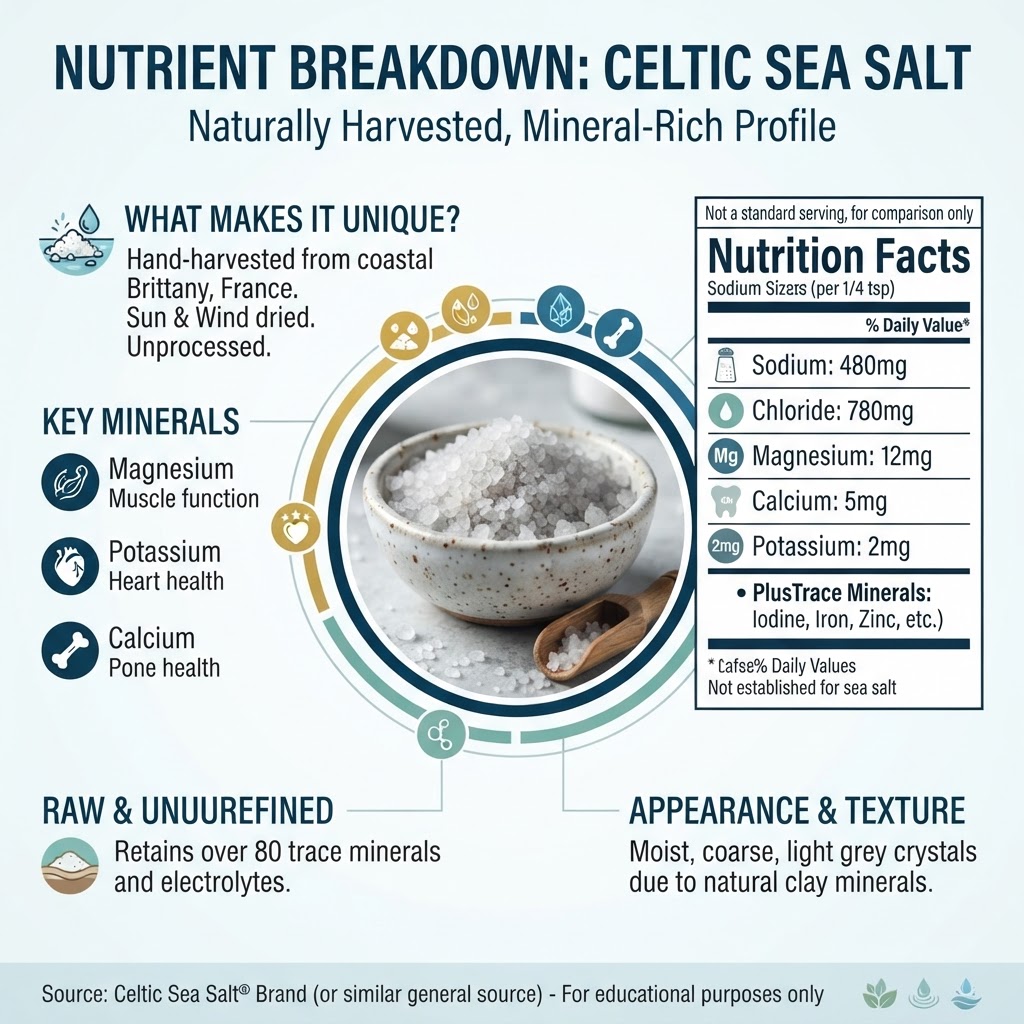
To fully appreciate Atlantic sea salt, it helps to understand exactly what it contains and how those constituents interact with food and with the body. The primary component is, of course, sodium chloride (NaCl), which typically accounts for around 84 to 87 percent of the salt's composition depending on the specific harvest and location. However, it is the remaining 13 to 16 percent that tells the most interesting story. In authentic, unrefined Atlantic sea salt — particularly the grey variety harvested from Guérande — this fraction contains a rich and varied mineral profile that includes significant levels of magnesium chloride, magnesium sulphate, calcium chloride, potassium chloride, and a broad spectrum of trace elements including iron, zinc, copper, manganese, fluoride, iodine, boron, and silicon. The presence of residual moisture — often 8 to 13 percent in freshly harvested grey sea salt — is itself an indicator of authenticity, as it reflects the natural hydration of the mineral-rich brine from which the crystals formed.
Magnesium is perhaps the most significant of the secondary minerals in Atlantic sea salt, and its presence has meaningful implications both for culinary performance and nutritional value. Magnesium chloride is hygroscopic — it attracts and retains moisture — which is why authentic grey sea salt has a slightly damp, clumping texture rather than a free-flowing one. In the kitchen, this moisture-retaining quality translates into a salt that seasons food more gently and evenly, releasing its flavour more gradually than the sharp, aggressive burst of refined table salt. Magnesium also plays a critical role in hundreds of enzymatic processes in the human body, including protein synthesis, muscle and nerve function, and blood glucose regulation. While salt is not a primary dietary source of magnesium, the cumulative contribution of using a magnesium-rich sea salt consistently over time is a meaningful addition to overall mineral intake, especially for individuals whose diets may be low in magnesium-rich whole foods.
Potassium is another key mineral found in authentic Atlantic sea salt. While it is present in smaller quantities than sodium, its presence is important because potassium and sodium work in a carefully balanced relationship within the human body — the sodium-potassium pump that regulates cellular hydration, nerve impulse transmission, and cardiovascular function depends on an appropriate ratio of both electrolytes. Refined table salt delivers sodium in isolation, with no counterbalancing potassium. Natural Atlantic sea salt, by contrast, provides a small but meaningful amount of dietary potassium alongside its sodium, contributing to a more physiologically balanced electrolyte profile. Calcium contributes to the structural integrity of bones and teeth, as well as playing a vital role in muscle contraction and blood clotting. Iron, though present in trace amounts, is essential for haemoglobin production and oxygen transport. Each of these minerals, present in natural ionic form, represents a small but genuine contribution to the full tapestry of human nutritional needs.
From a culinary perspective, the mineral content of Atlantic sea salt does something that chemistry alone might not predict: it creates flavour. The various chloride and sulphate salts of magnesium, calcium, and potassium all carry their own subtle taste signatures. Magnesium chloride, for instance, has a slight bitterness that in small concentrations functions as a flavour enhancer, adding depth and complexity without being identifiable as "bitter" in a finished dish. Potassium chloride contributes a mild, rounded salinity. Calcium adds a faint mineral freshness. Together, these compounds create what experienced chefs and food scientists describe as a more "complete" or "rounded" saltiness — one that seasons food on multiple taste dimensions simultaneously rather than simply delivering a one-dimensional hit of sodium on the palate. This is why dishes seasoned with authentic Atlantic sea salt consistently taste more satisfying and complex than those seasoned with refined salt, even when the same quantity is used.
The culinary applications of Atlantic sea salt are extraordinarily broad, encompassing everything from the most delicate confectionery work to the most robust outdoor grilling. In bread baking, coarse Atlantic grey salt plays a critical structural role, controlling yeast activity, strengthening gluten networks, and contributing to crust development. Professional bakers have long known that the mineral content of their salt affects the final texture and flavour of their loaves in ways that go beyond simple saltiness — the magnesium and calcium in natural sea salt interact with the proteins in flour to produce a more complex and satisfying bread. In cheese making, Atlantic sea salt is used both for flavour and preservation, with its moisture-retaining properties helping to maintain the ideal surface humidity during affinage. In charcuterie and curing, its full mineral profile contributes to the characteristic flavour development that distinguishes artisanal cured meats from their industrially produced counterparts. For more on traditional salt applications, explore our guide to Celtic salt in traditional cooking.
Health and Culinary Benefits
The health benefits associated with authentic Atlantic sea salt are inseparable from its mineral richness, and while it is important to note that salt should always be consumed in appropriate quantities as part of a balanced diet, the difference between unrefined sea salt and refined table salt is nutritionally meaningful. The trace mineral profile of genuine Atlantic sea salt — including magnesium, potassium, calcium, and over eighty additional trace elements — represents a form of nutritional completeness that simply does not exist in sodium chloride that has been industrially purified to 99.9 percent purity. The body recognises and processes naturally occurring mineral compounds with a biochemical familiarity that is quite different from its handling of synthetic additives or isolated compounds. This is not to make medical claims, but simply to acknowledge the basic nutritional science that whole foods — in their least processed form — tend to deliver their constituent nutrients in the most bioavailable and harmonious configurations.
Electrolyte balance is a central concept in understanding why the mineral profile of Atlantic sea salt matters for active individuals and those with physically demanding lifestyles. Electrolytes — sodium, potassium, magnesium, and calcium — are essential for fluid regulation, nerve conduction, and muscle function. When we sweat, we lose all of these electrolytes, not just sodium. Replenishing with refined salt alone replaces only one piece of a complex puzzle. Using Atlantic sea salt as part of a wholesome diet ensures that the electrolytes lost through perspiration are replaced in a more comprehensive and naturally balanced form. Athletes, outdoor workers, and individuals living in warm climates have traditionally reached for natural salt sources for exactly this reason, long before the science of electrolyte physiology was formally understood. The wisdom embedded in these traditional practices has since been validated by modern sports nutrition research.
From a digestive health perspective, there is growing interest in the role of mineral-rich salts in supporting stomach acid production. Adequate hydrochloric acid (HCl) in the stomach is essential for the proper digestion of proteins and the absorption of key nutrients including iron, zinc, and vitamin B12. The chloride component of sodium chloride is a direct precursor to HCl, and ensuring sufficient chloride intake — from natural, mineral-rich sources — supports healthy gastric function. Some practitioners of traditional and functional medicine have pointed to the complementary minerals in natural sea salt as potentially supportive of digestive wellness, though it is always advisable to consult a qualified healthcare professional for personalised dietary guidance. What is clear from a culinary standpoint is that food seasoned with mineral-rich Atlantic sea salt tends to taste more satisfying and complete, which may naturally contribute to more mindful, moderate eating habits.