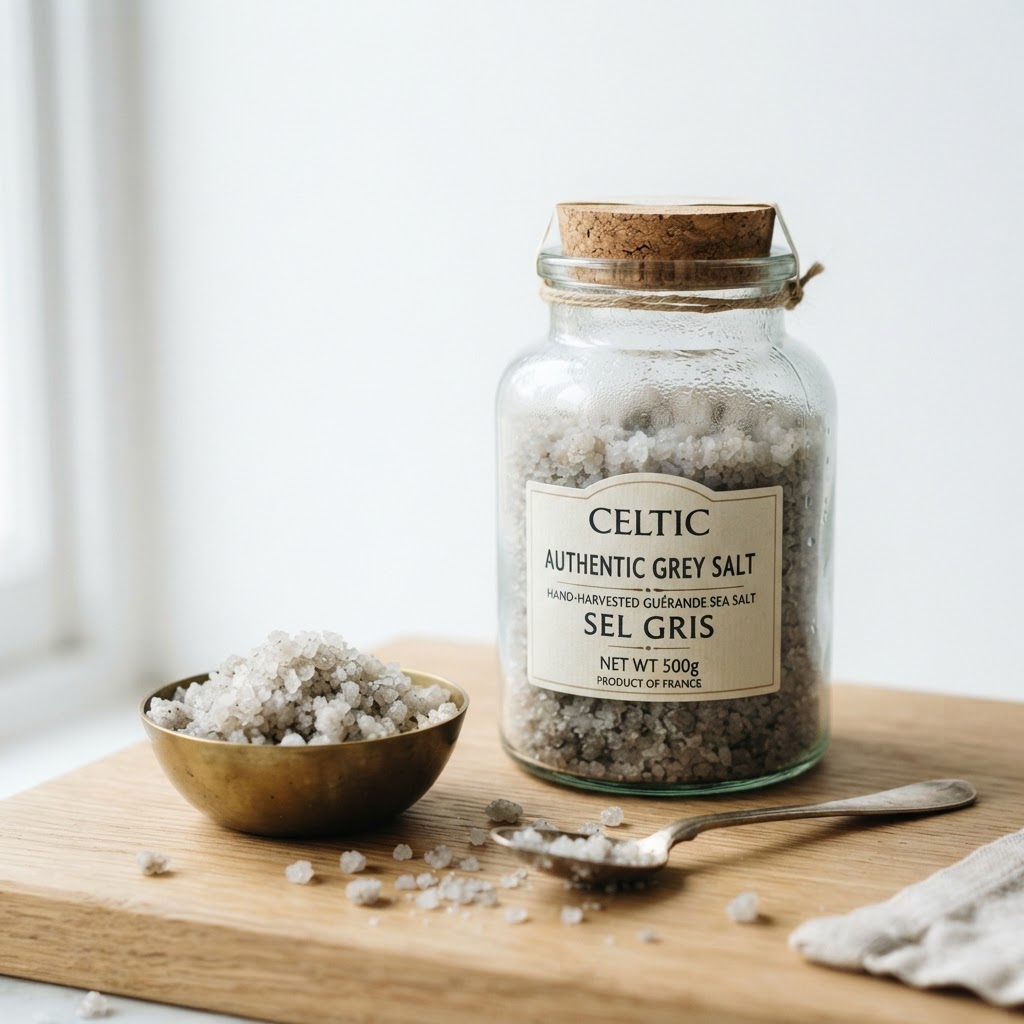
Hand-harvested Guérande salt · Tracked international delivery included
GuideOctober 8, 2026· by Celtic Salt Editorial Team
What is Fine Salt for Baking? A Pro-Baker’s Complete Guide
The Science Behind Fine Salt in Baking
In the professional world of patisserie and artisan bread making, salt is often referred to as the invisible engineer. While flour provides structure and water provides hydration, salt is the stabilizer that controls fermentation and develops flavor. When bakers ask, "what is fine salt for baking," they are essentially asking about the material that integrates most seamlessly into their crumb structure. Fine salt, characterized by its small, uniform crystal size, is preferred in professional environments because it dissolves rapidly and evenly. Unlike coarse grains that can leave pockets of salinity in a dough or batter, fine salt ensures that every bite is seasoned with precision.
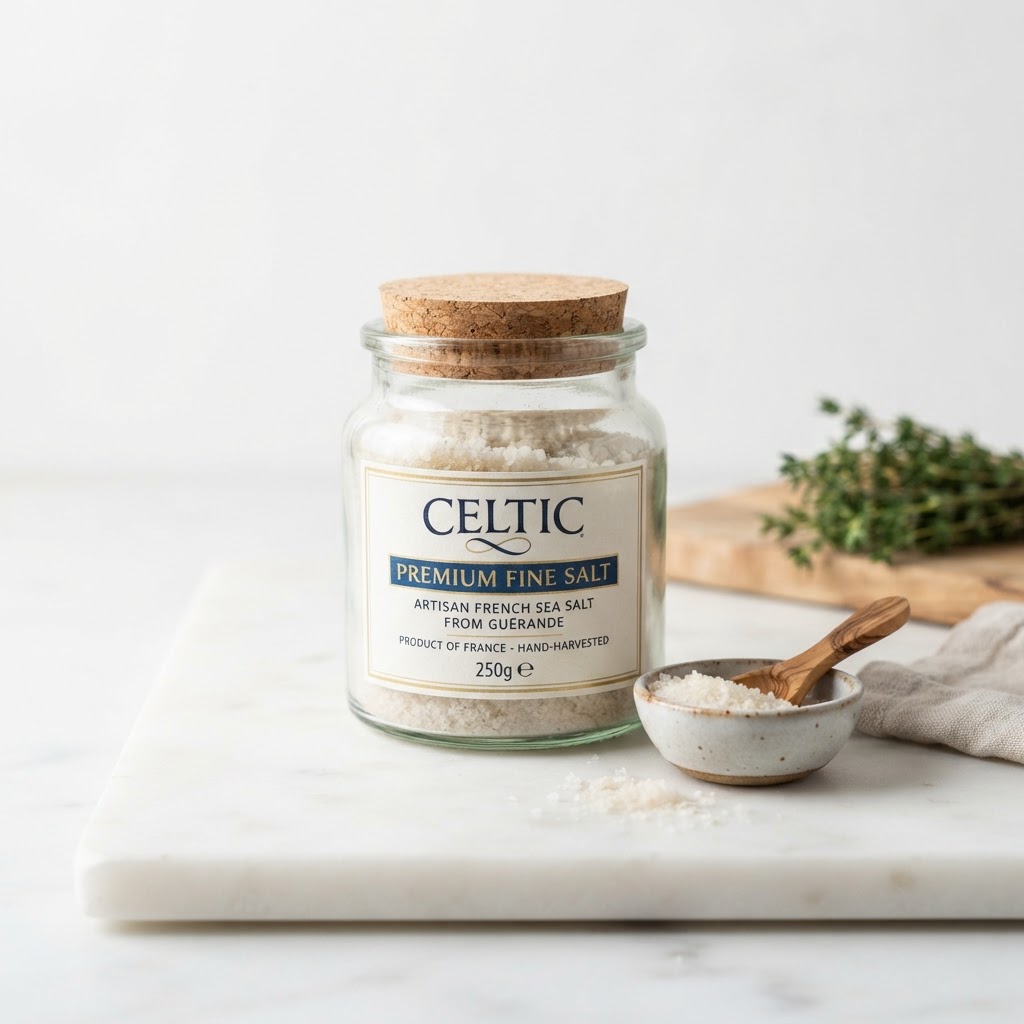
Using a premium product like Celtic Premium Fine Salt – 250g ($59.99) changes the chemistry of your baking. Because our salt is harvested using traditional methods that respect the mineral integrity of the clay-lined marshes, it provides a depth of flavor that mass-produced, refined table salts simply cannot mimic. For those interested in the fundamentals of high-quality sodium sources, you may want to explore Why Use Celtic Sea Salt to understand how the mineral composition impacts the biological processes in yeast-leavened doughs. Fine salt is not merely a preference; it is a functional requirement for achieving a consistent rise, preventing over-fermentation, and creating a balanced flavor profile in everything from delicate macarons to robust sourdough loaves.
Comparison: Fine Salt vs. Coarse Grain
When selecting a salt for your pantry, the physical structure of the crystal dictates its application. Fine salt is the workhorse of the kitchen, particularly in baking, where the distribution of ingredients must be homogenous. Coarse salt, while aesthetically pleasing for finishing a steak or a salted caramel, creates significant issues in baking if not properly dissolved. If you are using coarse crystals in a standard cake batter, you risk hitting a "salt bomb"—a tiny, undissolved pocket of concentrated sodium that ruins the delicate balance of your dessert. Understanding the differences is essential for culinary success.
Feature
Fine Salt
Coarse Salt
Dissolution Rate
Rapid; perfect for dough
Slow; requires agitation
Measurement Accuracy
Consistent by volume
Variable; crystals take more space
Application
Baking, sauces, seasoning
Finishing, curing, roasting
Integration
Blends seamlessly
May leave gritty residue
Best For
Cookies, breads, pastries
Finishing, seasoning steaks
As noted in our guide on Which Is Better Celtic Or Himalayan Salt, the harvesting environment significantly impacts the performance of the salt in baking. Celtic salt maintains a natural moisture content that prevents the grains from becoming brittle or overly processed. This characteristic makes our fine salt uniquely suited for the baker who demands both performance and quality. When replacing a recipe's call for 'fine salt,' you must use a product that dissolves uniformly, as the enzymatic activity of the yeast in your dough relies on the even distribution of minerals to function correctly. This is the primary reason why professional kitchens standardize their operations around fine, high-quality sea salt.
Choosing Celtic Premium Fine Salt – 250g ($59.99) offers distinct advantages that transcend simple salinity. First, there is the issue of provenance. Our salt is harvested from the protected salt marshes of Guérande, France, following the IGP (Indication Géographique Protégée) standards. This ensures that the salt has not been subjected to the high-heat industrial refining processes that strip away beneficial trace minerals. In baking, this matters. The subtle mineral complexity of Celtic salt helps to bring out the natural sweetness in butter and the nutty profile of heritage flours, creating a rounded flavor that is noticeably superior to standard options.
Furthermore, Celtic salt is recognized for its hygroscopic nature, which refers to its ability to absorb a small amount of moisture. While some might see this as a challenge, in baking, it signifies a salt that is alive and unrefined. When combined with hydration in a baking context, this moisture-retention property helps in maintaining the freshness of the baked good over time. For those curious about integrating high-quality salt into broader lifestyle applications, you might also look at our resources on Celtic Salt Flush to see how our premium mineral salts are used in various wellness routines. However, within the bakery, the advantage is purely gustatory and technical: it creates a tighter crumb, a more consistent fermentation process, and a richer finish that elevates a humble loaf of bread into a artisanal masterpiece.
When to Use Fine Salt in the Kitchen
Fine salt is the undisputed champion of the baking world, but it also has its place in the broader culinary landscape. You should reach for your Celtic Premium Fine Salt – 250g ($59.99) whenever a recipe calls for dry ingredients to be mixed with liquids. This includes muffins, sponges, shortbreads, and any yeast-based dough. In these applications, the mechanical process of mixing—whether by hand or machine—is designed to incorporate dry ingredients quickly. If your salt is too coarse, it won't be fully integrated by the time the oven heat kicks in, leading to uneven texture and inconsistent flavor throughout the batch.
Additionally, fine salt is the superior choice for emulsions and dressings. If you are making a vinaigrette or a glaze for a pastry, coarse salt will sit at the bottom of the bowl, leaving the sauce bland. Fine Celtic salt dissolves instantly, becoming part of the emulsified liquid. For home bakers, the switch to a finer, higher-quality grain is often the single most impactful change they can make to improve the consistency of their output. If you are struggling with 'flat' flavors in your sourdough or cakes that lack that professional 'pop,' it is almost certainly a distribution issue related to your salt selection. Fine salt ensures that the flavor is uniform from the first bite to the last, reflecting the true artistry of the baker.
⭐ IGP Certified — Guérande, France
Celtic Premium Fine Salt – 250g
Hand-harvested · trace minerals whose levels vary by harvest and product · No additives
$59.99$89.99
Free shipping — standard tracked delivery included
Ships from France · Worldwide delivery · 30-day return guarantee
Value Analysis: Why Quality Matters
At $59.99 for a 250g container, our Celtic Premium Fine Salt represents an investment in your culinary identity. Many casual bakers wonder why they should pay a premium for something that is perceived as a commodity. The answer lies in the 'Cost Per Application.' Because the flavor profile of high-quality French salt is so potent and balanced, you often find yourself using less to achieve a superior result. Furthermore, in professional baking, consistency is the primary driver of value. A failed batch of croissants or a ruined sourdough starter due to low-quality, additives-filled salt represents a financial loss far greater than the price of a jar of our salt.
By using Celtic salt, you are supporting a legacy of traditional harvesting that dates back centuries. The labor-intensive process, involving master salt workers in the Guérande region, ensures that every grain is handled with care. Unlike factory-produced alternatives that focus on speed and volume, we focus on the integrity of the mineral content and the texture of the finished grain. When you use Celtic Premium Fine Salt – 250g ($59.99), you are not just seasoning your dough; you are ensuring that the biological fermentation process is supported by high-quality minerals. This is the difference between amateur baking and the professional craft of bread making. For the discerning baker, the value is found in the final product—the crackle of the crust, the airiness of the crumb, and the depth of the flavor.
Expert Recommendations for the Modern Baker
As the Celtic Salt Editorial Team, we have observed a trend in 2026 where home bakers are increasingly looking toward professional-grade ingredients to bridge the gap between their kitchen and high-end boulangeries. Our primary recommendation is to standardize your salt. Do not use different salts for different recipes. By keeping a consistent, high-quality fine sea salt in your pantry, you become familiar with exactly how it performs. You will understand how it influences your yeast activity and how it interacts with the proteins in your flour. This mastery of one ingredient will make you a better, more predictable baker than switching between ten different brands.
We recommend storing your Celtic salt in a glass or ceramic container with a tight-fitting lid to manage its natural humidity. Because this is an authentic, unprocessed sea salt, it thrives in environments that mimic the coolness of the salt marshes. When baking, always weigh your salt. Volume measurements (like teaspoons) can be deceptive because the density of the grain can vary. Using a digital scale will provide the precision required for professional baking. Finally, do not fear the salt. Many bakers are conditioned to use too little out of a misguided fear of sodium. In baking, salt is a structural necessity. When you use a refined, mineral-rich option like our Celtic Premium Fine Salt – 250g ($59.99), you gain the confidence to season correctly, knowing that you are providing a balanced, sophisticated flavor profile that elevates your baked goods beyond the ordinary.
Ready to taste the difference?
Celtic Premium Fine Salt – 250g — Hand-harvested · trace minerals whose levels vary by harvest and product · No additives