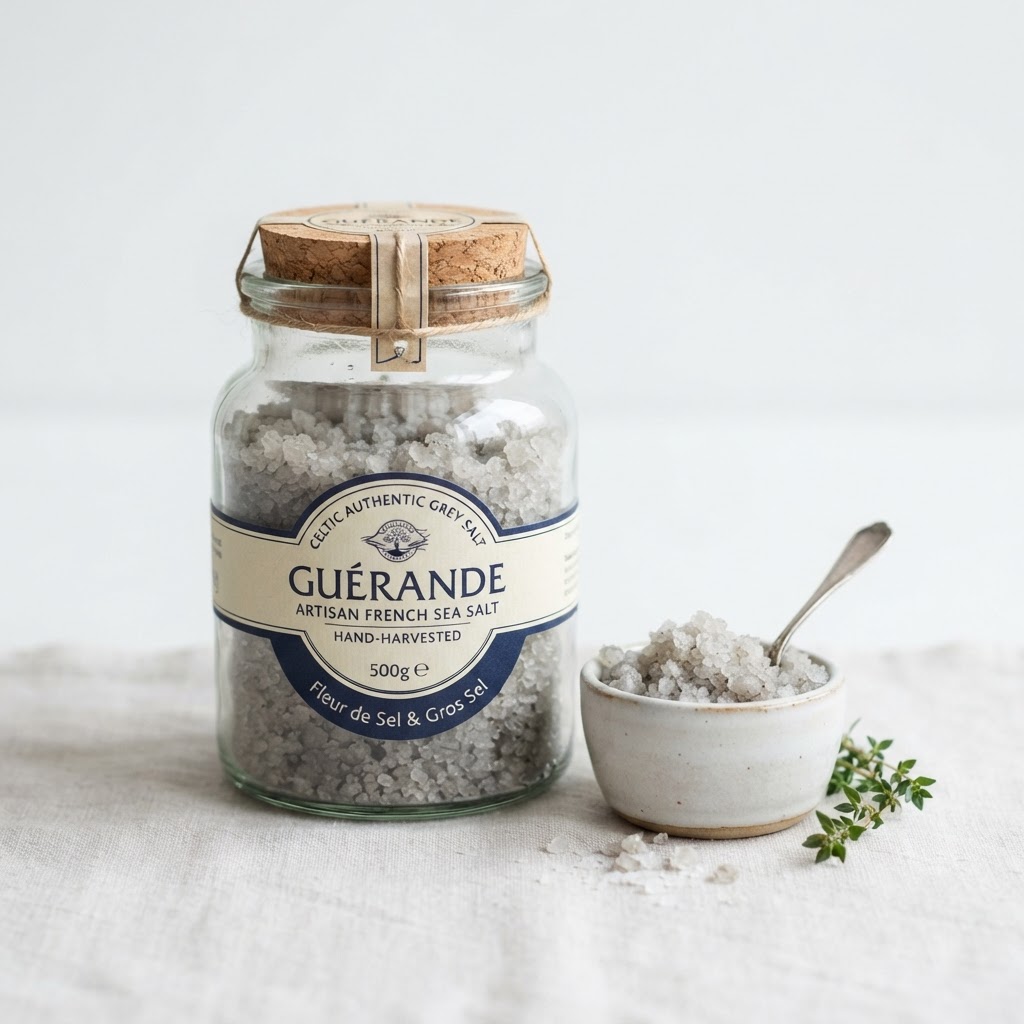
Hand-harvested Guérande salt · Tracked international delivery included
GuideNovember 19, 2026· by Celtic Salt Editorial Team
Mineral Content of Celtic Sea Salt: A Complete 2026 Analysis
The Importance of Mineral Content in Your Daily Salt Choice
In the modern culinary landscape, salt is often reduced to a simple seasoning—a way to enhance flavor or preserve ingredients. However, for those who prioritize the integrity of their nutrition, not all salts are created equal. The mineral content of salt is directly linked to its origin, its harvesting environment, and the processing methods used to bring it from the ocean to your table. Authentic Celtic sea salt, harvested from the pristine tidal marshes of the Guérande region in France, represents the pinnacle of traditional sea salt production. Unlike mass-produced table salts that undergo heavy processing and refining, this salt retains a unique, complex mineral profile that reflects the biodiversity of the Atlantic coast.
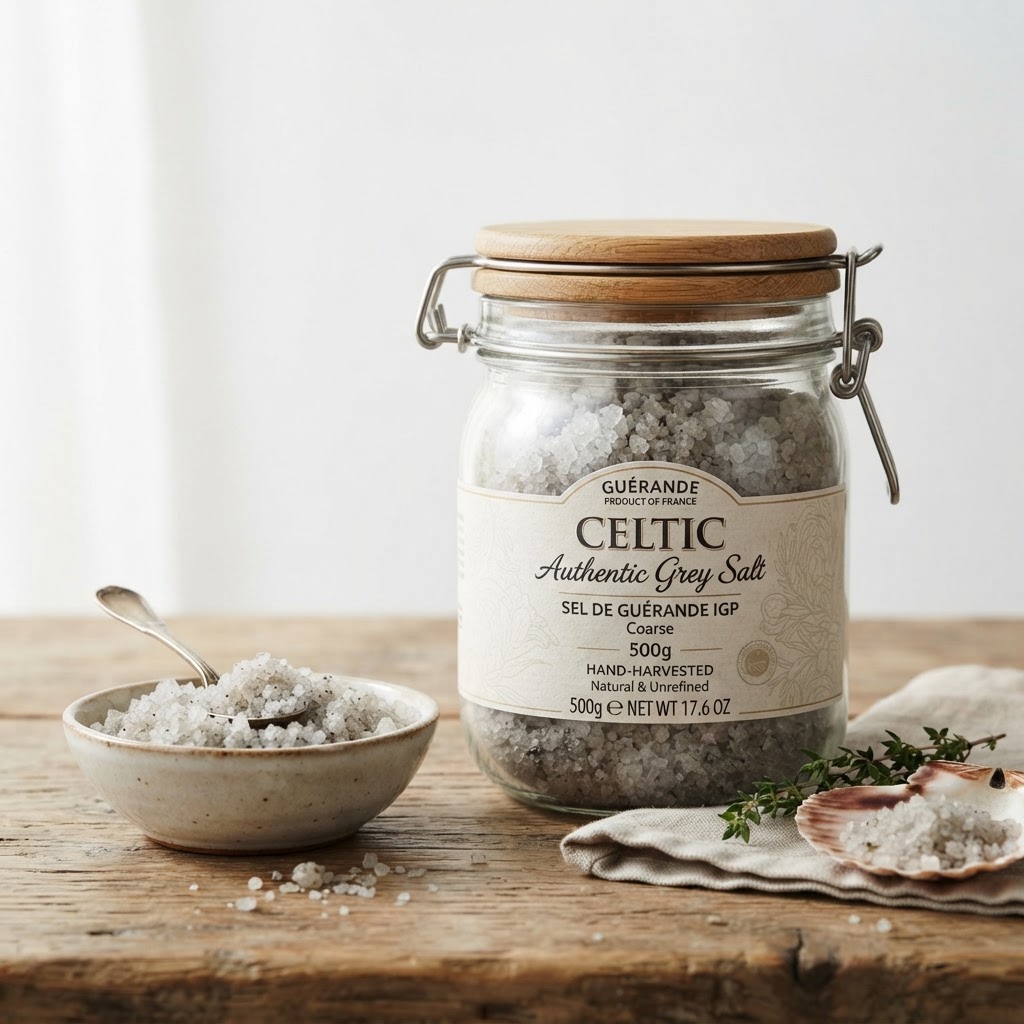
Understanding why this mineral content matters is the first step toward better culinary practices. When we talk about "mineral content," we are referring to the naturally occurring trace elements—such as magnesium, potassium, calcium, and iron—that remain trapped within the salt crystals during the evaporation process. These minerals are not just "impurities" to be stripped away; they are the source of the salt's signature grey hue and its mellow, oceanic flavor profile. By choosing a product like our Celtic Authentic Grey Salt – 500g ($79.99), you are opting for a traditional foodstuff that has remained largely unchanged for centuries. Whether you are interested in Celtic Sea Salt Nutritional Value or simply looking to elevate your home cooking, the mineral density found in unrefined, hand-harvested salt provides a depth of flavor that processed alternatives simply cannot replicate.
Understanding the Key Differences: A Comparative Overview
To truly appreciate what makes our product stand out, one must understand how different types of salt compare in terms of composition and production. Many people search for information regarding Himalayan Salt Vs Celtic Salt Mineral Content because both are frequently touted as premium options. However, they differ significantly in their geological origin and mineral concentration. Himalayan salt is a mined rock salt, meaning it was formed millions of years ago in ancient seabeds that have since been buried, whereas Celtic salt is an active, harvested sea salt sourced from current, living ocean waters.
Feature
Celtic Authentic Grey Salt
Standard Mined Rock Salt
Refined Table Salt
Origin
Guérande, France (Tidal)
Mined from subterranean deposits
Industrial evaporation & bleaching
Mineral Profile
Rich in Magnesium & Trace Minerals
Variable (mostly Iron oxide)
Depleted (Sodium Chloride only)
Processing
Hand-harvested/Unrefined
Crushed and refined
Chemically processed/additives
Moisture
Naturally moist
Dry
Very dry (anti-caking agents)
Culinary Use
Finishing & Cooking
Grinding/Basic seasoning
Standard baking/Industrial
As the table illustrates, the differences go beyond just flavor. Because Celtic salt is harvested from clay-lined marshes, it absorbs trace minerals from the surrounding earth, resulting in a slightly grey color and a natural moisture content. In contrast, refined table salts are essentially stripped of all trace minerals, often leaving behind only sodium chloride and anti-caking agents. When you invest in our Celtic Authentic Grey Salt – 500g ($79.99), you are choosing a product that honors the earth from which it is harvested, providing a more holistic culinary experience.
The Advantages of Celtic Salt's Mineral-Rich Profile
The primary advantage of Celtic salt lies in its diverse and bioavailable mineral composition. While sodium chloride is the base of all salt, the presence of magnesium, potassium, and calcium alters how the salt interacts with your food and your palate. These minerals contribute to the "mellow" saltiness that chefs prize—it is a flavor that lingers and enhances the ingredients around it rather than simply overpowering them with a sharp, metallic sting.
For those curious about specific components, our deep dive into How Much Potassium Is In Celtic Sea Salt highlights how traditional harvesting preserves these vital elements. Celtic salt is characterized by its high magnesium content, which is a result of the unique clay-based pans used in the Guérande region. This mineral richness makes it a favorite among professional chefs who value authenticity and performance in the kitchen. When you use Celtic salt, you are not just seasoning a dish; you are adding a layer of depth that changes the texture of sauces, the crunch of a crust, and the overall mouthfeel of a meal. Furthermore, because Celtic salt is naturally moist, it dissolves easily into warm dishes, creating a seamless integration of flavor that dry, granular salts often fail to achieve. The authenticity of our 500g offering ensures that every pinch contains the original mineral balance preserved by master salt harvesters.
When to Use Each Type of Salt: A Chef’s Guide
Choosing the right salt depends on the dish and the desired outcome. While refined table salt has its place in high-heat baking or industrial food production, it falls short when the quality of the ingredients takes center stage. Celtic salt shines in applications where the raw quality of the salt can be truly tasted and experienced. For instance, when roasting vegetables or searing a high-quality cut of meat, the mineral structure of Celtic salt creates a better interaction with the heat, drawing out natural juices and enhancing the Maillard reaction without the harsh bitterness sometimes associated with overly processed salts.
In the world of professional cooking, our Celtic Authentic Grey Salt – 500g ($79.99) is an essential "workhorse" salt. Use it to finish a crisp salad, stir it into a hearty bone broth, or use it to season a slow-cooked ragu. Because it contains trace amounts of ocean minerals, it pairs exceptionally well with fatty, rich foods like butter, cream, and aged cheeses, balancing their richness with its nuanced salinity. On the other hand, you should reserve refined salt only for situations where chemical uniformity is required, such as precise chemical-leavening baking recipes. However, for 90% of your daily kitchen needs, the mineral-dense nature of Celtic salt provides a superior culinary result that justifies its place in your pantry.
⭐ IGP Certified — Guérande, France
Celtic Authentic Grey Salt – 500g
Hand-harvested · trace minerals whose levels vary by harvest and product · No additives
$79.99$114.99
Free shipping — standard tracked delivery included
Ships from France · Worldwide delivery · 30-day return guarantee
Value Analysis: Why Quality Matters in 2026
In 2026, the discerning consumer is moving away from cheap, industrial food products and toward authentic, traditionally produced items. The value of our Celtic Authentic Grey Salt – 500g ($79.99) is best viewed through the lens of longevity and impact. While you may find cheaper salts on the market, these products often require higher usage to achieve the same depth of flavor, or they lack the complexity that defines a truly premium culinary experience. When you purchase high-quality salt, you are paying for the labor of master paludiers who hand-harvest the salt using centuries-old techniques that protect the environment and preserve mineral quality.
Furthermore, because the flavor profile of our salt is so potent, a little goes a long way. You don't need to over-salt your food to taste the ocean; the minerals do the work for you. This makes the 500g package a long-lasting staple that offers an incredible return on investment in terms of flavor enhancement. When you look at the price point, consider it an investment in your kitchen repertoire. By choosing a product that is IGP (Indication Géographique Protégée) protected, you are supporting the traditional French heritage and ensuring that you are getting the genuine, unrefined product rather than a bleached or synthetic alternative. Your salt is the most frequently used ingredient in your kitchen; it makes sense to invest in the very best quality available.
Expert Recommendation: Integrating Celtic Salt Into Your Routine
As we look at the trends for 2026, the Celtic Salt Editorial Team recommends a "less is more" approach to seasoning. We advise keeping your Celtic Authentic Grey Salt – 500g ($79.99) in an open-style ceramic salt cellar on your counter. This is not just for aesthetic reasons; the breathable nature of ceramic helps maintain the natural, healthy moisture content of the salt, ensuring it stays easy to pinch and sprinkle throughout your cooking process.
Start by replacing your standard cooking salt in simple preparations. Try it on a simple slice of fresh sourdough bread with good butter, or sprinkle it over a sliced tomato. You will immediately notice that the flavor is "fuller" and more rounded. If you have been using industrial salts, we recommend reducing your total salt quantity by about 10% when you first switch to Celtic salt, as the mineral intensity provides a much stronger flavor profile. As you become accustomed to the flavor, you will find that you naturally gravitate toward recipes that use fresh, specialty grocery stores, as this salt is the perfect partner for natural ingredients. Our mission at celtic-salt.com is to bring this traditional treasure into every home, providing a standard of quality that reflects the history and the passion of the Guérande marshlands. When you season with Celtic salt, you are seasoning with history, terroir, and the raw, unrefined essence of the Atlantic Ocean.
Frequently Asked Questions
Is Celtic salt the same as regular table salt?
No, Celtic salt is a hand-harvested, unrefined sea salt, whereas regular table salt is heavily processed, bleached, and stripped of its natural minerals. Our Celtic Authentic Grey Salt retains its natural mineral content and moisture, offering a vastly different flavor and texture.
Why does Celtic salt appear grey and slightly damp?
The grey color and natural moisture are signs of its authenticity and origin in the clay-lined tidal marshes of Guérande. The clay imparts trace minerals to the salt, and the moisture is the result of the natural magnesium content, which attracts water from the air.
Can I use Celtic salt for all my daily cooking needs?
Absolutely. Celtic salt is a versatile, mineral-rich culinary salt that enhances the flavor of everything from roasted vegetables and meats to baking and broths. Its unique mineral profile provides a depth of flavor that complements almost any ingredient.
How should I store my Celtic salt to keep it fresh?
We recommend storing your Celtic salt in a breathable container, such as a ceramic or wooden salt cellar. Avoid plastic or tightly sealed metal containers, as the salt’s natural moisture content thrives in environments that allow for slight airflow.
What does the IGP certification mean for my salt?
The IGP (Indication Géographique Protégée) label is a European quality seal that ensures the product is sourced from the specific, regulated region of Guérande, France. It guarantees that the salt is harvested using traditional, sustainable methods that preserve its integrity.
Ready to taste the difference?
Celtic Authentic Grey Salt – 500g — Hand-harvested · trace minerals whose levels vary by harvest and product · No additives