Hand-harvested Guérande salt · Tracked international delivery included
Guide· by Celtic Salt Editorial Team
Coarse Sea Salt
What Is Coarse Sea Salt and Why It Matters in 2026
Coarse sea salt is one of the oldest and most valued natural food ingredients on the planet. Unlike the fine, heavily processed table salt that lines most supermarket shelves, coarse sea salt is harvested directly from evaporated seawater, retaining its natural mineral complexity, its distinctive texture, and its remarkable depth of flavour. The crystals are larger, irregular in shape, and carry within them trace elements that simply cannot be replicated in a laboratory or industrial processing facility. In 2026, as more people turn their attention toward the quality and origin of the ingredients they cook with every day, coarse sea salt has moved from a niche artisan product to a cornerstone of conscious cooking. The renewed interest in whole, minimally processed foods has placed coarse sea salt firmly at the centre of both home kitchens and professional culinary environments across the world.
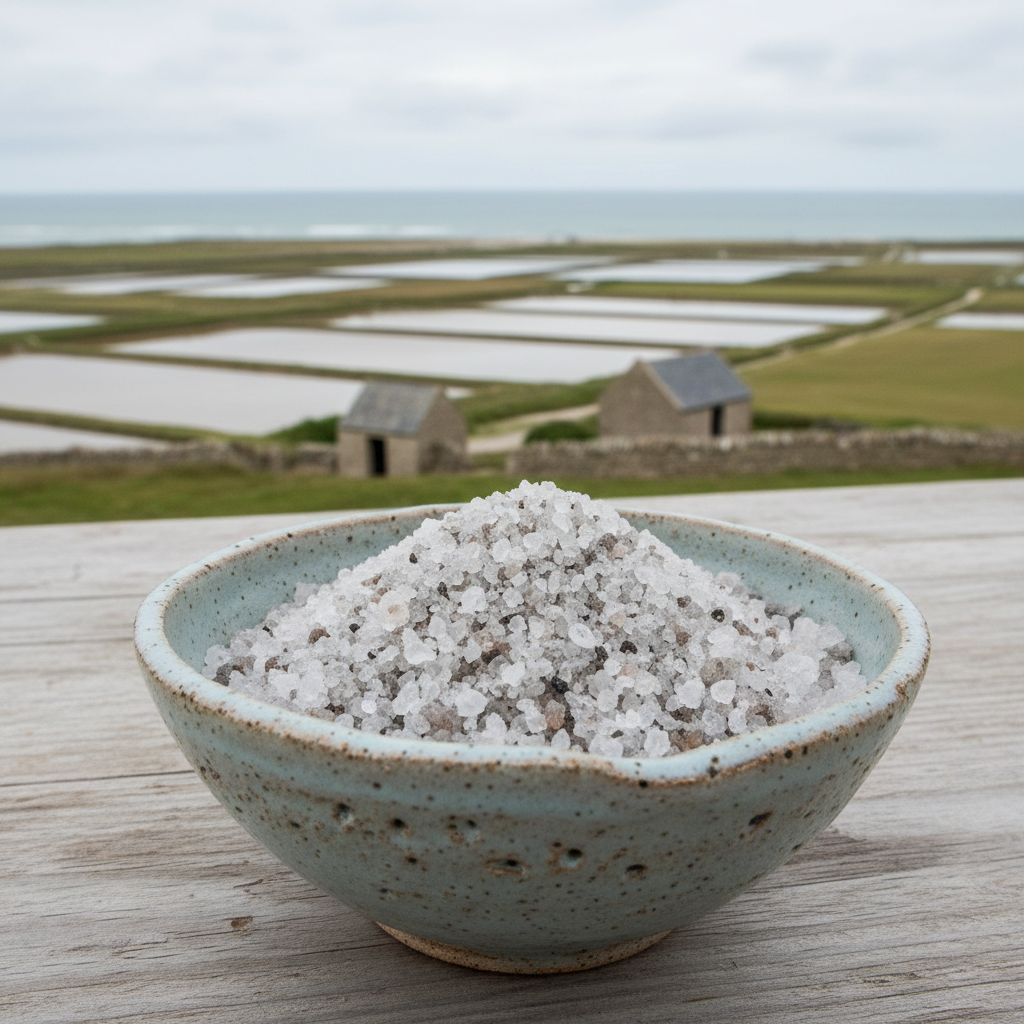
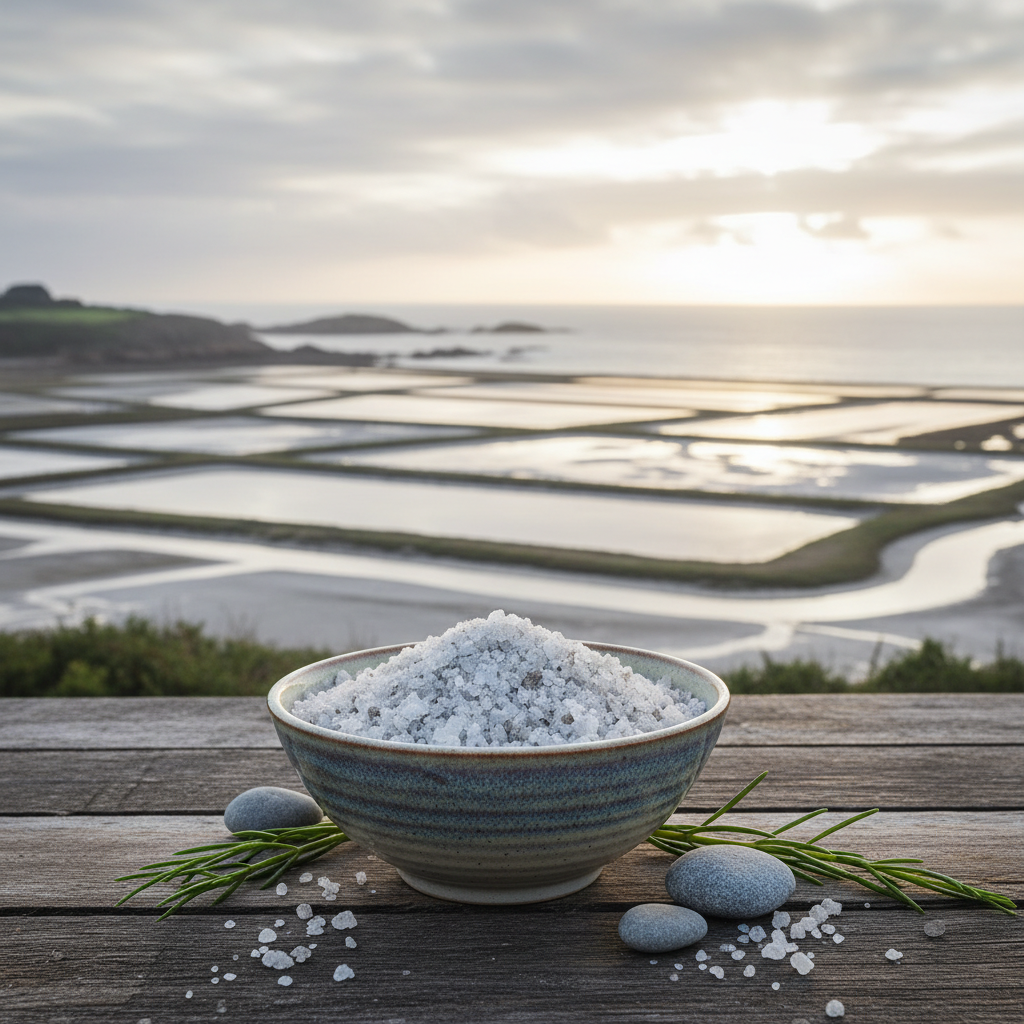
The story of coarse sea salt is deeply tied to geography and tradition. The most celebrated coarse sea salt in the world comes from the Atlantic salt marshes of Brittany, France — a region where salt has been harvested by hand for over a thousand years. The ancient salt pans, known locally as marais salants, are shallow clay-lined pools that capture Atlantic seawater and allow it to evaporate slowly under the influence of wind and sun. The result is a grey, mineral-rich coarse sea salt known as Gros Sel de Guérande, distinguished by its characteristic moist texture, its soft grey colour, and its extraordinarily complex mineral profile. This is not salt that has been bleached, dried at extreme temperatures, or stripped of its natural attributes. It is salt as nature intended — raw, vital, and full of character. The paludiers, the traditional salt farmers who maintain these marshes, follow methods that have been passed down through generations, working with the tides and seasons rather than against them.
In 2026, the conversation around coarse sea salt has also become tied to sustainability, environmental responsibility, and food transparency. Consumers increasingly want to know where their food comes from, how it was produced, and whether the methods used respect both the environment and the communities involved. Coarse sea salt from traditionally managed salt marshes fits this demand perfectly. The salt pans of Guérande, for instance, are protected natural ecosystems that support extraordinary biodiversity, including migratory birds, rare plant species, and complex microbiological communities. The production process requires no electricity, no chemical additives, and no industrial machinery. It is one of the most environmentally harmonious food production methods that exists. Choosing coarse sea salt from such sources is therefore not just a culinary decision — it is a vote for a more thoughtful, sustainable food system.
Beyond the environmental and cultural dimensions, coarse sea salt matters in 2026 for a very simple reason: it makes food taste better. Any experienced cook will tell you that the texture and flavour of the salt you use fundamentally shapes the character of a dish. Coarse sea salt dissolves more slowly than fine salt, which means it delivers bursts of flavour rather than an even, uniform saltiness. When used as a finishing salt — scattered over a piece of grilled fish, pressed into the crust of a roast, or dissolved into a brine for fermenting vegetables — coarse sea salt adds layers of complexity that fine processed salt simply cannot match. Its natural moisture content, its mineral undertones, and its satisfying crunch between the fingers all contribute to a sensory experience that elevates everyday cooking into something genuinely special. This is why chefs from Paris to Tokyo, from New York to Sydney, continue to reach for authentic coarse sea salt as their seasoning of choice.
The Complete Guide to Coarse Sea Salt
Understanding coarse sea salt fully means looking at its production, its composition, and its many varieties. At its most fundamental, coarse sea salt is produced through the natural evaporation of seawater. This process concentrates the dissolved minerals and salts in the water until crystals begin to form. The specific character of the resulting salt depends enormously on the source water, the local climate, the composition of the salt pan floor, and the harvesting methods employed. These variables explain why coarse sea salt from Brittany tastes and feels so different from, say, a coarse salt harvested off the coast of Portugal, Cyprus, or the Pacific islands. Each has its own identity, shaped by the unique conditions of its place of origin.
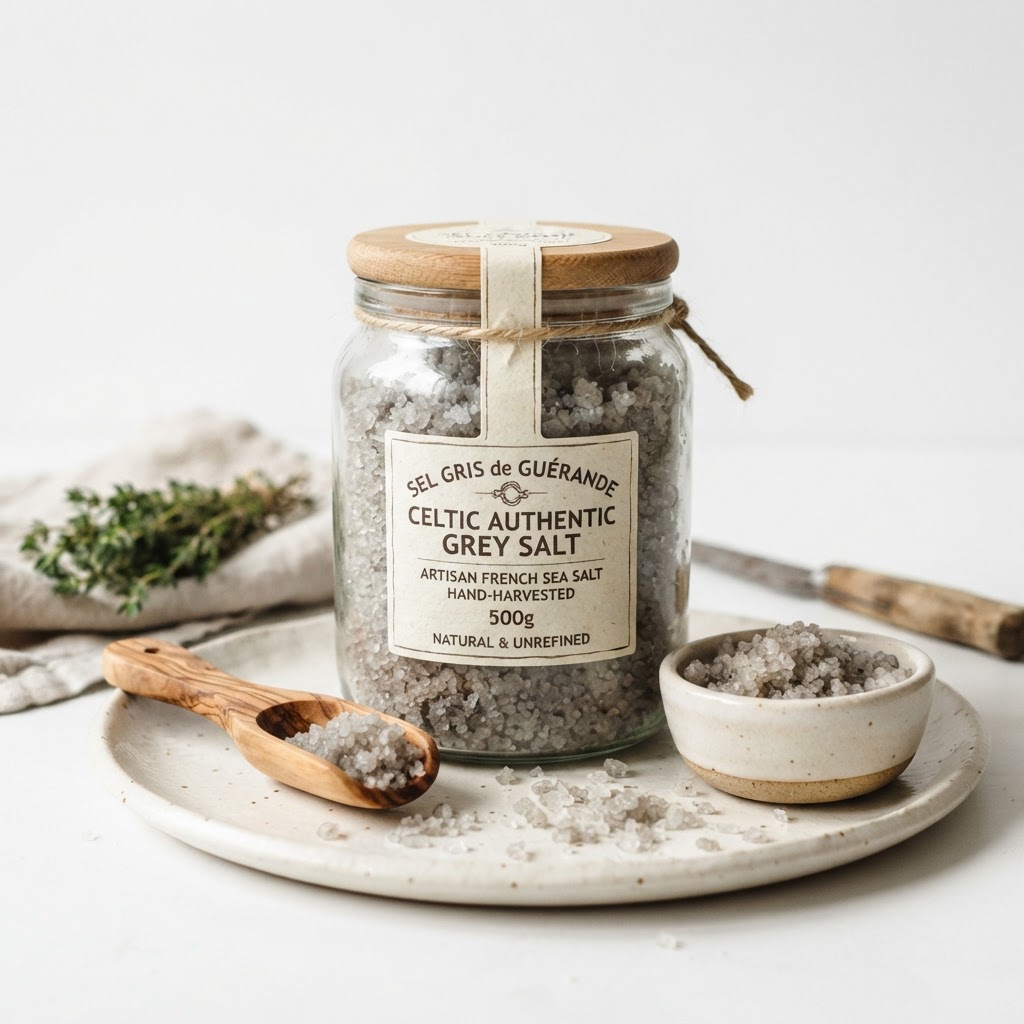
The coarse sea salt of Guérande is harvested twice yearly, typically in late summer when evaporation rates are at their highest. The salt farmers rake the crystals by hand using traditional wooden tools, carefully avoiding contamination from the clay floor of the pans. The grey colour that gives this salt its distinctive appearance comes from microscopic clay particles and naturally occurring minerals — it is not a sign of impurity but rather a hallmark of authentic, unprocessed production. The salt is then collected, drained of excess brine, and stored without any further processing. No anti-caking agents, no iodine additives, no drying at extreme temperatures. What reaches your kitchen is essentially the same product that the salt farmers would have sold a thousand years ago.
Mineralogically, coarse sea salt is significantly more complex than refined table salt. While table salt is essentially pure sodium chloride — typically 97 to 99 percent — coarse sea salt from traditional sources contains a broad spectrum of trace minerals including magnesium, calcium, potassium, iron, zinc, and manganese. These minerals are present in relatively small quantities, but they contribute meaningfully to the flavour profile of the salt. Magnesium, for example, is responsible for a slight bitterness that balances the saltiness and prevents it from tasting sharp or harsh. Calcium adds a mild creaminess, while potassium contributes a subtle savoury depth. Together, these minerals create the rounded, complex flavour that chefs and food lovers associate with high-quality coarse sea salt.
It is also worth understanding the difference between coarse sea salt and other large-crystal salts that sometimes appear under similar names. Kosher salt, for instance, is a coarse-grained salt but it is typically produced from mined rock salt deposits rather than evaporated seawater, and it is processed to remove most trace minerals. Pickling salt is also coarse but is formulated specifically for brine preservation and may have different purity requirements. Rock salt, used in ice cream makers and for de-icing roads, is a coarse crystalline salt but is entirely unsuitable for food use in most of its commercial forms. Authentic coarse sea salt stands apart from all of these because of its marine origin, its minimal processing, and its preserved mineral content. When you are looking for coarse sea salt to cook with, these distinctions matter enormously for both flavour and quality.
The relationship between salt and human health is nuanced, and it is important to approach it honestly. Salt — sodium chloride — is an essential nutrient. The human body cannot produce sodium on its own, and yet sodium is critical for nerve transmission, muscle contraction, fluid balance, and dozens of other physiological processes. The debate around salt and health in the modern era has largely focused on the excessive consumption of hidden sodium in ultra-processed foods, not on the moderate use of natural salt in home cooking. When used thoughtfully, coarse sea salt is not an adversary to good health — it is a fundamental part of balanced, flavourful, whole-food cooking.
What sets coarse sea salt apart from a health perspective is its mineral content. The trace minerals found in authentic coarse sea salt from marine sources — magnesium, potassium, calcium, and others — play supporting roles in overall health. Magnesium, in particular, is a mineral that many people do not consume in sufficient quantities, and while the amount present in coarse sea salt is not a primary dietary source, every contribution counts as part of a varied, mineral-rich diet. The absence of additives and anti-caking agents also means that coarse sea salt is a genuinely clean ingredient. Many commercial table salts contain additives such as sodium ferrocyanide, silicon dioxide, or sodium aluminosilicate to prevent clumping. These are not present in authentic, traditionally harvested coarse sea salt.
From a culinary standpoint, the benefits of coarse sea salt are perhaps even more immediately felt. The first and most significant benefit is flavour. Coarse sea salt has a more complex, nuanced flavour than refined salt because it retains the minerals and compounds naturally present in seawater. It does not taste harsh or metallic — instead, it has a rounded, oceanic quality that enhances rather than dominates the food it seasons. The second benefit is texture. The large, irregular crystals of coarse sea salt provide a satisfying crunch when used as a finishing salt, and they dissolve slowly and evenly when used in brines or cooking water. This textural quality is something that fine salt simply cannot replicate. The third benefit is control: because coarse sea salt dissolves more slowly, it gives the cook more time to adjust seasoning, making it easier to avoid over-salting a dish.
There is also a growing body of culinary evidence suggesting that the way salt interacts with other ingredients changes depending on its mineral composition. Chefs who regularly cook with high-quality coarse sea salt report that they use less overall salt while achieving more satisfying flavour in their dishes. This is partly because the complex mineral profile of natural sea salt stimulates the palate more fully than pure sodium chloride, and partly because the slower dissolution of coarse crystals means that flavour is released more gradually and pleasurably. While we make no specific medical or health claims here, the culinary evidence for the superiority of natural coarse sea salt over processed alternatives is well established among professional cooks, food writers, and culinary educators worldwide.
How to Use Coarse Sea Salt — Expert Tips
Using coarse sea salt well is both an art and a science. The first principle is understanding when to add it. Because coarse sea salt dissolves more slowly than fine salt, it behaves differently depending on when it is introduced to a dish. Added early in the cooking process — to boiling water for pasta, to a braising liquid, or to a dough — it dissolves completely and seasons the food from the inside out. Added at the end of cooking, as a finishing salt, it retains its crystalline structure and delivers concentrated bursts of flavour and texture. Both approaches are valid, but they serve different purposes, and mastering both will transform your cooking.
For boiling pasta, potatoes, or vegetables, add a generous quantity of coarse sea salt to the water before it reaches a boil. The traditional Italian instruction to make pasta water taste "like the sea" is a useful guide — the water should taste noticeably salty, not overwhelmingly so. This seasons the pasta throughout its structure rather than relying entirely on the sauce for saltiness. The same principle applies to blanching vegetables: salted water preserves their colour, enhances their natural sweetness, and ensures they are seasoned at every level. Use about one tablespoon of coarse sea salt per litre of water as a starting point, adjusting to taste.
For meat and fish, coarse sea salt is exceptionally versatile. One of the most effective techniques is dry brining, where you apply coarse sea salt generously to the surface of a piece of meat or fish and leave it uncovered in the refrigerator for several hours or overnight. The salt initially draws moisture to the surface, then is reabsorbed into the meat along with the dissolved minerals, seasoning it deeply and helping to retain moisture during cooking. This technique works beautifully with chicken, pork, lamb, beef, and oily fish such as salmon or mackerel. The result is meat and fish that are seasoned throughout, with a pleasantly firm texture and a deeply savoury flavour.
As a finishing salt, coarse sea salt is perhaps at its most dramatic. Scatter a few crystals over a freshly grilled steak just before serving, and the combination of heat, meat juices, and slowly dissolving salt crystals creates a sensory experience that is hard to describe and impossible to forget. The same technique works over roasted root vegetables, fresh tomatoes with olive oil, avocado on toast, dark chocolate desserts, homemade caramel, and even craft cocktails. The key is to use a light hand — finishing salt is not about adding bulk saltiness but about adding a final layer of complexity and texture. A pinch of authentic coarse sea salt can be the detail that elevates a dish from good to genuinely memorable.